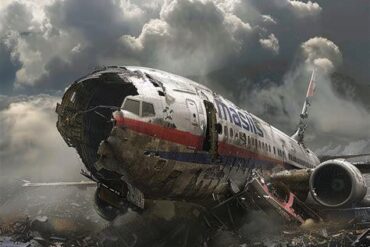
The history of commercial aviation is often told through stories of innovation, speed, and engineering brilliance. Yet behind many of the world’s most iconic aircraft lies another reality: catastrophic failures, design flaws, rushed certification programs, and accidents that reshaped the industry forever. Some airplanes became legends because they pushed aviation forward. Others became cautionary tales because they exposed the terrifying consequences of human error, corporate pressure, or technological overconfidence.
Several of the most recognizable airliners ever built earned headlines not for record-breaking achievements, but for disasters that shocked the world and forced aviation authorities to rewrite safety standards from the ground up. In many cases, those painful lessons ultimately made modern air travel safer. But the road to those improvements was written in tragedy.
From explosive decompression disasters aboard the McDonnell Douglas DC-10 to the worldwide grounding of the Boeing 737 MAX, these aircraft became symbols of aviation crises that the public could not ignore. Their stories remain deeply relevant because every modern airliner still carries the legacy of the mistakes that came before.
The aircraft on this list were not necessarily failures in the long term. Some evolved into reliable workhorses, while others disappeared from passenger service entirely. But each one left an unforgettable scar on the aviation industry and proved that even the most advanced aircraft can become dangerously vulnerable when engineering, regulation, or operational oversight breaks down.
After decades of accidents, investigations, redesigns, and reforms, these six aircraft remain among the most controversial and headline-grabbing commercial airplanes ever built.
Boeing 737 MAX — The Crisis That Shattered Boeing’s Reputation
The Boeing 737 MAX was supposed to represent the next chapter of Boeing’s dominance in the narrowbody market. Instead, it became one of the most damaging corporate and engineering scandals in aviation history. Two crashes within five months transformed the aircraft from a highly anticipated fuel-efficient jet into a global symbol of flawed certification practices and corporate shortcuts.
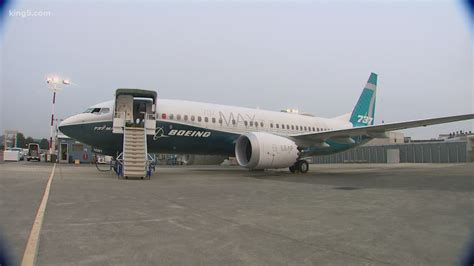
The first disaster occurred in October 2018, when Lion Air Flight 610 plunged into the Java Sea shortly after departure from Jakarta. Just months later, Ethiopian Airlines Flight 302 crashed near Addis Ababa under eerily similar circumstances. Together, the accidents killed 346 people and triggered worldwide outrage.
Investigators discovered that both crashes involved the Maneuvering Characteristics Augmentation System, better known as MCAS. The software was designed to automatically push the aircraft’s nose downward under certain flight conditions to compensate for aerodynamic changes caused by larger engines mounted farther forward on the airframe. The system relied heavily on data from a single angle-of-attack sensor. When that sensor malfunctioned, MCAS repeatedly forced the aircraft into fatal dives.
What made the scandal especially devastating was the revelation that many pilots were not fully informed about the existence or behavior of the system. Internal investigations later exposed troubling communication failures between Boeing and regulators. Questions quickly emerged regarding whether certification procedures had become too dependent on manufacturer self-assessment.
The consequences were enormous. The entire global 737 MAX fleet was grounded for nearly two years, marking the longest grounding of a modern commercial airliner in aviation history. Boeing suffered billions in financial losses, faced criminal investigations, and endured severe reputational damage that still affects the company today.
Even after the aircraft returned to service following software redesigns and enhanced pilot training, public confidence remained fragile. That anxiety intensified again in 2024 when an Alaska Airlines 737 MAX 9 experienced a midair door plug blowout, renewing fears about Boeing’s production quality and oversight culture.
The 737 MAX crisis fundamentally altered the relationship between regulators and manufacturers. It also accelerated Airbus’ rise in the narrowbody market, allowing the A320neo family to surpass the Boeing 737 family as the best-selling commercial aircraft line in aviation history.
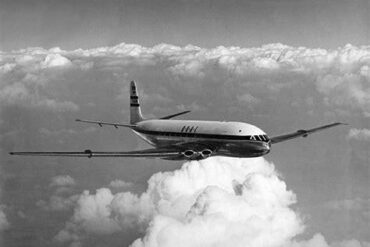
De Havilland Comet — The Jetliner That Taught Aviation About Metal Fatigue
Long before the Boeing 707 or Douglas DC-8 revolutionized international travel, the De Havilland Comet became the world’s first commercial jet airliner. Its sleek design, pressurized cabin, and unprecedented speed represented a dramatic leap into the future. Passengers suddenly experienced quieter flights at higher altitudes and faster travel times than propeller-driven aircraft could ever provide.
But beneath the elegance of the Comet was a fatal engineering vulnerability that engineers of the era barely understood.
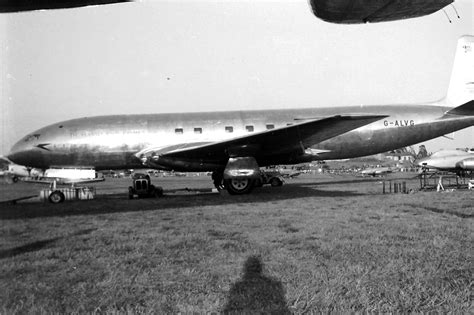
In the early 1950s, a series of mysterious crashes stunned the aviation world. BOAC Flight 781 disintegrated over the Mediterranean Sea near the island of Elba in January 1954. Just months later, South African Airways Flight 201 suffered a nearly identical fate near Naples. Investigators eventually discovered that the aircraft were literally tearing themselves apart in midair.
The culprit was metal fatigue caused by repeated pressurization cycles. Every time the aircraft climbed, cabin pressure increased. Every descent reversed the process. Over time, microscopic cracks formed in the fuselage and gradually expanded until catastrophic structural failure occurred.
The aircraft’s square windows proved especially dangerous because their sharp corners concentrated stress far more intensely than rounded shapes. Riveting techniques also contributed to crack formation in the thin aluminum skin surrounding the windows.
The findings changed aircraft engineering forever. Investigators conducted groundbreaking water tank pressure tests on a retired Comet fuselage, repeatedly simulating pressurization cycles until structural failure occurred. Those experiments became one of the most influential safety investigations in aerospace history.
Modern jetliners now universally feature rounded windows because of the Comet disasters. The accidents also established rigorous fatigue testing standards and helped create the fail-safe structural design philosophy still used in aviation today.
Although the Comet never fully recovered commercially, its painful lessons laid the foundation for the safe jet age that followed.
Boeing 787 Dreamliner — When Revolutionary Technology Triggered a Global Grounding
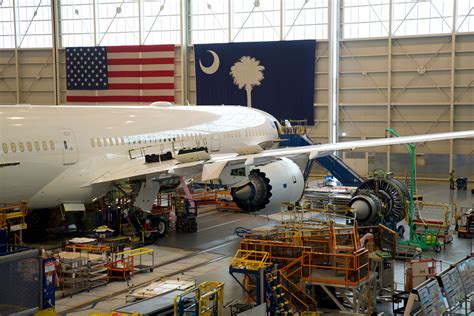
The Boeing 787 Dreamliner was marketed as one of the most technologically advanced commercial aircraft ever produced. Its composite fuselage, advanced avionics, improved fuel efficiency, and electrically driven systems promised to redefine long-haul aviation.
Instead, only a few years after entering service, the aircraft became the center of a frightening battery crisis that triggered the first worldwide grounding of a commercial fleet in decades.
In January 2013, a Japan Airlines 787 parked at Boston Logan International Airport experienced a battery fire in its auxiliary power unit. Thick smoke poured from the aircraft while firefighters struggled to contain the blaze. Just days later, an All Nippon Airways Dreamliner made an emergency landing in Japan after crews detected smoke and burning odors linked to battery malfunction.
The incidents raised alarming questions about Boeing’s decision to use large lithium-ion batteries in a commercial airliner. While the batteries offered major weight and efficiency advantages, they also carried the risk of thermal runaway — a chain reaction where overheating cells ignite uncontrollably.
Authorities feared that an uncontrolled battery fire in flight could become catastrophic. Regulators quickly grounded the entire global Dreamliner fleet while investigators searched for answers.
The crisis represented a massive embarrassment for Boeing because the 787 had already suffered years of delays and production problems before entering service. The battery failures threatened the credibility of the entire program.
Engineers ultimately redesigned the battery system with multiple layers of containment and protection. Boeing introduced improved manufacturing oversight, enhanced insulation, stainless steel containment boxes, and external venting systems capable of directing smoke and fire outside the aircraft.
The Dreamliner eventually returned to service and later became commercially successful. Yet the 2013 grounding remains one of the clearest examples of how revolutionary technologies can introduce unforeseen risks when adopted too aggressively.
The 787 story also reinforced a hard truth within aerospace engineering: innovation without exhaustive redundancy testing can rapidly become a safety nightmare.
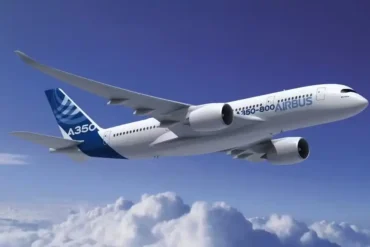
Airbus A380 — Structural Cracks Inside the World’s Largest Passenger Jet
When the Airbus A380 entered service, it symbolized the peak of modern commercial aviation ambition. The double-deck superjumbo was designed to dominate high-capacity international routes with unmatched passenger comfort and enormous carrying capability. Airlines envisioned the aircraft as the future of global hub-to-hub travel.
But only a few years into service, troubling structural issues began to emerge inside the aircraft’s massive wings.
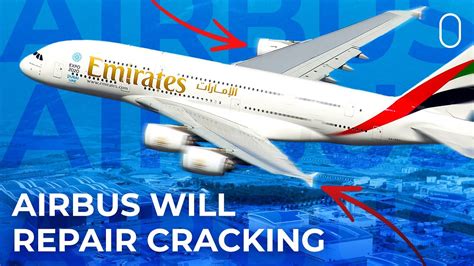
The problems first gained attention after a Qantas A380 suffered a dramatic engine failure in 2010. During subsequent inspections, engineers discovered cracks inside the wing rib structures. The issue affected aluminum brackets within the composite wing assembly and raised fears about long-term structural durability.
Further investigations revealed that a combination of material stress, fatigue, and manufacturing complexity contributed to the cracking problem. Because the A380 relied heavily on advanced composite structures, the findings sparked broader industry concerns about how new materials behaved under prolonged operational stress.
Regulators ordered mandatory inspections across the global fleet in 2012. Airbus eventually redesigned portions of the wing structure and replaced affected components with improved aluminum configurations on later aircraft.
The repair program cost hundreds of millions of dollars and created additional delays for an aircraft program already struggling economically. Although the cracks did not lead to catastrophic accidents, they damaged confidence in the aircraft’s long-term maintenance viability.
The A380’s challenges extended beyond structural engineering. Airlines increasingly shifted toward smaller, fuel-efficient twin-engine aircraft capable of operating point-to-point routes instead of relying on massive hub systems. The superjumbo gradually became less practical in a changing aviation market.
Despite its engineering beauty and passenger appeal, the A380 ultimately became one of aviation’s most expensive commercial disappointments. Production ended in 2021, marking the conclusion of one of the boldest gambles in aerospace history.
Concorde — The Supersonic Dream Destroyed by One Catastrophic Accident
Few aircraft have ever captured the imagination of the public quite like Concorde. The sleek supersonic jet represented speed, luxury, and technological prestige unlike anything else in commercial aviation. Flying faster than the speed of sound, Concorde reduced transatlantic travel times dramatically and became an icon of elite international travel.
For decades, the aircraft maintained an impressive safety record. Then, in July 2000, a horrific chain of events brought the entire era of supersonic passenger flight crashing down.
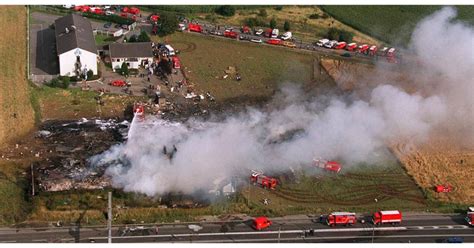
Air France Flight 4590 departed Paris Charles de Gaulle Airport bound for New York. During takeoff, the aircraft struck a titanium strip that had fallen onto the runway from a Continental Airlines DC-10 moments earlier. The debris caused a tire to explode violently.
Fragments of rubber slammed into the underside of the wing with devastating force. The impact triggered a shockwave that ruptured a fuel tank, spraying fuel across the aircraft. Sparks from damaged landing gear ignited the fuel almost instantly, engulfing the left side of the aircraft in flames.
Witnesses watched in horror as the Concorde struggled to climb while trailing fire. Engine power rapidly deteriorated, landing gear could not retract properly, and the aircraft lost lift before crashing into a hotel near the airport.
All 109 people onboard died along with four individuals on the ground.
Although the accident resulted from an extraordinarily rare chain of failures, the damage to public confidence proved irreversible. Even after extensive safety modifications, passenger demand collapsed. Airlines could no longer justify the immense operating costs of the aging supersonic fleet.
Concorde retired permanently in 2003, effectively ending commercial supersonic travel for a generation.
The tragedy demonstrated how even a single catastrophic accident can destroy public trust in an aircraft whose operational economics are already fragile.
McDonnell Douglas DC-10 — The Widebody That Became Synonymous With Disaster
The McDonnell Douglas DC-10 remains one of the most controversial commercial aircraft ever built. While many pilots praised its performance and capabilities, the aircraft developed a deeply troubled reputation following a series of catastrophic accidents tied to design flaws and maintenance vulnerabilities.
No other airliner became so strongly associated with deadly structural failures during its early years.
One of the DC-10’s most infamous weaknesses involved its outward-opening cargo door design. Faulty latching mechanisms could allow the door to fail during flight, causing explosive decompression. In 1974, Turkish Airlines Flight 981 crashed into the Ermenonville Forest near Paris after a cargo door blew open shortly after departure.
The decompression collapsed part of the cabin floor, severing critical flight control cables. The crew lost control completely, and all 346 people onboard died. At the time, it was the deadliest aviation disaster in history.
Yet the DC-10’s darkest moment came five years later with American Airlines Flight 191.
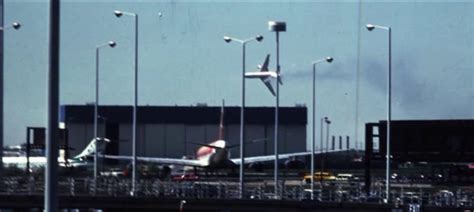
Shortly after takeoff from Chicago O’Hare International Airport in May 1979, the aircraft’s left engine and pylon assembly detached from the wing. The separation destroyed hydraulic systems and critical electrical connections while damaging the wing’s leading-edge devices.
The pilots suddenly lost essential flight information and control capability. The aircraft rolled sharply and crashed moments later, killing all 271 people onboard along with two people on the ground.
Investigators later determined that improper maintenance procedures contributed significantly to the engine separation. However, the accident intensified concerns that the aircraft’s design lacked sufficient tolerance for maintenance-related errors.
Public confidence in the DC-10 collapsed almost overnight. The Federal Aviation Administration temporarily grounded the fleet, and media coverage heavily branded the aircraft as dangerously flawed.
Although later modifications and operational improvements eventually restored the DC-10’s safety record, the stigma never fully disappeared. The aircraft became a lasting example of how design weaknesses, maintenance shortcuts, and public perception can combine to devastate an airplane’s reputation.
The Lasting Legacy of Aviation’s Most Troubled Airliners
Every aircraft on this list changed aviation permanently, though not always in the way manufacturers intended. Some introduced revolutionary technology before the industry was fully prepared to manage the risks. Others became victims of design compromises, overlooked engineering flaws, or corporate decisions driven by competitive pressure.
Yet the painful reality is that modern aviation safety standards were often forged through catastrophe. Rounded aircraft windows, advanced fatigue testing, redundant flight systems, battery containment structures, improved certification oversight, and stricter maintenance protocols all emerged because earlier aircraft exposed dangerous weaknesses.
Commercial flying today remains extraordinarily safe compared with previous decades precisely because the industry learned from disasters involving aircraft like the Comet, DC-10, Concorde, 787 Dreamliner, A380, and 737 MAX.
But these aircraft also serve as reminders that aviation progress is never guaranteed. Every new technological leap introduces risks that engineers, regulators, and airlines must confront carefully. The margin for error at 35,000 feet has always been brutally small.
And when that margin disappears, the consequences make headlines around the world for all the wrong reasons.