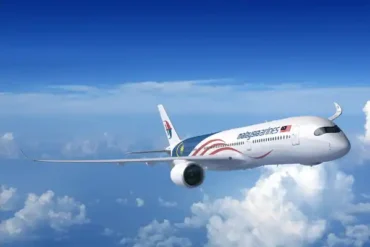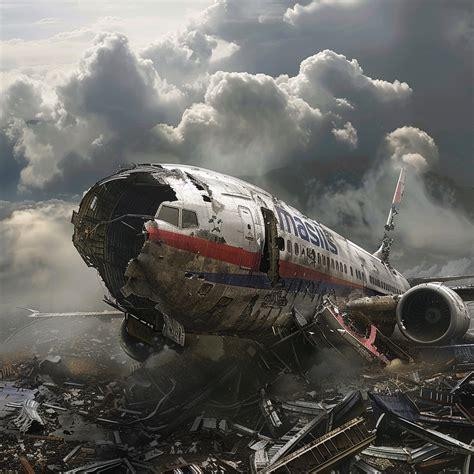
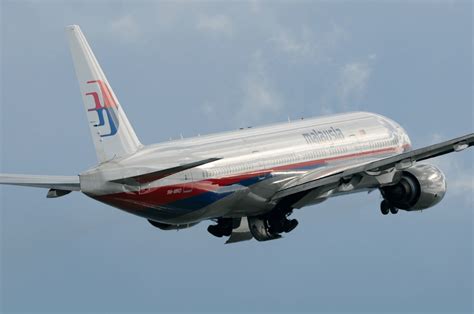
Malaysia Airlines Flight 370 (MH370), a Boeing 777-200ER operating under the registration 9M-MRO, vanished without a trace on 8 March 2014, leaving the world stunned and aviation experts grappling with an unprecedented mystery. With 239 lives aboard—227 passengers and 12 crew members—the flight was en route from Kuala Lumpur to Beijing when it inexplicably deviated from its planned trajectory and disappeared from radar. The aircraft’s last known communication occurred at 01:19 MYT, and from that point, a sequence of radar data and satellite signals would form the fragile backbone of the globe’s most extensive and expensive aviation search.
The Night of Disappearance: A Timeline of Vanishing
Flight MH370 departed from Kuala Lumpur International Airport at 00:41 MYT. Everything proceeded normally until 01:19 MYT when co-pilot Fariq Abdul Hamid delivered a calm “Good night, Malaysian three-seven-zero” as the aircraft approached Vietnamese airspace. Moments later, the aircraft’s transponder was disabled, and it vanished from civilian radar.
Military radar would later track the plane veering westward over the Malay Peninsula, looping around Penang Island, and proceeding into the Andaman Sea. The final military radar contact came at 02:22 MYT, positioning the aircraft approximately 200 nautical miles northwest of Penang. No distress signal was sent. No squawk code. No sign of trouble. The Boeing 777—considered one of the safest aircraft ever built—simply disappeared.
The Global Search: From the South China Sea to the Indian Ocean
Initial searches focused on the Gulf of Thailand and South China Sea, aligning with the aircraft’s original flight path. However, after Malaysian military radar data was analyzed, efforts shifted toward the Strait of Malacca and later, the remote southern Indian Ocean. The turning point came when British satellite firm Inmarsat revealed that MH370 had continued flying for six more hours, regularly pinging a satellite every hour. These automated signals—dubbed “handshakes”—allowed experts to develop two possible corridors: one northward, stretching into Central Asia, and one southward, deep into the Indian Ocean.
The northern arc was quickly dismissed due to the lack of radar detection in heavily monitored airspaces. Focus then shifted south. On 17 March 2014, the official search was moved to an area southwest of Perth, Australia, believed to be MH370’s final resting place.
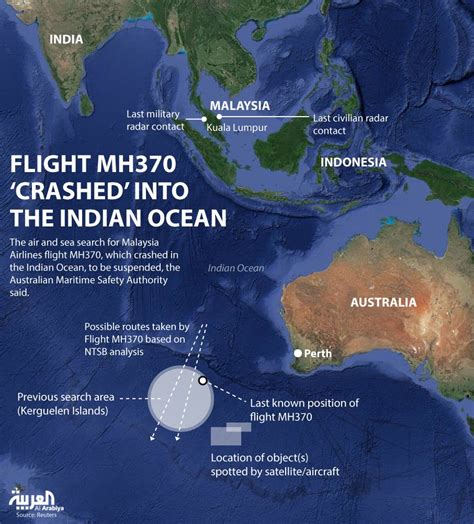
Between October 2016 and January 2017, a 120,000 km² underwater search zone was painstakingly scanned using bathymetric mapping and high-resolution sonar. No trace of the aircraft was found. However, in 2015 and 2016, multiple pieces of confirmed MH370 debris began washing up along the western Indian Ocean, including parts of the wing found on Réunion Island on 29 July 2015. These findings confirmed that the aircraft had indeed crashed, but the main wreckage remained elusive.
Financial and Logistical Scope: An Unprecedented Operation
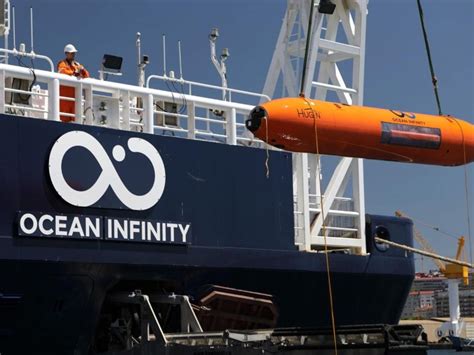
The search for MH370 became the most expensive in aviation history, costing an estimated US$155 million, jointly funded by Malaysia (58%), Australia (32%), and China (10%). When official efforts concluded in 2017 without success, the U.S.-based private firm Ocean Infinity initiated a new mission in January 2018 on a “no-find, no-fee” basis. Despite advanced autonomous underwater vehicles and targeted analysis, this second search—spanning until June 2018—also yielded no results.
Suspects and Theories: From Mechanical Failure to Deliberate Action
The Australian Transport Safety Bureau (ATSB), along with the Joint Investigation Team, conducted extensive analysis of satellite data, fuel reserves, autopilot settings, and simulator data. The most plausible scenario endorsed by the ATSB involves a hypoxia event—a loss of cabin pressure that incapacitated the crew and passengers. Under this theory, the aircraft continued on autopilot until it ran out of fuel and crashed into the ocean between 08:19 and 09:15 MYT.
Yet alternative theories persist. From mechanical failure to hijacking to pilot involvement, speculation remains abundant. The most scrutinized figure is Captain Zaharie Ahmad Shah, a seasoned pilot with 18,365 flight hours. His home flight simulator showed a deleted route similar to MH370’s southern trajectory. While investigators stopped short of assigning blame, Zaharie remains central to the human-sabotage hypothesis.
Other theories—ranging from military shootdowns to cargo fire, electrical malfunctions, and even cyber hijackings—have all been explored with varying degrees of credibility. Two Iranian passengers traveling on stolen passports drew early suspicion but were eventually ruled out as unrelated to any foul play.
The Aircraft and Its Occupants
The Boeing 777-200ER involved had been in service since May 2002, accumulating over 53,000 flight hours. It was powered by Rolls-Royce Trent 892 engines and had no major mechanical incidents beyond a 2012 tail strike while taxiing. The cabin was filled with people from 14 different nations, including:
- 153 Chinese nationals, among them 19 artists and cultural staff returning from a Beijing exhibition.
- 38 Malaysians, including crew members.
- 20 employees of Freescale Semiconductor, an American tech firm based in Texas.
First Officer Fariq Abdul Hamid, with 2,763 flight hours, was on his final training flight, adding another layer of tragedy to this mission.
The Legacy and Regulatory Response
The MH370 tragedy exposed severe vulnerabilities in global aviation, particularly over remote oceanic regions. Among the most alarming discoveries was that aircraft flying over vast oceans could disappear without trace, and that cockpit voice recorders (CVRs) had only two hours of recording time, often overwritten by routine chatter.
In response, the International Civil Aviation Organization (ICAO) and global regulators enforced sweeping changes:
- Extended CVR recording times.
- Longer battery lives for underwater locator beacons.
- Mandatory real-time position tracking for new aircraft, effective 2020.
- Provisions for flight data streaming in emergencies to prevent total data loss.
These reforms were a direct result of MH370’s disappearance and reflect the industry’s efforts to ensure such a tragedy never occurs again—or at least, is never untraceable.
Final Report and Incomplete Closure
In July 2018, Malaysia issued its final report, a 449-page document that, while thorough, offered no conclusive explanation for MH370’s fate. It confirmed the aircraft was deliberately turned off course but did not determine who was responsible or why.
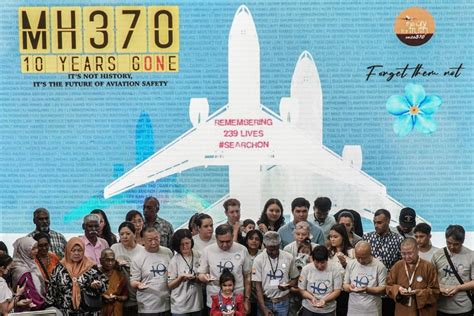
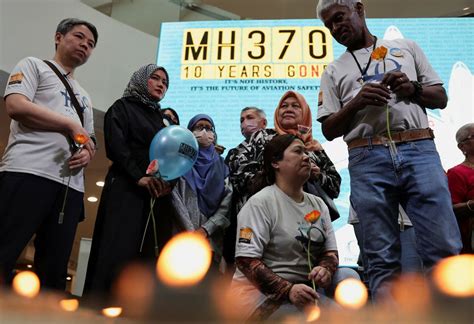
The lack of closure has left families in prolonged grief, haunted by questions that remain unanswered. Vigils continue. Memorials stand along coasts and cities from Kuala Lumpur to Beijing. In an age of ubiquitous connectivity, the idea that a modern aircraft could simply vanish remains a chilling reality.
Conclusion: A Vanishing That Redefined Modern Aviation
The disappearance of Malaysia Airlines Flight 370 is more than an aviation mystery—it is a profound human tragedy, a geopolitical enigma, and a technological wake-up call. Despite the ocean’s vastness and the satellite age’s promise, MH370 reminds us that not all answers lie within reach, and that for all our progress, some stories resist closure.
As the Indian Ocean tides continue their eternal churn, the world waits—perhaps forever—for the final chapter of MH370 to surface.