The annals of American crime are filled with audacious acts, but few captivate the public imagination quite like the daring skyjacking perpetrated by a man known only as D.B. Cooper. On the eve of Thanksgiving, November 24, 1971, this enigmatic figure executed a seemingly flawless plan, extorting a significant ransom before parachuting from a Boeing 727 into the stormy night sky over the Pacific Northwest, vanishing without a trace. The D.B. Cooper hijacking remains the only unsolved case of air piracy in commercial aviation history, a baffling puzzle that has spawned countless theories, amateur investigations, and a legend that endures over half a century later. His true identity, his fate, and the whereabouts of the vast majority of the ransom money remain subjects of intense speculation and ongoing, albeit officially suspended, inquiry.
The Audacious Gambit: Northwest Orient Flight 305
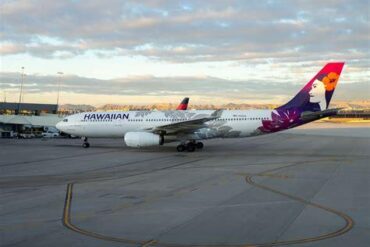
The saga began unremarkably at Portland International Airport. A man, described by eyewitnesses as being in his mid-40s, with dark hair and brown eyes, clad in a dark business suit, white shirt, thin black tie, and a black raincoat, approached the Northwest Orient Airlines counter. Using cash, he purchased a one-way ticket for Flight 305, a short hop to Seattle-Tacoma International Airport (Sea-Tac). He gave his name as “Dan Cooper”. Boarding the Boeing 727-100, FAA registration N467US, Cooper took seat 18-E in the last row. After ordering a bourbon and 7-Up, he waited for the flight to become airborne at 2:50 p.m. PST. The aircraft carried 36 passengers, including Cooper, and a crew of six: Captain William A. Scott, First Officer William “Bill” J. Rataczak, Flight Engineer Harold E. Anderson, and flight attendants Alice Hancock, Tina Mucklow, and Florence Schaffner.
Shortly after takeoff, Cooper handed a note to flight attendant Florence Schaffner, who was seated in a jump seat directly behind him. Schaffner, initially assuming it was a lonely businessman’s phone number, placed it in her purse unopened. Cooper, leaning closer, urged her, “Miss, you’d better look at that note. I have a bomb.” The note, neatly printed in all capital letters with a felt-tip pen, stated, “Miss—I have a bomb in my briefcase and want you to sit by me.” Schaffner complied, and upon her quiet request to see the bomb, Cooper briefly opened his attaché case, revealing two rows of four red cylinders, wires, and a large cylindrical battery – what she took to be dynamite. He then relayed his demands: $200,000 in negotiable American currency (equivalent to over $1.6 million in 2024), and four parachutes (two main, two reserve), to be delivered upon landing in Seattle. The request for four parachutes was a cunning psychological ploy, implying he might take a hostage, thus discouraging authorities from providing faulty equipment. Schaffner conveyed the demands to the cockpit. Captain Scott alerted Northwest Orient flight operations and air traffic control, who in turn contacted the Seattle Police Department and the FBI. Passengers were informed of a delay due to a “minor mechanical difficulty” as Flight 305 began circling Puget Sound for approximately two hours. This allowed authorities time to assemble the ransom and parachutes and mobilize emergency personnel. Northwest Orient’s president, Donald Nyrop, authorized the ransom payment and ordered full cooperation.
During the holding pattern, flight attendant Tina Mucklow became Cooper’s primary liaison. She later described him as calm, not nervous, and “rather nice,” not cruel or nasty. Cooper seemed familiar with the local terrain, correctly identifying Tacoma from the air and noting McChord Air Force Base’s proximity to Sea-Tac when told the parachutes were sourced from there. He chain-smoked Raleigh filter-tipped cigarettes and ordered another bourbon. When Mucklow asked why he chose Northwest Airlines, he replied, “It’s not because I have a grudge against your airlines, it’s just because I have a grudge,” explaining the flight simply suited his needs. He declined to say where he was from. An interaction with another passenger, described by fellow passenger George Labissoniere as a man in a cowboy hat questioning Mucklow about the delay, reportedly irritated Cooper, who told the man to return to his seat. Mucklow’s account differed slightly, stating a passenger merely asked for a magazine. This “cowboy” was never identified or interviewed by the FBI. The ransom, 10,000 unmarked $20 bills, mostly with “L” serial numbers from the Federal Reserve Bank of San Francisco, weighing approximately nineteen pounds, was gathered from Seattle First National Bank and photographed on microfilm by the FBI. The parachutes were obtained from a local skydiving school and a stunt pilot.
Exchange and a Second Flight into Darkness
At 5:46 p.m. PST, Flight 305 landed at Sea-Tac. Cooper directed Captain Scott to park the aircraft on a dimly lit, remote taxiway. He demanded that a single airline representative, Al Lee, Northwest’s Seattle operations manager (who changed into civilian clothes to avoid being mistaken for law enforcement), deliver the money and parachutes via the aircraft’s front door using mobile stairs. Mucklow retrieved the money bag and, after Cooper confirmed its contents, the 35 other passengers were allowed to deplane. Cooper had also tried to tip Mucklow and the other two flight attendants earlier, which they declined due to company policy; Mucklow jokingly asked for some of the ransom money, which Cooper offered, but she again declined. Flight attendants Hancock and Schaffner were also permitted to leave after Mucklow brought the parachutes aboard. Cooper dismissed the parachute instructions Mucklow offered, saying he didn’t need them.
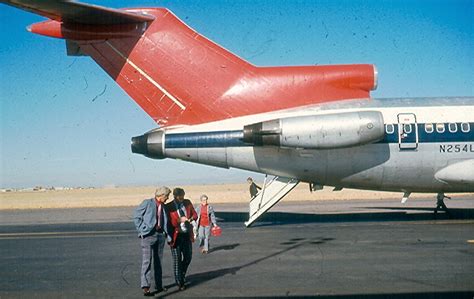
A delay occurred during refueling, frustrating Cooper. He complained the money was in a cloth bag, not the knapsack he requested, and used a pocket knife to cut material from one of the reserve parachutes, apparently to fashion a makeshift money bag. An FAA official’s request for a face-to-face meeting was denied. Cooper then issued his flight plan: a southeast course toward Mexico City, at minimum airspeed (around 100 knots or 115 mph) without stalling, at a maximum altitude of 10,000 feet. Crucially, he specified the landing gear remain deployed, wing flaps be lowered to 15 degrees, and the cabin remain unpressurized. First Officer Rataczak informed him this configuration limited their range to about 1,000 miles, necessitating a refueling stop. They agreed on Reno, Nevada. Cooper also demanded the rear exit door be open and its airstair extended for takeoff, but relented when Northwest officials objected, stating he would lower it once airborne. He insisted Tina Mucklow remain with the flight crew.
Around 7:40 p.m., the Boeing 727, now with only Cooper, Mucklow, Scott, Rataczak, and Anderson aboard, took off from Seattle. Two F-106 fighter jets from McChord Air Force Base and a Lockheed T-33 trainer shadowed the airliner, staying out of Cooper’s view. After takeoff, Cooper told Mucklow to go to the cockpit, close the curtain partition, and not return. Before she left, Mucklow saw Cooper tying something, presumably the money bag, around his waist. She pleaded with him to take the bomb with him; he said he would either disarm it or take it. This was the last time anyone saw D.B. Cooper. At approximately 8:00 p.m., a warning light in the cockpit indicated the aft airstair had been deployed. Captain Scott asked Cooper via intercom if he needed assistance; Cooper’s final, curt reply was, “No.” Around 8:13 p.m., the aircraft’s tail section experienced a sudden upward movement, requiring the pilots to adjust trim. This was believed to be the moment Cooper jumped, likely over southwestern Washington. The crew remained unsure of Cooper’s status until they landed in Reno at 11:02 p.m. with the aft staircase still deployed. FBI agents and local police surrounded the plane, and after a search confirmed Cooper was gone, an FBI bomb squad declared the cabin safe.
The Manhunt and Investigation Begins
The FBI immediately launched an extensive investigation, codenamed NORJAK (Northwest Hijacking). Agents recovered Cooper’s black clip-on tie, his mother-of-pearl tie clip, two of the four parachutes (one opened with lines cut, the other intact), and eight Raleigh cigarette butts from the aircraft. Sixty-six latent fingerprints were also found, but their origin could not be definitively linked to Cooper or were otherwise unidentifiable. Eyewitnesses in Portland, Seattle, and Reno provided descriptions for composite sketches. It was during this initial media frenzy that a reporter for The Oregon Journal, James Long, mistakenly referred to the hijacker as “D.B. Cooper” instead of Dan Cooper, an error quickly picked up by wire services and cemented in public consciousness. Portland police did investigate a local man named D.B. Cooper with a minor police record, but he was swiftly cleared.
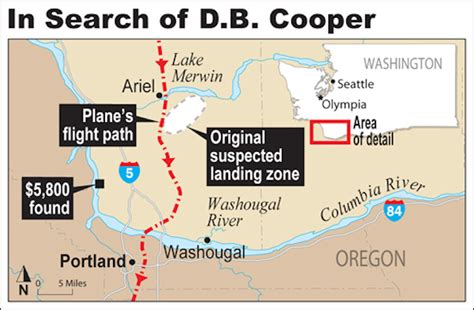
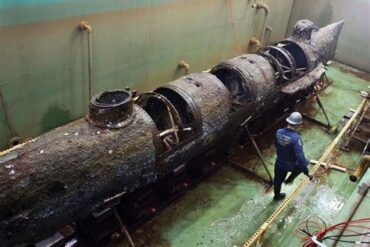
Pinpointing Cooper’s exact jump location proved immensely challenging. Variables included the jet’s fluctuating airspeed, changing wind conditions, and the unknown duration of Cooper’s freefall before deploying his parachute. The F-106 pilots shadowing the 727 saw nothing, unsurprising given the pitch-black, cloudy night. An experimental re-creation, using the same aircraft (N467US) and pushing a 200-pound sled out the aft stairs, reproduced the upward tail pitch noted by the crew, helping to refine the estimated jump time. Initial projections placed Cooper’s landing zone near Ariel, Washington, southeast of Mount St. Helens, around Lake Merwin on the Lewis River. Extensive ground searches by FBI agents, sheriff’s deputies, and later, with the aid of 200 soldiers from Fort Lewis, covered vast areas of Clark and Cowlitz counties in March and April 1972. Helicopters and fixed-wing aircraft scoured the flight path, known as Victor 23. A submarine even searched Lake Merwin’s depths. These efforts yielded no trace of Cooper, the ransom money, or his parachute. One grim discovery during the search was the unrelated remains of a missing teenager, Barbara Ann Derry. In 2019, an FBI report noted a grocery store burglary near Heisson, Washington (within a calculated drop zone), about three hours after Cooper jumped, where only survival items were taken, though the burglar wore military-type boots, unlike Cooper’s described loafers.
Tangible Clues: The Tie and the Money
Among the few pieces of physical evidence, Cooper’s black JCPenney clip-on tie became a significant focus decades later. In 2001, the FBI developed a partial DNA profile from samples on the tie, though it couldn’t be definitively proven the DNA was Cooper’s, as the tie could have acquired DNA from multiple sources before he wore it. In 2009, a group of “citizen sleuths,” the Cooper Research Team (CRT), using electron microscopy, identified numerous particles on the tie. These included Lycopodium spores (possibly from a pharmaceutical product) and, more intriguingly, minute particles of unalloyed titanium, bismuth, antimony, cerium, strontium sulfide, aluminum, and titanium-antimony alloys. These rare-earth and metal particles suggested Cooper might have worked for Boeing, another aerospace firm, a chemical plant, or a metal fabrication facility. Pure titanium was rare in the 1970s, primarily used in aircraft manufacturing or by chemical companies. Cerium and strontium sulfide were linked to Boeing’s supersonic transport project and Portland-area electronics manufacturers like Teledyne and Tektronix. Hair samples found in Cooper’s seat were either deemed not useful or later lost by the FBI. The Raleigh cigarette butts were also destroyed while in FBI custody before DNA could be extracted.
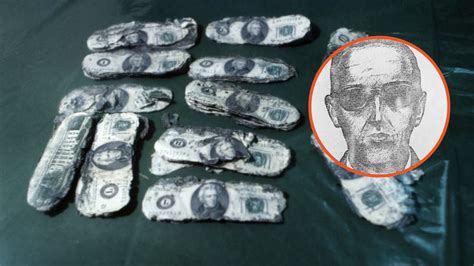
A major break, or perhaps a deepening of the mystery, came on February 10, 1980. Eight-year-old Brian Ingram, vacationing with his family, was raking sand to build a campfire on a Columbia River beach known as Tina Bar (or Tena Bar), about 9 miles downstream from Vancouver, Washington. He uncovered three decaying packets of $20 bills, totaling approximately $5,800. FBI technicians confirmed it was part of Cooper’s ransom money, bundled in rubber bands and arranged in the same order as when given to him. This discovery, miles southwest of the initially presumed Ariel drop zone, reignited public interest. Army Corps of Engineers hydrologists noted the bills’ rounded, matted condition suggested deposition by river action. This supported theories that Cooper landed near the Washougal River, a Columbia tributary upstream from Tina Bar. However, the fact that the bundles remained largely intact and that ten bills were missing from one packet presented contradictions. Geologist Leonard Palmer of Portland State University suggested the money arrived at Tina Bar after a 1974 dredging operation on that section of the Columbia, based on distinct sediment layers. Furthermore, analysis of diatoms (microscopic algae) on the bills in late 2020 indicated they were from species that bloom only in springtime, suggesting the money entered the water months after the November hijacking. The recovered money remains the only confirmed physical evidence found outside the aircraft. After negotiations, the recovered bills were divided between Ingram and Northwest Orient’s insurer, with the FBI retaining some as evidence.
The Parachutes and a Placard
Cooper demanded and received two main (back) parachutes and two reserve (front) parachutes. Earl Cossey, who packed them, described the main parachutes as military-style emergency bailout chutes, designed to open immediately and not steerable. One main parachute (Model NB6) and one reserve parachute were left on the plane. The reserve parachute had been opened and three shroud lines cut from its canopy, possibly for Cooper to secure the money bag. The other reserve parachute, which was missing, was later revealed by Cossey to be a non-functional training “dummy” with its canopy sewn shut, intended only for classroom demonstration. FBI agents speculated Cooper’s lack of experience was shown by taking this unusable chute. However, it was also revealed that neither parachute harness provided had the D-rings necessary to attach a reserve parachute anyway. Cossey speculated Cooper might have used the empty container of the dummy chute as an additional money bag, a theory aligning with Tina Mucklow’s recollection of Cooper attempting to pack money into a parachute container. In November 1978, a deer hunter found an instruction placard for lowering the 727’s aft airstair near a logging road about 13 miles east of Castle Rock, Washington, north of Lake Merwin but within the flight’s basic path, adding another small piece to the puzzle.
FBI Profiling: Who Was D.B. Cooper?
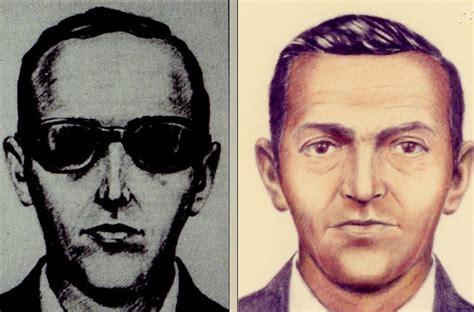
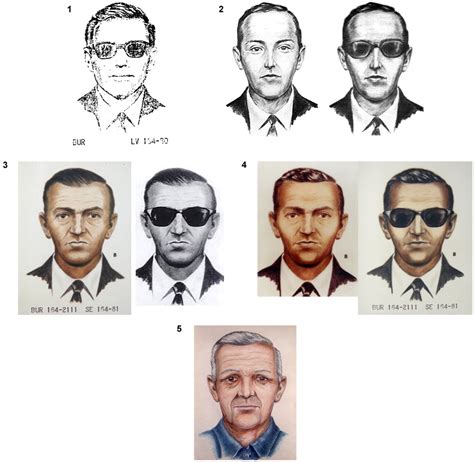
Based on eyewitness accounts from flight attendants Schaffner and Mucklow, Cooper was around 5 feet 10 inches tall, 170-180 pounds, with an olive complexion, brown eyes, and short, dark, combed-back hair, speaking without a discernible accent. The FBI developed several composite sketches; the final revised Composite B sketch from early 1973 was considered the best likeness. FBI profilers believed Cooper was likely an Air Force veteran, given his familiarity with parachutes (specifically military-style), aviation terminology, and the Seattle area, including McChord AFB. His calm demeanor, meticulous planning (retrieving notes, demanding four parachutes), and ability to adapt suggested intelligence and experience, not an impulsive criminal. He was likely in desperate financial straits. His alias, “Dan Cooper,” was theorized to come from a popular French-language Belgian comic book series featuring a Royal Canadian Air Force test pilot hero named Dan Cooper, one cover of which depicted the character skydiving. This led to speculation the hijacker might have encountered the comics during a military tour in Europe and possibly spoke French.
Cooper demonstrated specific knowledge of the Boeing 727, including its ability to fly slowly at low altitude with 15-degree flaps and, crucially, that its aft airstair could be opened in flight—a feature not widely known, even among civilian crews, as the switch in the cabin could not be overridden from the cockpit. This led to speculation he might have known of CIA operations using 727s for covert drops during the Vietnam War. However, former lead FBI investigator Larry Carr later suggested Cooper might have been an Air Force cargo loader, familiar with parachutes and dispatching items from planes but not necessarily an expert skydiver.
Cooper’s Fate: Survived or Perished?
The FBI largely maintained that Cooper likely did not survive the jump. Reasons cited included his apparent lack of expert skydiving skills for such a risky jump (pitch-black night, rain, 172 mph wind, wearing loafers and a trench coat), inadequate equipment (no helmet, insufficient clothing for the -9°C wind chill at 10,000 feet), the rugged, forested terrain, his lack of knowledge of the specific landing area, and the fact the ransom money was never spent. Carr famously stated, “Diving into the wilderness without a plan, without the right equipment, in such terrible conditions, he probably never even got his chute open.” The 1980 eruption of Mount St. Helens likely obliterated any remaining clues in a significant portion of the potential landing zone.
However, not all investigators agreed. Some believed he could have survived, particularly if he landed in a less hostile area than initially presumed. The survival of several copycat hijackers who jumped in similar or even worse conditions (e.g., Martin McNally, Frederick Hahneman, Richard LaPoint) forced a reevaluation. McNally, for instance, jumped at night over Indiana with even less preparation and survived with minor injuries, though he lost his ransom. This led former lead agent Ralph Himmelsbach to revise his initial assessment of Cooper’s survival chances upwards. Despite the statute of limitations for air piracy and violation of the Hobbs Act, a Portland grand jury returned an indictment in absentia against “John Doe, a.k.a. Dan Cooper” in November 1976, ensuring prosecution could proceed if he were ever found.
The Investigation Suspended
On July 8, 2016, after 45 years of active investigation and reviewing over a thousand serious suspects, the FBI officially announced it was suspending its active investigation into the D.B. Cooper case. The decision was made to redirect resources to higher priority cases. Local field offices would still accept legitimate physical evidence, specifically related to the parachutes or ransom money. The extensive 66-volume case file was preserved for historical purposes at FBI headquarters and made available on the FBI website. The crime remains a unique, unsolved chapter in aviation history.
A Gallery of Suspects
Over the decades, numerous individuals have been proposed as D.B. Cooper, ranging from plausible candidates to deathbed confessors and publicity seekers. Here are some of the most notable:
- Ted Braden (1928–2007): A Special Forces commando in Vietnam, master skydiver, and convicted felon. Braden was reportedly a daredevil with experience in HALO jumps and was involved in “shady deals” for money. He deserted his unit in 1966 and had a criminal record post-military service. His physical description and skills matched Cooper’s profile, and he was known to be in the Pacific Northwest region. Many in the Special Forces community believed him to be Cooper.
- Kenneth Christiansen (1926–1994): A former Army paratrooper and Northwest Orient purser. His brother Lyle became convinced Kenneth was Cooper after watching a documentary. Christiansen smoked, liked bourbon, and was based in Seattle. Flight attendant Florence Schaffner said photos of him resembled Cooper more than other suspects, but she couldn’t be certain. The FBI considered him a poor match physically and lacked direct evidence.
- Lynn Doyle “L.D.” Cooper (1931–1999): A Korean War veteran whose niece, Marla Cooper, recalled him and another uncle planning something mischievous with walkie-talkies around the time of the hijacking. L.D. returned home with a bloody shirt, attributed to a car accident. He was reportedly obsessed with the Dan Cooper comic book hero. However, DNA from a guitar strap he made did not match the partial DNA from the hijacker’s tie.
- Barbara Dayton (1926–2002), formerly Robert Dayton: A recreational pilot and World War II veteran who underwent gender reassignment surgery in 1969. Dayton claimed to have staged the hijacking (presenting as a man) to get back at the airline industry for preventing her from becoming a commercial pilot. She later recanted her story and did not closely match the physical description.
- William Pratt Gossett (1930–2003): A Marine Corps, Army, and Army Air Forces veteran with jump training and wilderness survival experience. He was reportedly obsessed with the Cooper case and allegedly told his sons a safe deposit box key contained the ransom money. The FBI found no direct evidence linking him to the crime or placing him in the Pacific Northwest at the time.
- John List (1925–2008): An accountant who murdered his family in New Jersey 15 days before the hijacking, withdrew $200,000 from his mother’s bank, and vanished. The timing and sum were suspicious, but after his capture in 1989, List denied involvement, and the FBI cleared him.
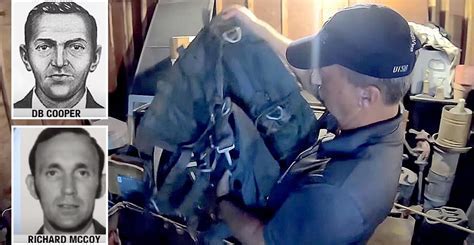
- Richard McCoy Jr. (1942–1974): An Army veteran and skydiver who staged a similar copycat hijacking of a Boeing 727 in April 1972, demanding $500,000 and parachutes. He was caught, but later escaped prison and was killed in a shootout with FBI agents. While some, including the agent who killed him, believed McCoy was Cooper, the FBI officially discounted him due to physical mismatches, superior skydiving skills compared to Cooper’s presumed level, and evidence placing him elsewhere during the Cooper hijacking. Eyewitnesses from Flight 305 also stated McCoy was not Cooper.
- Sheridan Peterson (1926–2021): A World War II Marine veteran, smokejumper, and former Boeing technical editor in Seattle. His appearance, age, and risk-taking nature made him an early suspect. Peterson often teased the media about his potential involvement but claimed to be in Nepal during the hijacking. DNA analysis from the tie reportedly did not match Peterson’s.
- Robert Rackstraw (1943–2019): A retired pilot and ex-convict with Army helicopter crew experience in Vietnam and parachute training. He came to the FBI’s attention in 1978. Despite some physical resemblance (though younger than Cooper in 1971), the FBI eliminated him in 1979 due to lack of direct evidence. Renewed interest arose in 2016 due to a book and TV program, but flight attendants did not identify him, and Rackstraw denied involvement, calling the claims a stunt.
- Walter Reca (1933–2014): A former military paratrooper and intelligence operative proposed by his friend Carl Laurin in 2018, based on recorded deathbed confessions. Reca claimed to have landed near Cle Elum, Washington, far from the accepted flight path and ransom money discovery site. His extensive skydiving experience also contradicted the FBI’s profile of Cooper.
- Duane Weber (1924–1995): A World War II Army veteran with a criminal record for burglary and forgery. His widow, Jo, reported his deathbed confession: “I am Dan Cooper.” He drank bourbon, chain-smoked, and his handwriting was allegedly found in a book about Cooper. However, his fingerprints and DNA did not match evidence from the plane or tie.
Lasting Impact: Aviation Security and Legacy
The D.B. Cooper hijacking, along with a spate of copycat attempts in 1972, had a profound and lasting impact on aviation security. Despite the existing Sky Marshal Program, the ease with which Cooper executed his plan highlighted vulnerabilities. In early 1973, the Federal Aviation Administration (FAA) mandated that airlines search all passengers and their bags, a measure upheld by courts despite Fourth Amendment challenges. These universal searches dramatically reduced hijacking incidents.
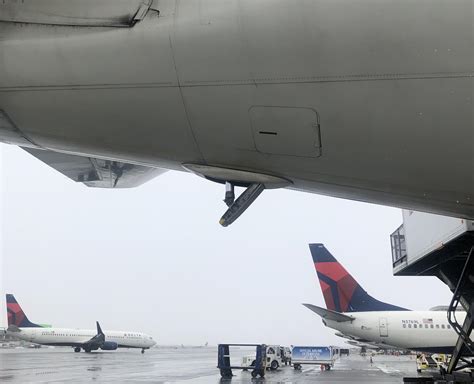
Aircraft design also saw direct changes. All Boeing 727s were retrofitted with a device known as the “Cooper Vane” – a spring-loaded aerodynamic wedge that physically prevents the aft airstair from being lowered while the aircraft is in flight. Cockpit doors were also mandated to have peepholes, allowing crews to observe the cabin without opening the door. The specific aircraft involved, N467US, was sold by Northwest Orient in 1978 to Piedmont Airlines, then to Key Airlines in 1984, serving in the Air Force’s civilian charter fleet before being scrapped for parts in Memphis in 1996.
The D.B. Cooper case transcended its criminal origins to become a part of American folklore. Termed a “rotten sleazy crook” by Himmelsbach, Cooper nonetheless inspired a cult following, celebrated in songs, films, books, and novelty merchandise. The enduring mystery of his identity and fate continues to fuel speculation and fascination, ensuring that the legend of D.B. Cooper, the audacious skyjacker who leaped into history, will likely persist for generations to come. Annual gatherings like CooperCon attest to the unwavering public interest in solving one of America’s most captivating unsolved crimes.