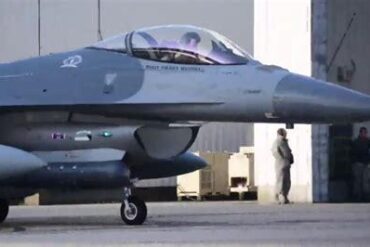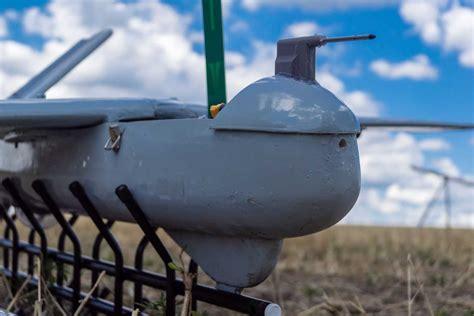
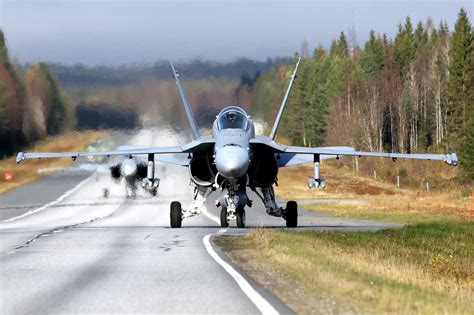
Earlier this morning, Finland’s aviation network faced a sudden and highly unusual disruption after authorities issued an emergency drone alert over the Helsinki region, forcing the temporary closure of airspace surrounding Helsinki Vantaa Airport (HEL). The incident triggered an immediate military response, including the scrambling of Finnish Air Force F/A-18 fighter jets, as defense officials worked to determine whether unidentified drones posed a direct national security threat.
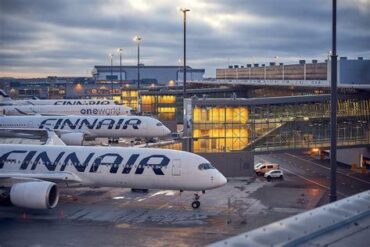
The three-hour closure created widespread operational disruption at Finland’s busiest airport, particularly during one of the most critical arrival periods for intercontinental traffic. Helsinki Airport serves as the primary long-haul gateway for Finnair, whose extensive Asia-focused network funnels dozens of early morning arrivals into the Nordic hub each day. As authorities halted operations between 4:00 AM and 7:00 AM local time, inbound aircraft approaching Finland were suddenly forced to divert across Northern Europe.
The emergency unfolded against a tense geopolitical backdrop. Finland’s proximity to Russia, combined with increasing military drone activity observed across Europe since the Russia-Ukraine conflict intensified, elevated the seriousness of the alert. Finnish officials reportedly warned that “possibly more than one drone” may have entered or remained inside Finnish airspace, prompting rapid coordination between aviation authorities, defense forces, and air traffic controllers.
Emergency Drone Warning Triggers Major Airspace Closure
Authorities first issued the drone warning for the Uusimaa region at approximately 3:49 AM local time. Within minutes, Finnish aviation officials implemented a complete temporary airspace restriction over the Helsinki metropolitan area. The swift decision underscored how seriously Nordic defense agencies now treat unidentified aerial activity near strategic infrastructure.
Helsinki Vantaa Airport, located north of the Finnish capital, immediately suspended arrivals and departures. Although the closure lasted only three hours, the timing amplified its impact dramatically. Early morning operations at HEL are heavily concentrated with long-haul arrivals from Asia, including flights from Tokyo, Seoul, Singapore, Hong Kong, and other major cities connected through Finnair’s expanding Asia-Pacific strategy.
After military and aviation authorities concluded that there was no “direct military threat,” the airspace restriction was lifted shortly after 7:00 AM, with airport operations resuming at approximately 7:19 AM local time. Even after reopening, however, disruption cascaded throughout the network for hours.
According to operational tracking data, at least three departures and four arrivals were canceled, while more than 50 additional flights experienced delays. Finavia, Finland’s airport operator, warned travelers that morning disruptions would likely continue affecting schedules throughout the remainder of the day.
Long-Haul Flights Forced Into Diversions Across Northern Europe
The most visible consequence of the closure involved multiple long-haul aircraft already nearing Finnish airspace when the restrictions took effect. Several widebody jets carrying hundreds of passengers each were forced to divert to alternate airports across Sweden, Estonia, and northern Finland.
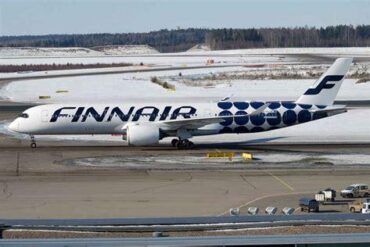
Among the most significant diversions were two Finnair Airbus A350-900 services arriving from Japan. Flight AY62 from Tokyo Haneda, originally scheduled to land in Helsinki at 4:40 AM local time, diverted to Stockholm Arlanda Airport before later continuing to Finland once restrictions were lifted. Another Finnair service, AY74 from Tokyo Narita, rerouted northward to Rovaniemi in Finnish Lapland.

Additional diversions quickly followed as the closure window overlapped with Helsinki’s busiest long-haul arrival bank. A Finnair flight from Seoul Incheon and a Sichuan Airlines service from Chengdu diverted to Tallinn. Other Finnair services arriving from Hong Kong and Singapore rerouted to Stockholm, while an Osaka-bound aircraft also landed in Rovaniemi.
Short-haul traffic faced disruption as well. Tallinn handled additional regional arrivals, including a Sunclass Airlines flight from Chania, while Stockholm absorbed further overflow traffic from Southern Europe.
Flight monitoring platform Flightradar24 later confirmed that at least nine inbound flights were diverted during the emergency. Even several hours after reopening, Helsinki arrivals continued operating under elevated delay conditions.
Helsinki Airport’s Strategic Importance Magnified The Impact
The disruption highlighted the enormous strategic importance of Helsinki Vantaa Airport within Northern European aviation. As Finland’s main international gateway and Finnair’s central hub, the airport handles the overwhelming majority of the nation’s commercial passenger traffic.
In 2025 alone, Helsinki Airport processed nearly 17 million passengers, vastly outperforming every other airport in Finland. The facility’s dominance becomes even more apparent when compared to Rovaniemi, the country’s second-busiest airport, which handled just over one million passengers during the same period.
Current aviation scheduling data shows that more than 6,400 commercial passenger departures are planned from Helsinki during May alone, representing over one million available seats. Finnair accounts for nearly 78% of those departures, reinforcing the airline’s dependence on smooth and uninterrupted operations at its home hub.
Because Helsinki occupies a geographically efficient position between Europe and Asia, the airport has become one of the continent’s most important connecting hubs for eastbound traffic. Any interruption during the tightly coordinated morning arrival window can create ripple effects extending across Europe, Asia, and North America.
Rising Drone Concerns Reshape European Aviation Security
The Helsinki incident reflects a growing aviation security challenge facing airports and governments worldwide. Drone technology has evolved rapidly in recent years, with increasingly sophisticated unmanned aircraft capable of traveling longer distances, flying at higher altitudes, and operating with minimal detection.
Military planners and aviation authorities across Europe have become especially sensitive to unidentified drone activity near airports, government facilities, and energy infrastructure. The widespread deployment of drones in modern warfare has transformed what once appeared to be a minor nuisance into a potentially serious security concern.
Finland’s response demonstrated how rapidly modern defense protocols can escalate when unidentified aerial activity intersects with civilian aviation corridors. The immediate deployment of fighter aircraft, combined with the temporary shutdown of one of Northern Europe’s busiest airports, illustrated the increasingly blurred line between civil aviation safety and national defense preparedness.
While officials ultimately determined that no direct military threat existed, the operational shockwaves from the incident exposed how vulnerable even highly advanced aviation hubs remain to sudden airspace security alerts.