The Middle East’s skies have fallen abruptly silent. Following coordinated US–Israel strikes on Iranian targets, a sweeping cascade of airspace closures has paralyzed one of the world’s most critical aviation corridors. What began as a military escalation rapidly metastasized into a full-scale aviation emergency, grounding fleets, stranding tens of thousands of passengers, and forcing global airlines into chaotic rerouting decisions with immediate financial and operational consequences.
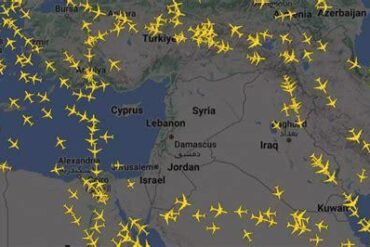
Israel announced “pre-emptive” strikes in the early hours, with Washington soon confirming its involvement. Within minutes, Iran closed its airspace. Israel followed. Then Bahrain, Jordan, Kuwait, Iraq, Qatar, and the United Arab Emirates enacted similar measures. Syria partially restricted traffic near its border. In practical terms, this meant that an enormous swath of controlled airspace—normally crisscrossed by hundreds of long-haul aircraft every hour—was rendered inaccessible.
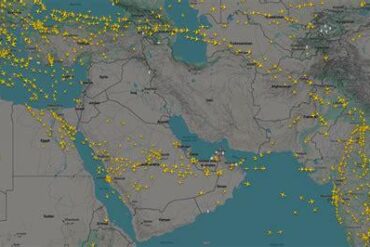
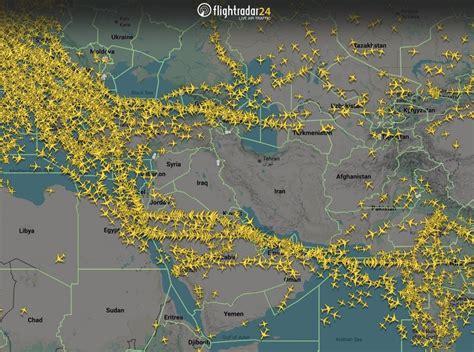
By mid-morning UTC, flight tracking platforms showed an extraordinary sight: Iranian airspace completely empty. Aircraft already en route were ordered to divert or return to their points of origin. The shock rippled outward across continents.
Airlines Suspend Middle East Services as Diversions Multiply
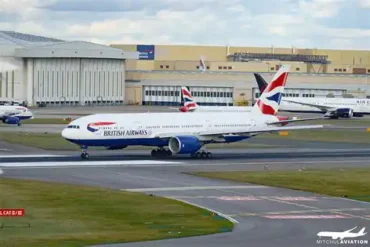
Global carriers reacted with urgency. European heavyweights including Air France, British Airways, Lufthansa, KLM, and Iberia suspended services to affected destinations. Turkish Airlines and Wizz Air implemented wide-ranging cancellations. Several airlines extended suspensions into the following month, signaling that this disruption may not be fleeting.
Middle Eastern giants were hit hardest. Emirates canceled nearly 87% of scheduled flights, while flydubai approached an 89% cancellation rate. Etihad Airways and Gulf Air reported substantial reductions. Even carriers maintaining limited operations warned of significant network instability. The scale is staggering: hundreds of aircraft grounded within hours.
The human cost unfolded in parallel. An American Airlines service from Philadelphia to Doha turned back more than six hours after departure, transforming into a transatlantic “flight to nowhere.” An Air Canada flight bound for Dubai remained airborne for over ten hours before diverting. Similar scenarios played out across Europe, North America, and Asia as crews recalculated fuel margins and alternates in real time.
Airline operations centers—normally meticulous orchestras of scheduling precision—shifted into crisis mode. Crews ran against duty-time limitations. Aircraft ended up out of position. Maintenance rotations fractured. Each diversion compounds into cascading disruptions for days.
Dubai International Airport and Regional Hubs Grind to a Halt
If the airspace closures were dramatic, the ground impact was equally severe. Dubai International Airport (DXB), one of the world’s busiest hubs, suspended operations indefinitely after an Iranian missile strike targeted the airport vicinity. Over 1,100 inbound and outbound flights were canceled in a single day—almost 90% of total movements.
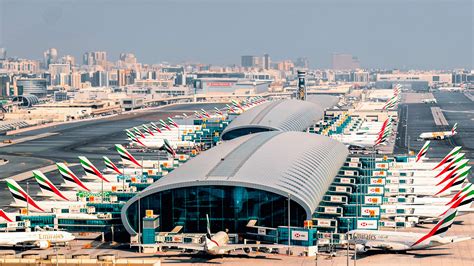
At Abu Dhabi (AUH), Hamad International (DOH) in Qatar, Tel Aviv (TLV), Jeddah (JED), and Kuwait (KWI), departure boards filled with red cancellation notices. Transit passengers—many connecting between Europe and Asia—found themselves stranded in terminals designed for fluid movement, not indefinite suspension.
Qatar’s decision to close its airspace effectively immobilized much of Qatar Airways’ fleet. Aircraft that had departed shortly before the closure were forced into holding patterns or rerouted to secondary airports. For a hub-and-spoke carrier whose business model depends on seamless global connections through Doha, the implications are severe.
Footage circulating online showed passengers rushing through concourses as announcements echoed across otherwise silent gates. In a digital twist emblematic of modern crises, traffic surged to flight-tracking platforms so intensely that at least one major service temporarily crashed under demand.
A Vital Global Air Corridor Severed
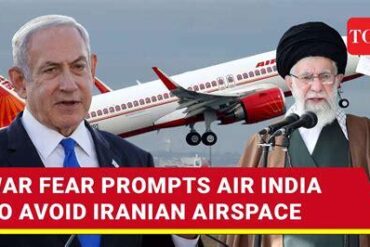
The Middle East is not merely a regional aviation market. It is a strategic overflight bridge between Europe and Asia. Aircraft traveling from London to Singapore, Frankfurt to Bangkok, or Paris to Sydney routinely rely on corridors crossing Iranian, Iraqi, or Gulf airspace. The sudden removal of these routes forces airlines into suboptimal detours—south over Saudi Arabia and the Arabian Sea, or north toward Central Asia—each carrying fuel penalties and time delays.
Even before this escalation, carriers had been navigating complex geopolitical airspace constraints. Avoiding Russian airspace has already imposed substantial costs on European airlines flying to East Asia. Now, with Iranian and neighboring airspace inaccessible, the geometry of long-haul travel becomes even more distorted.
Industry estimates suggest Gulf airlines have been incurring up to $7,500 in additional costs per flight hour on certain rerouted services due to higher fuel burn and longer flight times. Multiply that across dozens of daily long-haul operations, and the economic burden becomes unsustainable if sustained.
Fuel is only part of the equation. Crew overtime, passenger re-accommodation, missed cargo connections, and aircraft repositioning amplify financial strain. Airlines operate on thin margins even in stable conditions; prolonged geopolitical turbulence can rapidly erode quarterly performance.
The Escalation Intensifies
The crisis deepened later in the day when further strikes were reported. The suspension at Dubai International extended indefinitely, underscoring the seriousness of the security environment. As regional tensions flared, governments faced a delicate calculus: balancing sovereign airspace security with the economic lifeline aviation provides.
Historically, airspace shutdowns in the region have lasted days rather than weeks. Yet each episode leaves a deeper scar. Airlines adapt, but repeated disruptions alter network planning, insurance premiums, and risk assessments. Some carriers may reconsider the viability of certain routes altogether if instability persists.
The spectacle of empty skies over Iran serves as a stark visual metaphor. Modern aviation depends on invisible agreements—navigation rights, diplomatic accords, predictable air traffic control systems. When geopolitics fractures those arrangements, the globalized world feels it immediately.
For passengers, the disruption is personal and immediate. For airlines, it is operational and financial. For the broader economy, it is systemic. Cargo flows between Europe and Asia depend on these corridors. High-value freight, pharmaceuticals, and time-sensitive goods face delays that ripple into supply chains.
The Middle East has long positioned itself as the connective tissue of global aviation. Mega-hubs in Dubai, Doha, and Abu Dhabi were engineered precisely to exploit geography. This crisis reveals the fragility inherent in that advantage: geography is powerful, but politics can override it overnight.
As the situation continues to evolve, airlines remain in reactive posture—monitoring military developments, adjusting schedules, and communicating with stranded passengers. The skies may reopen in stages, as they have before. Yet the episode underscores a broader truth about modern aviation: it is both marvelously resilient and acutely vulnerable.
When geopolitics ignites, jet streams become battlegrounds of logistics rather than wind patterns of efficiency. The world’s aircraft will eventually return to their preferred routes, but the cost of this sudden silence in Middle Eastern airspace will echo through balance sheets and travel plans long after the contrails fade.