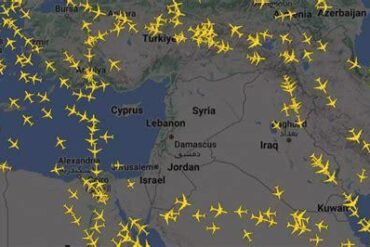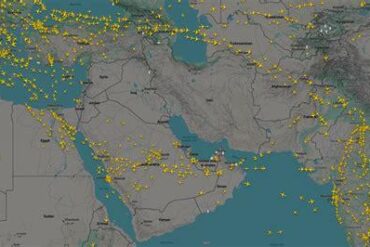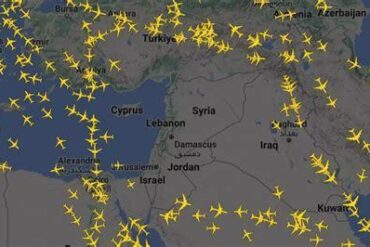
The escalating military confrontation involving Iran, Israel, and the United States is rapidly reshaping international aviation patterns, forcing airlines across Europe, Asia, and the Gulf to suspend flights, redesign long-haul routes, and absorb mounting operational costs as major sections of Middle Eastern airspace become inaccessible.
Commercial aviation networks stretching from London and Paris to Singapore and Mumbai are facing one of the region’s most significant disruptions in years. As missile exchanges, military strikes, and security warnings intensify, airlines are recalculating flight paths in real time while governments tighten restrictions across some of the world’s busiest transit corridors.
The consequences are already visible across airport departure boards. Flights to Dubai, Doha, Riyadh, Beirut, Tehran, and Tel Aviv have been cancelled or delayed by major international carriers, while aircraft already in transit have been diverted away from restricted zones over Iran, Iraq, Syria, Jordan, and Israel. The result is a growing web of longer journeys, increased fuel consumption, and mounting pressure on alternative air corridors.
For global airlines still recovering from years of supply chain strain and fluctuating demand, the timing could hardly be worse.
Airlines Suspend Middle East Routes Amid Escalating Security Risks
Several of the world’s largest airlines have suspended or scaled back operations into the Middle East as safety concerns intensify. British Airways, Air France-KLM, Lufthansa Group, and Singapore Airlines have all temporarily halted services to key Gulf destinations, citing the deteriorating security environment and uncertainty surrounding regional airspace access.
British Airways suspended flights to both Dubai and Doha, two of the airline’s most strategically important long-haul destinations. Air France cancelled routes linking Paris with Dubai and Riyadh, while Singapore Airlines also withdrew services to Dubai amid concerns over potential escalation.
Indian carriers are facing particularly complex operational challenges because many Europe-bound routes traditionally rely on Middle Eastern corridors. Air India confirmed it is avoiding selected Gulf airspace and rerouting aircraft through safer alternatives, even though these detours significantly extend flight times.
The airline stated that flights to destinations including the United Arab Emirates, Qatar, Oman, and Kuwait would increasingly bypass sensitive areas around the Persian Gulf. Those changes are expected to raise operational costs substantially due to additional fuel burn and longer crew duty hours.
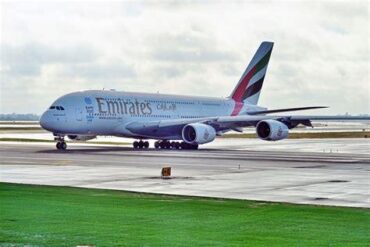
Budget and regional airlines operating inside the Middle East are also adjusting networks. Emirates, Etihad Airways, and flydubai have suspended selected routes to Iran, Iraq, and Lebanon, with some cancellations already extended into July as planners prepare for the possibility of prolonged instability.
Alternative Flight Corridors Create New Operational Pressures
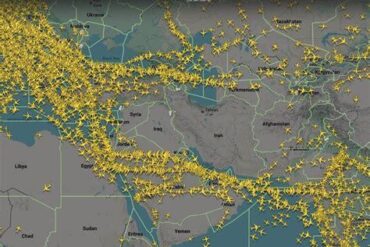
As traditional air corridors close, airlines are funneling traffic into a limited number of alternative routes. Those substitute paths are becoming increasingly congested, creating fresh operational risks even in areas outside the immediate conflict zone.
Industry monitoring organization OPSGROUP identified three primary alternatives currently being used by carriers attempting to avoid dangerous airspace. Each presents its own complications and vulnerabilities.
The southern route, passing through Saudi Arabia and Egypt, has become heavily congested as airlines divert away from Iranian and Iraqi airspace. Yet this corridor also carries risks associated with Houthi missile and drone activity near the Red Sea, alongside mounting air traffic control pressure over Egypt.
The central pathway through Turkey and Iraq has become increasingly problematic due to widespread GPS interference, while sections of Iraqi airspace are now effectively unusable because of the regional conflict.
Meanwhile, the northern route crossing the Caspian Sea and Central Asian states avoids the immediate conflict area but introduces operational challenges of its own. Aircraft traversing Afghanistan face limited diversion airports, sparse air traffic services, and high-altitude terrain concerns that complicate emergency planning.
Saudi Arabia and Afghanistan Experience Sharp Surge in Overflights
The shift in airline routing patterns is producing dramatic increases in overflight traffic above countries previously considered secondary transit corridors.
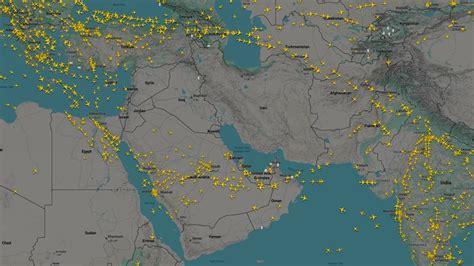
According to aviation tracking platform Flightradar24, overflights above Saudi Arabia have doubled within days of the regional airspace shutdowns. The country is now handling approximately 1,400 overflights per day, compared with roughly 700 daily flights recorded in mid-May.
Afghanistan has experienced an even more striking increase. Overflights there have surged by nearly 500 percent, climbing from approximately 50 daily flights to around 280 since Iranian and Iraqi airspace restrictions intensified on 13 June.
The rapid growth in traffic has exposed infrastructure limitations inside Afghan-controlled airspace. Kabul Flight Information Region authorities issued notices warning carriers about potential en-route holding delays caused by aircraft spacing requirements.
Those warnings highlight broader concerns within the aviation industry regarding the reliability of Afghan air traffic services following the withdrawal of American forces from the country. Airlines operating through the region must now balance the need to avoid active conflict zones against the operational uncertainties of less-developed air corridors.
Rising Costs Threaten Airlines Beyond the Immediate Crisis
The disruption is already creating substantial financial consequences for airlines worldwide. Longer routes require additional fuel, larger contingency reserves, extended maintenance planning, and revised crew scheduling. Even relatively minor diversions can add hundreds of miles to long-haul operations between Europe and Asia.
Fuel markets are also reacting nervously to the growing instability. Aviation analysts warn that sustained conflict involving key oil-producing nations could push jet fuel prices significantly higher during the peak summer travel season.
For airlines operating narrow profit margins, the combination of elevated fuel costs and reduced scheduling flexibility could weaken profitability throughout the remainder of the year. Carriers serving Gulf hubs face particularly acute exposure because Dubai, Doha, and Abu Dhabi function as critical transfer points connecting Europe, Asia, Africa, and Oceania.
Israeli airspace remains under especially tight control. Authorities have intermittently reopened sections of the airspace for emergency and repatriation flights, though civilian access continues to change rapidly depending on the evolving security situation.
Global Aviation Faces Prolonged Uncertainty
Airlines across the world are now preparing for the possibility that Middle Eastern airspace restrictions may persist for weeks or even months. Operational planners are continuously revising schedules, fuel strategies, and aircraft rotations while monitoring military developments hour by hour.
The aviation sector has weathered volcanic eruptions, pandemics, wars, and oil shocks before, but the current crisis underscores how deeply interconnected global air travel has become. A conflict centered in one region can rapidly disrupt passenger flows, cargo operations, crew logistics, and airline economics on a worldwide scale.
With no clear diplomatic resolution yet emerging, the industry remains locked in a volatile holding pattern — one where every new military development has the potential to redraw the map of international aviation overnight.