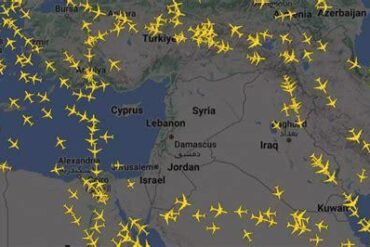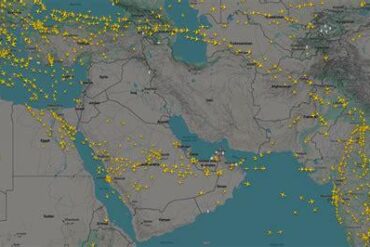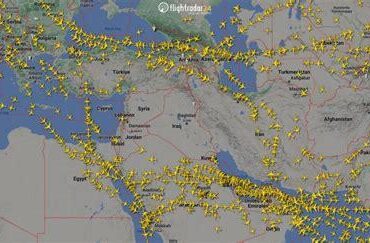
As Qatar Airways joins major global airlines in an abrupt halt to flight operations, the skies above the Middle East are no longer a gateway—but a growing zone of geopolitical tension. Following Iran’s retaliatory missile strikes targeting a U.S. military airbase in the Gulf, the State of Qatar has enforced a nationwide air traffic movement closure, forcing a cascade of international flight suspensions that has left passengers, airlines, and entire aviation corridors in turmoil.
The development arrives at a time of high global passenger traffic and growing regional unrest, setting the stage for a severe disruption in international connectivity. United Airlines, American Airlines, Singapore Airlines, Air Canada, British Airways, Emirates, and Air India are now joined by Qatar Airways in suspending flights through the affected airspace, underscoring the breadth of the crisis.
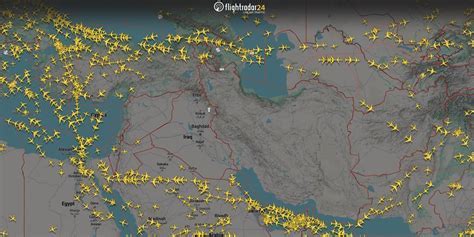
A Regional Shutdown Echoing Worldwide
With Doha’s Hamad International Airport—a critical hub linking Asia, Africa, Europe, and the Americas—effectively paralyzed, the ripple effects are instantaneous and wide-ranging. Qatar Airways, lauded for its seamless global connectivity and world-class service, made the decision to suspend all flights in compliance with emergency airspace closure orders. Airline officials have confirmed that safety remains the top priority, and that operations will remain suspended until clearances are reinstated by aviation authorities.
The decision wasn’t made in isolation. Other regional powerhouses like Emirates and Etihad Airways are similarly strained. Re-routed passengers and increased pressure on alternative routes are pushing regional networks to their logistical limits. Travelers hoping to make connections via Gulf hubs now face mass cancellations, excessive delays, or indefinite grounding.
Grounded Flights, Stranded Travelers, Global Fallout
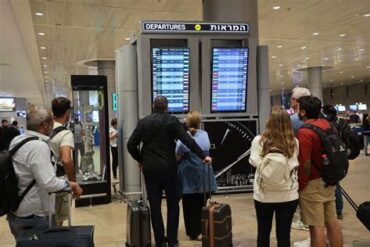
At Hamad International Airport, additional ground personnel have been mobilized to manage the surge of stranded travelers, but the congestion is immense. Passengers, some midway through transcontinental journeys, are reporting overcrowded terminals, extended layovers, and few rebooking options as airlines scramble to recalibrate.
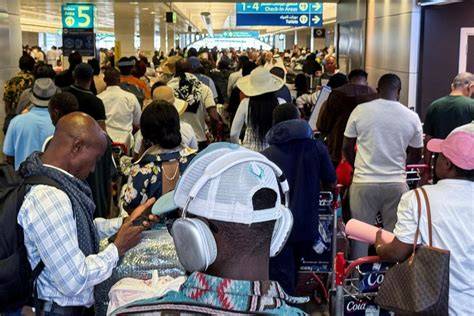
The timing compounds the crisis. The peak summer travel season means that flights are already operating at or near capacity. Conferences, business trips, family holidays, and seasonal tourism are all affected. From London Heathrow to Sydney Kingsford Smith, airlines are struggling to manage the operational chaos as they re-route planes, reassess flight paths, and deal with aircraft now out of position.
Geopolitical Tensions Create Aviation Flashpoint
The decision by Iran to strike a U.S. airbase has sent shockwaves far beyond the Gulf region. Global risk analysts are warning that the airspace above Iran and its neighboring countries has now entered high-risk status, forcing airlines to make rapid, high-stakes decisions on routing, safety, and passenger welfare. The closure of Qatari airspace is a signal to the rest of the aviation world: flying through this corridor now carries unmanageable risks.
Security experts note that this situation is not isolated to Qatar. Airlines flying near Iraq, Iran, Bahrain, and parts of Saudi Arabia are now considering emergency reroutes. The knock-on effect includes longer flight times, increased fuel consumption, and congested detour corridors, such as routes over Turkey and Egypt.
Aviation Industry’s Fragile Recovery Tested Again
The global aviation industry, already weakened by the lingering impact of the COVID-19 pandemic, is now facing an unprecedented shock to its fragile recovery. For carriers like Qatar Airways, which were just regaining full operational strength, the sudden grounding of flights is a major setback.
Hotels in Doha, Dubai, and Abu Dhabi are witnessing an influx of last-minute bookings from travelers with nowhere else to go. Meanwhile, business travelers and event organizers are being forced to cancel or reschedule meetings across the region. The economic implications for the hospitality and business tourism sectors are immediate and severe.
Coordination Amid Crisis: Airlines, Governments, and Passengers
Qatar Airways is in active coordination with aviation regulators and international air traffic control authorities to assess conditions for a safe resumption of services. The airline has advised all passengers to remain updated via official mobile apps and websites. Travelers holding bookings over the coming week are being encouraged to exercise flexibility, with the airline offering more lenient refund and rebooking policies during this extraordinary disruption.
Meanwhile, Star Alliance, Oneworld, and SkyTeam members are working on cooperative contingencies to reallocate passenger loads across available partner networks. However, limited capacity and overloaded rerouted flights mean that delays and cancellations will likely persist even after the initial crisis subsides.
The Sky Is No Longer the Limit: Rethinking Route Risks
This incident exposes a stark vulnerability in the global aviation architecture: its reliance on politically stable air corridors. The Middle East, despite its history of volatility, has long served as a cornerstone of transcontinental travel due to its geographic location. Yet, as Iran’s strike illustrates, a single missile launch can trigger a global aviation shockwave.
Airlines may now revisit route-planning protocols and conduct heightened risk assessments for any flight paths near regions experiencing escalating political or military activity. New alternate corridors, likely less efficient or cost-effective, may become the new norm—reshaping airline economics and passenger experience alike.
When Will Flights Resume? Outlook Remains Uncertain
There is currently no official timeline for when Qatari airspace will reopen or when full airline operations can safely resume. Analysts warn that if the closure extends beyond the week, the cumulative disruption to global airline schedules may become exponentially damaging. Aircraft displaced from routine operations may take days, or even weeks, to return to normal patterns. Overstretched crew schedules could lead to mandatory rest periods, further compounding delays.
As of this update, passenger rebooking windows are limited, with few viable alternative routes that avoid the restricted zone. Northbound detours over Central Asia or Mediterranean airspace are seeing a spike in usage, prompting traffic management concerns and higher airspace tariffs.
Tourism, Trade, and Trust in Crisis
The economic ripple extends to cargo operations, with freight-dependent businesses facing mounting delays and supply chain disruptions. Qatar Airways Cargo, a major player in international logistics, is also impacted by grounded fleets. With just-in-time delivery systems already strained globally, the pressure on exporters and importers is significant.
For global travelers, the immediate question is not merely one of logistics, but of trust. Can airline schedules be relied upon when geopolitical winds shift so suddenly? Can high-value travel, especially for business or healthcare, continue to hinge on regions with high strategic volatility?
Conclusion: A New Chapter of Uncertainty for Global Aviation
What began as a missile strike in the Gulf has evolved into a multinational aviation shutdown, impacting thousands of flights and millions of lives. For Qatar Airways and its peers, the message is clear: air safety is paramount, but operational resilience is now under the spotlight.
As the situation continues to unfold, travelers, analysts, and airline executives are left watching the skies—and hoping for a swift resolution. But one truth has been made unmistakably clear: in a globally connected world, the tremors of conflict travel as fast and as far as any aircraft ever could.