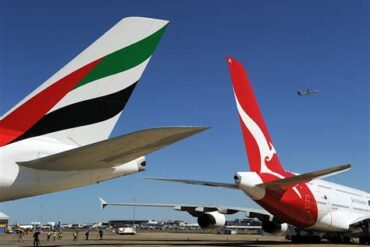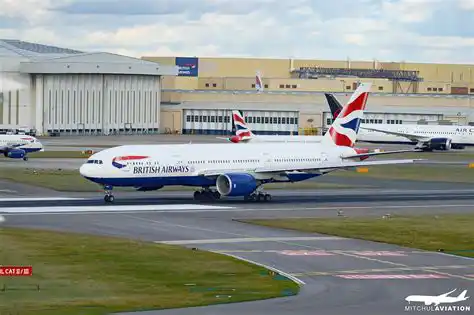
As geopolitical tensions reach a boiling point in the Middle East, the airline industry is facing its most severe disruption in years. Following targeted US airstrikes on Iranian nuclear facilities, over 150 international flights have been either canceled or forced to reroute, affecting a broad spectrum of major airlines. These include British Airways, Singapore Airlines, Air France, American Airlines, Japan Airlines, and many others caught in the rapidly shifting dynamics of regional conflict.
The strikes—reportedly a retaliatory move in coordination with Israel’s missile attacks on Tehran—have led to a cascade of airspace closures, particularly over Iran, Iraq, Jordan, and Israel, which were immediately deemed no-fly zones by global aviation authorities. Airlines have scrambled to ensure passenger safety, redirecting long-haul flights through alternate air corridors and causing cascading delays and logistical bottlenecks across Europe, Asia, and the Middle East.
Escalating Middle East Conflict Forces Airlines Into Crisis Mode
The Middle East airspace, a critical corridor for connecting Europe to Asia and Africa, has become increasingly treacherous. As the US launched precision airstrikes against suspected Iranian nuclear installations, the possibility of Iranian retaliation loomed large, prompting immediate responses from international carriers.
British Airways suspended all flights to Dubai, Doha, and Bahrain, citing untenable safety risks. Notably, a BA flight that departed London Heathrow en route to Dubai was dramatically rerouted mid-air after nine hours of flight time, eventually landing in Zurich. This single flight symbolizes the larger operational havoc experienced by airlines since the airstrikes began.
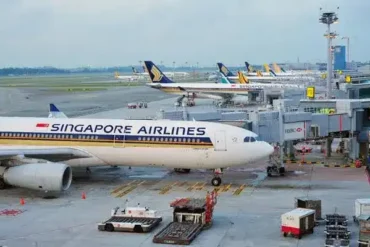
Singapore Airlines, renowned for its stringent safety protocols, swiftly canceled multiple services between Singapore and Dubai, following an internal security assessment. The airline’s move reflects growing industry consensus: airlines are unwilling to gamble with safety, even if that means stranding thousands of passengers and absorbing heavy operational losses.
Airspace Blackouts Over Iran, Iraq, and Syria
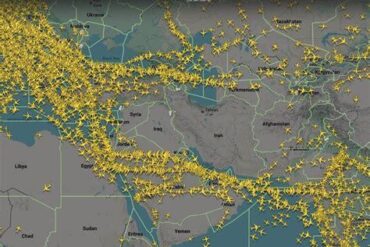
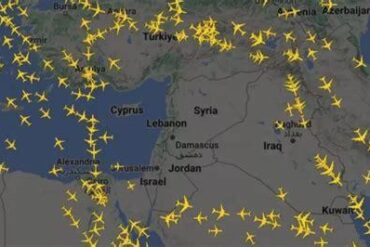
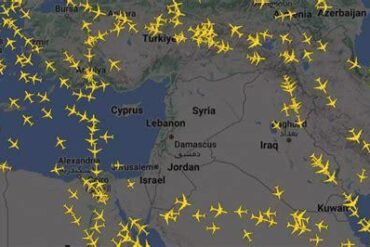
At the core of the aviation disruption lies the near-total blackout of Middle Eastern airspace. Flight data aggregator Flightradar24 confirmed that skies over Iran, Iraq, and Syria have been largely abandoned, forcing commercial jets to reroute over Saudi Arabia and Egypt. While technically safe, these detours have caused significant increases in flight times, fuel consumption, and scheduling difficulties.
In many cases, flights had to circle or divert unexpectedly due to air traffic bottlenecks. Data shows more than 3,000 cancellations per day across the region, a staggering figure that underscores the magnitude of the crisis. Airlines are also having to contend with ground handling disruptions, stranded aircraft, and the growing risk of passenger dissatisfaction and litigation due to failed travel plans.
Airlines Under Pressure: Operational Adjustments and Safety Priorities
Other major carriers have followed suit. American Airlines, United Airlines, and Finnair preemptively suspended flights to Doha and Dubai, citing risk assessments and evolving conflict scenarios. Air France-KLM and Japan Airlines also confirmed route adjustments and cancellations to avoid entanglement in any potential retaliatory actions by Iranian forces.
These cancellations are not merely a short-term disruption; they signal a broader restructuring of international flight networks. Airlines must now reconsider not only their Middle Eastern routes but also their contingency planning and risk management strategies. The situation mirrors, and in some ways exceeds, the disruptions seen during the Russia-Ukraine conflict, where flights were barred from crossing Russian airspace.
Israel’s Response and National Carriers in Crisis
The reverberations of conflict are not limited to global airlines. Israel’s national carrier, Arkia, halted operations temporarily after Israel closed its airspace amid fears of incoming attacks. Arkia, however, resumed “rescue flights” as of Sunday afternoon, aimed at bringing home Israeli nationals stranded abroad. These flights are operating under special permits and limited air corridors, marking a rare instance of state-led aviation rescue operations in wartime conditions.
A Tangle of Logistics, Geopolitics, and Passenger Impact
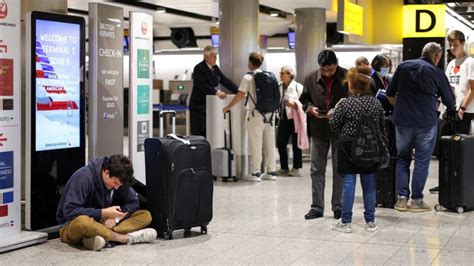
For international travelers, the fallout has been immediate and brutal. Passengers are facing:
- Last-minute cancellations without immediate alternatives
- Excessive travel delays due to detours
- Confusion around rebooking and refunds, as airlines struggle to update systems
- Potential stranding in layover cities without sufficient accommodation support
This crisis has exposed a fragile dependency on stable airspace, particularly in regions where geopolitical rivalries are rapidly intensifying. The aviation industry, still reeling from pandemic-era turbulence and the Russia-Ukraine war’s aftermath, is now thrust into another unpredictable scenario that could take months to stabilize.
Broader Implications for Global Travel and Aviation Security
The timing of this disruption is particularly problematic. The summer travel season, a peak period for global tourism and international business travel, is underway. Airlines were counting on high passenger volumes to recoup pandemic-era losses and operational costs. Now, the loss of critical Middle East routes threatens to derail financial forecasts and strain fleet logistics.
Moreover, this crisis may accelerate an overhaul in airline risk modeling, with carriers likely to invest more heavily in:
- Conflict-zone intelligence partnerships
- AI-based route risk simulations
- Faster rerouting and airspace prediction technologies
- Stronger intergovernmental aviation coordination mechanisms
Markets, Oil Prices, and the Airline Bottom Line
Beyond the skies, the economic consequences of these disruptions are far-reaching. Fuel costs surged as markets reacted to the heightened tensions and instability in the Persian Gulf, a vital artery for global oil shipments. Aviation fuel prices rose by nearly 5% within 48 hours of the strikes, further squeezing margins for already embattled carriers.
Stock markets responded swiftly. Shares in airline companies dipped globally, with European carriers seeing the steepest declines due to their reliance on Middle East-Asia routes. Investors, alarmed by the potential for prolonged disruptions, began shifting to safer assets, compounding the financial pressure on the aviation sector.
The Path Forward: Risk, Resilience, and Realignment
As the conflict between the US, Israel, and Iran shows no signs of de-escalation, the aviation sector is bracing for long-term impact. Airlines are adopting a wait-and-see approach, keeping aircraft and crew on standby, and updating flight paths in near real-time.
Industry insiders speculate that full airspace normalization could take weeks, if not months, depending on how quickly diplomatic channels can reduce hostilities. Until then, carriers will continue to operate under a framework of maximum caution, prioritizing safety over punctuality or profitability.
What’s certain is that this moment will be etched in the history of commercial aviation as yet another stark reminder of the industry’s vulnerability to geopolitical upheaval. For now, the message to travelers is clear: stay informed, stay flexible, and prepare for a bumpy ride through the clouds of uncertainty.