As airlines persist in rerouting flights across the Gulf region, passengers are facing significant delays and drastically prolonged travel times amidst the escalating tensions between Iran and Israel. This ongoing geopolitical situation, particularly following recent military actions, has prompted air traffic management practices to remain overly cautious. Despite declarations that Iranian airspace is open, airlines are opting for alternative routes, leading to widespread disruption and inflated journey durations for travelers.
The impact on global air travel is profound. Travelers heading to the Gulf region and beyond are experiencing longer journey times as airlines continue to avoid Iranian airspace. Although a ceasefire was declared between Iran and Israel, the operational delays remain a significant concern for airlines, travelers, and air traffic controllers alike. Reports indicate that as of June 25, while Iranian airspace and broader Middle Eastern regions were deemed open, the rerouting of flights persists, causing considerable challenges for those attempting to navigate these airspaces.
A notable factor contributing to this ongoing rerouting is the closure of Iranian airspace in recent months. Despite the formal declaration that it has reopened, many airlines have chosen to bypass Iran entirely. According to Flightradar24, a leading flight-tracking service, only a few exceptions have been made where carriers have flown through Iranian airspace. Instead, most airlines are taking detours that lead them either north over Turkey or south over Egypt and Saudi Arabia, resulting in extended flight durations that can be frustrating for passengers.
The geographical size of Iran—more than twice the size of Texas—and its central position within the Middle East make it a pivotal area for international air travel. The consequences of rerouting flights are evident, with increased congestion on the alternative northern and southern routes, particularly those traversing countries such as Saudi Arabia, Egypt, and Turkey. This diversion continues to be a part of ongoing flight management strategies, especially after the military tensions escalated in the region.
Among the airlines most affected by these developments are Gulf carriers like Emirates and Qatar Airways. These airlines have faced significant disruptions due to rerouted flights, with Ian Petchenik, director of communications at Flightradar24, emphasizing the impact on Gulf carriers. Air India has also been notably affected by the current geopolitical situation, having initially suspended its flights to Europe and North America at the onset of the Middle East conflict. However, by late June, flights to the U.S. resumed, albeit with altered flight paths avoiding the typical northern routes over Iran. Furthermore, the closure of airspace over Pakistan, a consequence of the ongoing geopolitical instability, adds another layer of complexity for Air India’s operations.
For U.S. airlines, rerouting around Iranian airspace is not a new challenge. U.S. carriers have been prohibited from flying over Iran for years due to a longstanding Federal Aviation Administration (FAA) regulation. This restriction extends to foreign carriers that operate codeshare flights with U.S. airlines, meaning they, too, are unable to utilize Iranian airspace. The FAA’s airspace restriction stems from safety concerns in light of the ongoing regional tensions. As the number of rerouted flights increases due to the recent conflict, U.S. airlines have managed these airspace closures more efficiently, having developed alternative flight plans over the years. However, the situation remains more challenging for non-U.S. carriers that traditionally rely on Iranian airspace as part of their global operations.
One of the most significant ramifications of these rerouted flight paths is the increase in flight durations. Petchenik noted that rerouting flights via Egypt and Saudi Arabia could lead to extended flight times of 45 to 90 minutes, depending on various factors such as prevailing jet streams, wind patterns, and air traffic congestion. While this delay may seem manageable for some travelers, it poses major operational challenges, particularly during peak travel seasons or when multiple airlines are navigating similar detours. The rerouting of a substantial number of flights, especially those crossing the Middle East, has contributed to congestion on alternative air routes. Fortunately, air traffic control authorities have been adept in managing these increased pressures, effectively preventing more serious disruptions despite the complexities involved.
In light of these ongoing challenges, Emirates Airlines has provided a positive outlook regarding the recent airspace disruptions. Following Iran’s missile attack on the U.S.’s Al Udeid Air Base in Qatar on June 23—an act of retaliation against the United States—both the United Arab Emirates (UAE) and Qatar temporarily closed their airspaces. However, Emirates quickly activated its contingency plans, reporting that only a small number of flights were significantly affected due to airspace congestion. While the airline’s ability to adapt swiftly is encouraging, the future remains uncertain as the geopolitical tensions between Iran, Israel, and the U.S. continue to evolve.
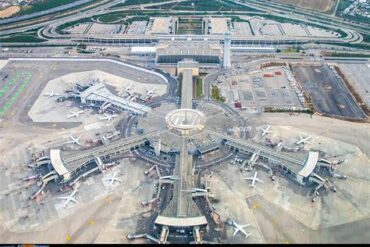
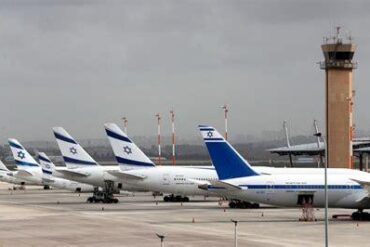
As of late June, Tel Aviv’s Ben Gurion Airport resumed operations, yet U.S. airline flights to Israel remain suspended, including United Airlines’ Newark-Dubai service. Even with Iranian airspace declared open, airlines are still choosing to reroute flights in response to the ongoing tensions. This cautious approach is causing significant delays and drastically lengthening travel times for passengers across the Gulf region.
In conclusion, as airlines navigate this complex and ever-evolving geopolitical landscape, the rerouting of flights to avoid Iranian airspace remains a critical operational challenge. Travelers should anticipate longer flight times and potential delays, particularly when flying to or from the Gulf region. While air traffic control authorities are managing the situation to the best of their abilities, ongoing tensions and airspace congestion are likely to keep travel disruptions prevalent for the foreseeable future. Passengers are advised to plan their journeys accordingly, factoring in the possibility of extended travel times as airlines adapt to the shifting dynamics of the region.