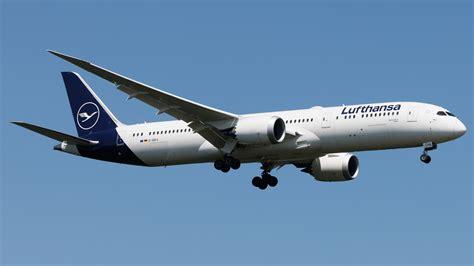
The balance of power inside a major airline group is rarely visible to passengers. Yet every so often, a decision reveals how operational pressure at a flagship carrier can ripple through its subsidiaries. That is precisely what happened when Lufthansa chose to postpone the transfer of a nearly new Boeing 787-9 Dreamliner originally destined for Austrian Airlines.
The aircraft was scheduled to join Austrian’s growing long-haul fleet in March. Instead, the German airline has opted to retain the jet temporarily to strengthen its own operational capacity. While the official explanation frames the decision as a minor scheduling adjustment, the move reflects deeper challenges within Lufthansa’s Dreamliner program—particularly ongoing complications surrounding cabin certification and seating configurations.
For the Austrian subsidiary, the delay may be short, but it highlights how fleet strategy within a large aviation group often bends to the needs of the dominant airline. When aircraft availability tightens, the flagship carrier tends to get priority.
A Last-Minute Fleet Decision Inside the Lufthansa Group
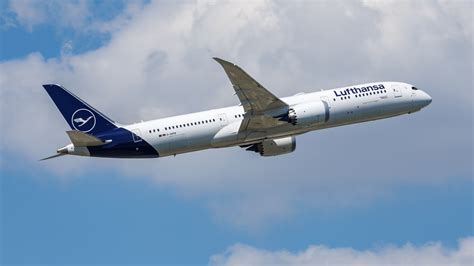
The aircraft at the center of the decision carries the future registration OE-LPG and represents the third Dreamliner that Austrian Airlines expects to receive from Lufthansa. Originally scheduled for transfer in March, the jet will now remain with Lufthansa until at least after the Easter travel period.
This short-term retention might seem minor, yet in airline scheduling terms it can have significant consequences. Widebody aircraft like the Boeing 787-9 Dreamliner are high-value assets designed to maximize long-haul efficiency. When one becomes temporarily unavailable, flight planning, route deployment, and crew rotations must all adjust.
Austrian Airlines ultimately agreed to the delay and emphasized that it is supporting its parent company’s operational needs. Such cooperation is typical within airline groups, where fleet allocation often shifts dynamically depending on market demand and operational constraints.
However, the aircraft will not immediately enter Austrian service once the transfer occurs. Instead, the jet faces a multi-stage preparation process before passengers ever board it from Austrian territory.
The Dreamliner’s Detour Before Joining Austrian Service
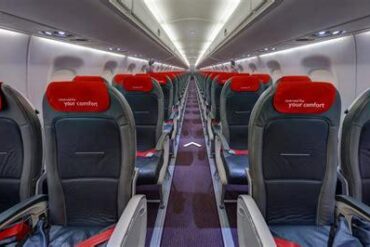
Once Lufthansa hands over the aircraft, the journey for OE-LPG will involve several stops before entering commercial operations. The jet is scheduled to fly to Taipei for a cabin refurbishment, where interior modifications will align the aircraft with Austrian Airlines’ onboard product standards.
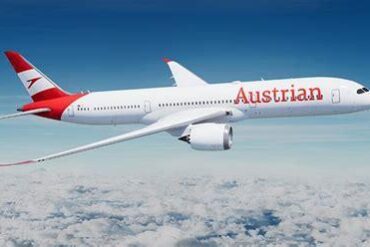
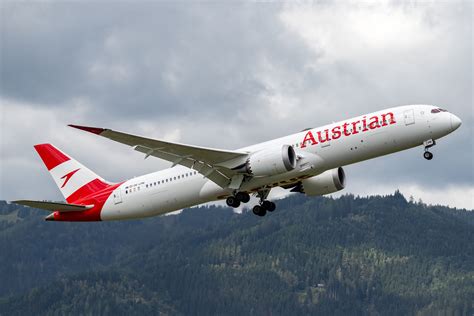
After the interior work is completed, the aircraft will continue to Teruel Airport for repainting into Austrian’s distinctive red-and-white livery.
Only then will the aircraft travel to its operational base in Vienna. The airline currently plans for the jet to begin service on June 1, operating long-haul flights to Newark—a route that represents a key gateway between Austria and the United States.
Lufthansa’s Dreamliner Fleet Faces Unexpected Complications
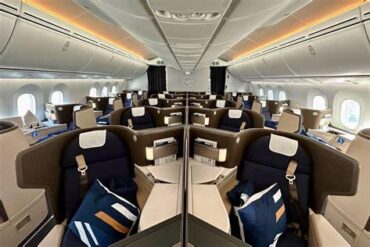
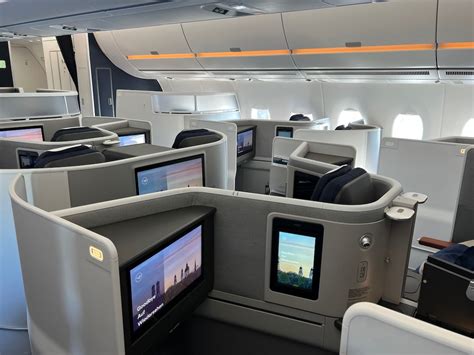
The reason Lufthansa needed the aircraft a little longer lies in a saga that has quietly frustrated the airline for months. The issue revolves around seat certification for Lufthansa’s new Allegris cabin, an ambitious redesign intended to elevate the airline’s long-haul passenger experience.
Certification delays meant that Lufthansa initially received several Dreamliners with seating layouts that regulators had not fully approved for commercial sale. As a result, the airline was forced to operate aircraft while leaving a significant portion of premium seats unavailable to passengers.
Imagine running a luxury restaurant but being legally allowed to sell only a handful of tables in the dining room. The economics become awkward very quickly.
In the early stages, Lufthansa could sell only four business-class seats in the front row of the cabin. Over time, regulators approved additional seating positions, gradually improving the situation. By April 2026, the airline expects to sell 25 of the 28 business-class seats installed in the Allegris configuration.
Even with that progress, the slow rollout has complicated Lufthansa’s fleet deployment and revenue projections.
Where Lufthansa and Austrian Deploy Their Dreamliners
Despite the hurdles, Lufthansa continues to rely heavily on the 787-9 for its long-haul network. According to aviation scheduling data, the airline plans more than 600 Dreamliner flights in a single month, highlighting the aircraft’s importance to its global operations.
Many of those rotations connect major international destinations with Lufthansa’s hub in Frankfurt. One of the most frequent routes is the domestic shuttle to Munich, where the Dreamliner performs numerous short positioning flights.
Long-haul deployments stretch across multiple continents, including routes to Detroit, Toronto, Atlanta, Mumbai, Nairobi, and Bogotá.
Austrian Airlines, operating a much smaller fleet, deploys its Dreamliners in a more focused pattern. Its two existing 787-9 aircraft primarily serve North American destinations along the U.S. East Coast, including Newark and New York.
A Small Delay That Reveals a Bigger Aviation Reality
From a passenger perspective, the postponed delivery might seem like a footnote in airline news. Yet within the aviation industry, it illustrates something fundamental about fleet management.
Aircraft are not simply machines; they are strategic assets moving through a complex web of scheduling, certification, branding, and economics. A delay in seat approval, a seasonal surge in demand, or a temporary shortage of widebody jets can force airlines to reshuffle plans across entire networks.
For Lufthansa, holding onto one additional Dreamliner offers breathing room while its new cabin product continues to clear regulatory hurdles. For Austrian Airlines, the delay means waiting a few extra weeks before expanding its modern long-haul fleet.
In the choreography of global aviation, even a single airplane can shift the rhythm of two airlines at once—and in this case, the Dreamliner’s dance card simply stayed with Lufthansa a little longer.