European budget airline Ryanair is facing renewed legal scrutiny after Austria’s Supreme Court ruled that several of the carrier’s airport-related charges breach consumer protection standards. The landmark decision could ultimately force the airline to eliminate its widely criticized €55 airport check-in fee, marking another setback for the airline’s long-standing ancillary fee strategy.
The case was brought by the Austrian Consumer Association (VKI), which argued that passengers were being subjected to unfair contractual terms and insufficiently transparent charges. While the ruling does not automatically refund customers who previously paid the fees, it requires Ryanair to stop relying on the disputed contractual clauses within three months and reinforces the principle that airline fees must be clearly explained and fair to consumers.
For one of Europe’s largest ultra-low-cost carriers, whose business model depends heavily on optional service charges, the judgment represents a significant legal challenge that could influence similar disputes across the European Union.
Austrian Court Declares Key Ryanair Contract Clauses Unlawful
The Austrian Supreme Court concluded that several provisions contained in Ryanair’s passenger terms and conditions unfairly disadvantaged consumers. According to the ruling, passengers could not reasonably understand all of their rights and obligations because some charges could even apply in situations where travelers were not responsible for the underlying problem.
Rather than focusing solely on the amount of the fees, the court examined whether the contractual language complied with Austria’s Consumer Protection Act and broader civil law principles. Judges found that multiple clauses failed this legal standard, requiring Ryanair to discontinue their use.
The decision overturns earlier lower-court outcomes that had largely favored the airline, making this the most significant legal victory yet for Austrian consumer advocates.
Why the €55 Airport Check-In Fee Has Become So Controversial
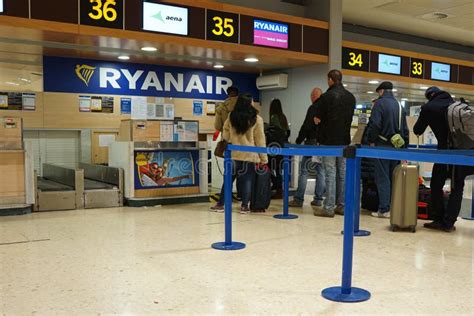
Ryanair has spent years encouraging passengers to complete check-in online or through its mobile application before arriving at the airport. Travelers who fail to do so are generally required to pay a €55 airport check-in fee, a charge designed to discourage manual processing at airport counters.
From the airline’s perspective, digital check-in reduces staffing costs, shortens queues, and supports its ultra-low-cost operating model. The carrier has increasingly promoted paperless travel and is continuing its transition toward fully digital boarding procedures.
Consumer groups, however, argue that the policy becomes unfair when passengers are unable to check in online because of technical failures or circumstances beyond their control. The Austrian court agreed that contractual terms should not transfer business risks, such as system outages, from the airline to its customers.
Additional Airport Charges Also Face Legal Pressure
The disputed contractual provisions extend beyond the airport check-in fee. Several other charges were included in the legal proceedings because the court determined that consumers may not have received sufficient transparency regarding when these fees could legitimately be imposed.
Among the most closely scrutinized charges are:
- Airport check-in: €55
- Boarding pass printing: €15
- Infant administration fee: €25
- Passenger name change fee: Up to €160
Although Ryanair continues to impose numerous optional charges for services such as seat selection, baggage, missed departures, and booking modifications, the Austrian judgment specifically targets clauses that may unfairly disadvantage passengers.
Ryanair Rejects Consumer Group Interpretation
Despite losing the case, Ryanair disputes the broader interpretation presented by consumer advocates. The airline maintains that the court did not declare its entire fee structure unlawful and did not order compensation for passengers who previously paid the disputed charges.
The airline argues that its ancillary pricing model remains an essential component of keeping base ticket prices among the lowest in Europe. Additional services remain optional for most passengers, allowing travelers to pay only for the extras they choose.
Meanwhile, the VKI views the ruling as an important affirmation that airlines must provide transparent pricing and avoid contractual conditions that place unreasonable burdens on consumers.
Passengers Will Not Automatically Receive Refunds
One important aspect of the judgment is that it does not automatically reimburse affected travelers. Anyone seeking repayment of previously charged fees would generally need to pursue an individual legal claim if they believe the charge was imposed unlawfully under applicable law.
However, the ruling strengthens the legal position of consumers in future disputes and could encourage additional challenges against similar airline practices throughout Europe.
The court also ordered Ryanair to pay approximately €2,544.90 in legal costs incurred by the Austrian Consumer Association, adding financial consequences to the reputational impact of the decision.
Growing Regulatory Pressure on Ryanair Across Europe
The Austrian ruling arrives during a period of increasing regulatory attention on airline ancillary fees. Ryanair has already modified certain policies after investigations by regulators, including changes affecting charges for parents wishing to sit next to young children.
At the same time, European lawmakers continue advancing stronger passenger protections, including rules supporting a standard cabin bag allowance. Ryanair Chief Executive Michael O’Leary has criticized these proposals, arguing that additional regulation increases airline operating costs and could ultimately lead to higher ticket prices.
The latest Austrian judgment adds further momentum to the broader European debate over balancing affordable airfares with transparent consumer rights. While Ryanair’s low-cost model remains highly successful, courts and regulators are increasingly signaling that aggressive ancillary fees must satisfy stricter legal standards, potentially reshaping how Europe’s largest budget airlines generate revenue in the years ahead.