The economics of being a US flight attendant have changed dramatically in recent years. New contracts, higher hourly rates, improved benefits, and stronger premium-pay opportunities have lifted compensation at the country’s biggest airlines. Yet those gains have created an uncomfortable contradiction: while experienced cabin crew at the major legacy carriers can now earn well into six figures, thousands of flight attendants elsewhere remain separated by a substantial wage gap.
The divide is particularly visible between American Airlines, Delta Air Lines, and United Airlines and the regional airlines that feed their networks. These three carriers have become the industry’s financial benchmark, offering compensation packages that can transform the economics of a flight attendant career. Their latest pay increases have not eliminated the industry’s wage inequality. Instead, they have arguably made the boundary between the best-paid cabin crew and everyone else even more pronounced.
For aspiring flight attendants, that difference matters because airline employment is not simply about finding a job. It is about entering a seniority system in which the employer you eventually join can determine how quickly your income grows. A new hire may begin with a relatively modest wage, but a flight attendant who reaches a legacy carrier and remains there for a decade can occupy an entirely different financial position. The wage floor is therefore becoming a career dividing line, not merely a starting salary.

United, American and Delta Set a New Flight Attendant Pay Benchmark
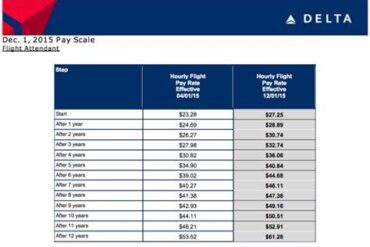
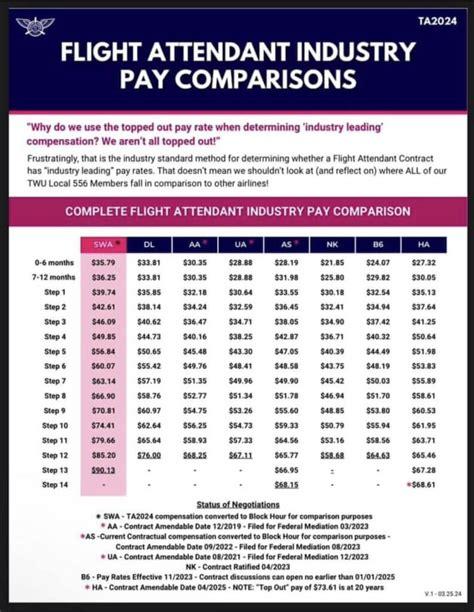
The latest contracts at the major US airlines demonstrate just how quickly the upper end of flight attendant compensation has moved. United Airlines flight attendants begin at $38.21 per hour in 2026, with that first-year rate scheduled to rise to $39.36 in July 2027 under the carrier’s newly ratified agreement. Looking only at the hourly figure understates the potential value of the job because flight attendants can also receive per diem, boarding pay, lead premiums, and additional compensation for premium flying.
American Airlines begins its cabin crew at approximately $36.81 per hour, while Delta Air Lines lists a starting rate of about $38.40 per hour. Although the precise structure differs among carriers, the three airlines provide additional opportunities that can substantially increase take-home earnings. Per diem helps cover expenses while employees are away from their home bases, while boarding compensation provides payment for work that historically received less recognition in flight attendant pay structures.
The important point is that these rates are only the beginning. Each carrier uses a pay scale that rewards years of service, meaning the distance between a first-year employee and a veteran can become enormous. At United, for example, a senior flight attendant can reach an hourly rate of $87.47, while American reaches approximately $84.50 and Delta about $86.32 at comparable senior levels. Those figures are before considering the scheduling and premium-pay advantages that can accompany seniority.

This is where the industry’s apparent wage floor becomes misleading. A new employee might see a starting rate in the high-$30-per-hour range and assume the three major carriers are simply offering somewhat better entry-level wages. In reality, the much more significant advantage lies in the long-term compensation curve. A flight attendant who remains at one of these companies can see earnings rise dramatically over many years, while someone who spends an entire career at a lower-paying carrier may never approach the same compensation ceiling.
Regional Airlines Remain the First Step for Many Flight Attendants
The contrast becomes much sharper when regional airlines enter the picture. For many aspiring US flight attendants, regional carriers provide an accessible entry point into commercial aviation. Airlines such as SkyWest Airlines, Republic Airways, Envoy Air, Endeavor Air, GoJet, Mesa Airlines, PSA Airlines, Piedmont Airlines, and CommuteAir employ large numbers of cabin crew and operate flights under major airline brands.
Regional airline compensation is generally lower. Republic Airways, for example, pays new flight attendants around $27.82 per hour, while SkyWest’s rate is approximately $30. Envoy Air starts cabin crew at roughly $29.73 per hour. Individual contracts and pay scales vary, but the broad pattern is consistent: regional flight attendants typically earn substantially less than their counterparts at the largest legacy airlines.
That difference is especially important because regional flying is not necessarily an easier version of the job. Flight attendants still manage safety procedures, passenger conflicts, medical incidents, emergency equipment, service duties, irregular operations, and the physical demands of repeated departures and arrivals. Yet the compensation attached to that work can be dramatically lower.
The regional system has historically functioned as a career launching pad. A flight attendant may gain experience, build qualifications, and eventually apply to a legacy carrier. But this creates a difficult financial transition. Employees are often required to spend years building enough experience to become competitive for the most desirable jobs, all while earning significantly less than the people they hope to join.

The result is a two-tier labor market. The first tier consists of flight attendants at the major legacy carriers, where seniority can eventually produce six-figure compensation. The second includes regional and many lower-paying carriers, where reaching that income level is considerably more difficult. The gap is not necessarily permanent for an individual employee, but it can be persistent across the industry.
Seniority Turns Airline Pay Into a Long-Term Financial Strategy
Flight attendant compensation cannot be understood by looking at an hourly wage alone. Seniority is the engine that drives the entire system. It influences not only the rate an employee receives but also the schedules, trips, bases, positions, and additional flying opportunities available to that employee.
A highly senior flight attendant can often select more productive trips and obtain assignments that generate more credit hours. Long-haul flying can be particularly attractive because it can involve less ground time relative to the amount of flying credited. Short-haul schedules, by contrast, can contain multiple segments, creating more opportunities for delays and operational disruptions.
Seniority also affects access to positions such as purser or lead flight attendant. Those roles can bring additional compensation while providing experienced employees with greater control over their working environment. A senior employee may also have more opportunities to pick up additional trips at premium rates, allowing the difference between contractual pay and actual annual earnings to become substantial.
This helps explain how experienced flight attendants at legacy carriers can earn more than $100,000 annually after roughly a decade or longer, with some exceeding $120,000 depending on their schedules and additional flying. The achievement is not simply a product of the hourly wage. It is the cumulative effect of years of contractual increases, schedule control, premium opportunities, and favorable trip selection.
The Schedule Can Be Almost as Important as the Pay Scale
Two flight attendants with similar seniority can still take home noticeably different amounts because their schedules may be completely different. The US airline industry commonly uses a preferential bidding system, or PBS, to construct monthly schedules.
Under PBS, flight attendants submit preferences involving trips, days off, layovers, and other scheduling factors. The system then attempts to construct a monthly line that satisfies those preferences while respecting operational requirements and seniority. A more senior employee generally has a stronger position when desirable schedules are awarded.
Junior employees face a different reality. Many spend time on reserve, meaning they remain available to the airline rather than holding a predictable sequence of trips. Reserve schedules can provide certain advantages, including greater flexibility for employees who need particular days free, but they can also involve less desirable working patterns and fewer opportunities to maximize productive flying.
That distinction makes seniority valuable beyond the hourly pay scale. A higher wage means more when an employee can also control the schedule that determines how many productive hours they actually fly. Conversely, a lower-paid flight attendant may have limited ability to compensate for the wage gap because junior employees frequently have less access to the most lucrative trips.
Why Changing Airlines Can Reset a Career
There is another feature of the airline industry that makes the wage divide particularly powerful: seniority generally does not transfer between airlines.
A flight attendant with years of experience at a regional carrier who is eventually hired by United, American, or Delta typically enters the new company at the bottom of its seniority list. Previous experience may help secure the job, but it does not magically place the employee alongside people who have spent years at the new airline.
That creates a powerful incentive to remain with a successful employer once an employee has secured a position there. Walking away from a legacy carrier can mean surrendering years of accumulated seniority and restarting the progression elsewhere.
For the same reason, airlines with stronger long-term compensation become especially attractive. The most valuable part of a flight attendant job may not be the first-year wage but the future income that seniority unlocks. Employees therefore have a financial reason to pursue the strongest employer possible and, once hired, to stay.
The Legacy Carrier Advantage Extends Beyond Flight Attendants
The same pattern can be seen elsewhere in the airline workforce. Pilots also receive hourly compensation, per diem, and premium pay, while seniority plays an important role in schedules and career progression. Their pay scales, however, introduce another major variable because compensation can depend on aircraft type and position.
For pilots, the financial difference between airlines can become enormous. First-year compensation may already be high, but experienced pilots at major carriers can move into dramatically higher salary brackets. The career logic is similar for cabin crew: the airline you eventually join can matter almost as much as the profession itself.
That helps explain why the largest US airlines remain among the most desirable employers in aviation. Their recruitment pools are deep, and competition for positions can be intense because applicants understand that a successful hire can establish a decades-long financial trajectory.
What the Two-Class Flight Attendant Market Means for New Entrants
For someone entering the industry today, the most important lesson is that the first job may not define the entire career, but it can strongly influence the path toward the next one. Regional airlines remain important because they provide experience and access to the broader commercial aviation system. However, the compensation gap means that staying indefinitely at a lower-paying carrier can have significant financial consequences.
At the same time, moving to a legacy carrier is not an automatic ticket to six-figure earnings. New hires must begin near the bottom of the seniority ladder and spend years accumulating the experience that gives the pay scale its greatest value. The attractive salaries associated with veteran flight attendants therefore represent a long-term outcome rather than an immediate guarantee.
The emerging divide is ultimately about more than dollars per hour. It is about career trajectory, schedule control, seniority, job stability, and access to premium compensation. The strongest contracts have raised expectations across the industry, but they have also highlighted how different the economics of cabin crew work can be from one airline to another.
The Wage Gap Is Becoming a Defining Feature of US Cabin Crew Careers
The latest wave of flight attendant contracts has produced an unusual result. It has improved compensation for thousands of workers while simultaneously making the difference between airlines more visible.
At American, Delta, and United, a first-year flight attendant can now enter a pay system that eventually leads toward hourly rates in the mid-$80s or higher. Regional employees can start closer to the upper-$20s, even though they perform many of the same essential safety and customer-service functions. Years of service can widen the difference further, especially when seniority unlocks better trips, premium flying, and leadership positions.
That is why US flight attendant pay is increasingly divided into two economic worlds. One offers a comparatively modest entry point followed by substantial long-term earning potential. The other provides lower compensation throughout the early career and can make it harder to reach the income levels available at the major legacy carriers.
The wage floor, in other words, is not simply the lowest number printed in a contract. It is the starting point of a much larger financial ladder. And in today’s US airline industry, where seniority determines so much of a flight attendant’s professional life, which airline holds that ladder may be the most important career decision of all.