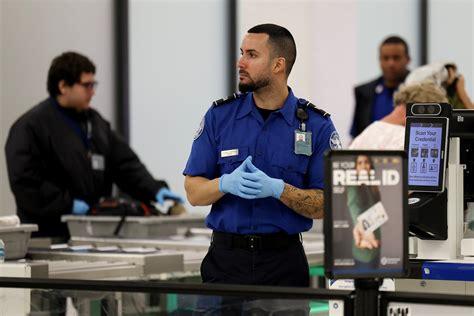
The Transportation Security Administration is removing chairs from Travel Document Checker (TDC) positions at airport security checkpoints across the United States, meaning officers responsible for checking passengers’ identification and boarding documents are now expected to remain standing throughout the assignment. TSA confirmed the nationwide policy change on September 29, turning what might appear to be a minor adjustment at the entrance to airport security into a wider debate over security, professionalism, passenger service, and employee working conditions.
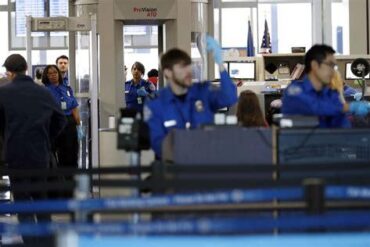
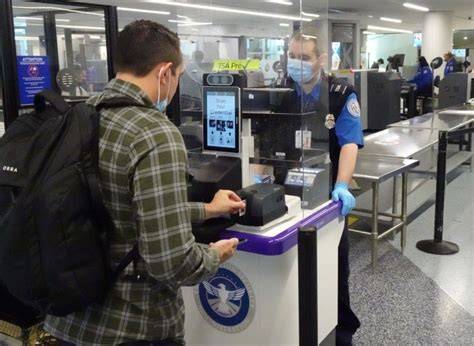
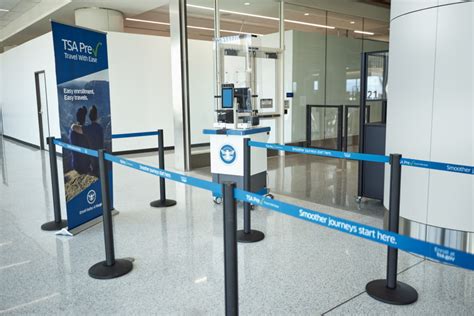
TDC officers occupy one of the most visible positions in the TSA screening process. Before passengers reach the main screening lanes, these employees verify documents, interact directly with travelers, and determine whether passengers can proceed into the next stage of the checkpoint. TSA argues that requiring officers to stand will make them appear more alert and engaged while creating a more professional and welcoming first interaction with passengers.
The decision has nevertheless generated opposition from the American Federation of Government Employees (AFGE) TSA Council 100, which represents TSA employees. The union says officers were not formally consulted before chairs began disappearing from checkpoints and argues that the seats provided a modest but important form of ergonomic relief. According to the union, many officers spend much of their working day standing or walking on hard surfaces, making the short periods spent checking travel documents one of the few opportunities to sit during a shift.
The disagreement highlights a tension that is easy to overlook in the airport security process. From a passenger’s perspective, the document-checking position may involve only a few seconds of interaction. For the employee behind the podium, however, the assignment is part of a physically demanding shift involving repeated standing, walking, reaching, and movement across a busy checkpoint environment.
Why TSA Is Removing Chairs From Travel Document Checker Positions
TSA says the policy is intended to reinforce both its security posture and commitment to hospitality. The agency has specifically emphasized that officers should remain on their feet and alert while carrying out their national security responsibilities. Standing also makes the officer more visually prominent, potentially creating a stronger sense of engagement at the first point of contact between passengers and airport security.
The agency has described the change in terms of alertness and professionalism rather than simply employee posture. A TDC is often the first TSA employee a traveler encounters, and the interaction establishes the tone for the remainder of the screening experience. TSA’s position is that an officer standing behind the document-checking podium presents a more attentive and welcoming presence than an officer seated while performing the same task.
That reasoning comes as TSA attempts to change how passengers experience security checkpoints. Identity verification is increasingly becoming a technology-driven process, with touchless identification available to eligible TSA PreCheck travelers at selected airports. Such systems can reduce some of the physical interaction involved in traditional document checks while shifting the role of officers toward monitoring, verification, assistance, and customer interaction.
TSA has not publicly provided evidence demonstrating that removing chairs directly improves the detection of security threats. The distinction is important. The agency’s stated rationale centers on alertness, visibility, professionalism, and passenger experience, but those objectives are not the same as demonstrating that standing officers identify more security risks.
TSA Workers Say Chairs Provided Essential Ergonomic Relief
AFGE has challenged the policy from a workplace-safety perspective. The union says chairs were not simply a convenience or an optional benefit. Instead, they provided basic ergonomic support for employees who already spend substantial portions of their shifts standing and walking on hard floors.
The timing of the change has also become part of the dispute. AFGE said employees learned about the broader chair-removal policy through members rather than through advance formal notification. Reuters reported that workers were reportedly learning about the change around September 25, while TSA publicly confirmed the nationwide policy several days later.
The union argues that the relatively short duration of a document-checking assignment does not make sitting unnecessary. TSA officers rotate between different checkpoint responsibilities, and an employee may spend approximately 30 minutes performing document checks before moving to another assignment. From the union’s perspective, that period represents a meaningful opportunity for physical recovery during a demanding shift.
Federal occupational-health research provides some context for the argument. The National Institute for Occupational Safety and Health (NIOSH) has associated prolonged occupational standing with problems including lower-back pain, fatigue, muscle pain, leg swelling, and general discomfort. Research also indicates that movement can reduce some of the problems associated with static standing.
This does not establish that removing TSA chairs is inherently unsafe. The evidence instead explains why employee representatives regard access to ergonomic relief as a legitimate workplace issue. The physical effect of standing continuously depends on factors such as movement, flooring, footwear, duration, posture, workload, and the availability of anti-fatigue measures.
TSA’s Existing Workplace Rules Add Another Layer
The chair dispute is particularly notable because TSA’s existing workplace framework already recognizes some of the ergonomic challenges associated with prolonged standing. The agency’s 2024 collective bargaining agreement includes provisions concerning anti-fatigue mats for employees who must remain in one place for extended periods and calls for appropriate ergonomic equipment in relevant circumstances.
That creates an important distinction in the current disagreement. The question is not simply whether TSA employees should be standing at all. Many checkpoint duties inherently require officers to remain mobile or upright. Instead, the dispute concerns whether removing the ability to sit during one particular assignment unnecessarily eliminates a form of ergonomic support.
AFGE has indicated that it intends to challenge the decision and has encouraged affected employees to contact their congressional representatives. The controversy also arrives during a difficult period in relations between TSA management and its workforce, including litigation surrounding the agency’s attempt to rescind its 2024 collective bargaining agreement.
A federal court order issued in January required TSA to continue treating that agreement as applicable and binding while the broader legal dispute continues. The chair issue therefore enters an already complicated environment involving questions about management authority, employee rights, workplace safety, and operational policy.
The Change Comes During a Major TSA Reset
The removal of chairs is also occurring during a broader transformation at TSA under new administrator David Cummins, who was sworn into the position on August 7, 2026. Less than three weeks later, the agency introduced Horizon 25, a strategy focused on modernizing airport checkpoints, improving the traveler experience, and strengthening transportation security.
TSA oversees security operations at more than 430 airports and employs approximately 60,000 people. Its responsibilities are therefore enormous, and even a seemingly small workplace-policy change can affect thousands of frontline employees and millions of travelers.
Horizon 25 has emphasized the need to combine security with efficiency and a better passenger experience. Technology is expected to play a major role in that effort, with digital identity verification and modern screening equipment changing the traditional checkpoint process.
The chair policy has not been formally identified by TSA as a component of Horizon 25. Nevertheless, its focus on alertness, professionalism, visibility, and passenger interaction closely overlaps with the broader themes of the agency’s modernization effort.
The timing is especially significant because the administration’s April budget proposal also called for substantial reductions in TSA staffing and funding. The proposal included eliminating more than 9,400 positions and cutting more than $1.5 billion from the agency’s budget, while proposing greater use of private screening at smaller airports.
Those proposed changes remain separate from the chair policy, but together they illustrate the scale of the operational questions confronting TSA. The agency is being asked to modernize checkpoints, maintain security standards, improve passenger interactions, and reconsider how its workforce is deployed.
What the Chair Removal Means for Passengers
For travelers, the immediate change will probably be subtle. Passengers will continue to approach a TSA document-checking podium, present identification and boarding credentials when required, and proceed toward the screening area if authorized. The most obvious difference will be the officer’s position: TDC employees will now be standing rather than sitting.
The passenger experience could change slightly depending on how officers and local managers implement the policy. TSA believes a standing officer can appear more attentive and approachable. Employees and their union, meanwhile, argue that the physical demands placed on officers should be considered alongside expectations for professional customer service.
That distinction matters because the quality of a checkpoint depends on more than technology. Even as digital identity systems become more common, TSA officers remain responsible for handling exceptions, assisting passengers, observing behavior, answering questions, and maintaining the security process.
A Small Checkpoint Change With Larger Implications
The removal of chairs from TSA document-checking stations illustrates how airport security policy can affect both travelers and the workforce behind the checkpoint. TSA views the change through the lens of alertness, professionalism, visibility, and hospitality. AFGE views it through workplace ergonomics, employee safety, and the practical realities of spending long periods on hard airport floors.
Neither perspective changes the basic operational fact: TDC officers are now expected to perform their document-checking duties while standing. The larger question is how that requirement fits into TSA’s evolving approach to checkpoint design and employee working conditions.
As the agency pursues modernization through new identity technology, redesigned checkpoints, and broader operational changes, frontline employees will remain central to the passenger experience. The debate over a chair may therefore be about more than a chair. It reflects a larger question about how TSA balances security, customer service, modernization, and the physical demands placed on the officers responsible for delivering all four at once.