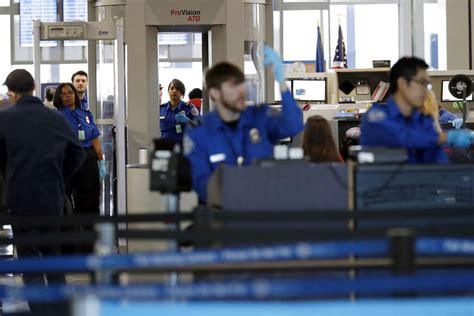
Denver International Airport (DEN), one of the busiest aviation hubs in North America, has launched a public gift card donation drive aimed at helping Transportation Security Administration (TSA) officers who continue to work without pay during the ongoing partial federal government shutdown. The initiative highlights how local airport communities sometimes step in when national budget disputes ripple down to frontline workers responsible for maintaining critical infrastructure.
The airport is asking travelers, airport employees, and members of the broader public to donate $10 and $20 grocery or gas gift cards, small amounts designed to provide practical relief to employees who suddenly find themselves facing everyday expenses without a paycheck. Collection boxes have already been placed at two high-traffic locations inside the airport complex, including the Jeppesen Terminal and the Final Approach Cell Phone Lot, making participation easy for anyone passing through Denver’s vast airport campus.
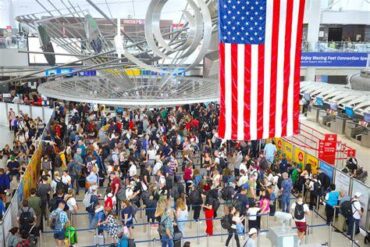
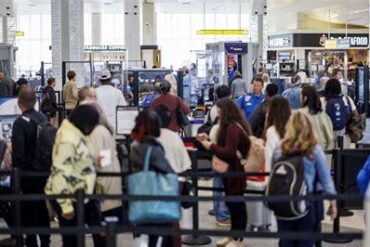
As spring break travel demand increases, the timing of the initiative is especially significant. Denver International routinely handles tens of thousands of passengers each day, and TSA screeners remain a critical layer of aviation security. Even as federal funding remains stalled in Washington, these officers continue reporting for duty, ensuring that security checkpoints operate smoothly while travelers move through one of the world’s most complex airport systems.
A Community Response to Financial Pressure on TSA Workers
The gift card drive is structured to provide immediate, flexible support for employees navigating financial strain. Grocery and gas cards target two of the most immediate household pressures—food and transportation—which often become difficult to manage when a paycheck disappears unexpectedly.
Unlike direct cash donations, these small-denomination gift cards serve a practical purpose. They are simple to distribute, easy to use, and immediately helpful for workers commuting to the airport or purchasing daily necessities. By requesting modest contributions, Denver International also lowers the barrier for participation, encouraging a wider group of travelers and employees to contribute.
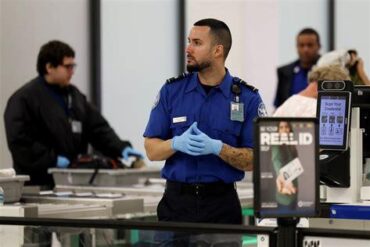
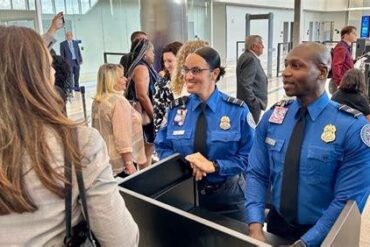
Beyond the material benefits, the program carries a powerful symbolic message. TSA officers often perform their duties quietly and largely out of public view, positioned behind screening equipment and security checkpoints that passengers encounter briefly before rushing toward their gates. The donation campaign signals that the airport community recognizes their role not simply as federal staff, but as essential partners responsible for protecting millions of travelers each year.
For employees facing financial uncertainty, public recognition can matter almost as much as financial assistance. Moments of community support help maintain morale, reinforce professional pride, and encourage attendance during periods when staffing shortages could create longer security lines and travel delays.
Why TSA Officers Continue Working Without Pay
The financial strain faced by TSA employees stems from a partial shutdown within the U.S. Department of Homeland Security (DHS) that began in mid-February after lawmakers failed to reach an agreement on federal funding legislation. The TSA operates under DHS, meaning its budget becomes vulnerable whenever congressional appropriations stall.
Under federal law, aviation security cannot pause simply because government funding lapses. TSA officers are categorized as “essential” or “excepted” federal employees, which requires them to continue working even when payroll processing temporarily stops.
This arrangement creates a difficult reality for thousands of federal workers. While they are legally required to report to work, their paychecks are delayed until Congress restores funding. Once a funding agreement is reached, employees typically receive retroactive compensation, but the gap between pay periods can place significant pressure on household budgets.
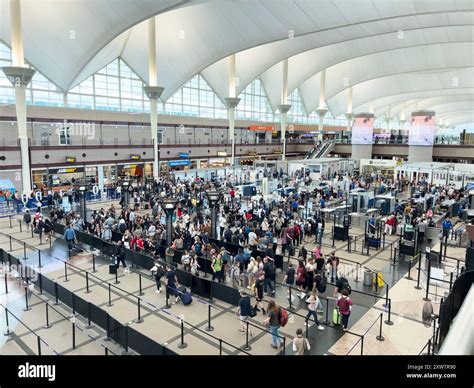
The shutdown also arrives during a busy period for aviation. The spring travel season, particularly around school breaks, brings a surge in passenger numbers. In recent years, the TSA has reported screening millions of passengers per day across the United States, underscoring how critical uninterrupted airport security operations remain.
Denver International’s Longstanding Partnership with TSA
Denver International Airport’s response reflects an institutional culture that views federal agencies not as distant bureaucracies but as integral operational partners. Airport leadership has repeatedly emphasized that TSA officers are part of the broader “airport family,” a philosophy that becomes most visible during times of crisis.
This is not the first instance in which DEN has stepped in to assist federal employees during funding disruptions. In November 2025, during a previous shutdown-related disruption, the airport established a temporary pantry for unpaid federal staff, providing food and supplies to workers from several agencies including the TSA, Federal Aviation Administration (FAA), and U.S. Customs and Border Protection (CBP).
The partnership between Denver International and the TSA also extends beyond crisis support. In 2025, the airport collaborated with the agency to deploy TSA PreCheck Touchless ID technology, allowing passengers to move through certain security lanes using facial recognition and digital identity verification. These technological upgrades aim to improve both security efficiency and passenger convenience in one of the largest airports in the United States.
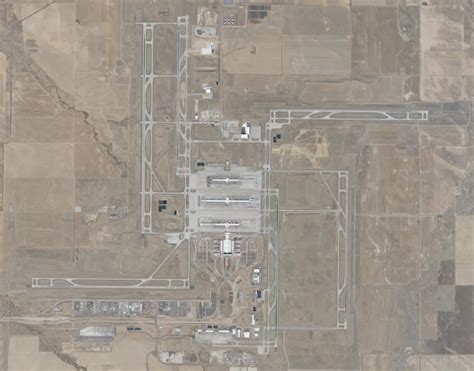
For an airport that spans more than 33,000 acres and serves as a major gateway to the American West, security screening plays a central role in the overall travel experience. Denver’s visible support for TSA staff reflects the understanding that aviation security is not merely a federal responsibility—it is a shared operational mission that affects airlines, airports, and passengers alike.
As the federal shutdown continues to unfold, Denver International’s gift card initiative demonstrates how local institutions can offer immediate relief while highlighting the human realities behind national budget negotiations. For the TSA officers who stand at security checkpoints every day, the small cards represent something larger: a community acknowledging the value of their work when the system temporarily fails to pay them for it.