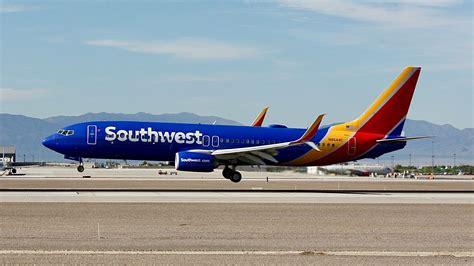
The prolonged 43-day U.S. federal government shutdown has forced Southwest Airlines to sharply revise its full-year 2025 profit expectations, triggering turbulence across the broader aviation sector. With air-traffic staffing shortages, mandated flight reductions, elevated fuel prices, and weeks of cascading operational disruptions, the carrier now anticipates significantly weaker earnings than originally projected.
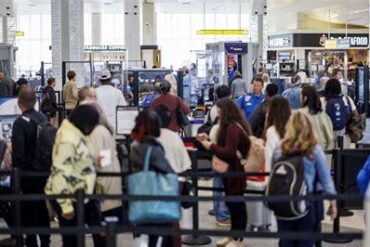
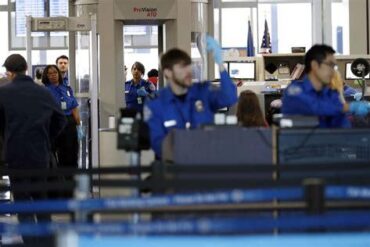
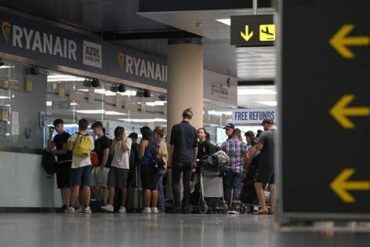
The financial hit became unavoidable as key federal aviation functions stalled. Air-traffic control towers—already stretched thin—saw further workforce reductions. TSA screening lanes slowed across major hubs, and security bottlenecks deepened, rippling through the busy domestic travel network that Southwest depends on. The airline’s stock reacted swiftly, sliding as investors recalibrated expectations.
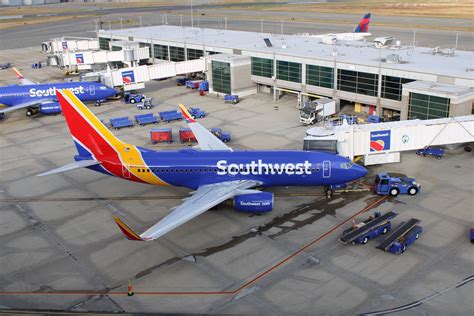
Southwest’s Reduced Forecast Reflects Systemwide Strain
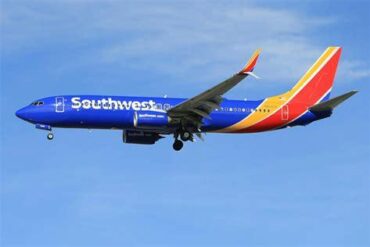
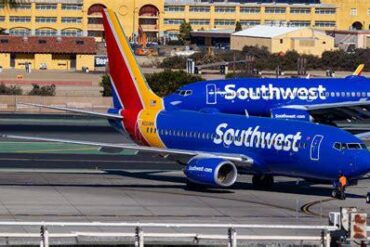
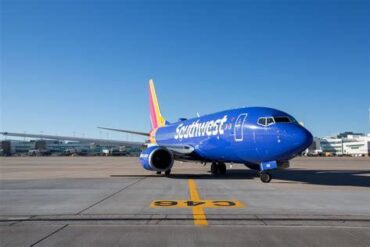
Southwest now expects full-year 2025 revenue before interest and tax of about $500 million, a steep descent from the previously projected $600–$800 million. The adjusted target represents a 16.7%–37.5% reduction, underscoring the financial force of the shutdown.
A major turning point came when the Federal Aviation Administration (FAA) imposed a mandatory 10% reduction in flights across 40 high-traffic U.S. airports to maintain operational safety amid staffing shortages. This decision alone triggered thousands of cancellations, stranded passengers, and millions in refunded fares. Compounding the airline’s challenges, volatile fuel prices further squeezed margins during the same period.
Analysts across Wall Street anticipate that the shutdown’s effects will resonate well into Q4, with expectations of profit drops of roughly 30% for U.S. carriers—an unusually intense blow even for an industry accustomed to volatility.
Other U.S. Airlines Are Absorbing Heavy Losses
Southwest is not alone in recalibrating its expectations. The FAA-mandated flight pullbacks and severe winter weather knocked out more than 10,000 flights between November 7 and November 16, according to AeroTime data. Roughly 5.2 million passengers felt the impact as delays rolled from airport to airport.
Delta Air Lines signaled a $200 million drop in its Q4 2025 pre-tax profit, while JetBlue expects a one-point reduction in Available Seat Mile (ASM) growth during the same quarter. United Airlines and American Airlines have acknowledged significant disruptions as well, even if exact financial hits remain unquantified. Despite this turbulence, some carriers—particularly Delta—report that bookings have normalized, setting the stage for a stronger December and a modest rebound in investor confidence.
Aviation Leaders Look Toward a Stronger 2026
While 2025 bears the scars of shutdown-driven chaos, the major U.S. carriers are charting an ambitious course for 2026. Southwest plans to expand aggressively across leisure-heavy destinations such as Honolulu and Anchorage, launching new routes from West Coast gateways including Burbank, Seattle, and Portland. The airline is betting that pent-up travel demand—paired with operational stability—will accelerate recovery.
United Airlines aims to strengthen its transatlantic presence with four new European routes from Newark (EWR), a strategic move teased extensively across the airline’s social channels. American Airlines is pushing further into Europe and South America with new services to Prague, Budapest, Buenos Aires, and beyond, while Delta is charting a bold return to the Gulf region with planned service to Riyadh by winter 2026.
Airlines are preparing for 2026 with renewed optimism. Despite the shutdown’s sweeping disruptions, the nation’s largest carriers are positioning for network expansion, fleet growth, and renewed international competition. The industry’s recovery arc now depends on stable federal operations, consistent staffing, and the return of traveler confidence—an equation airlines hope will finally break in their favor.