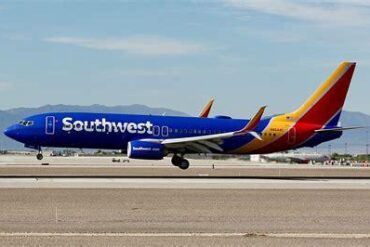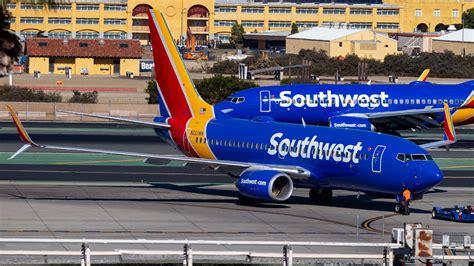
The decision by Southwest Airlines to lay off approximately 75 employees has sparked widespread industry attention, particularly given the airline’s announcement of a record-breaking $7.2 billion in first-quarter operating revenue. The move reflects a growing paradox within modern aviation: strong top-line performance does not necessarily shield companies from internal restructuring or workforce reductions. Instead, it highlights a deeper shift toward efficiency-driven strategies shaping airline operations in 2026.
While the layoffs impact a relatively small portion of Southwest’s workforce, they arrive at a moment when the airline is under heightened scrutiny from investors, analysts, and competitors. The Dallas-based carrier has framed the decision as part of an “operational restructuring,” signaling a recalibration of internal priorities rather than a broad downsizing initiative. Still, the optics of cutting jobs during a period of financial strength underscore the complexity of balancing growth with cost discipline.
The employees affected were reportedly tied to internal operational support functions, suggesting that Southwest is targeting backend efficiencies rather than frontline service roles. This distinction is critical, as it indicates a strategic focus on optimizing internal systems rather than reducing customer-facing capacity.
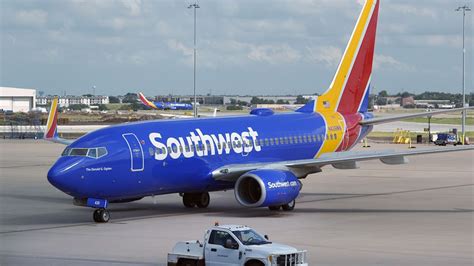
Operational Restructuring Signals Strategic Realignment
Southwest’s restructuring effort appears rooted in a broader transformation strategy that has been quietly unfolding over the past two years. Following operational disruptions and mounting external pressures, the airline has increasingly prioritized modernization and system resilience.
The layoffs, though modest in scale, represent a tangible step in aligning workforce structure with evolving operational demands. Internal departments connected to scheduling, logistics, and administrative coordination are often the first areas targeted when companies pursue efficiency gains, particularly in industries as complex as aviation.
This shift reflects a wider industry pattern where airlines streamline non-core functions while preserving or even expanding revenue-generating operations. By refining internal processes, Southwest aims to reduce redundancies and enhance responsiveness in a highly dynamic travel environment.
Record Revenue Masks Persistent Cost Pressures
The headline figure of $7.2 billion in quarterly revenue underscores the continued strength of domestic air travel demand in the United States. Southwest has benefited from robust leisure travel, a loyal customer base, and an expansive route network that connects key cities across the country.
However, revenue alone provides an incomplete picture of financial health. Airlines operate within a high-cost ecosystem where fuel prices, labor agreements, and maintenance expenses can quickly erode margins. In recent years, rising wages—particularly following new pilot contracts—have significantly increased operating costs across the industry.
Southwest is no exception. Despite its low-cost carrier DNA, the airline faces mounting financial pressures that demand continuous optimization. Fuel volatility remains a persistent challenge, while supply chain disruptions and aircraft delivery delays further complicate long-term planning.
Against this backdrop, the decision to reduce headcount in specific operational areas reflects a calculated effort to protect profitability rather than a reaction to declining demand.
Post-Crisis Transformation Continues
The restructuring initiative also ties into Southwest’s ongoing efforts to recover from its widely publicized operational crisis during the 2022 holiday season. That disruption exposed vulnerabilities in the airline’s crew scheduling systems and highlighted the need for technological upgrades.
Since then, Southwest has invested heavily in modernizing its infrastructure, including improvements to scheduling software, operational analytics, and contingency planning frameworks. These investments are designed to prevent future disruptions and enhance overall reliability.
At the same time, the airline has been reassessing its organizational structure to ensure that it can support these new systems effectively. Streamlining certain roles while strengthening others is a common approach during periods of technological transition, as companies seek to align human resources with digital capabilities.
The latest layoffs may therefore represent a continuation of this transformation rather than an isolated cost-cutting measure.
Balancing Tradition With Competitive Pressure
Southwest’s business model has long been defined by simplicity and consistency. Its all-Boeing 737 fleet, point-to-point network, and no-frills service approach have historically enabled cost efficiency and operational flexibility.
However, the competitive landscape has evolved significantly. Ultra-low-cost carriers are exerting downward pressure on fares, while legacy airlines have improved their own cost structures and service offerings. This intensifying competition forces Southwest to adapt without compromising the core principles that define its brand.
The airline’s restructuring efforts suggest a willingness to evolve internally while maintaining external stability. By focusing on efficiency improvements behind the scenes, Southwest can continue delivering value to passengers without introducing disruptive changes to its customer experience.
Industry-Wide Trend Toward Leaner Operations
Southwest’s decision is not occurring in isolation. Across the global aviation sector, airlines are increasingly embracing leaner operational models to navigate an environment characterized by high demand but tight margins.
Post-pandemic recovery has driven passenger numbers to new highs, yet profitability remains constrained by rising costs and operational complexity. As a result, carriers are adopting more disciplined approaches to resource allocation, often involving targeted layoffs or departmental restructuring.
This trend reflects a broader shift toward data-driven decision-making, where airlines continuously evaluate performance metrics and adjust organizational structures accordingly. In this context, workforce reductions—even during periods of strong revenue—are becoming a normalized aspect of strategic management.

What This Means for Southwest’s Future
The layoffs at Southwest Airlines, while limited in scale, offer a revealing glimpse into the airline’s strategic direction. The company is clearly prioritizing efficiency, resilience, and long-term competitiveness over short-term optics.
By refining its internal structure, Southwest aims to position itself for sustained success in an increasingly complex aviation landscape. The challenge lies in executing these changes without undermining employee morale or operational stability.
Ultimately, the situation underscores a fundamental reality of modern business: financial success does not eliminate the need for continuous adaptation. For Southwest, the path forward involves balancing its legacy strengths with the demands of a rapidly evolving industry—an equation that will shape its trajectory in the years ahead.