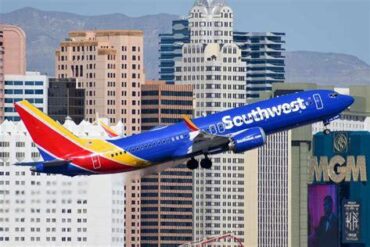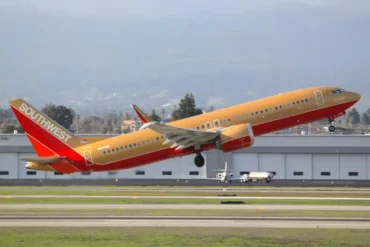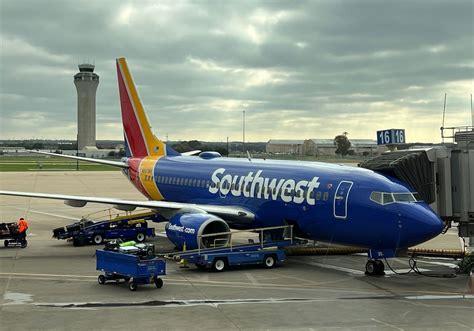
Inside the aviation industry, few practices were as instantly recognizable as Southwest Airlines’ open seating system. For 54 years, passengers lined up according to boarding position rather than seat number, creating an experience that supporters described as democratic and efficient while critics viewed it as chaotic and outdated. Yet despite its iconic status, open seating ultimately collided with an unforgiving reality: mathematics.
The final unassigned Southwest flight departed from Honolulu International Airport to Los Angeles International Airport on January 26, 2026, closing one of the longest-running operational experiments in modern commercial aviation. Nostalgia surrounded the moment, but sentiment had little influence over the outcome. Behind boardroom doors, executives faced increasingly difficult equations involving customer behavior, ancillary revenue, shareholder pressure, and operational efficiency.
The end of open seating was not simply a branding decision. It was the result of years of financial modeling demonstrating that preserving tradition had become more expensive than abandoning it. In a fiercely competitive airline market where every square foot of cabin space is analyzed for profitability, Southwest’s beloved boarding process had transformed from a competitive advantage into a measurable financial liability.
By the time executives completed their calculations, the conclusion had become unavoidable: the numbers no longer worked.
After generating $27.5 billion in operating revenue during fiscal year 2024, Southwest still struggled with weakening profitability trends. Adjusted net income declined sharply, exposing vulnerabilities in a business model increasingly out of alignment with broader industry economics. While competitors expanded premium offerings and diversified ancillary revenue streams, Southwest continued relying heavily on ticket sales alone.
The mathematics of survival had changed.
The Customer Preference Data That Changed Everything
For decades, Southwest believed open seating fostered flexibility, encouraged customer interaction, and accelerated boarding procedures. Those assumptions remained deeply embedded within the airline’s corporate culture.
Unfortunately, contemporary travelers increasingly disagreed.
Internal research revealed that 80% of existing Southwest customers preferred assigned seating arrangements, while an even larger 86% of prospective passengers favored pre-selected seats. More significantly, surveys identified open boarding anxiety as the leading reason travelers chose competing airlines.
These findings represented more than shifting opinions. They revealed direct revenue implications.
Business travelers frequently avoided Southwest because seating uncertainty complicated professional schedules. Families hesitated to book vacations without guarantees that parents and children could sit together. Couples planning important trips sought predictability rather than gate-side competition.
The airline discovered that its signature feature had evolved into a booking deterrent.
This transformation reflected broader societal shifts. Modern consumers increasingly prioritize convenience, certainty, and personalization. Digital ecosystems have conditioned travelers to customize virtually every aspect of their experiences before departure. Against this backdrop, scrambling for seats moments before boarding appeared increasingly antiquated.
The implications extended far beyond customer satisfaction scores.
Every passenger choosing another carrier represented lost revenue opportunities not only from ticket purchases but also from loyalty memberships, credit card partnerships, premium upgrades, and future travel decisions. What initially appeared to be a philosophical disagreement about boarding procedures became an undeniable threat to long-term earnings growth.
Culture alone could no longer justify the costs.
The Billion-Dollar Revenue Opportunity Southwest Couldn’t Access
While changing consumer preferences created strategic urgency, ancillary revenue mathematics ultimately accelerated Southwest’s transformation.
Unlike traditional assigned seating systems, open boarding prevented airlines from monetizing specific locations within the cabin. Window seats, aisle seats, forward rows, and extra-legroom sections carried identical economic value despite varying customer demand.
Competitors capitalized aggressively on this imbalance.
Between 2018 and 2023, major U.S. airlines collectively generated $12.4 billion through seat assignment fees alone. These revenues carried exceptionally attractive margins because they involved selling existing assets rather than introducing new operational costs.
Southwest simply lacked the infrastructure necessary to participate.
An open cabin contains no fixed inventory. Without designated seats, airlines cannot price preferences according to willingness to pay. High-demand locations remain economically invisible.
As rivals transformed aircraft interiors into carefully segmented marketplaces, Southwest effectively treated every seat as interchangeable.
That philosophy came at a staggering price.
The issue extended beyond seating assignments. Competitors increasingly relied upon ancillary revenues to buffer against volatile fuel costs, economic downturns, and pricing wars. Checked baggage fees, priority boarding purchases, subscription products, and premium seating generated consistent supplemental income independent of airfare fluctuations.
Southwest’s longstanding commitment to free checked bags reinforced its customer-friendly reputation but simultaneously widened the revenue gap separating the carrier from its peers.
Eventually, those differences became impossible to ignore.
Turning Every Seat Into Revenue-Producing Real Estate
Once executives committed to abandoning open seating, they faced another challenge: maximizing the financial potential of assigned cabins.
Their answer involved comprehensive segmentation.
Corporate projections estimated that newly introduced seating products could generate approximately $1.5 billion in annual incremental revenue, contributing substantially toward ambitions of adding $4.3 billion in total operating profit.
The strategy depended upon transforming aircraft interiors into tiered marketplaces.
Under revised fare structures, travelers encounter multiple product categories designed to capture varying spending behaviors. Budget-conscious customers retain access to lower fares while sacrificing flexibility and preferred seating privileges. Meanwhile, travelers prioritizing convenience or comfort gain opportunities to purchase enhanced experiences.
Extra-legroom sections became especially significant.
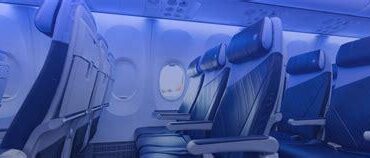
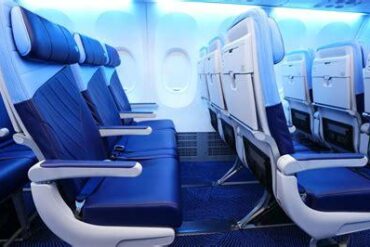
Southwest allocated approximately one-third of cabin capacity toward premium seating configurations offering additional pitch. These seats required no additional aircraft acquisitions, no new airport infrastructure, and no dramatic increases in operating expenses.
Instead, they extracted greater value from existing assets.
This represented perhaps the most important mathematical principle underlying Southwest’s transformation: increasing revenue without increasing capacity.
Traditional expansion strategies require purchasing aircraft, hiring crews, negotiating airport access, and absorbing substantial capital expenditures. Premium segmentation accomplishes similar financial objectives through pricing innovation.
The same airplane suddenly becomes more profitable.
For investors seeking improved returns, the appeal was obvious.
The Eight Million Simulations That Protected Southwest’s Efficiency Advantage
Despite attractive revenue projections, assigned seating introduced serious operational concerns.
Southwest’s low-cost success historically depended upon rapid aircraft turnarounds. Quick gate operations enabled high utilization rates across its extensive Boeing 737 fleet, allowing individual aircraft to operate multiple daily segments.
Even minor delays threatened this advantage.
Executives therefore initiated one of the most extensive operational modeling exercises in company history, conducting more than eight million boarding simulations before implementing new procedures.
The objective was straightforward.
Would assigned seating slow operations enough to undermine the efficiency gains that defined Southwest’s business model?
The results proved encouraging.
Traditional back-to-front boarding methods produced unacceptable congestion patterns, extending turnaround windows beyond practical thresholds. However, refined zone boarding strategies demonstrated the ability to preserve much of Southwest’s historical efficiency.
Modeled turnaround estimates reflected this balance.
Traditional open seating averaged approximately 20 to 25 minutes, maximizing daily aircraft utilization while generating substantial gate-side stress.
Legacy assigned systems frequently required 28 to 32 minutes, reducing scheduling flexibility and increasing operational risk.
Optimized zone boarding landed between 23 and 27 minutes, offering manageable trade-offs between efficiency and customer preference.
Those few minutes mattered enormously.
Across hundreds of aircraft operating thousands of annual departures, small timing differences compound rapidly. Additional delays reduce schedule resilience, increase crew complications, and limit overall productivity.
Simulation data suggested Southwest could successfully navigate these challenges.
Without those results, open seating might have survived.
Elliott Investment Management’s Role in Accelerating Change
Financial pressures alone rarely produce immediate transformation within legacy organizations.
External catalysts often become necessary.
For Southwest, that catalyst emerged through Elliott Investment Management, which accumulated a substantial ownership stake and advocated aggressively for strategic modernization.
At its peak, Elliott controlled approximately 16% of Southwest’s equity, securing meaningful influence over corporate governance discussions.
The activist firm’s perspective differed sharply from traditional leadership philosophies.
Rather than viewing open seating as a cherished cultural asset, Elliott considered it an underperforming operational relic constraining profitability. Executives had delayed monetization opportunities for years while competitors evolved rapidly.
Patience diminished.
Through board representation and shareholder pressure, Elliott accelerated initiatives previously resisted by management. Assigned seating, baggage fees, fare segmentation, and network optimization all gained momentum under intensified scrutiny.
The message remained consistent.
Brand identity carries value, but not infinite value.
If traditions compromise earnings potential, shareholders increasingly demand adaptation.
Eventually, Southwest embraced changes it once considered unthinkable.
Interestingly, Elliott later reduced its ownership position after implementation milestones advanced substantially. By early 2026, the firm’s stake declined toward 9%, while several activist directors departed the board.
The revolution had already occurred.
Operational Consequences Beyond Boarding Procedures
The elimination of open seating created ripple effects extending throughout Southwest’s operational ecosystem.
One particularly sensitive area involved the airline’s longstanding customer-of-size accommodation policies.
Under open boarding frameworks, gate agents could often allocate adjacent seats with relative ease. Assigned cabins complicated these arrangements considerably, especially on heavily booked flights operating near capacity.
New procedures required careful refinement.
Southwest ultimately adjusted policies again during 2026, seeking solutions that preserved customer dignity while navigating logistical constraints introduced by fixed seating assignments.
These challenges illustrated broader truths about airline transformation.
No operational element exists independently.
Boarding procedures influence turnaround times. Seating assignments affect customer service protocols. Revenue strategies reshape cabin configurations. Investor expectations alter executive priorities.
Changes reverberate throughout entire organizations.
The transition away from open seating therefore represented more than a procedural update.
It reflected comprehensive reinvention.
The End of an Era and the Beginning of a New Southwest
Southwest Airlines built its reputation by challenging industry conventions.
For decades, that rebellious spirit fueled extraordinary success. Open seating symbolized simplicity, egalitarianism, and operational creativity during periods when competitors remained burdened by complexity.
Yet industries evolve.
Practices once considered revolutionary can gradually become constraints. Consumer expectations shift. Revenue models mature. Competitive landscapes intensify.
Eventually, organizations confront difficult choices between preservation and adaptation.
Southwest reached that crossroads.
Its executives examined customer surveys revealing overwhelming preferences for assigned seating. They studied billions of dollars competitors generated through ancillary products. They evaluated millions of boarding simulations designed to safeguard efficiency advantages. They responded to increasingly vocal shareholder demands for modernization.
The arithmetic consistently pointed toward one conclusion.
Maintaining open seating no longer maximized value.
For aviation enthusiasts, the final unassigned flight marked the disappearance of a uniquely American airline tradition. Few carriers maintained such distinctive operational identities for so long, and fewer still willingly surrendered them.
Yet commercial aviation has always rewarded pragmatism over sentimentality.
Aircraft cabins function simultaneously as transportation systems and economic ecosystems. Every policy decision influences profitability. Every operational adjustment affects competitive positioning.
The boarding groups that once defined Southwest’s personality ultimately became incompatible with contemporary financial realities.
Open seating survived for 54 remarkable years because it solved problems relevant to its era.
Assigned seating emerged because it solves today’s problems more effectively.
The mathematics did not erase Southwest’s history.
It simply determined its future.
And in the modern airline business, the future belongs to carriers willing to optimize every seat, every minute, and every dollar flying through the skies.