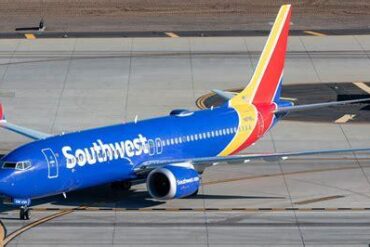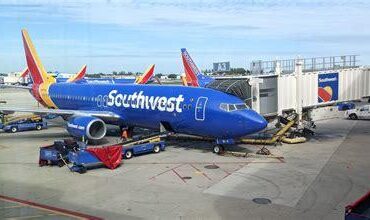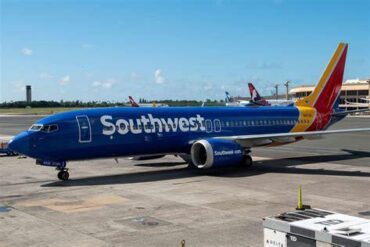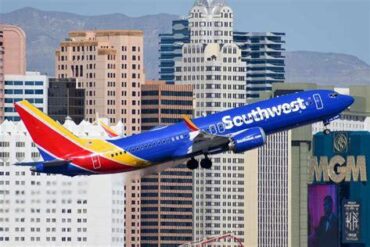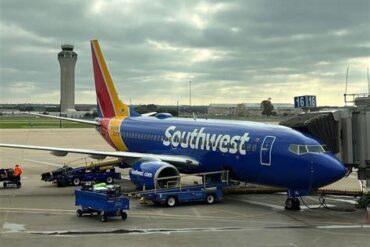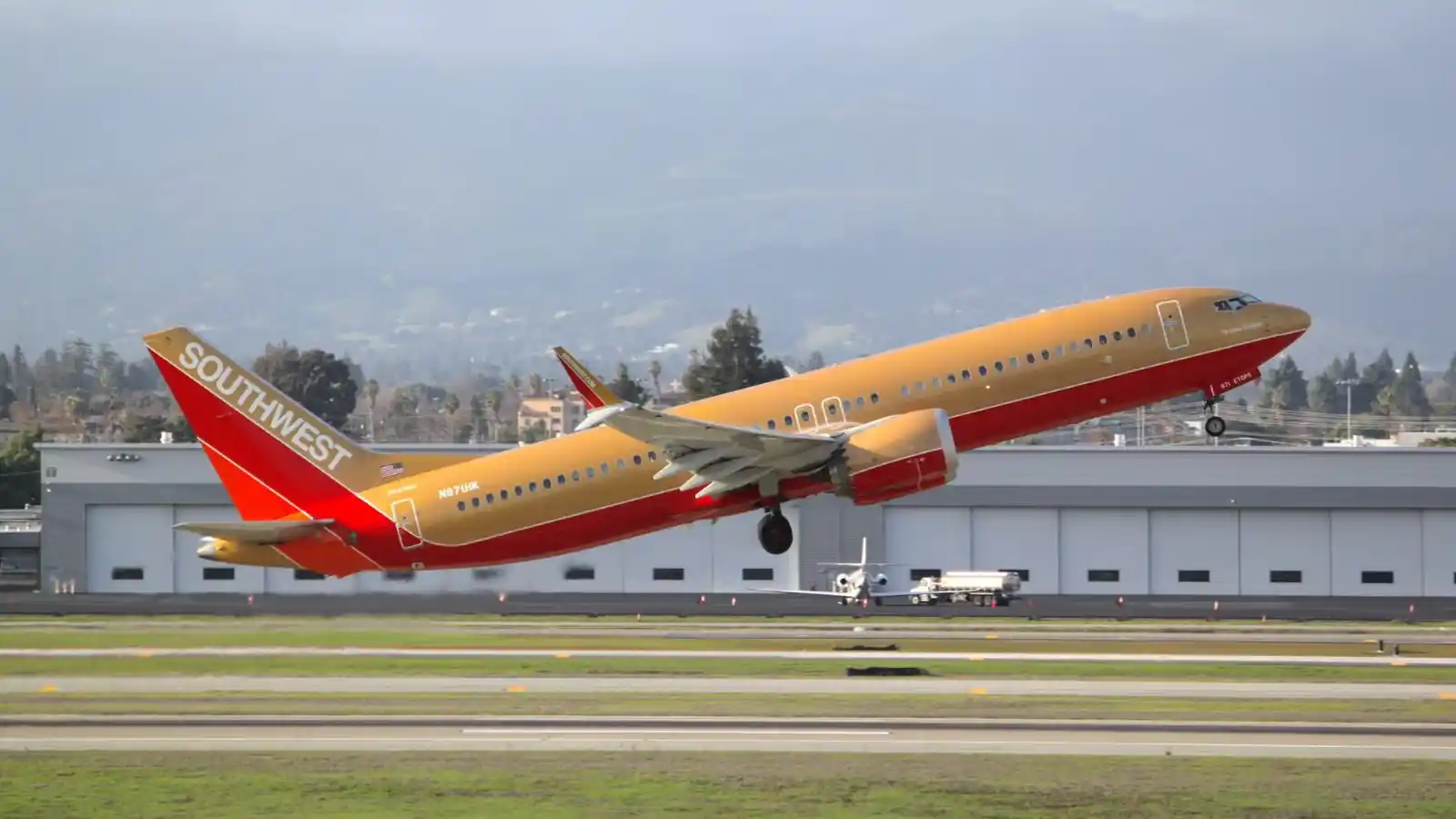
Southwest Airlines is closing one of the most distinctive chapters in US commercial aviation by operating its final open-seating flight with a deliberate sense of symbolism. On the night of January 26, Southwest flight WN1971 will depart Honolulu for Los Angeles, arriving the following morning and quietly ending a policy that defined the airline for more than half a century. The carrier chose not just any aircraft for this moment, but a Boeing 737 MAX 8 painted in its original Desert Gold livery, a visual callback to the airline’s earliest days and the philosophy that reshaped domestic flying in America.
The Final Journey of Open Seating at Southwest
The overnight flight from Daniel K. Inouye International Airport to Los Angeles International Airport is scheduled to depart at 9:55 pm local time and land at 5:30 am Pacific time. That arrival time carries quiet irony. While WN1971 is still airborne over the Pacific, Southwest’s first assigned-seating flight—from San Juan to Orlando—will already be preparing for departure, effectively overlapping the old and new worlds for a few brief hours.
For decades, open seating was more than a boarding method. It was a behavioral experiment at 35,000 feet, rewarding punctuality, decisiveness, and sometimes a bit of social agility. Passengers boarded in groups, then selected any available seat. No seat maps. No assignments. No negotiations with algorithms. Just humans, carry-ons, and the subtle psychology of aisle versus window.
Why a Retro Boeing 737 MAX 8 Was Chosen
The aircraft assigned to WN1971, N871HK, is itself a carefully chosen artifact. While internally it is a standard Boeing 737 MAX 8, its exterior tells a richer story. The Desert Gold livery mirrors Southwest’s original paint scheme, and the aircraft is dedicated to Herb Kelleher, the airline’s co-founder and long-time leader whose initials are embedded in the registration.
Kelleher’s influence went far beyond branding. He championed simplicity, efficiency, and customer empowerment, and open seating embodied that ethos perfectly. Assigning this specific aircraft to the final open-seating flight feels less like coincidence and more like a restrained salute—an understated goodbye consistent with Southwest’s historically no-frills public tone.
Open Seating as a Brand Identity, Not a Gimmick
Open seating helped Southwest differentiate itself in an industry increasingly defined by segmentation and fees. It reduced turnaround times, simplified operations, and fostered a sense—real or imagined—of equality onboard. Everyone had access to the same seats; the only currency was boarding position.
At the same time, the system was polarizing. Frequent flyers mastered it. Infrequent travelers often found it stressful or confusing. Families worried about sitting together. The boarding process could feel chaotic to those accustomed to rigid structure. As the airline expanded and its customer base diversified, open seating became both a signature strength and a growing liability.
January 27 Signals a Structural Shift in Strategy
As of January 27, assigned seating becomes standard across all Southwest flights, placing the airline squarely in line with global industry norms. Every major carrier already relies on seat assignments to manage customer expectations and maximize ancillary revenue. Southwest’s move reflects not just a policy tweak, but a structural recalibration of its business model.
With assigned seating comes monetization. Preferred seats, aisle and window selection, and bundled fares with complimentary seat choice open new revenue streams. This shift is particularly significant for an airline that long resisted à la carte pricing in favor of simplicity. The decision acknowledges a competitive reality where margins increasingly depend on non-ticket revenue.
Extra-Legroom Seating and Cabin Reconfiguration
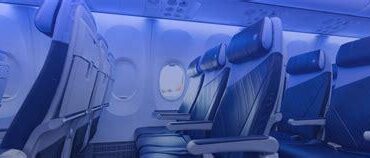
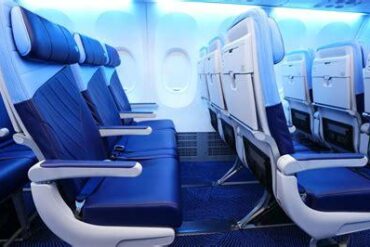
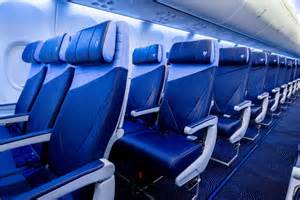
The transition is not purely financial. Southwest has reconfigured its fleet to support the new strategy, introducing extra-legroom seating across its Boeing 737 variants. The 737 MAX 8 and 737-800 now feature 46 extra-legroom seats, while the smaller 737-700 offers slightly fewer.
These seats target a passenger segment that has grown steadily more willing to pay for comfort, especially on longer routes. For Southwest, the addition represents a philosophical pivot: recognizing differentiated experiences onboard rather than a single egalitarian cabin.
Investor Pressure and Industry Convergence
The timing of these changes is not accidental. Following Elliott Investment Management’s significant stake acquisition in 2024, Southwest began aligning more closely with the practices of competitors such as Delta Air Lines and United Airlines. Assigned seating, overnight flights, international partnerships, and revised baggage policies all point toward a carrier prioritizing financial resilience and shareholder expectations.
Some changes have been broadly welcomed. Expanded schedules and new partnerships enhance network utility. Others, particularly the introduction of fees where none existed before, have drawn sharper criticism from loyal customers who viewed Southwest as an outlier in a fee-heavy industry.
Nostalgia, Pragmatism, and the Cost of Change
The retirement of open seating is emotionally charged precisely because it symbolizes something larger: the gradual erosion of Southwest’s outsider identity. Charging for checked bags and seat selection aligns the airline with industry norms, but also dissolves long-standing brand promises that fostered intense loyalty.
From a business perspective, the logic is clear. From a cultural perspective, the loss feels heavier. The final open-seating flight, operated by a retro-painted aircraft honoring Herb Kelleher, captures that tension perfectly—a bridge between nostalgia and necessity.
When WN1971 touches down in Los Angeles, nothing dramatic will happen. No ceremony. No announcement. Just another arrival. Yet for aviation watchers and long-time customers alike, it marks the quiet end of an experiment that helped redefine low-cost flying. Southwest will continue to evolve, but the era of walking onto a jet and choosing any seat you like will live on as one of the most distinctive ideas in airline history.