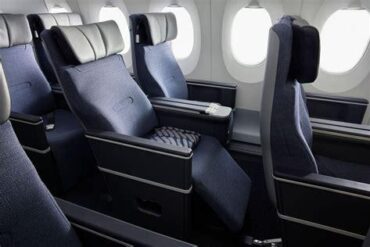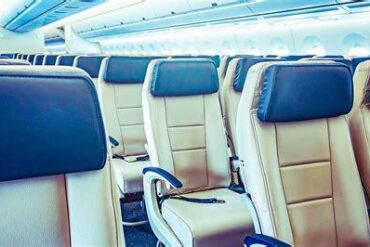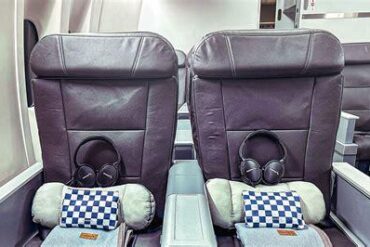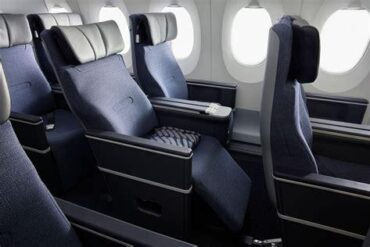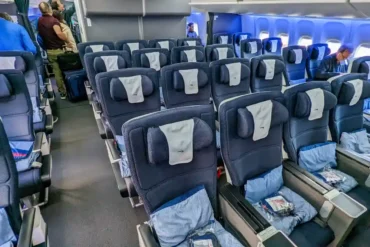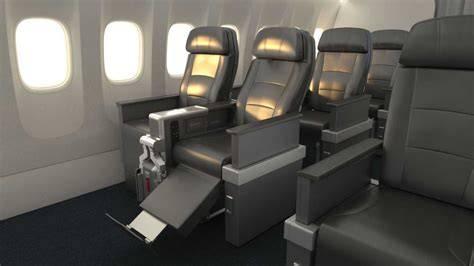
Premium economy has evolved from a modest step above standard economy into one of the most compelling products in long-haul aviation. For travelers who want more space, better seats, improved service, and a more relaxed journey without paying business-class fares, it increasingly represents the sweet spot between price and comfort.
The appeal is particularly strong on overnight and long-distance flights. A few extra inches of legroom can make a meaningful difference after eight or ten hours in the air, while a wider seat, deeper recline, adjustable leg support, better dining, and upgraded entertainment can transform the overall experience. Airlines have also recognized that passengers are willing to pay for these improvements, making premium economy an increasingly important part of their cabin strategies.
The strongest products, however, do not all approach comfort in the same way. Some airlines focus heavily on seat dimensions, while others emphasize recline technology, privacy, entertainment, food, or the softer details that make a long flight feel less exhausting. The 2025 Skytrax World Airline Awards provide a useful benchmark, ranking the world’s premium economy products based on passenger feedback and overall cabin experience.
Among the highest-ranked products are six airlines that have established particularly strong reputations for premium economy comfort. From Virgin Atlantic’s service-focused cabin to EVA Air’s innovative recline mechanism and Japan Airlines’ generous personal space, these seats demonstrate how much the category has changed.
6. Cathay Pacific Premium Economy
Cathay Pacific occupies sixth place in the 2025 Skytrax ranking, offering a premium economy product that combines generous dimensions with practical features designed for long-haul travel.
Cathay Pacific provides approximately 40 inches of seat pitch, giving passengers substantially more legroom than they would typically receive in economy. The seats also incorporate leg and foot rests, adjustable calf support, and considerable recline. These features matter because comfort is not determined by seat pitch alone. Supporting the lower legs and calves can reduce the feeling of compression that becomes increasingly noticeable during a long flight.
The seat’s leather headrest includes privacy wings, allowing passengers to create a more enclosed personal space when sleeping or watching a movie. Storage compartments are another useful touch, particularly for travelers carrying headphones, phones, passports, glasses, or other small items that otherwise tend to disappear into the seat pocket.
Cathay Pacific offers premium economy on aircraft including the Boeing 777-300ER, Airbus A330-300, Airbus A350-900, and Airbus A350-1000. The refurbished 777-300ER introduces an especially notable entertainment upgrade, with a 15.6-inch 4K display and Bluetooth audio. That represents a major improvement over the older 12.1-inch screens and gives passengers a more contemporary entertainment experience.
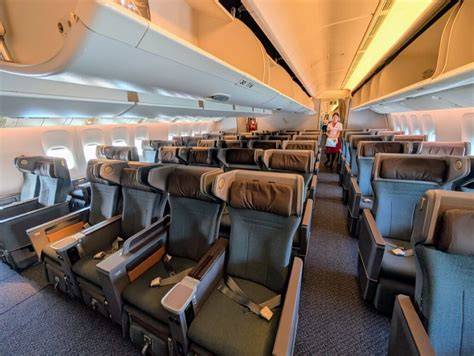
5. EVA Air Premium Economy
EVA Air has a particularly important place in premium economy history because it was the first airline to introduce the concept, launching Evergreen Deluxe Class in 1992.
More than three decades later, the Taiwanese carrier remains one of the category’s strongest performers. Its premium economy cabin on the Boeing 777-300ER has long been recognized for its spacious configuration, while the airline introduced a new generation of premium economy seating on its Boeing 787-9 in 2025.
The latest version contains 28 seats in a 2-3-2 configuration, giving passengers considerably more personal space than the dense 3-3-3 arrangement commonly found in economy on widebody aircraft. Seat pitch reaches 42 inches, placing EVA Air among the most generous airlines in this group.
Perhaps the most interesting feature is the cradle-motion recline mechanism. Rather than simply tilting the entire seatback backward, the cushion moves forward and upward as the seat reclines. The result is up to 8 inches of recline while minimizing intrusion into the space of the passenger behind.
That is a particularly valuable feature for travelers who want to sleep without creating an uncomfortable situation for the person in the next row. Premium leather headrests, armrests, and footrests further improve the physical experience, while a 15.6-inch personal display provides modern inflight entertainment.
The new product initially appeared on flights between Taipei and Jakarta before expanding to destinations including Munich, Milan, San Francisco, and Dallas/Fort Worth. As more aircraft receive the new cabin, EVA Air’s premium economy proposition should become even more attractive.
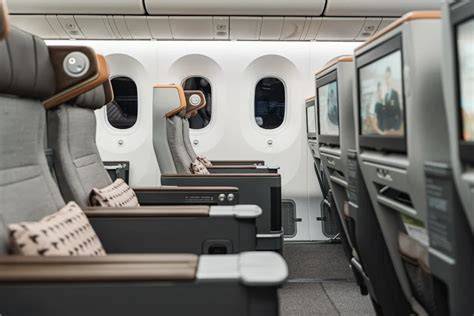
4. Singapore Airlines Premium Economy
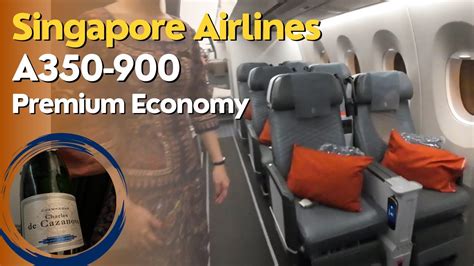
Singapore Airlines ranks fourth, and its premium economy product demonstrates that comfort is about considerably more than legroom.
The airline offers a 38-inch seat pitch, with seat widths reaching approximately 19.5 inches. Those measurements create a noticeable step up from economy, particularly for passengers spending many hours aboard an aircraft. Premium economy is available on the Airbus A350-900, A350-900ULR, Airbus A380, and Boeing 777-300ER.
Singapore Airlines also places significant emphasis on entertainment. Passengers receive a 13.3-inch HD touchscreen connected to the airline’s KrisWorld entertainment system, which provides more than 1,800 entertainment options across movies, television, music, and games. Noise-canceling headphones, two USB ports, and a universal power outlet make it easier to work, relax, or remain connected during a long journey.
The dining experience is another important differentiator. Premium economy passengers receive meals on porcelain tableware, accompanied by proper service and a selection of premium wines and champagnes. These details may appear relatively small, but they help distinguish premium economy from an economy cabin with simply a larger seat.
Passengers also receive priority check-in, boarding, and baggage handling, alongside a 35-kilogram baggage allowance. On Singapore Airlines’ A350-900ULR, premium economy is particularly interesting because it is the lowest cabin offered, underscoring the importance of the product on ultra-long-haul missions.
3. Emirates Premium Economy
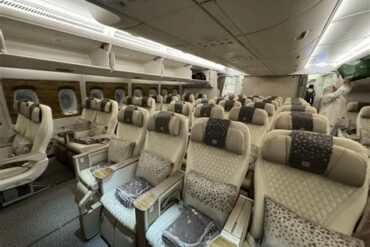
Emirates entered premium economy considerably later than several of its competitors, introducing the cabin in August 2022. Yet the product quickly became one of the most recognizable premium economy offerings in the world.
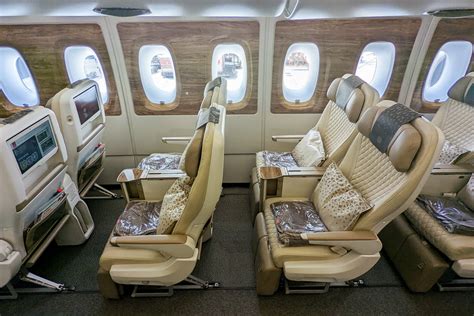
Emirates generally uses a 2-4-2 layout, although its Airbus A350 uses 2-3-2. Depending on the aircraft, passengers can receive up to 40 inches of pitch, approximately 19.5 inches of width, and as much as 8 inches of recline.
Adjustable legrests and headrests provide additional support, which becomes particularly valuable on some of Emirates’ longest routes. The combination of soft leather seating and wood-grain finishes also gives the cabin a distinctive visual character. Rather than feeling like economy with a few extra inches, the space has been designed to support Emirates’ broader luxury-oriented brand.
The product is now available across a growing selection of Airbus A380s, Airbus A350s, Boeing 777-200LRs, and Boeing 777-300ERs. From Dubai International Airport, passengers can find premium economy services to destinations such as London, São Paulo, Newark, and Mumbai.
Emirates demonstrates an important trend in the market: an airline does not necessarily need decades of premium economy experience to create a competitive product. Strong seat design, consistent branding, and a substantial fleet rollout can quickly establish a new benchmark.
2. Japan Airlines Premium Economy
Japan Airlines holds second place in the 2025 Skytrax ranking after winning the world’s best premium economy title in 2024. Its continued position near the top reflects a product built around one of the most important aspects of premium travel: personal space.
Japan Airlines provides approximately 42 inches of seat pitch and around 19 inches of width. Those dimensions give passengers generous room to stretch out, particularly when compared with conventional economy seating.
Like EVA Air, Japan Airlines uses a sliding seatback mechanism that allows the seat to recline without substantially reducing the usable space of the passenger behind. This is an elegant solution to one of the biggest problems associated with traditional reclining seats.
The cabin is available on the Boeing 777-300ER, Boeing 787-9, and Airbus A350-1000. The A350-1000 represents the most modern iteration, featuring a 16-inch personal entertainment screen that ranks among the larger displays available in premium economy.
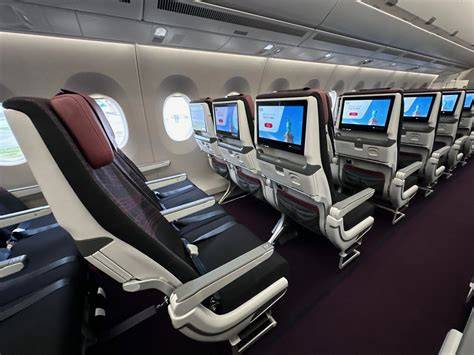
Japan Airlines’ approach is relatively straightforward but highly effective. Instead of relying on gimmicks, it prioritizes the dimensions passengers immediately notice: width, legroom, and intelligent seat movement. For travelers who value physical comfort above everything else, those characteristics can make an enormous difference.
1. Virgin Atlantic Premium Economy
Virgin Atlantic takes the top position in the 2025 Skytrax World Airline Awards, making it the highest-ranked premium economy airline in this group.
Virgin Atlantic was also among the early airlines to embrace the concept in the 1990s, and the product has since become an important component of its long-haul offering. Premium economy is available throughout its fleet, including the Airbus A330-300, Airbus A330-900, Airbus A350-1000, and Boeing 787-9.
Configurations vary by aircraft. The A330-300 contains 48 premium economy seats in a 2-3-2 layout, while the A330-900 has 46 seats in the same arrangement. The A350-1000 has 56 seats in a 2-4-2 configuration, and the 787-9 contains 35 seats in a 2-3-2 arrangement.
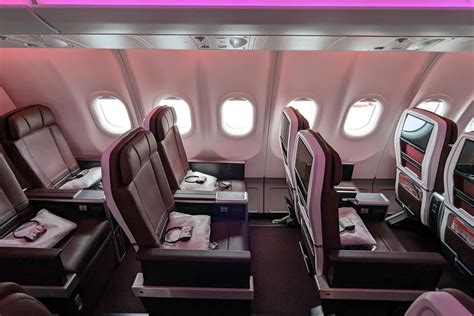
The hard product provides around 38 inches of pitch, while seat width can reach approximately 20 inches. Those figures are competitive, but they do not completely explain why Virgin Atlantic ranks first.
The airline’s greatest strength is arguably its soft product. Premium economy passengers receive a welcome drink, enhanced meals, an amenity kit, a substantial pillow, and a soft blanket. Food is presented on china with proper cutlery, creating a more refined dining experience than the typical economy meal service.
Virgin Atlantic’s latest premium economy offering on the Airbus A330-900 is particularly important as the airline continues its fleet modernization. The carrier has committed substantial investment to renewing its aircraft and cabin products, ensuring that premium economy remains a visible part of its long-term strategy.
Why Premium Economy Is Becoming More Important
The rise of premium economy reflects a broader transformation in long-haul air travel. Passengers increasingly want an experience that is noticeably better than economy but do not necessarily need or want to spend several times more for business class.
That creates an attractive middle ground. A wider seat, additional legroom, greater recline, better food, priority services, and improved entertainment can deliver many of the practical benefits travelers seek without the enormous price premium associated with a lie-flat business-class seat.
Airlines are responding by investing in more sophisticated seating technology. Sliding seatbacks and cradle-motion designs are already solving problems that traditional recliners could not. Future concepts could go considerably further, including experimental double-deck or lie-flat premium economy seats designed to provide a bed-like experience while maintaining cabin density.
Not every futuristic concept will reach commercial aircraft, but the direction is clear. Airlines are searching for ways to increase comfort without sacrificing the number of passengers carried.
The soft product is evolving as well. Healthier meals, more carefully designed cabin lighting, sleep-oriented entertainment, and wellness features are becoming increasingly relevant as airlines operate longer flights. With ultra-long-haul services expanding, the importance of premium economy is likely to grow further.
Qantas’ planned Project Sunrise operations illustrate the opportunity. Flights linking Australia with Europe and North America will place enormous demands on passenger comfort, and premium economy could become especially valuable on journeys lasting well into double-digit hours.
The Best Premium Economy Seat Depends on What Matters Most
The six airlines at the top of the 2025 ranking take different approaches to comfort. Cathay Pacific combines generous space with practical storage and modern entertainment. EVA Air stands out for its innovative recline technology and 42-inch pitch. Singapore Airlines adds strong dining, entertainment, and service benefits, while Emirates brings a distinctive luxury aesthetic to a relatively young premium economy product.
Japan Airlines emphasizes personal space and clever seat mechanics, while Virgin Atlantic demonstrates how the complete passenger experience can elevate a seat beyond its basic specifications.
For passengers choosing a premium economy ticket today, the lesson is simple: the cabin name alone does not guarantee the same experience from one airline to another. Aircraft type, seat generation, route, configuration, and onboard service can all matter.
The most comfortable premium economy seats are therefore not simply the ones with the biggest numbers. The strongest products combine space, intelligent seat design, thoughtful service, quality entertainment, and a sense that the passenger has genuinely moved into a different level of travel. That is precisely why premium economy has become one of the most compelling segments in modern long-haul aviation.