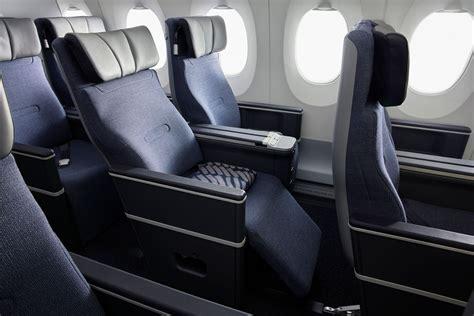
Premium economy in 2026 is no longer a compromise—it is a deliberate choice for travelers who want space, ergonomics, and thoughtful design without crossing into business-class pricing. Airlines now treat premium economy as a strategic product, not a secondary add-on. Seats are wider, recline is engineered to protect personal space, screens rival business class in size and clarity, and cabin density is carefully calibrated to reduce fatigue on long-haul flights.
This evolution has accelerated in the post-pandemic era, driven by travelers who prioritize comfort over sheer price minimization. Airlines responded with billion-dollar retrofit programs, next-generation seat shells, and dedicated premium economy cabins that feel genuinely premium. The result is a class that finally earns its name.
What follows is a detailed examination of the seven most comfortable premium economy seats you can realistically book in 2026, based on seat engineering, dimensions, privacy, recline mechanics, and real-world usability across long-haul missions.
The focus here is not marketing claims, but how these seats actually perform when you are eight, ten, or even seventeen hours into a flight.
Air New Zealand: A Purpose-Built Seat Designed Around Personal Space
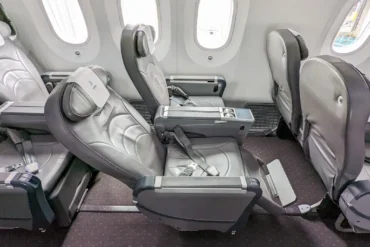
Air New Zealand has been shaping premium economy longer than almost any airline, and its newest iteration finally feels like the culmination of two decades of refinement. The carrier’s latest premium economy seat, introduced as part of a $2 billion Dreamliner retrofit, is a fixed-shell design supplied by ZIM Aircraft Seating. This means your recline no longer intrudes into the space of the passenger behind you—a detail that dramatically improves cabin harmony on long-haul flights.
The seat’s 19.3-inch width immediately stands out, providing genuine shoulder room even for broader passengers. The 41.5-inch pitch is among the most generous in the industry, and the 8.7-inch recline feels substantial without forcing awkward postures. Side wings create a subtle sense of enclosure, while an 11-inch HD touchscreen is positioned at an ideal viewing distance.
What truly elevates this seat is balance. Cushion firmness is tuned for long-duration support rather than short-term softness, and the fixed shell ensures consistent legroom regardless of what happens in the row ahead.
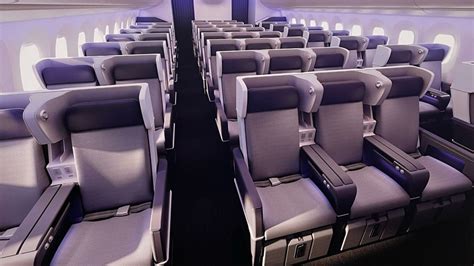
By the end of 2026, every Air New Zealand 787-9—and all incoming 787-10s—will feature this cabin, making it one of the easiest top-tier premium economy experiences to find in the Pacific market.
Cathay Pacific: Quiet Refinement and Cabin Consistency at Scale
Cathay Pacific’s strength lies in its ability to deliver uniform excellence across a large fleet. Its premium economy product has evolved steadily since its 2012 debut, but the most significant leap comes with the ongoing Boeing 777-300ER retrofit program tied to the introduction of Aria Suites in business class.
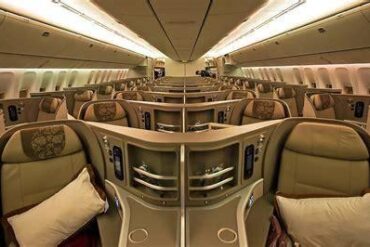
In premium economy, this translates to 48 seats in a spacious 2-4-2 layout, an unusually generous allocation that reduces the sense of crowding. The seat itself prioritizes posture and visual calm, with clean lines, supportive cushioning, and a recline mechanism that feels smooth rather than abrupt.
On the Airbus A350 fleet, the experience is particularly refined. Larger personal screens, increased pitch compared to earlier generations, and a well-defined cabin zone make long-haul flights feel structured and predictable—qualities frequent flyers value more than novelty.
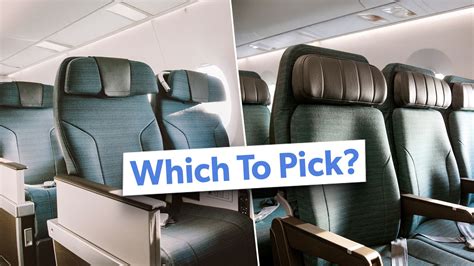
Cathay’s approach may not shout for attention, but it delivers consistency, ergonomic reliability, and excellent sleep potential, especially on ultra-long routes between Asia, Europe, and North America.
Delta Air Lines: The Most Competitive Premium Economy in the United States
Delta’s Premium Select cabin represents a turning point for U.S. carriers, which historically lagged behind their international counterparts in premium economy quality. Introduced with the Airbus A350, Premium Select now spans most of Delta’s widebody fleet and continues to expand onto high-demand domestic transcontinental routes.
The seat measures 18.5 inches wide, with 38 inches of pitch and a 7-inch recline. On paper, these numbers are solid rather than exceptional, but Delta compensates with excellent padding density, memory foam cushions, and a cabin refresh that includes improved upholstery and mood lighting.
Where Delta truly excels is availability. With premium economy installed across A330s, A350s, and select 767s, travelers have far more opportunities to experience a consistent product without route-specific guesswork.
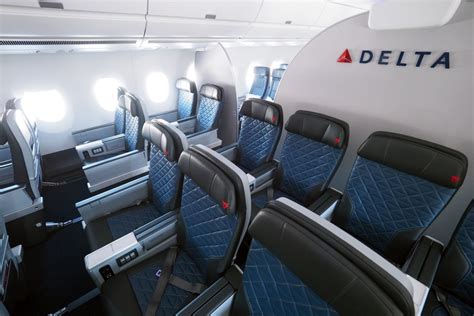
The A350 variant stands above the rest, offering a 48-seat premium economy cabin that feels calm, modern, and well-zoned. For travelers flying to or from the U.S., this is the most reliable premium economy experience currently available.
Singapore Airlines: Engineering Comfort for the Longest Flights on Earth
Singapore Airlines treats premium economy as a long-haul endurance solution, not merely a comfort upgrade. Nowhere is this philosophy clearer than on its Airbus A350-900ULR aircraft, which operate the world’s longest nonstop routes.
The Safran Z535 seat features a 19-inch width, 38-inch pitch, and 8-inch recline, complemented by an integrated calf rest and footrest that meaningfully reduce lower-body fatigue. The 13.3-inch touchscreen is crisp and responsive, while the seat’s recline geometry maintains lumbar alignment even when fully extended.
On the ultra-long-range A350s, premium economy expands to a staggering 94 seats, forming the largest premium economy cabin in commercial aviation. Despite the size, the cabin remains quiet and well-managed, thanks to thoughtful zoning and Singapore Airlines’ famously disciplined service flow.
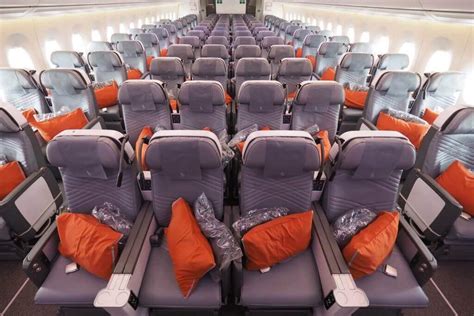
This is premium economy designed for 17-hour missions, and few competitors come close in terms of sustained comfort over extreme distances.
Virgin Atlantic: The Original Premium Economy, Refined for Modern Flyers
Virgin Atlantic invented the concept of premium economy, and its current “Premium” cabin reflects decades of experimentation and refinement. Across its fleet, the airline offers some of the largest premium economy cabins in Europe, with seating density that favors comfort over maximization.
On newer aircraft like the Airbus A350-1000 and A330-900, the Collins MiQ seat delivers 18.5 inches of width, 38 inches of pitch, and a 7-inch recline, paired with a 13.3-inch touchscreen featuring Bluetooth connectivity. The seat feels modern and flexible, with a bi-fold table that doesn’t intrude into personal space.
Older aircraft, particularly the A330-300, surprise with exceptional seat width—up to 20 inches, making them favorites among travelers who prioritize lateral space.
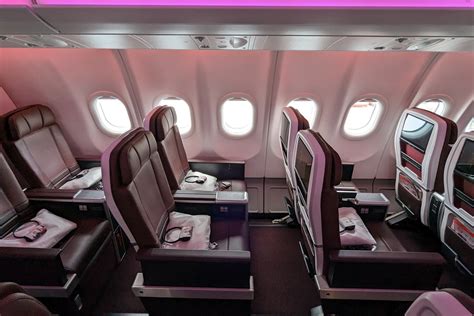
Virgin Atlantic’s premium economy shines in human-centered details: armrest design, table stability, and headrest articulation all feel thoughtfully executed rather than standardized.
Japan Airlines: Precision, Privacy, and the Best Fixed-Shell Design
Japan Airlines has long been a quiet innovator, and its premium economy seat on the Airbus A350-1000 may be the most technically impressive in the world. The Safran fixed-shell design ensures your recline never infringes on the passenger behind you, preserving personal space with mathematical precision.
With a 19-inch seat width, an extraordinary 42-inch pitch, and a 7-inch recline, this seat delivers a near-business-class sense of openness. The motorized leg rest, adjustable lumbar support, and 16-inch 4K UHD display elevate the experience beyond expectations.
What truly sets this seat apart is posture control. Every adjustment feels deliberate, allowing passengers to fine-tune their seating position rather than settling for a single recline angle.
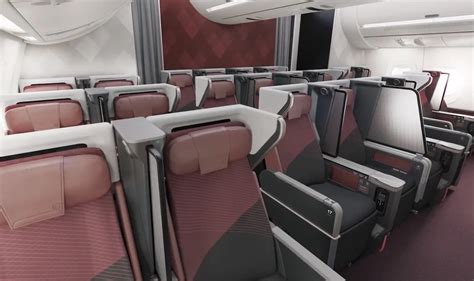
For travelers who value engineering excellence and quiet comfort, Japan Airlines sets a benchmark few can match.
Emirates: A Late Entry That Redefined Expectations
Emirates arrived late to premium economy but immediately aimed for the top. Its Recaro PL3530 seat, now installed across A380s, select 777s, and new A350s, is unapologetically plush.
The seat boasts a 19.5-inch width, 40-inch pitch, and 8-inch recline, complemented by a calf rest, footrest, and 13.3-inch 4K UHD display. Upholstery quality is noticeably upscale, aligning closely with Emirates’ business class aesthetic.
On the A380, premium economy occupies a quiet zone on the lower deck, insulated from galley traffic and economy-class congestion. The result is a cabin that feels premium in both material quality and spatial perception.
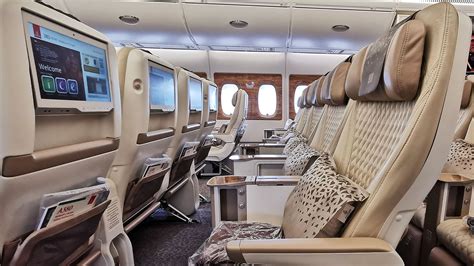
As Emirates completes its fleet-wide retrofit, this product is poised to become one of the most widely available high-end premium economy seats globally.
Why 2026 Is the Best Year Yet for Premium Economy Travelers
Premium economy has finally reached maturity. The seats highlighted here are not incremental upgrades—they are purpose-built solutions for travelers who want space, support, and dignity on long-haul flights. Fixed-shell designs, larger screens, refined recline mechanics, and smarter cabin layouts have transformed this class into a genuine alternative to business class for many routes.
In 2026, choosing premium economy is no longer about settling. It is about selecting the right balance of comfort, value, and intelligent design—and these seven seats represent the very best the industry has to offer.