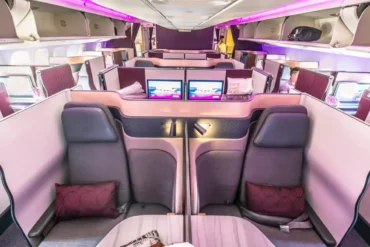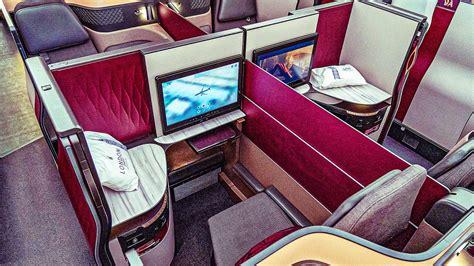
The modern widebody business class seat is no longer just a place to sit between meals and movies. It has become a carefully engineered personal environment, designed to control light, sound, posture, privacy, and even social interaction at 35,000 feet. Airlines now compete as much on seat architecture as they do on routes or fares, and the result is a golden age for travelers who value genuine comfort over marketing fluff.
This guide focuses strictly on the physical seat experience you can book today. Soft product elements like catering and service matter, but here the spotlight stays on the hardware: width, layout, bed design, privacy, storage, and how these elements work together over long hours in the air. The rankings and inclusions reflect widely benchmarked industry evaluations, including SKYTRAX-recognized products, while acknowledging that comfort is deeply personal and sometimes gloriously subjective.
Why Widebody Business Class Seats Matter More Than Ever
Long-haul flying stretches the human body in ways it was never designed for. Pressure changes, dry air, noise, and prolonged stillness all conspire against rest. A well-designed widebody seat mitigates these stresses by distributing weight evenly, allowing multiple postures, and creating psychological separation from the cabin around you. The difference between a mediocre and an excellent seat is not subtle after ten or fifteen hours.
The best products today approach first-class comfort disguised as business class, combining clever geometry with premium materials and spatial intelligence. Some emphasize social flexibility, others prioritize monastic privacy. A few manage both.
Qatar Airways Qsuite: Still the Industry Benchmark
By now, the Qatar Airways Qsuite has achieved something rare in aviation: it changed expectations permanently. Introduced in 2017, the Qsuite reframed what business class could be, not by incremental improvement, but by structural reinvention.
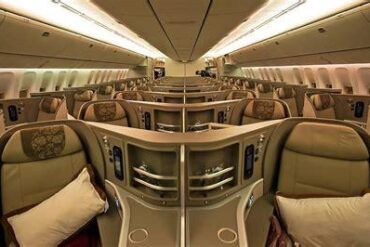
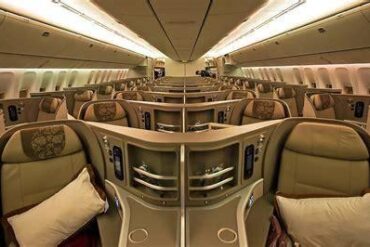
The staggered 1-2-1 configuration ensures direct aisle access for every passenger, but the real magic lies in flexibility. Each seat converts into a fully flat bed with substantial width and padding, while sliding privacy doors create a genuine suite-like feel. The materials lean modern rather than ornate, emphasizing clean lines and muted tones that age well.
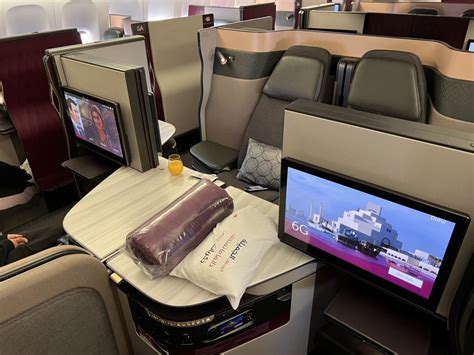
The patented center “quad” is where the Qsuite earns its legend. Middle seats can be transformed into a shared space for four, complete with adjustable privacy panels. For couples, this becomes the first true double bed in business class, a feature that still feels slightly surreal on an aircraft. Families and colleagues benefit just as much, turning a flight into a collaborative or social experience rather than an isolated one.
Qatar continues to refine the concept, with Qsuite 2.0 announced in 2024 and scheduled for service entry in 2026. Subtle improvements in ergonomics, storage, and digital controls suggest the airline understands that dominance requires evolution, not complacency.
Singapore Airlines: Precision, Space, and Quiet Luxury
Singapore Airlines approaches comfort with a different philosophy. Instead of dramatic features, it delivers meticulous refinement, and nowhere is this clearer than in its widebody business class seats aboard the Airbus A380, Airbus A350, and Boeing 777 fleets.
Configured in an industry-standard 1-2-1 layout, these seats emphasize width and solidity. The sleeping surface is notably firm, favoring spinal alignment over sink-in softness, a choice appreciated on ultra-long-haul sectors. Storage spaces are plentiful and intuitively placed, eliminating the awkward mid-flight scavenger hunt for personal items.
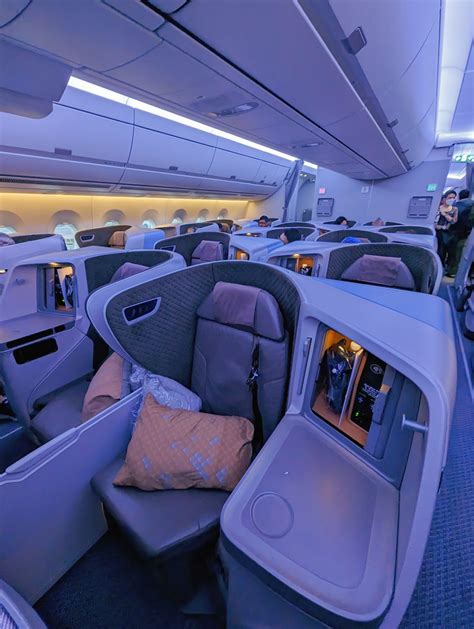
While Singapore Airlines does not offer a true double bed, the movable privacy dividers in the center section allow couples to create a shared zone without sacrificing individual comfort. Power options, including USB and HDMI ports, are seamlessly integrated, and the overall cabin design prioritizes calm, with lighting and textures chosen to reduce sensory fatigue.
This is a seat for travelers who value predictability and polish, where nothing distracts and everything works exactly as expected.
ANA “The Room”: Sheer Space Redefined
If comfort could be measured purely in square inches, ANA’s “The Room” might already hold the crown. Found on select Boeing 777-300ER aircraft, this product takes a bold approach: make the seat so wide that traditional constraints simply vanish.
The layout alternates between forward- and rear-facing seats, creating a visual rhythm while maximizing space. Each seat includes a sliding privacy door, and when upright, the width is sufficient for two adults to sit side by side. This is not novelty; it fundamentally changes how the seat feels during long working or dining sessions.
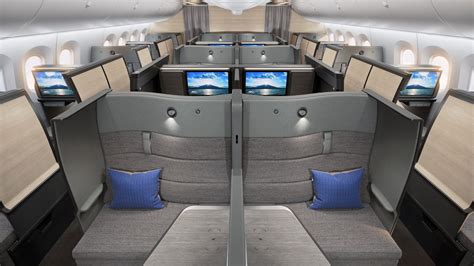
Unlike the Qsuite, The Room avoids communal configurations. Its focus is individual indulgence. The cabin density tells the story clearly: only 212 total seats on aircraft where competitors often seat well over 300 passengers. The result is an unusually serene environment, where business class does not feel like a compromise between cabins but a destination in itself.
For travelers who equate comfort with personal real estate, The Room delivers in unapologetic fashion.
Cathay Pacific Aria Suite: Technology Meets Personalization
Cathay Pacific’s Aria Suite, introduced in late 2024, represents a thoughtful fusion of digital innovation and physical comfort. Installed on refurbished Boeing 777-300ERs, the seat adopts a reverse herringbone 1-2-1 layout, ensuring privacy while maintaining visual openness.
Each seat is a fully enclosed suite with a sliding door, but what sets Aria apart is the degree of passenger control. A separate console manages both seat positioning and inflight entertainment, while a 24-inch 4K screen dominates the visual field without overwhelming it. Wireless charging and generous storage reinforce the sense that the seat was designed around modern travel habits.
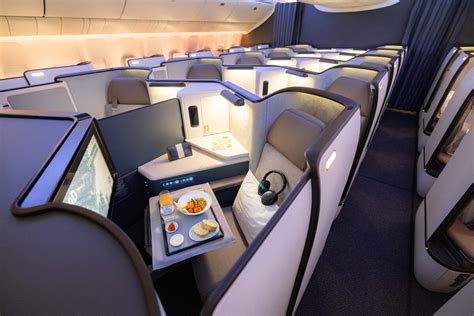
A standout feature is personalized mood lighting, allowing passengers to tune the ambience of their suite. This may sound cosmetic, but on long-haul flights, control over light profoundly affects circadian comfort. Cathay’s ongoing retrofit program suggests strong confidence in the product’s long-term relevance.
Air France Business Class: Elegance Without Excess
Air France occupies a slightly different niche in the comfort spectrum. Its latest widebody business class seats, found on Boeing 777s, Airbus A350-900s, and Boeing 787-9s, prioritize ergonomic reliability and understated elegance.
Two primary products dominate. “Optima” features a staggered configuration with alternating forward-facing and angled seats, while “Opera” uses a reverse herringbone 1-2-1 layout. Both convert into two-meter-long fully flat beds, a generous length that accommodates taller passengers without contortions.
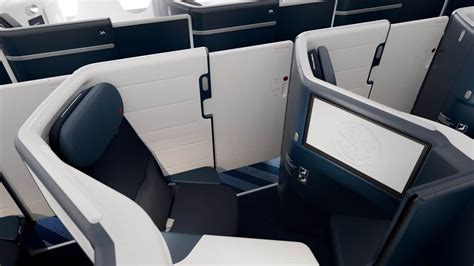
Unlike some competitors, Air France does not include privacy doors. This choice reflects a design philosophy that favors openness and cabin cohesion over isolation. For travelers who dislike enclosed spaces, this can be a genuine advantage. The seats excel in sleep ergonomics, with well-judged cushioning and supportive contours that reduce pressure points over time.
Hainan Airlines Dream Feather: East Meets West in Design
Hainan Airlines’ best business class seat appears on select Boeing 787-9 aircraft branded as “Dream Feather Passenger Cabin Aircraft.” Configured in a 1-2-1 reverse herringbone layout, this product blends Western seat architecture with Eastern aesthetic cues.
The seat offers five distinct storage areas, an unusually high number that keeps the living space uncluttered. Design touches like wooden tray tables add warmth without veering into gimmickry. While there is no privacy door, the shell design provides effective visual separation.
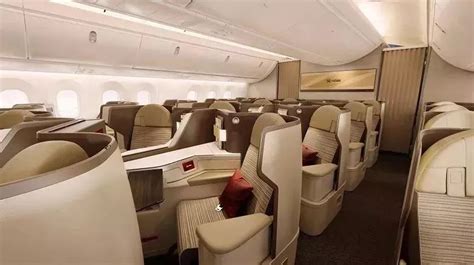
This is a seat designed for balance. It does not chase extremes but delivers consistent comfort, especially on medium- to long-haul routes. For travelers seeking refinement without theatrical flair, Dream Feather quietly satisfies.
Honorable Mentions Worth Booking
Several other widebody business class seats deserve recognition for pushing comfort forward, even if they narrowly miss the very top tier. Lufthansa’s Allegris, Emirates A380 business class, United Polaris, and Japan Airlines’ Airbus A350-1000 product each excel in specific dimensions, from bedding quality to cabin acoustics. Preferences here often hinge on body type, sleep style, and tolerance for enclosure.
Choosing the Right Seat for Your Definition of Comfort
Comfort in the sky is not a single variable. Some travelers crave maximum privacy, others want space to work or dine with a companion. Seat width, bed firmness, storage logic, and even cabin density all shape the experience.
What unites the seats in this guide is intentional design. These are not incremental upgrades; they are carefully considered environments built to make long-haul travel not merely tolerable, but genuinely restorative. Booking one of them means arriving not just rested, but recalibrated, reminded that even in a metal tube hurtling through the stratosphere, comfort can be engineered with remarkable precision.