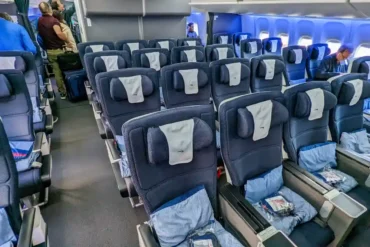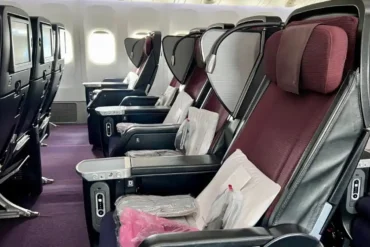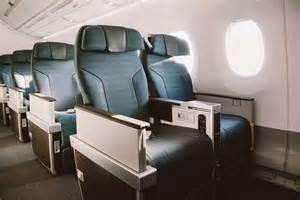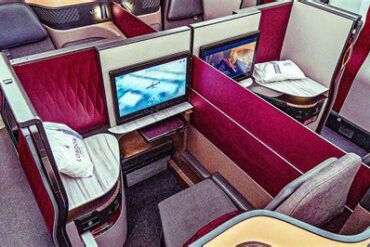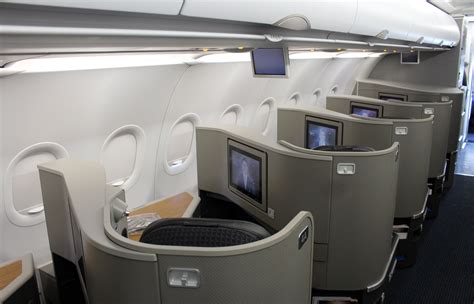
Flying coast to coast in the United States is a deceptively demanding experience. Five to six hours in the air is long enough for every weakness in a seat design to announce itself loudly, yet short enough that airlines cannot hide behind the excuse of “it’s only a domestic flight.” On these routes, comfort is not a luxury add-on. It is the product. Travelers paying premium fares between New York, Los Angeles, San Francisco, Boston, and Seattle expect a cabin that supports real rest, meaningful privacy, reliable power, thoughtful storage, and a level of service that treats the journey as important rather than routine.
Over the last decade, US airlines have quietly transformed their flagship transcontinental offerings into something that looks far closer to international business class than domestic first. Lie-flat beds, privacy doors, upgraded bedding, and quieter cabins are now table stakes on the most competitive routes. The result is a small but fascinating ecosystem of premium seats where the difference between arriving sharp or exhausted comes down to a few inches of width, a smarter seat shell, or a cabin that understands how people actually rest.
This guide takes a clear-eyed look at the five most comfortable premium transcontinental seats you can book today. These are not theoretical bests or future promises. These are seats flying right now, on routes where comfort is scrutinized by some of the most demanding travelers in the world. The focus is simple: which products consistently deliver the most comfortable gate-to-gate experience when crossing the continent.
United Airlines Polaris Business Class on Transcontinental Routes
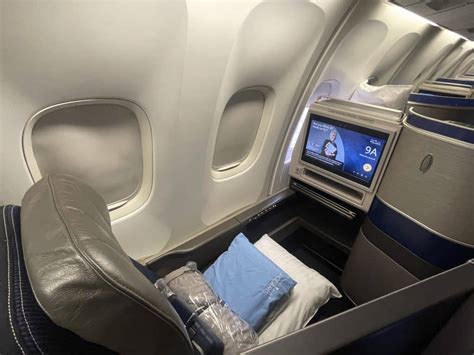
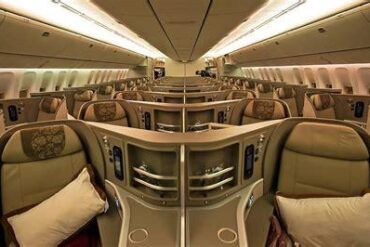
United Airlines has built much of its modern premium reputation around Polaris Business Class, and nowhere is that more visible than on its core transcontinental routes. Flights such as Newark to Los Angeles or San Francisco are treated as flagship services, often operated by widebody aircraft like the Boeing 777-200 or Boeing 767 that allow United to install a true long-haul-style cabin.
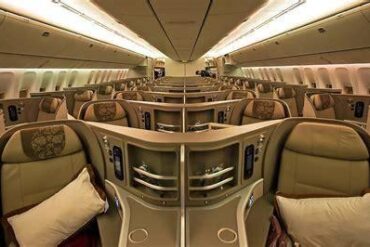
The Polaris seat itself is designed around one central idea: uninterrupted rest. These seats convert into fully lie-flat beds with substantial width, deep cushioning, and a shell that creates a genuine sense of personal space. On many aircraft, the layout provides direct aisle access for every passenger, eliminating the awkward choreography of climbing over a neighbor at 35,000 feet. Even on daytime flights, the ability to stretch out fully changes the entire rhythm of the journey.
United’s bedding program plays an outsized role in comfort. Proper pillows, a well-weighted duvet, and a mattress pad combine to make the bed feel intentional rather than symbolic. The cabin environment is relatively quiet, with muted lighting and large, high-definition entertainment screens positioned at a comfortable viewing distance. Power outlets and USB ports are thoughtfully placed, reducing the constant reach-and-fumble that plagues older premium seats.
While Polaris on domestic routes does not always match the absolute consistency of United’s best international installations, it remains one of the most reliable ways to secure real sleep on a US transcontinental flight. For red-eyes in particular, this seat transforms the experience from endurance test to manageable overnight journey.
Delta One Suites and the Variable Comfort Equation
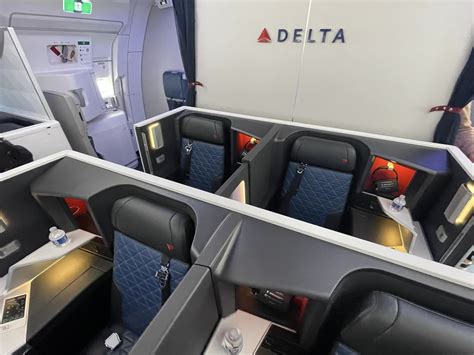
Delta Air Lines occupies a unique position in the transcontinental comfort conversation because its best product is genuinely excellent, yet not universally deployed. When a route is operated by an Airbus A350 or A330-900neo equipped with Delta One Suites, the result is one of the strongest domestic premium seats in the sky.
These suites offer fully lie-flat beds paired with sliding privacy doors, a feature still rare on US domestic routes. The seat design emphasizes ergonomic support, with a sleeping surface that feels level and supportive rather than contoured in awkward ways. Storage is intelligently integrated, allowing laptops, headphones, and personal items to remain accessible without cluttering the seat area. The sense of enclosure created by the suite design significantly reduces visual and auditory distractions, which directly improves rest quality.
Delta’s strength extends beyond the seat itself. The airline invests heavily in the end-to-end experience, from priority handling on the ground to access to dedicated Delta One Lounges at key hubs. This continuity matters. A calm, well-managed preflight experience sets the tone for the hours spent on board, and Delta understands that comfort begins long before takeoff.
The challenge with Delta lies in fleet variability. Many transcontinental flights still operate with older Delta One seats that lack doors and feel less modern. These seats are not uncomfortable, but they do not deliver the same sense of privacy or polish as the newer suites. Savvy travelers check seat maps carefully, because on Delta, the difference between an excellent flight and a merely good one often comes down to the specific aircraft assigned.
American Airlines Flagship Business and the Coming Flagship Suite Era
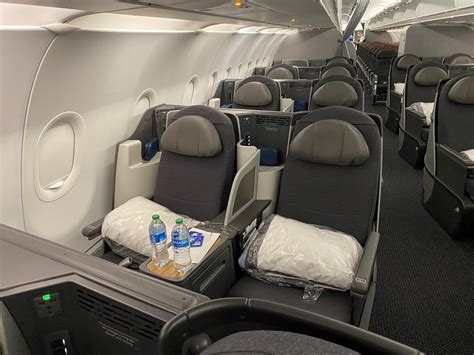
American Airlines’ premium transcontinental story is one of transition. For years, the backbone of its coast-to-coast offering has been Flagship Business on the Airbus A321T, most famously on JFK to Los Angeles and JFK to San Francisco. These aircraft were purpose-built for premium-heavy routes, and they still deliver a respectable experience.
Flagship Business offers fully lie-flat seats that allow for real rest, paired with elevated service and ground benefits that distinguish the product from standard domestic first class. The seats are arranged in a way that maximizes density without feeling overtly cramped, and the cabin retains a quiet, business-focused atmosphere that suits long flights between major financial and creative hubs.
That said, the seat design itself reflects an earlier generation of premium thinking. Privacy is limited compared to newer competitors, storage is more constrained, and the overall aesthetic feels dated next to the latest offerings from Delta and United. Comfort remains solid, but not cutting-edge.
The real excitement lies ahead with the Flagship Suite, debuting on aircraft like the Airbus A321XLR. This new seat introduces privacy doors, a more spacious layout, modern storage solutions, and features such as wireless charging. American has signaled that these aircraft will increasingly appear on premium transcontinental routes, gradually closing the comfort gap. When fully deployed, the Flagship Suite has the potential to elevate American back into the top tier of coast-to-coast comfort.
JetBlue Mint and the Boutique Comfort Advantage
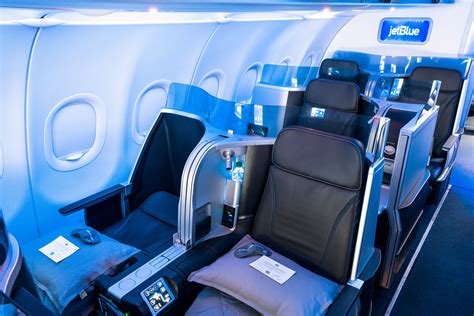
JetBlue’s Mint cabin remains one of the most distinctive premium products in US domestic aviation. From the beginning, Mint was designed to challenge the assumption that true lie-flat comfort belonged only to legacy carriers. On key transcontinental routes, particularly between New York and California, Mint delivers a level of comfort that consistently surprises first-time flyers.
The defining feature of Mint is its genuine lie-flat bed, which allows passengers to arrive rested rather than merely less tired. In its newest iterations, JetBlue has doubled down on comfort with private suites featuring sliding doors and premium cushioning developed in partnership with Tuft & Needle. The result is a sleeping surface that feels supportive and thoughtfully engineered, rather than adapted from an older design.
Mint cabins are smaller than those of the legacy carriers, which creates a quieter, more intimate atmosphere. Service tends to feel personal rather than procedural, and the overall experience benefits from JetBlue’s emphasis on thoughtful details, from well-designed entertainment interfaces to intuitive seat controls.
As with Delta, not all Mint cabins are created equal. JetBlue operates multiple Mint configurations, including older mixed-layout cabins where only some seats offer full privacy. Checking the seat map before booking is essential. When you secure one of the newer Mint suites, however, the experience ranks comfortably among the best ways to cross the United States by air.
Alaska Airlines First Class and the Premium Recliner Reality
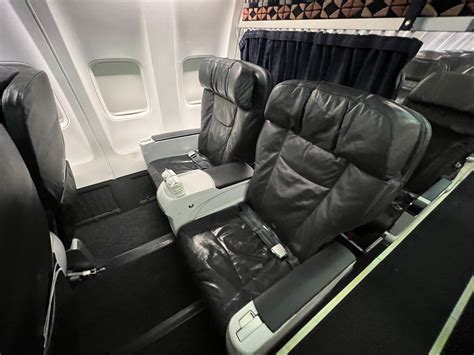
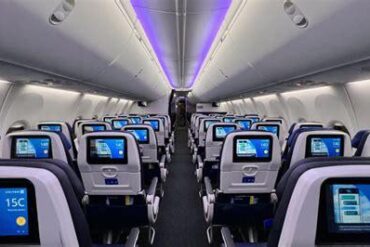
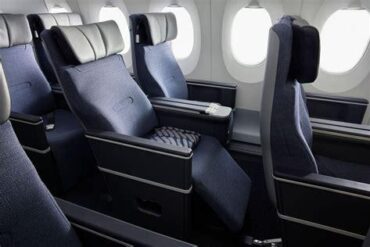
Alaska Airlines approaches transcontinental comfort from a different angle. The airline does not offer lie-flat seats on its narrowbody transcontinental services, but its First Class product is among the best premium recliner experiences available in the US.
These seats provide generous width, significantly increased pitch, and a deeper recline than standard domestic first class on many competitors. While they do not convert into beds, the ergonomic design supports longer periods of seated comfort, making them a solid option for travelers who prioritize space and service over sleeping flat.
Alaska’s strength lies in consistency and hospitality. Complimentary meals, snacks, and alcoholic beverages are standard, and the service style often feels warmer and more attentive than that of larger carriers. Power outlets and USB ports are reliably available, and priority boarding and baggage handling smooth the overall journey.
For travelers who find lie-flat seats unnecessary on daytime flights or who prefer a simpler, more upright experience, Alaska First Class offers a balanced and dependable premium option. It does not compete directly with the mini–business class cabins of its rivals, but it excels within its chosen category.
Choosing the Right Seat for Your Coast-to-Coast Flight
The modern US transcontinental market offers more genuine choice than ever before. The most comfortable seat depends not only on the airline, but on the specific aircraft, route timing, and your personal priorities. If uninterrupted sleep is the goal, lie-flat products like United Polaris, Delta One Suites, JetBlue Mint, or American’s newer Flagship Suites clearly lead the field. If daytime comfort, space, and service matter more, premium recliners like Alaska First Class can be surprisingly satisfying.
What unites the best of these products is a shared recognition that coast-to-coast flights are not short hops. They are substantial journeys that deserve thoughtful design. Airlines that understand this reality have invested in seats that respect the passenger’s time, body, and need for rest. When booked carefully, these premium transcontinental seats transform a long domestic flight into an experience that feels considered, calm, and genuinely comfortable from takeoff to touchdown.