Travelers crossing the Atlantic today expect more than a simple upgrade; they expect a premium economy experience that justifies the fare difference with noticeably better space, service, and amenities. The surge in demand for this middle-cabin product has pushed major airlines to refine their offerings, especially on widebody aircraft like the Airbus A350 and Boeing 787 Dreamliner, which dominate modern long-haul routes. Comfort is no longer a luxury reserved for business class alone. It has become an accessible layer of indulgence for travelers who want space to stretch without breaking into four-figure budgets.
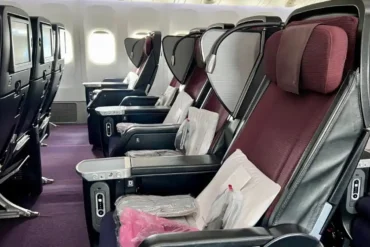
The current generation of premium economy seats is worlds apart from the earlier narrow recliners airlines once introduced as an experiment. Today’s seats borrow clever design principles from business class, featuring structured headrests, deeper recline mechanisms, calf and foot support, and wide high-definition entertainment screens that can keep passengers immersed for hours. Cabin designs have also evolved. These spaces are carved out deliberately between business and economy, creating small, quiet environments that strike a balance between comfort and efficiency. On transatlantic flights—where journeys often hover around seven to ten hours—those extra inches of pitch and width make all the difference.
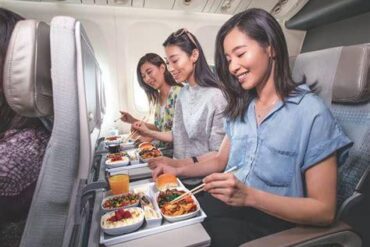
Passengers also benefit from a series of soft-product perks: priority boarding, upgraded meals, attentive service, larger amenity kits, and generous checked baggage allowances. For airlines, this cabin has become the new battleground for differentiation. For passengers, it represents the sweet spot between cost and comfort.
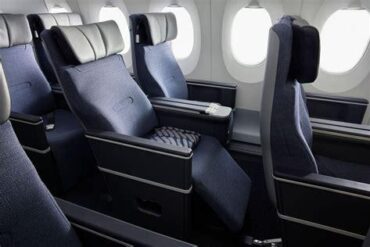
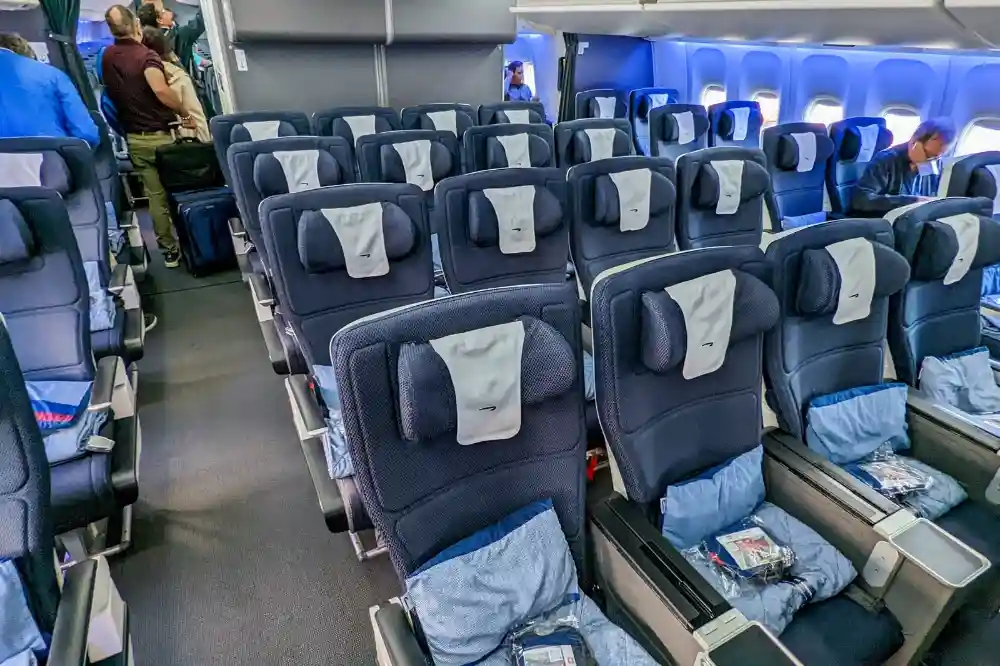
British Airways remains one of the most influential transatlantic carriers, and its premium economy—branded World Traveller Plus—has undergone a careful transformation over the past few years. The airline’s Airbus A350-1000 aircraft feature the advanced Recaro PL3510 recliner seat, a model engineered to strike the ideal balance between structured support and long-haul relaxation. The seat pitch sits at 38 inches, while the seat width stands at 18.7 inches, providing a noticeably roomier footprint than standard economy.
The seat’s standout features include a four-way adjustable headrest, a motor-free but secure recline mechanism offering eight inches of movement, and a clever bi-fold tray table that feels business-class adjacent in terms of stability. The entertainment system features a 12-inch HD touchscreen, crisp and bright, supported by universal power outlets and USB charging. Even passengers on overnight flights find that the A350’s lower cabin altitude and enhanced humidity pair well with BA’s plush pillow and blanket to create a genuinely restful environment.
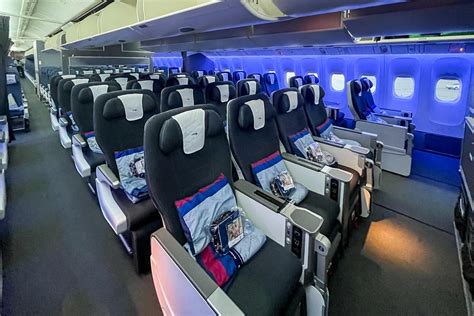
Beyond the seat itself, British Airways shines in soft-product refinement. Travelers receive a stylish amenity kit made from recycled bottles, noise-cancelling headphones, and a dining service that includes two meals along with a complimentary bar. The carrier even offers an industry-leading baggage service, including AirPortr, an at-home collection option that simplifies the airport journey. The A350’s 2-4-2 layout ensures a predictable seating plan, though couples often gravitate toward the intimate window-side duos.
Virgin Atlantic Premium Economy: Wider Style and Signature Service
Virgin Atlantic has long cultivated a reputation for flair, and its premium economy cabin—featured across the A350, A330, and Boeing 787—is a testament to that philosophy. The airline treats this cabin as a distinct product rather than an incremental step above economy. Virgin’s premium seats, based on the Collins Aerospace MiQ platform on the A350s, provide 38 inches of pitch, 18.5 inches of width, and a seven-inch recline. These seats feel sculpted, with supportive padding and curved upper shells that lend a pleasantly cocooned sensation during extended flights.
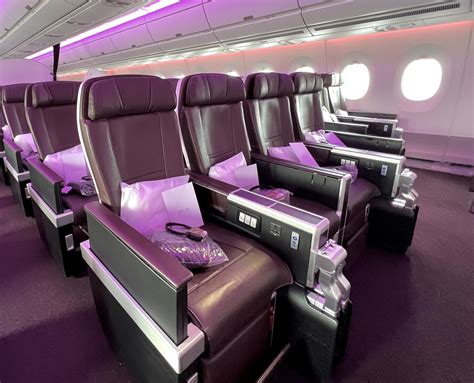
One of Virgin Atlantic’s signature touches is its welcome drink, usually a glass of bubbly served shortly after passengers settle in. The dining experience also stands out, featuring upgraded entrées and the ability—on select routes—to pre-order meals, often a privilege reserved for higher cabins on other carriers. The 13.3-inch HD touchscreen display outperforms many competitors, and the airline’s extra-wide armrests provide subtly more physical space, a small but meaningful detail on long journeys.
Virgin is also investing heavily in connectivity. Its forthcoming rollout of free Starlink Wi-Fi, beginning in late 2026, means passengers will eventually enjoy uninterrupted, high-speed internet across most transatlantic flights. The cabin’s 2-4-2 layout on the A350 keeps seat selection straightforward, though aisle seats are particularly prized for those who prefer easier movement. Everything is designed to feel bright, curated, and contemporary.
Delta Premium Select: Collins MiQ Seating with Cohesive Upgrades
Delta Air Lines has emerged as a leader in the evolution of premium economy, known as Delta Premium Select. The airline’s Airbus A350-900 fleet showcases the Collins Aerospace MiQ seat, an impressive recliner with 38 inches of pitch, 18.5 inches of width, and a substantial recline complemented by adjustable leg and footrests. Delta places particular emphasis on the tactile aspects of comfort—thick cushions, premium materials, and a structured headrest designed to hold posture rather than collapse mid-flight.
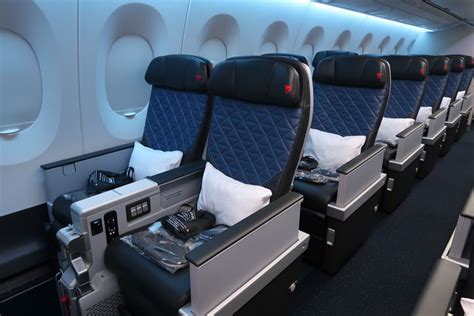
Another defining trait of Delta’s offering is consistency. The airline provides fast, free Wi-Fi, courtesy of T-Mobile, across much of its long-haul fleet. Passengers receive noise-cancelling headsets, an upgraded amenity kit, plush bedding, and meal selections that mirror some of the flavors and presentations seen in Delta One. Even short transatlantic routes maintain this enhanced standard, with the A350 and A330 cabins serving as the best examples of the product.
Airport experience matters too. Premium Select customers enjoy Sky Priority, which includes expedited check-in, security lanes at major hubs, and priority bag handling. On flights where multiple widebody types operate, comfort levels shift slightly. The A350 remains the flagship, with its 2-4-2 configuration and large 13.3-inch screens. Older Boeing 767s still fly certain transatlantic routes, but the airline continues retiring these aircraft in favor of a more harmonious Airbus fleet.
United Premium Plus: Spacious 2-3-2 Layout on the 787-9
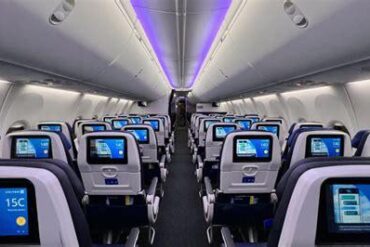
United Airlines’ premium economy product, known as United Premium Plus, has become a strong contender thanks to smart cabin planning and generous amenities. On the Boeing 787-9 Dreamliner, United uses the Collins Aerospace MiQ seat in a 2-3-2 configuration, a meaningful advantage over the tighter 2-4-2 commonly found on A350s. This layout increases the sense of personal space and makes the middle section more comfortable for groups.
The seat offers 38 inches of pitch, 18.7 inches of width, and a six-inch recline—slightly less than some rivals but offset by the arrangement that avoids cramped eight-across rows. The result is a comfortable recliner that feels pleasantly open, complemented by a 13-inch HD screen, in-seat power, USB charging, and noise-reducing headphones provided at boarding. Passengers also receive a refreshed amenity kit designed in partnership with lifestyle brands.
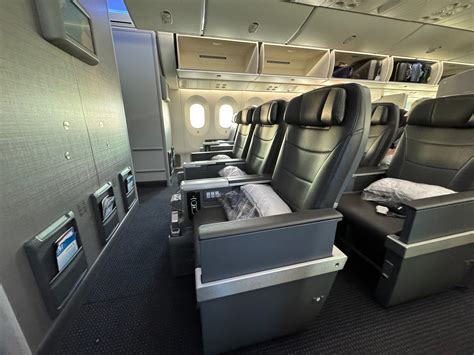
United’s food and beverage options include upgraded entrées, free beer and wine, and a pre-arrival meal, which becomes especially welcome on early-morning arrivals in Europe. Passengers benefit from priority check-in and boarding and enjoy expedited baggage handling on landing. While United does not offer free Wi-Fi to all passengers, its loyalty members can access certain benefits, and paid packages are widely available.
Beyond the seat itself, the Dreamliner platform enhances comfort through lower cabin altitude and improved humidity. Combined with the quieter engines, Premium Plus becomes a well-rounded cabin ideal for frequent business travelers who want consistency without committing to business-class fares.
American Airlines Premium Economy: Refreshed Comfort on the 787-9
American Airlines offers premium economy across its Boeing 777 and 787 aircraft, but the most compelling version sits aboard the 787-9 Dreamliner, where the airline has recently introduced refreshed interiors. American traditionally used the Collins Aerospace MiQ seat, but its newest cabins now feature the Safran Z535i recliner. Despite the change in manufacturer, the ergonomic priorities remain consistent: 38-inch pitch, 19-inch seat width, and an eight-inch recline—one of the deepest in this class.
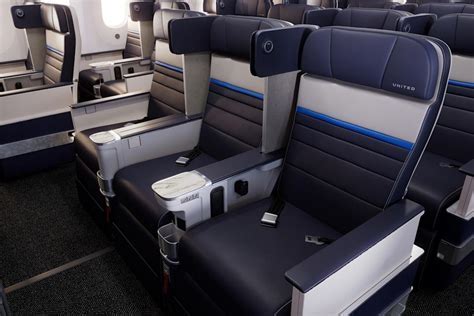
The updated entertainment screen, now enlarged to 13.3 inches, brings clarity and responsiveness superior to earlier versions. Passengers benefit from a well-organized footrest and a multi-position leg rest, creating an almost cradle-like sitting posture ideal for overnight transatlantic runs. American also maintains strong premium-economy service elements: two checked bags, priority services, upgraded dining, and an amenity kit that mirrors the tone of its flagship business-class package.
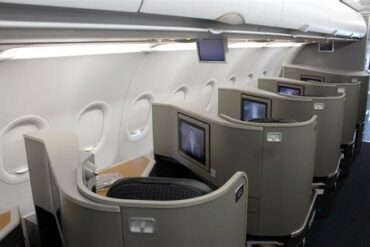
American has been phasing out international first class entirely, leaning on business and premium economy as its two-tier long-haul structure. This shift has led the airline to polish premium economy more deliberately than before. On the 787-9, the 2-3-2 layout ensures predictability and comfort, making the middle cabin an appealing option for both leisure and business travelers.
Why These Five Airlines Lead the Market in Transatlantic Comfort
Each of these five carriers—British Airways, Virgin Atlantic, Delta Air Lines, United Airlines, and American Airlines—anchors its premium economy success in two key factors: modern aircraft and thoughtfully engineered recliner seats. The market has grown fiercely competitive, encouraging airlines to refine not only the hard product but also the soft-product experience surrounding it. Everything from Wi-Fi accessibility to cabin aesthetics now plays a role in shaping passenger satisfaction.
The common thread across all five airlines is the modern widebody fleet, particularly the A350 and 787, which revolutionize comfort through better pressurization, quieter cabins, and fuel-efficient performance. Premium economy thrives on these aircraft, offering a meaningful improvement without pushing fares into business-class territory. The structured recliner seats found across these carriers—primarily the Collins Aerospace MiQ, Recaro PL3510, and Safran Z535i—have emerged as the industry’s leading designs.
As demand continues climbing, premium economy is becoming more than a transitional product. It is now a core cabin that airlines rely on for revenue diversification. For passengers, especially those crossing the Atlantic frequently, these five airlines offer the most consistently comfortable and thoughtfully crafted experiences available today.