Long-haul travel has evolved into a contest of engineering elegance and human comfort, and nowhere is that more evident than inside the Boeing 787 Dreamliner. Built with lightweight composite materials and designed to reduce cabin altitude and increase humidity, the 787 was never just about fuel efficiency. It was about how a passenger feels after twelve hours in the sky. Less jet lag. Less dryness. Larger electro-dimmable windows. Quieter engines. The aircraft itself sets the stage for rest. Airlines then compete fiercely to transform that stage into a private sanctuary.
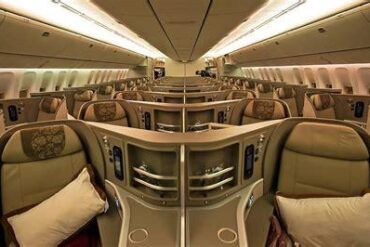
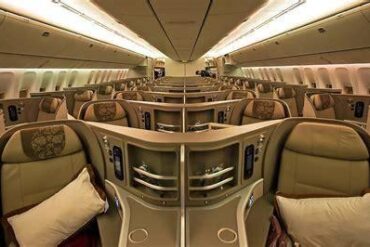
Business class is where that competition becomes intensely personal. The difference between “very good” and “deeply relaxing” often comes down to inches of width, door height, mattress padding, or how effectively a seat shields you from aisle traffic. Privacy has become the new currency. Space is measured not just in seat pitch, but in psychological breathing room. On the Dreamliner, five standout products consistently rise above the noise.
After the first 787 entered service with All Nippon Airways in 2011, carriers rapidly realized that pairing a technologically advanced airframe with dated seating made little sense. The modern Dreamliner now carries some of the most refined business-class suites in commercial aviation. These are the five most relaxing Boeing 787 business class seats you can book today.
American Airlines Flagship Suite on the Boeing 787-9
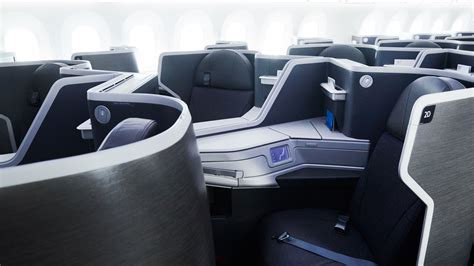
American Airlines has embraced the privacy revolution with its Flagship Suite, a fully enclosed business class product now rolling out across select Boeing 787-9 aircraft.
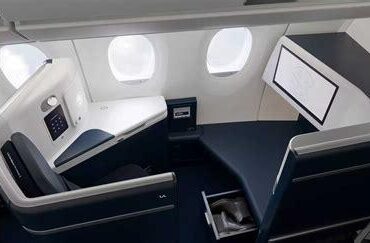
The introduction flight from Chicago O’Hare to Los Angeles signaled more than a cabin refresh. It represented a philosophical shift. Business class is no longer semi-private. It is personal territory. The Flagship Suite features a six-foot-six-inch fully flat bed, a sliding privacy door, wireless charging, a personal mirror, and significantly expanded storage. The suite feels structured and architectural rather than simply padded.
The configuration is a 1-2-1 reverse herringbone layout, ensuring every passenger has direct aisle access. Reverse herringbone means seats angle slightly away from the aisle toward the window or center, increasing both privacy and usable surface area. American plans to equip 30 787-9 aircraft with this premium-heavy configuration, each featuring 51 Flagship Suites.
Eight of these are designated as preferred suites, offering additional bed space and a more expansive footwell. On a long overnight flight such as Chicago to London Heathrow, that extra breathing room becomes noticeable. The psychological benefit of closing a door and dimming the cabin into a private cocoon cannot be overstated. Sleep quality improves simply because interruptions disappear.
American’s bedding complements the hard product well, and the cabin lighting aboard the 787 enhances the overall effect. The Dreamliner’s reduced cabin altitude—equivalent to roughly 6,000 feet instead of 8,000—means passengers wake up feeling less dehydrated. Combine that with a sealed suite, and the experience becomes intentionally restorative rather than merely transportive.
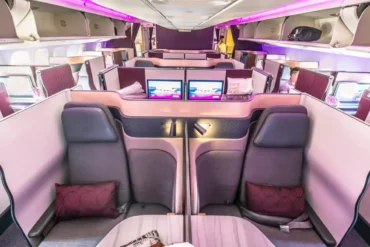
Qatar Airways Ascent Suite on the Boeing 787-9
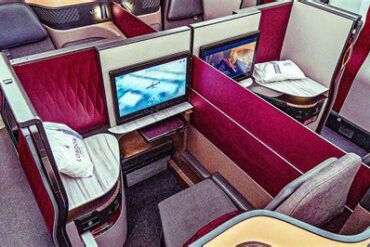
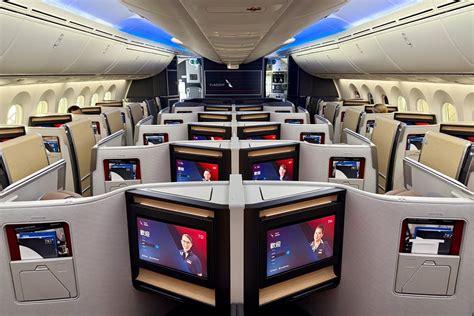
Qatar Airways is synonymous with its award-winning Qsuite, yet fuselage constraints prevent the full Qsuite installation on the 787. Instead, the airline offers the Ascent Suite on its Boeing 787-9 fleet, and it remains one of the most relaxing options in the sky.
The critical detail here is aircraft variant. Qatar’s 787-9 features a 1-2-1 configuration with privacy doors, while some 787-8 aircraft retain a 2-2-2 layout without doors. For maximum relaxation, the -9 is essential.
The Ascent Suite extends up to six feet eight inches in bed length on certain seats, offering one of the longest sleeping surfaces among 787 operators. Wireless charging, large high-definition entertainment screens, and clever storage compartments reinforce the premium feel. The design language is understated but polished, leaning into Qatar’s signature burgundy and soft lighting.
Electro-dimmable Dreamliner windows add another layer of calm. Instead of yanking down a plastic shade, passengers gently darken the window electronically, maintaining an outside view without harsh glare. On ultra-long segments such as Doha to Munich, this small detail contributes to a more gradual, less jarring rest cycle.
Reviews consistently note that while Qsuite may edge out Ascent in overall spectacle, the 787-9 Ascent Suite is still deeply comfortable and thoughtfully designed. The self-serve snack bar at the galley also supports relaxation by removing the formality barrier. Instead of summoning crew for every minor request, passengers can quietly retrieve refreshments and return to their suite.
KLM Royal Dutch Airlines World Business Class on the Boeing 787
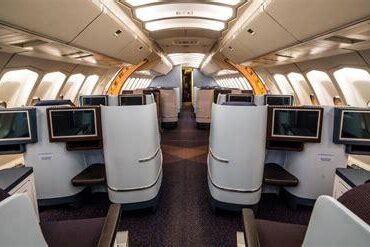
Not every relaxing space needs a door. KLM’s World Business Class on the Boeing 787 proves that intelligent design can create calm without theatrical enclosure.
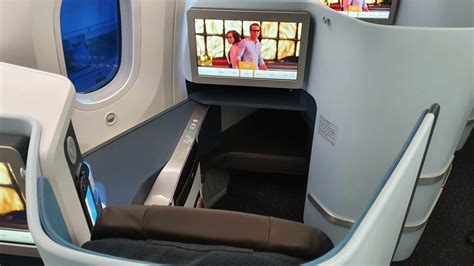
KLM operates both the 787-9 and 787-10, each featuring a 1-2-1 configuration. Seats convert into six-foot-six-inch fully flat beds, arranged in a staggered layout that alternates orientation. The defining feature is the seat’s privacy wings, subtle side panels that shield passengers from aisle activity.
This is business class without pretense. No gold-plated drama. No overbearing service theatrics. Instead, it is composed, balanced, and welcoming. The bedding is plush, and the cabin aesthetic leans into Dutch design sensibilities—clean lines, muted tones, and controlled lighting.
The Dreamliner’s quieter cabin acoustics enhance this environment. Reduced engine noise and smoother cabin pressurization create a background hum rather than a roar. On routes such as Amsterdam to San Francisco, that matters. Fatigue accumulates less aggressively when ambient stressors are minimized.
KLM’s product appeals especially to travelers who equate relaxation with simplicity. The absence of a door actually creates a sense of openness that some passengers prefer. Instead of a sealed compartment, the space feels airy but protected. It strikes a rare middle ground between privacy and social connection.
United Airlines Polaris Business Class on the Boeing 787
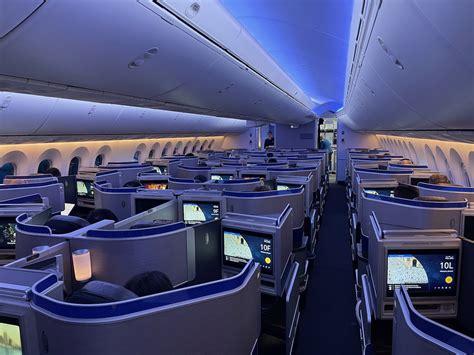
United Airlines’ Polaris Business Class has evolved steadily, and the newest 787 deliveries introduce the “Elevated” interior with privacy doors and expanded studio suites.
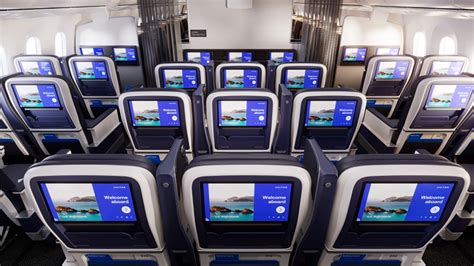
The current Polaris seats already measure six feet six inches in fully flat mode and are arranged in a 1-2-1 configuration. The upgrade introduces eight larger Polaris Studio suites in addition to 56 standard Polaris seats on the 787-9. All will feature sliding privacy doors.
United’s defining advantage lies in its bedding. Reviews frequently describe it as industry-leading. A plush duvet, two substantial pillows, a mattress pad available on request, and an additional throw blanket combine to create a bed-like experience rather than a seat approximation.
The tactile sensation of quality bedding changes how the body relaxes. Pressure points diminish. Micro-movements during sleep decrease. On overnight flights such as Chicago to Frankfurt, this bedding can make the difference between light dozing and legitimate rest.
The Dreamliner’s cabin humidity further enhances comfort. Traditional long-haul flights dry skin and sinuses quickly, but the 787’s improved environmental control systems mitigate that effect. When paired with Polaris’ soft textures and darkened cabin mood lighting, the result is deeply restorative.
As new aircraft enter the fleet through 2027, United’s privacy doors bring it into direct competition with the most exclusive suites in the sky. The evolution signals a broader industry truth: business class relaxation is no longer optional. It is expected.
British Airways Club Suite on the Boeing 787
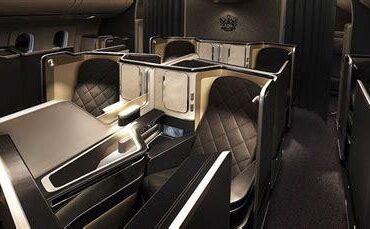
British Airways has quietly transformed its long-haul reputation with the Club Suite, now installed on all 787-10 aircraft and an increasing number of 787-8 and 787-9 jets.
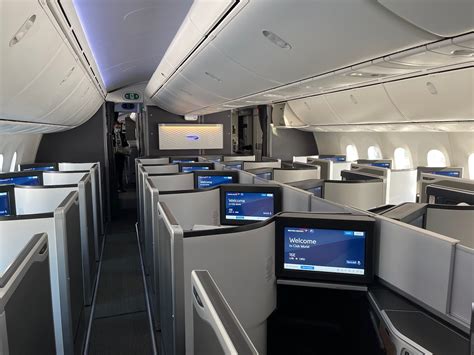
The Club Suite features a sliding door, direct aisle access in a 1-2-1 layout, and a six-foot-six-inch fully flat bed. The design replaces the airline’s older, less private configuration with a modern, enclosed product that finally matches global competitors.
Beyond the seat itself, British Airways enhances relaxation through ground services. Business passengers can access baggage pick-up and check-in services in select markets, removing airport friction before the journey even begins. Lounge access and upgraded catering further shape the experience.
The bedding has received strong praise, and recent improvements to meal presentation have elevated the overall perception of the cabin. On high-profile routes such as London Heathrow to New York JFK, the Club Suite now competes head-to-head with leading global carriers.
What distinguishes British Airways on the 787 is consistency. The Club Suite has become increasingly standardized across its fleet, reducing the guesswork that often frustrates premium travelers. Booking a 787-10 almost guarantees the enclosed suite experience.
The result is a cabin that feels cohesive and calm. The privacy door isolates external movement. The seat shell blocks peripheral distractions. The Dreamliner’s lower cabin altitude reduces the physical strain of long-haul travel. Together, these elements convert transit into reprieve.
Why the Boeing 787 Enhances Business Class Relaxation
Across all five airlines, the common denominator remains the Boeing 787 Dreamliner itself. Composite materials allow for higher cabin humidity. The effective cabin altitude is lower, reducing headaches and dehydration. Larger windows reduce claustrophobia. Noise-dampening engines soften the background soundscape.
Relaxation is cumulative. A privacy door eliminates interruptions. A longer bed reduces muscular strain. Better humidity protects skin and sinuses. Quieter cabins calm the nervous system. When layered together, these improvements produce a measurable difference in how passengers feel upon arrival.
The competition among airlines has accelerated refinement. Privacy doors are becoming standard. Wireless charging is expected. Storage compartments are smarter. Bedding is thicker. What once defined first class has migrated downward into business cabins.
Choosing the most relaxing Boeing 787 business class seat ultimately depends on personal preference. Some travelers prioritize complete enclosure and gravitate toward American’s Flagship Suite or British Airways’ Club Suite. Others value bedding above all and lean toward United Polaris. Qatar’s Ascent Suite delivers polish and length, while KLM’s understated approach proves that calm can exist without spectacle.
The Dreamliner was engineered to redefine long-haul flight. These five business class products fulfill that promise by transforming a seat into a sanctuary. In the modern era of premium travel, relaxation is not a luxury flourish. It is the central design objective.