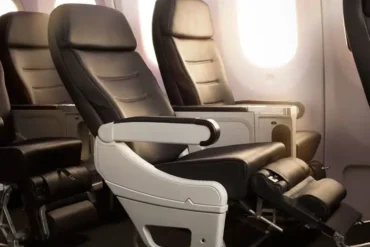
Flying long-haul no longer has to mean choosing between cramped economy seating and eye-watering business-class fares. Premium economy has quietly evolved into one of the smartest sweet spots in modern air travel, offering wider seats, deeper recline, upgraded meals, and a calmer cabin atmosphere at a fraction of the price of traditional premium cabins. What matters now is knowing where genuine value exists, because not all premium economy seats are priced — or designed — equally.
The most affordable premium seats today are not always found where travelers expect. Legacy airlines often market premium economy as a near-luxury upsell, while newer long-haul challengers treat it as a comfort-first product designed to attract value-conscious passengers. That philosophical divide has created striking price gaps on identical routes, sometimes exceeding hundreds of dollars for essentially the same journey. Understanding those differences is the key to booking smarter, not just cheaper.
Timing also plays an outsized role. Premium fares fluctuate dramatically by season, route demand, and load factors, often moving independently from economy pricing. A carrier known for higher fares can suddenly become the cheapest option on a specific date, while a low-cost airline can spike during peak demand. Looking at mid-range booking windows — around one month out — removes much of the distortion caused by last-minute corporate travel and seasonal surges, revealing which airlines truly price premium economy competitively.
The result is a surprisingly rich landscape of affordable premium seats that deliver tangible comfort improvements without drifting into luxury pricing. From transatlantic low-cost specialists to foreign flag carriers that quietly undercut U.S. airlines, today’s market rewards travelers who know where to look.
The Real Meaning of “Affordable” in Premium Economy
Affordability in premium economy is not just about the ticket price; it is about the ratio between what you pay and what you receive. A modest fare increase can feel unjustified if it delivers little more than extra legroom, while a slightly higher price can be excellent value when it includes significantly wider seating, enhanced recline, priority boarding, upgraded dining, and a quieter cabin environment.
U.S. legacy airlines often price premium economy defensively. Their premium cabins are designed to protect business-class revenue, which means premium economy fares are intentionally set high enough to avoid cannibalizing corporate travelers. In contrast, many non-U.S. carriers position premium economy as a volume product — a step up from economy meant to sell widely rather than selectively. That difference alone explains why international airlines so frequently undercut U.S. carriers on long-haul routes.
Another often-overlooked factor is aircraft configuration. Premium economy seats vary widely in pitch, width, recline, and cabin density. Some low-cost carriers actually offer more physical space than flagship airlines, simply because they prioritize seat comfort over onboard frills. When evaluated seat-for-seat rather than brand-for-brand, affordability becomes much clearer.
Why Prices Move So Much on the Same Route
Airline pricing is dynamic by design. Algorithms constantly adjust fares based on booking velocity, remaining seat inventory, historical demand, and competitor behavior. Even a minor change — such as a connecting flight feeding into a long-haul segment — can dramatically alter the total fare. That is why nonstop trunk routes provide the cleanest comparisons when evaluating premium economy value.
Secondary airports also influence pricing. Flights departing from London-Gatwick instead of Heathrow, or Paris-Orly instead of Charles de Gaulle, often carry lower fares because of reduced airport fees and lighter business-travel demand. For leisure travelers, these differences can translate directly into savings without any meaningful loss of convenience.
Seasonality adds another layer. Premium economy pricing tends to spike during summer and holidays but softens significantly during shoulder seasons. Booking outside peak travel windows not only lowers the base fare but also increases the likelihood of last-minute discounts as airlines attempt to fill premium cabins.
Low-Cost Long-Haul Airlines Redefining Premium Value
Low-cost long-haul carriers have disrupted premium economy pricing more than any other segment of the industry. These airlines strip away complexity and focus on seat economics, allowing them to offer premium products at prices that legacy airlines struggle to match.
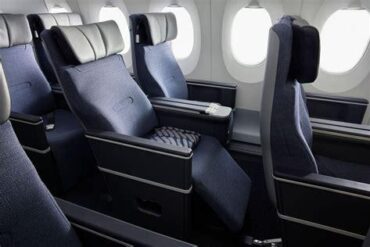
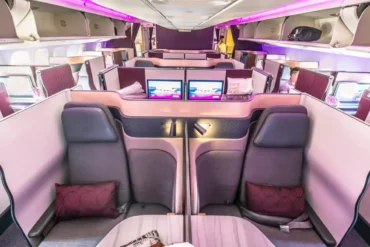
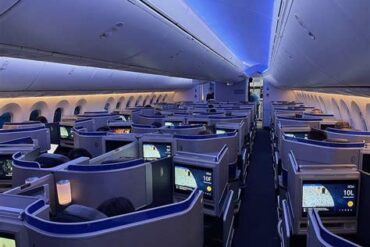
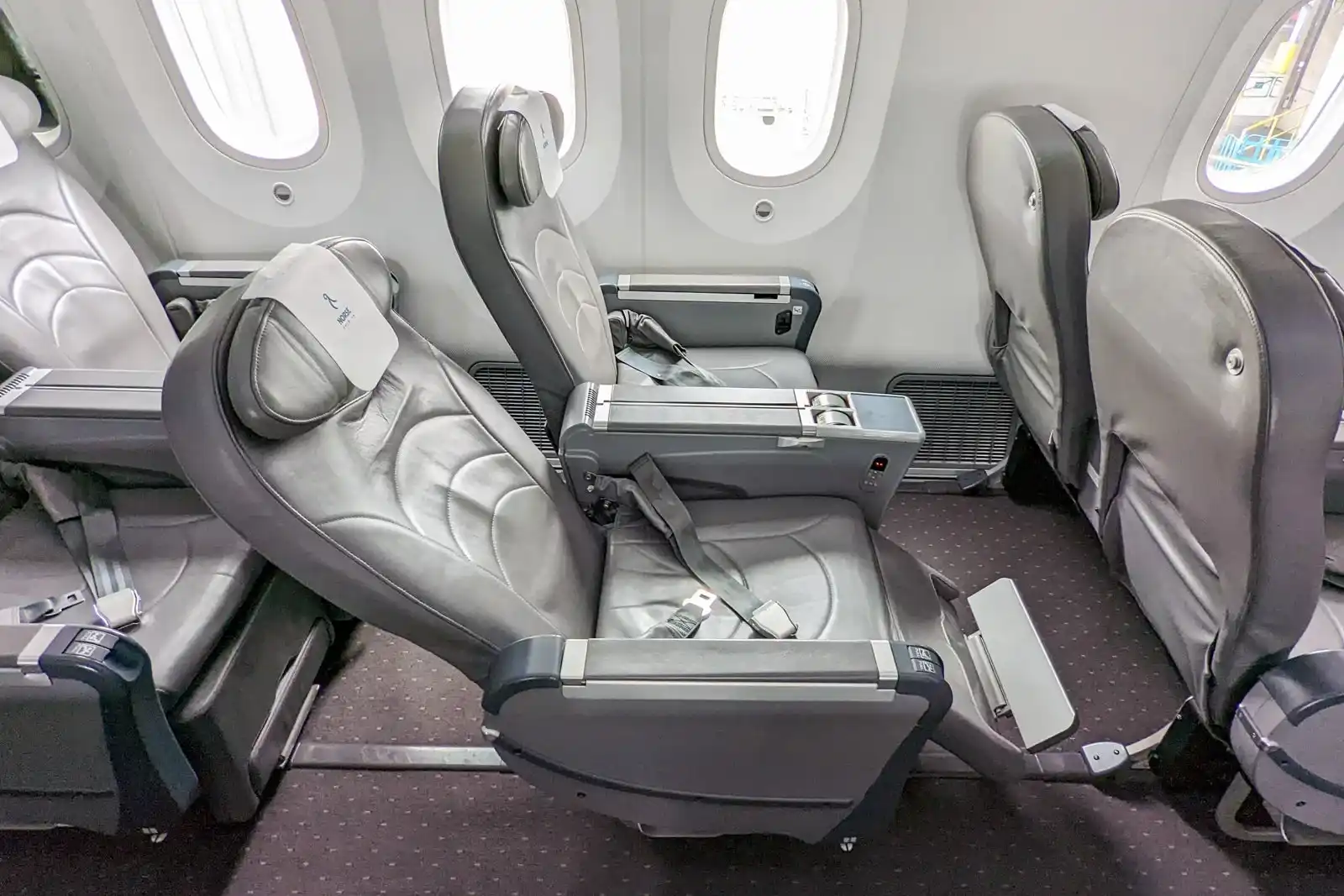
Norse Atlantic Airlines stands out as a prime example. Operating an all-Boeing 787-9 fleet, Norse offers premium seating that rivals — and in some dimensions exceeds — the offerings of established carriers. With a 43-inch seat pitch, 19-inch width, and deep recline, its premium cabin feels closer to a relaxed business-class experience than a marginal economy upgrade. Yet fares frequently start hundreds of dollars below competitors on transatlantic routes.
French Bee follows a similar strategy on select routes between North America and Europe. While its standard economy seating is densely configured, its premium economy product offers a meaningful comfort upgrade at a relatively modest price increase. For travelers prioritizing space and rest over brand prestige, these airlines represent some of the strongest value propositions in the sky.
Transatlantic Routes Where Premium Bargains Are Hiding
The transatlantic market remains the most fertile ground for affordable premium seating. Competition is intense, aircraft utilization is high, and pricing pressure forces airlines to remain aggressive. On routes such as New York to London or Paris, the gap between premium economy fares can be startling.
On comparable February travel dates, low-cost carriers have offered premium seats starting in the mid-$300 range, while some U.S. legacy airlines price their own premium economy seats at more than double that amount. Even more revealing is when a U.S. airline sells a partner carrier’s premium seat at a far lower price than its own, despite operating the same route into the same airport.
European carriers such as Virgin Atlantic, SAS, Finnair, and Iberia frequently position their premium economy cabins as accessible comfort upgrades rather than luxury products. This approach allows them to attract leisure travelers willing to pay slightly more than economy without committing to business-class pricing.
The U.S. Legacy Airline Premium Pricing Problem
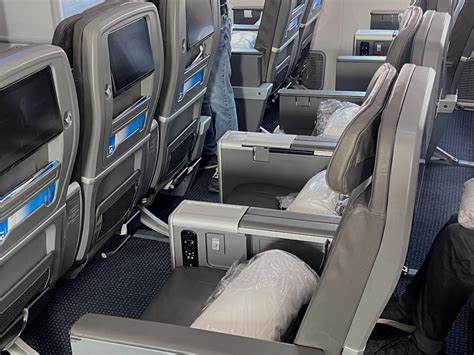
U.S.-based airlines consistently price premium economy higher than their foreign counterparts. This is not due to inferior products — many U.S. premium seats are well-designed — but rather to strategic positioning. Premium economy is treated as an extension of the corporate travel ladder, not as a mass-market comfort solution.
The result is pricing that often feels disconnected from the actual onboard experience. When a premium economy seat costs nearly as much as discounted business class on another carrier, its value proposition weakens considerably. For travelers paying out of pocket, this pricing philosophy makes U.S. legacy carriers difficult to justify unless schedule or loyalty benefits are decisive.
Seat Dimensions That Actually Matter
Comfort in premium economy is largely dictated by measurable factors rather than marketing language. Seat pitch, width, and recline define whether a long-haul flight feels tolerable or restorative.
Some low-cost carriers offer more legroom than legacy airlines, challenging the assumption that higher fares guarantee better comfort. A few extra inches of pitch can dramatically improve sleep quality, while wider armrests and deeper recline reduce fatigue on overnight flights. When evaluated objectively, certain budget-oriented premium seats outperform far more expensive alternatives.
Service, Catering, and the Soft Product Advantage
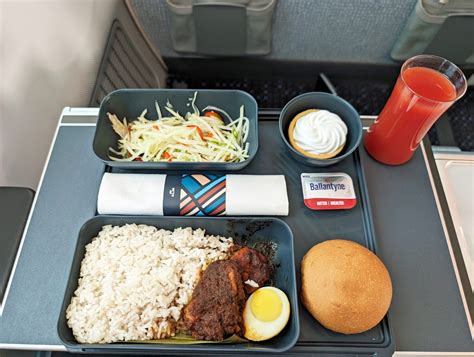
Beyond physical space, service quality often separates good premium economy from great premium economy. Non-U.S. carriers, particularly in Asia and Europe, frequently invest more in catering, cabin service, and overall presentation. Enhanced meal options, real tableware, and attentive service contribute to a noticeably more refined experience.
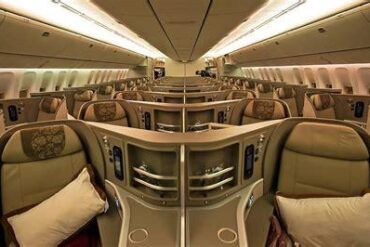
Asian airlines such as Japan Airlines, EVA Air, and Singapore Airlines consistently rank among the world’s best for premium economy, combining competitive pricing with high service standards. While they may not always be the cheapest, the balance they strike between cost and quality makes them compelling choices for longer routes.
Awards, Rankings, and What They Really Tell You
Industry rankings provide useful context but should not be taken as absolute truth. Awards often reflect consistency and brand perception rather than value. An airline ranked highly for premium economy may still be overpriced on a given route, while a lesser-known carrier can deliver outstanding comfort at a lower cost.
What rankings do reveal is which airlines consistently invest in their premium cabins. Carriers that score well across seat design, catering, and service tend to maintain higher standards even when pricing fluctuates. When these airlines offer sales or off-peak fares, the value proposition becomes especially strong.
When Non-U.S. Carriers Make the Most Sense
For travelers focused on affordability, non-U.S. carriers are often the first place to look. Their pricing models are more flexible, and their premium cabins are designed to appeal to leisure travelers as much as corporate ones. This does not mean U.S. airlines should be ignored entirely, but rather that they should be evaluated carefully against international alternatives.
During peak travel periods, pricing differences can narrow or even reverse, particularly from major U.S. hubs. Outside those windows, however, foreign carriers regularly emerge as the better option for premium comfort at a reasonable cost.
How to Book Smarter Premium Seats Today
The most affordable premium seats are rarely the result of a single rule. They emerge at the intersection of timing, route selection, airline philosophy, and aircraft configuration. Travelers willing to consider secondary airports, flexible dates, and non-U.S. carriers unlock the widest range of options.
Premium economy is no longer a compromise product. In its best form, it delivers space, calm, and dignity at a price that makes sense. The airlines that understand this — and price accordingly — are the ones quietly redefining what affordable premium travel looks like today.