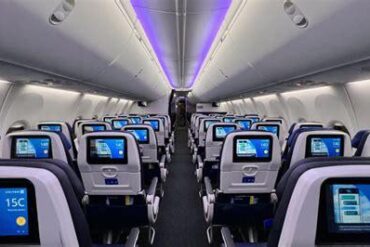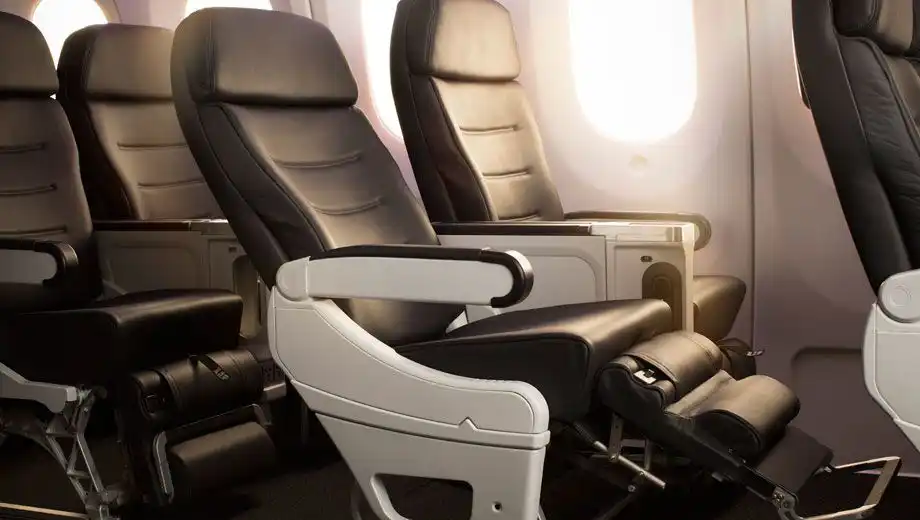
Premium economy once occupied a simple middle ground between standard economy and business class. Over time, however, the category has stretched and blurred, producing cabins that range from slightly roomier economy seats to offerings edging close to true business-lite comfort. In this evolving landscape, a handful of global airlines continue to anchor their products around high value, competitive pricing, and a consistently upgraded onboard experience. These carriers—Air New Zealand, China Eastern Airlines, Vietnam Airlines, SAS, and American Airlines—regularly offer seats that function as meaningful upgrades without forcing travelers into the sharp fare spikes common across the industry.
Within this group, each airline achieves affordability through a different strategy. Some rely on smart inventory management to keep cabins full and prices controlled. Others deliberately streamline their service offerings, allowing them to deliver expanded space and comfort at compelling fares. The result is a set of premium economy products that remain impressively accessible, particularly for long-haul travelers who prioritize rest, stability, and cabin quietness without paying for luxury amenities.
Why These Five Airlines Stand Out in a Crowded Market
The premium economy category tends to reward carriers that understand the psychology of the mid-tier traveler: individuals willing to pay more for comfort but not for extravagance. This traveler wants a larger seat, a quieter cabin, a better chance at arriving well-rested, and just enough priority services to remove a few layers of airport stress. These expectations create natural opportunities for the five airlines highlighted here, all of which deploy their premium economy cabins on major long-haul routes and structure pricing to favor consistent upgrades.
The value among these carriers is not theoretical. In most markets, their premium economy fares sit comfortably below those of regional competitors, at times approaching or even matching economy fares offered by full-service airlines with higher operating costs. This allows passengers to enjoy wider seats, greater pitch, deeper recline, and more personal space for a fraction of what they might expect.
The following sections examine how each airline designs its premium economy product, where travelers can find the best pricing, and which specific features move these cabins beyond economy while keeping them far below business-class price thresholds.
Air New Zealand’s High-Value Premium Economy Strategy
Air New Zealand has become one of the most dependable names in affordable premium economy, due largely to its intentional strategy of keeping fare differentials modest. The airline deploys its premium economy cabin on Boeing 787-9 and Boeing 777-300ER aircraft across long-haul routes connecting New Zealand with North America, Asia, and Australia. These are dense, competitive markets where comfort matters and pricing can swing dramatically.
Instead of inflating fares to approximate a semi-luxury upgrade, Air New Zealand uses premium economy as a smart upsell tool. Fares frequently sit only 50% to 100% above economy, enabling travelers to purchase large-scale comfort improvements without committing to business-class budgets. This model also drives consistently high cabin occupancy, ensuring predictable revenue for the airline.
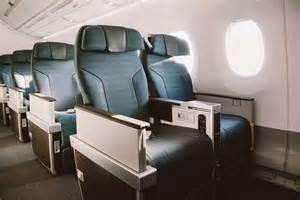
The cabin’s 2-3-2 recliner layout provides generous width, leg rests, deep recline, and noticeably more personal space. Combined with improved catering and priority check-in, Air New Zealand delivers an experience that sits firmly in the premium tier without introducing the cost burden of elite amenity kits or business-class-style service rounds. Passengers effectively pay for space and rest—two commodities that matter most on long-haul flights.
China Eastern Airlines: Premium Comfort Engineered for Affordability
Among large network carriers, China Eastern Airlines stands out for offering one of the most aggressively priced premium economy cabins in today’s market. Rather than positioning premium economy as a distinct soft-product experience, the airline focuses on hard-product differentiation—wider seats, additional legroom, and added recline—while keeping the service profile closer to economy.
This strategy significantly reduces operating costs and allows China Eastern to price premium economy as little as 20% to 60% above standard economy, especially on major Europe–China routes. In certain seasonal windows, the fare difference is so narrow that premium economy essentially becomes the default selection for international travelers seeking additional space.
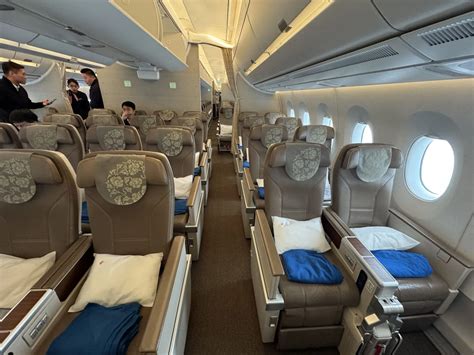
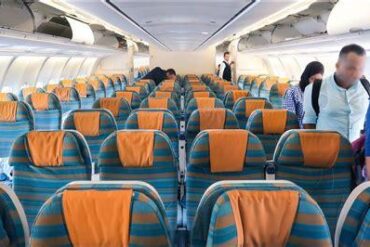
The cabin itself, found on the Airbus A350-900, Boeing 787-9, and select Airbus A330s, uses a 2-4-2 configuration with pitch between 37 and 38 inches. Travelers receive a recognizably better hard product without paying for high-touch amenities. This equilibrium appeals strongly to cost-conscious travelers who want a long-haul upgrade without adopting a luxury mindset.
Vietnam Airlines: A Quiet Star in the Asia-Europe Premium Market
Vietnam Airlines operates one of the most quietly impressive premium economy cabins in the Asia-Pacific region. The airline relies on its Boeing 787-9 and Airbus A350-900 fleets to deliver premium economy seats in a 2-3-2 layout with a notably generous pitch that reaches up to 42 inches. These seats offer leg rests, footrests, and a smaller, quieter cabin environment—features that resonate strongly with travelers crossing long distances between Vietnam and Europe.
Vietnam Airlines positions premium economy as an accessible comfort-boosting upgrade. Pricing typically ranges from 50% to 100% above economy, but sale periods and off-peak months often produce much lower gaps, turning premium economy into one of the most attractive value propositions in the region.
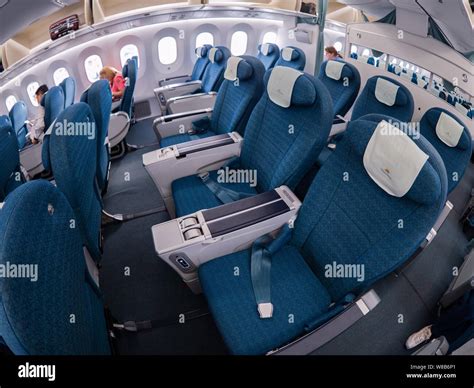
The soft product remains closer to economy than to business class, but the real allure comes from the seat itself. For travelers who prioritize comfort over frills—especially those flying overnight—the combination of deep recline, wide seating, and stable pricing places Vietnam Airlines among the most compelling premium economy options available today.
SAS: Smart Pricing That Delivers Transatlantic Value
Scandinavian Airlines System (SAS) has long understood the importance of value-driven long-haul travel. Its premium economy product, installed on Airbus A330-300, Airbus A350-900, and Airbus A321LR aircraft, targets travelers journeying between Scandinavia and North America or Asia. SAS regularly discounts this cabin during off-peak seasons, producing long-haul fares in the mid- to high-$600s—a rare and powerful value in the transatlantic market.
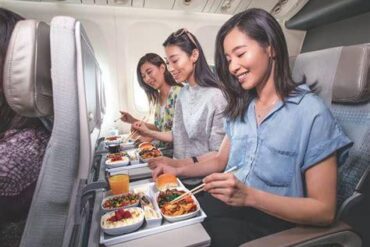
While SAS’s premium economy doesn’t attempt to mimic business-lite offerings, it reliably delivers the essentials: wider seats, 38-inch pitch, leg rests, upgraded catering, priority check-in, and generous baggage allowances. This combination transforms the cabin into a dependable mid-tier option for leisure travelers and cost-sensitive business passengers.
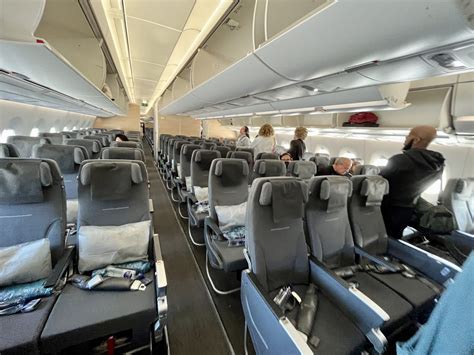
For passengers comparing fares across joint-venture carriers and large US or European airlines, SAS frequently emerges as the price leader. The airline uses premium economy not as a prestige product but as a revenue lever—one that attracts travelers who want comfort above all else.
American Airlines: The Best-Priced Premium Economy in the U.S. Market
American Airlines has invested heavily in expanding its premium economy footprint, now present on Boeing 777-200ER, Boeing 777-300ER, Boeing 787-8, and Boeing 787-9 aircraft. While American’s premium economy is not the cheapest globally, it is often the most competitively priced among major US carriers.
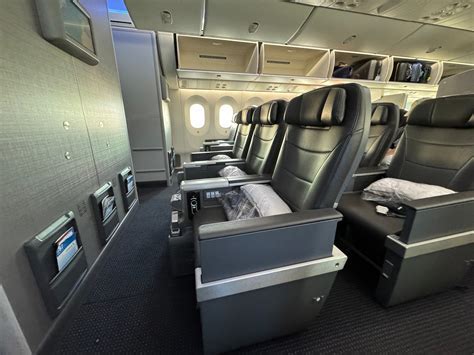
The cabin features a 2-3-2 or 2-4-2 configuration with 38-inch pitch, deeper recline, larger screens, and improved catering relative to the Main Cabin. American prices premium economy at 70% to 120% above economy on most international routes, but this still undercuts Delta and United, especially during peak travel periods.
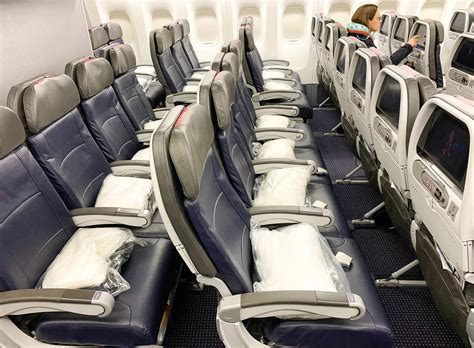
American’s value lies in predictable pricing behavior and broad network coverage. Travelers flying between the U.S. and Europe, South America, or Asia often find that American’s premium economy delivers the lowest price for a mid-tier upgrade—an especially important distinction for long-haul travelers who want comfort without paying for premium branding.
The Bottom Line: A Global Tier of Affordable Comfort
Premium economy continues to evolve, but affordability remains a differentiating factor for passengers selecting seats that provide tangible comfort gains. Air New Zealand, China Eastern, Vietnam Airlines, SAS, and American Airlines have shaped their cabins around this reality, delivering space, quiet, and stability at prices that remain accessible to a wide range of travelers. For long-haul passengers seeking meaningful comfort upgrades at manageable rates, these five airlines consistently offer some of the strongest opportunities available today.
The landscape will continue shifting as demand patterns and fleet strategies evolve, yet the core appeal of premium economy—space without extravagance—remains. These carriers have proven that comfort does not need to be a luxury purchase, and travelers who understand the strengths of each airline will continue to find exceptional value across global routes.