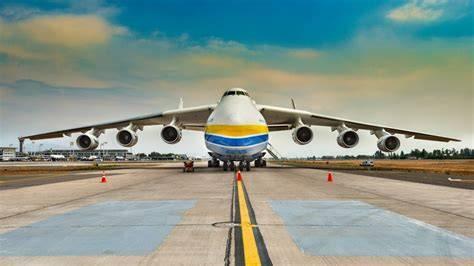
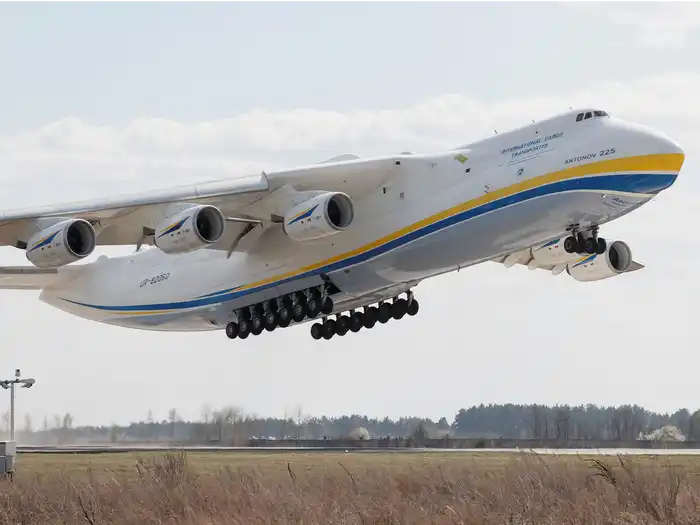
Antonov was once one of the most important aircraft manufacturers in the world. Its name was connected with some of the most impressive transport aircraft ever created, from the legendary An-2 biplane to the enormous An-225 Mriya, the largest aircraft ever built. During the peak years of the Soviet aviation industry, Antonov was not simply an aircraft designer. It was a massive industrial organization capable of producing hundreds of aircraft every year.
At its height in the late 1980s, Antonov was delivering around 250 aircraft annually, supplying military forces, civilian operators, and governments across the Soviet Union and its allies. The company produced tactical airlifters, regional aircraft, cargo planes, and specialized transports that filled unique roles no other manufacturer could easily replace.
However, the collapse of the Soviet Union transformed Antonov’s position almost overnight. The company went from being a central part of one of the world’s largest aerospace systems to an isolated manufacturer operating inside an economically struggling independent Ukraine.
The result was devastating. Production dropped from hundreds of aircraft per year to only a handful. By the 2000s, Antonov was delivering fewer than 20 aircraft annually, and the last newly built Antonov aircraft was delivered in 2016.
Yet Antonov did not disappear. Despite decades of economic pressure, broken supply chains, political upheaval, and war, the company has survived. Its story is not simply about decline. It is about how a major aerospace organization endured repeated crises and continued searching for a path back to serial aircraft production.
The Soviet Collapse Destroyed Antonov’s Original Business Model
Before 1991, Antonov operated inside the highly integrated Soviet aerospace system. Aircraft development, component manufacturing, engine production, and final assembly were spread across multiple republics. No single design bureau functioned as a completely independent company.
Antonov’s aircraft were designed in Ukraine, but many critical components came from factories located elsewhere in the Soviet Union. Engines, avionics, landing systems, and other specialized parts moved through a centralized industrial network designed to support the entire Soviet military machine.
When the Soviet Union collapsed, that system disappeared.
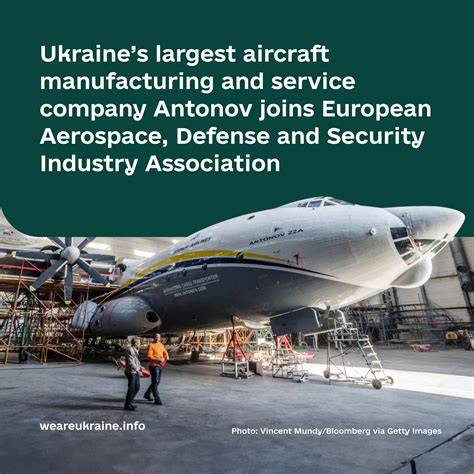
Antonov became one of the most vulnerable aerospace companies because it was suddenly located outside Russia, which inherited most of the former Soviet military infrastructure and financial resources. While Russian aerospace companies such as United Aircraft Corporation eventually received government support and consolidation, Antonov had to survive as part of Ukraine’s smaller economy.
The economic shock was enormous. Ukraine experienced a dramatic industrial decline during the 1990s, with aerospace programs suffering from reduced government spending and collapsing demand.
At the same time, the global aviation market changed. The end of the Cold War created a surplus of military transport aircraft, reducing the need for new airlifters. Many countries that previously operated Soviet aircraft began replacing them with Western models from manufacturers such as Airbus and Boeing.
For Antonov, the timing could hardly have been worse. Its main market disappeared just as its industrial foundation was breaking apart.
Why Antonov Suffered More Than Other Soviet Aircraft Makers
Many Soviet aircraft manufacturers faced similar problems after 1991, but Antonov had additional disadvantages.
Russia inherited a much larger aerospace sector, including major design bureaus such as Tupolev, Ilyushin, Sukhoi, and Yakovlev. These companies struggled but benefited from Russia’s larger economy and military spending.
Ukraine inherited Antonov, but it lacked the financial capacity to maintain a comparable aerospace ecosystem.
One of Antonov’s biggest problems was its dependence on Russian suppliers. Around 60% of its components originally came from Russia, meaning the company was still deeply connected to the country that had become a separate state.
This dependence created difficulties throughout the 1990s and early 2000s. Antonov could continue supporting existing aircraft, but developing entirely new models became much more complicated.
The company survived mainly through maintenance programs, upgrades, and specialized aviation services. Its cargo airline division, Antonov Airlines, became internationally famous for operating oversized cargo missions with aircraft like the An-124 Ruslan.
The giant aircraft that once represented Soviet engineering power became one of the few profitable parts of Antonov’s global presence.
Antonov Continued Developing New Aircraft Despite Financial Problems
Although production numbers collapsed, Antonov did not stop designing aircraft.
During the 1990s and early 2000s, the company attempted to create new aircraft that could compete in changing markets. It produced limited numbers of models such as the An-140 turboprop, An-148 regional jet, and An-158 stretched regional aircraft.
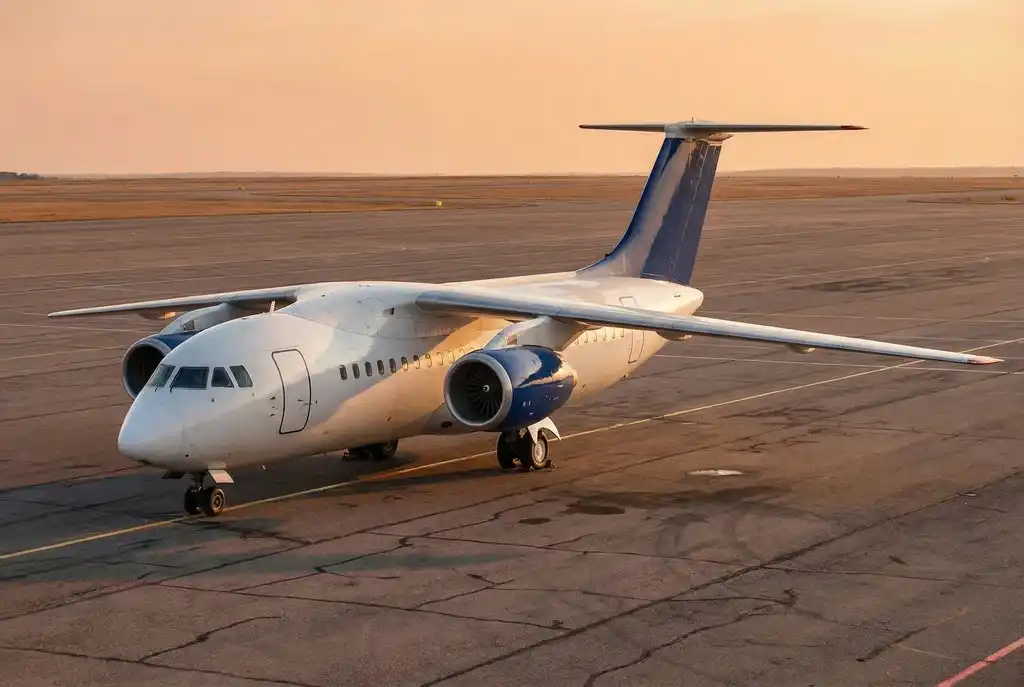
These programs demonstrated that Antonov still possessed significant engineering capability. The company could design modern aircraft, but turning designs into successful commercial products required investment, reliable supply chains, and customers.
One of Antonov’s most ambitious projects was the An-178 medium transport aircraft.
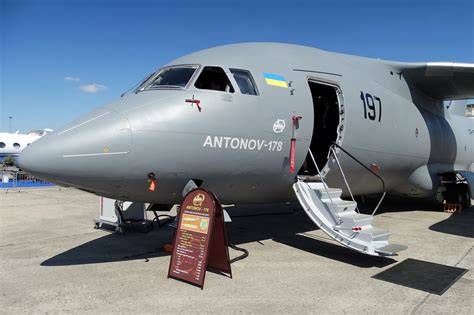
The An-178 was designed as a replacement for aging Soviet-era tactical airlifters. It offered a payload capacity of approximately 18 tonnes and was positioned against aircraft such as the Embraer C-390 Millennium and Lockheed Martin C-130J Super Hercules.
The aircraft attracted international interest, including an order from Peru. Antonov believed there was a global market for around 200 aircraft.
For a company that had struggled for decades, the An-178 represented a possible return to relevance.
However, Antonov’s recovery plans depended on solving its biggest historical problem: dependence on Russian components.
The 2014 Ukraine Crisis Forced Antonov To Change Direction
Relations between Ukraine and Russia had been increasingly complicated for years, but the two aerospace industries remained connected through cooperation.
That changed dramatically in 2014 when Russia annexed Crimea and conflict began in eastern Ukraine.
Ukraine ended most military and industrial cooperation with Russia, forcing Antonov to rapidly redesign its supply chain.
This was not a simple replacement process. Aircraft are highly integrated machines, and changing one component can require extensive engineering modifications, testing, and certification.
Antonov began replacing Russian equipment with Western alternatives. The company worked with suppliers including Honeywell for avionics, Collins Aerospace for navigation systems, and Safran for landing gear-related technologies.
The transformation was difficult but necessary.
By the late 2010s, Antonov was moving toward becoming a more independent Ukrainian aerospace manufacturer. The company was reducing Russian influence and creating aircraft with more international components.
The upgraded An-178 program appeared close to becoming a major export opportunity.
Then another crisis arrived.
The 2022 War Destroyed Antonov’s Manufacturing Recovery
The full-scale Russian invasion of Ukraine in 2022 created the most serious challenge in Antonov’s history.
The company’s facilities were directly affected by the conflict. The destruction of the Antonov airport near Kyiv became one of the early symbols of the war, especially after the famous An-225 Mriya was destroyed during fighting.
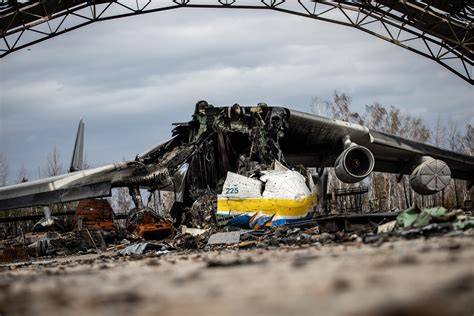
The war halted aircraft production and disrupted nearly every aspect of Antonov’s operations.
The first An-178 aircraft intended for Peru was under assembly when the conflict began. Work stopped, and Antonov’s plans for renewed aircraft production were effectively frozen.
The company that had spent years escaping Soviet-era dependencies suddenly faced a far greater challenge: maintaining its existence during a major war.
Unlike many aerospace companies that can relocate production or access international financing, Antonov’s situation was unique. Its aircraft were closely tied to Ukrainian industrial infrastructure that had been damaged by conflict.
Russia Also Faces Aerospace Problems After Losing Ukrainian Cooperation
Antonov’s decline was not the only consequence of the broken Ukrainian-Russian aerospace relationship.
Russia also depended heavily on Ukrainian industries, particularly companies such as Motor Sich, which produced important aircraft engines.
After 2014, Russia began replacing Ukrainian suppliers with domestic alternatives. However, the process was expensive and technically difficult.
The impact became even greater after Western sanctions following the 2022 invasion. Russian aviation programs that relied on Western avionics and components faced additional delays.
The situation demonstrates how deeply connected the former Soviet aerospace system remained decades after the USSR disappeared.
Antonov lost access to Russian suppliers, while Russia lost access to important Ukrainian technologies.
Can Antonov Return To Serial Aircraft Production?
Antonov today is far smaller than the aerospace giant of the Soviet era, but it still possesses valuable assets.
The company retains decades of transport aircraft expertise, experienced engineers, proven designs, and a globally recognized brand.
Its future recovery will likely focus on military transport aircraft rather than commercial passenger jets. The demand for tactical and strategic airlifters remains significant, especially as countries modernize aging fleets.
The An-178 remains one of Antonov’s strongest candidates for future production. The An-70 heavy transport aircraft also represents a valuable design concept, although restarting these programs would require major investment.
Antonov may also expand into unmanned aircraft and drone technology. The company’s experience in large aircraft design, aerodynamics, and military aviation could provide a foundation for new defense-related products.
Antonov’s Story Is About Survival, Not Just Decline
Antonov’s journey is one of the most dramatic examples of how geopolitical change can reshape an aerospace company.
The company survived the collapse of the Soviet Union, the loss of its traditional market, the breakdown of Russian cooperation, and the destruction caused by war.
Its production numbers may never return to the extraordinary levels of the 1980s, when hundreds of aircraft left its factories every year. The aerospace industry has changed, and competition is stronger than ever.
However, Antonov remains one of the world’s most recognizable transport aircraft names.
The company that created the An-124 Ruslan and An-225 Mriya is no longer the industrial giant it once was. But its engineering knowledge, aircraft designs, and aviation heritage remain intact.
Antonov’s future depends on peace, investment, and the ability to rebuild a modern production system. If those conditions return, the Ukrainian aircraft manufacturer may once again become a serious player in the global transport aircraft market.