Why The US Navy Replaced The C-2 Greyhound With The CMV-22B Osprey
At first glance, the US Navy’s decision to retire the Grumman C-2A Greyhound and replace it with the Bell Boeing CMV-22B Osprey appears to represent a major reduction in carrier logistics capability. The C-2 Greyhound was a proven fixed-wing aircraft designed specifically for Carrier Onboard Delivery (COD) missions, carrying cargo, spare parts, mail, and personnel between shore bases and aircraft carriers for more than five decades.
The numbers seem surprising. The aging C-2A could carry approximately 10,000 pounds of cargo, while the newer CMV-22B Osprey has a maximum payload closer to 6,000 pounds in many operational configurations. On paper, the Navy exchanged a larger cargo aircraft for a platform with roughly 40% less payload capacity.
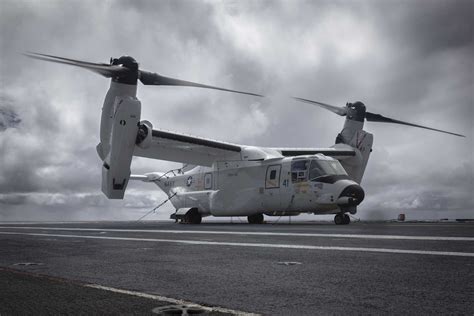
However, military aviation decisions are rarely based on simple cargo volume. The Navy did not replace the Greyhound because the Osprey could carry more. It made the transition because the modern carrier strike group faces a completely different strategic environment. The CMV-22B provides capabilities that the C-2A could never achieve, especially in an era dominated by F-35C Lightning II operations, distributed warfare, and long-range Indo-Pacific missions.
The most important advantage of the Osprey is its ability to transport the Pratt & Whitney F135 engine power module used by the F-35 family. This single capability fundamentally changed the Navy’s logistics requirements and became the deciding factor behind the transition.
The C-2 Greyhound Was A Reliable Carrier Logistics Legend
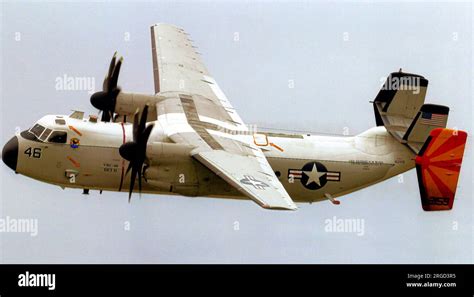
The C-2 Greyhound was introduced during the 1960s as the Navy’s dedicated carrier onboard delivery aircraft. Built from the same basic design family as the E-2 Hawkeye airborne early warning aircraft, the Greyhound combined a pressurized cargo cabin with folding wings and carrier landing capability.
For decades, the aircraft served as the logistical connection between aircraft carriers and mainland supply networks. It transported everything from critical spare components to replacement personnel. When a carrier strike group operated far from friendly territory, the C-2 provided a dependable bridge between the fleet and established airfields.
The aircraft’s greatest strength was its payload capacity. The C-2 could move heavy equipment that smaller aircraft could not handle, making it an essential part of carrier operations. Its large rear cargo ramp allowed crews to quickly load pallets, containers, and bulky equipment.
However, the Greyhound had limitations that became increasingly obvious as naval aviation evolved. It required conventional runways when operating away from carriers. It could not land on small ships, remote islands, austere locations, or improvised landing zones. It was essentially tied to traditional aviation infrastructure.
As the US military shifted toward the Pacific theater, those limitations became more significant. The distances involved in the Indo-Pacific are enormous, and future conflicts may require forces to operate from dispersed locations rather than large, predictable bases.
The CMV-22B Osprey Introduced A New Era Of Naval Logistics
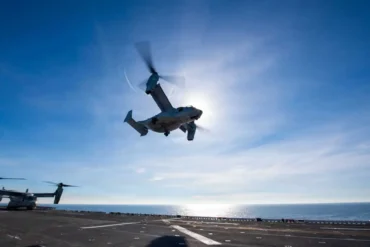
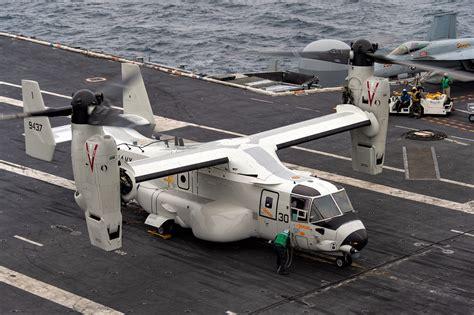
The CMV-22B Osprey changed the concept of carrier logistics by combining the capabilities of a helicopter and a fixed-wing aircraft. Its unique tiltrotor design allows it to take off and land vertically while also achieving the speed and range of a conventional aircraft.
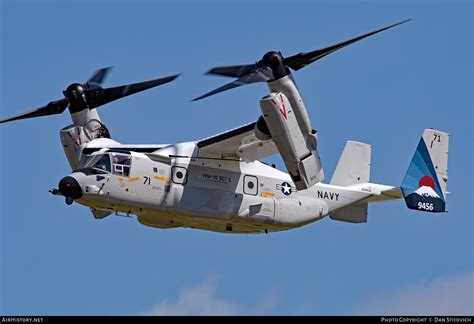
Unlike the C-2 Greyhound, the Osprey does not require a long runway. It can deliver cargo directly to ships, remote bases, islands, and locations without traditional aviation infrastructure. This creates a much more flexible logistics network for modern naval operations.
A destroyer or cruiser operating away from the carrier group may require urgent replacement parts, medical evacuation support, or critical supplies. Previously, many of these missions depended on helicopters with limited range or fixed-wing aircraft requiring nearby airfields. The CMV-22B removes that limitation.
The Osprey can fly directly from an aircraft carrier to smaller vessels or remote locations, dramatically expanding the reach of the carrier strike group. It also provides improved operational flexibility during night missions because of its modern avionics, sensors, and flight systems.
For a Navy preparing for operations across thousands of miles of ocean, the ability to move supplies without relying on vulnerable airfields is a major strategic advantage.
The F-35C Engine Problem Changed Everything
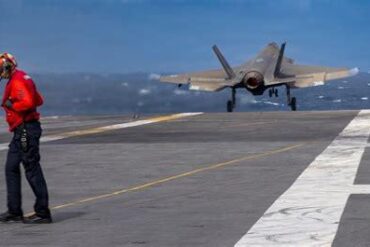
The central reason behind the Navy’s decision was the arrival of the F-35C Lightning II. Unlike previous carrier fighters such as the twin-engine F-14 Tomcat and F/A-18 Super Hornet, the F-35C uses a single engine.
That engine, the F135 turbofan, is one of the most advanced fighter engines ever developed. It produces enormous thrust while powering the aircraft’s sophisticated sensors, electronic warfare systems, and stealth capabilities.
But the single-engine design creates a serious logistics requirement. If an F-35C suffers an engine failure while deployed aboard an aircraft carrier, the aircraft becomes unavailable until a replacement engine component arrives.
The Navy determined that maintaining fifth-generation carrier aviation required the ability to quickly transport the F135 power module. The C-2 Greyhound could not easily perform this mission.
The engine component is large and heavy, weighing approximately 3,750 pounds. Its dimensions also create challenges because the Greyhound’s cargo compartment was not designed around the F135 system. Modifying the C-2 to carry the engine would have required a major redesign of an aging aircraft.
The CMV-22B, by contrast, was specifically adapted to accommodate this critical component. Although the fit is extremely tight, the Osprey’s cargo bay provides the necessary space.
Carrying Less Cargo But Delivering More Capability
The CMV-22B’s smaller payload capacity does not tell the complete story. Modern military logistics are increasingly focused on moving the right equipment rather than simply moving the largest amount of cargo.
A single F135 power module may be more valuable to a carrier air wing than thousands of pounds of general supplies. The ability to restore an F-35C to combat readiness could directly influence the effectiveness of an entire carrier strike group.
The Osprey also provides capabilities that the C-2 never possessed. It features an aerial refueling probe, allowing it to receive fuel from tanker aircraft and significantly extend its operational range.
With aerial refueling support from aircraft such as the F/A-18 Super Hornet or future unmanned tanker platforms like the MQ-25 Stingray, the CMV-22B can travel farther across the Pacific while maintaining operational flexibility.
This capability is particularly important because future naval operations may occur far from established bases. A carrier group operating thousands of miles from friendly territory cannot depend on predictable logistics routes.
Supporting The US Navy’s Pacific Strategy
The Indo-Pacific region has become the primary focus of US military planning because of its vast geography and increasing strategic competition. In this environment, fixed bases can become vulnerable targets.
The traditional model of concentrating aircraft and supplies at large installations is being replaced by a more distributed approach. Forces are expected to operate from multiple locations, including smaller islands, temporary facilities, and allied bases.
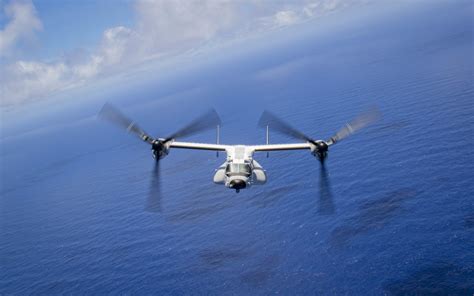
The CMV-22B fits directly into this strategy. It can transport critical components between aircraft carriers, amphibious ships, remote airfields, and allied locations.
Because all F-35 variants share common engine technology, the Osprey’s ability to move F135 components benefits more than just the Navy. Air Force, Marine Corps, and allied F-35 operators can all benefit from a flexible logistics network.
A Navy CMV-22B could theoretically move an engine component from a major logistics hub, deliver it to a carrier, or support operations at a remote island location. This creates a shared sustainment capability across multiple branches and partner nations.
The Future Of Carrier Aviation Logistics
The retirement of the C-2 Greyhound represents more than the replacement of one aircraft with another. It reflects a broader transformation in how the US Navy thinks about naval warfare.
The carrier strike group of the past depended heavily on predictable supply chains and traditional airfields. The carrier strike group of the future must operate in a contested environment where flexibility, speed, and survivability matter more than maximum cargo volume.
The CMV-22B Osprey is not a perfect replacement for the Greyhound. It cannot carry as much cargo, and its unique design introduces maintenance challenges. The aircraft’s cargo bay is tightly packed when transporting an F135 module, requiring careful loading procedures and specialized equipment.
Yet those disadvantages are balanced by capabilities that the C-2 could never provide. Vertical landing, extended range, aerial refueling, and direct ship-to-shore logistics create an entirely new operational model.
The Navy accepted a smaller cargo aircraft because it gained a far more adaptable logistics platform. In the age of fifth-generation fighters, distributed operations, and Pacific competition, the ability to keep advanced aircraft flying is more important than simply carrying more cargo.
The CMV-22B Osprey represents a shift from traditional transportation toward strategic mobility. It may carry fewer pounds than the aircraft it replaced, but it delivers something far more valuable: the ability to sustain the future of naval aviation anywhere the fleet needs to operate.