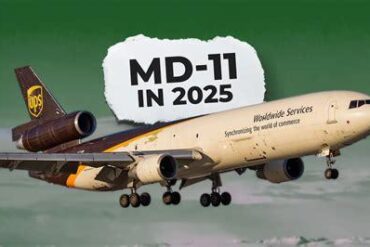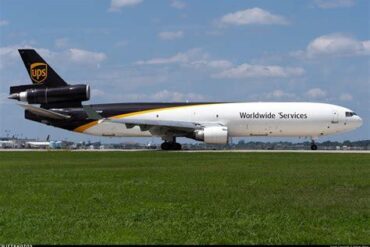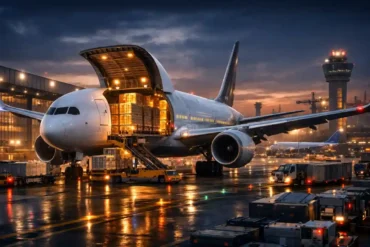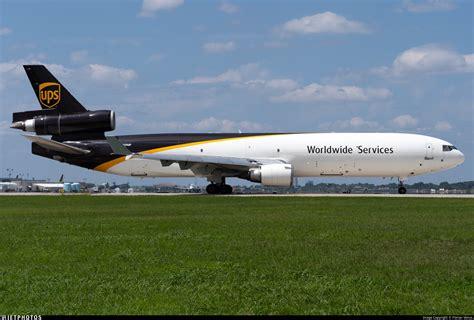
The age of the tri-jet widebody is quietly closing, and few aircraft symbolize that transition more vividly than the McDonnell Douglas MD-11. For decades, its long fuselage, distinctive tail-mounted engine, and unmistakable silhouette were fixtures in global cargo corridors. Now, United Parcel Service has confirmed that the MD-11’s long run under the UPS Airlines banner has ended, marking a decisive moment in commercial aviation history and signaling a broader shift in how the world’s cargo moves.
UPS disclosed the decision within its fourth-quarter 2025 financial results, pairing strong commercial performance with a sobering operational milestone. The company posted $24.5 billion in consolidated revenue and $2.6 billion in operating profit, yet within the figures sat confirmation that the MD-11 fleet would not return to service. The announcement closed the door on an aircraft that had already been nearing retirement, but whose exit was ultimately accelerated by events that reshaped internal risk calculations and public scrutiny.
A Strategic Retirement Hidden Inside Strong Financial Results
UPS characterized the move as part of an accelerated fleet modernization strategy, confirming that the retirement of the MD-11 fleet was completed during the final quarter of 2025. While modernization had long been planned, the timeline shifted sharply forward. The company acknowledged a $238 million total charge, including a $137 million non-cash after-tax write-off tied directly to the MD-11 aircraft, alongside $101 million in transformation costs.
These figures underline how deeply embedded the MD-11 had been in UPS’s operational fabric. Retiring the aircraft early was not simply a matter of parking aging jets; it required accounting for remaining asset value, reworking schedules, retraining crews, and absorbing the financial impact of an abrupt transition. Yet UPS made it clear that the decision was unavoidable, reflecting a new balance between efficiency, safety, and long-term fleet sustainability.
November’s Crash and the End of Operational Confidence
The defining moment arrived in November 2025, when a UPS MD-11 departed Louisville—its global air hub—and suffered a catastrophic engine separation shortly after takeoff. The aircraft crashed into a nearby residential area, triggering immediate comparisons to historic engine-loss accidents and reigniting debate over the continued use of aging tri-jet designs.
The human cost was devastating. All three crew members lost their lives, and 12 people on the ground were killed, with additional injuries reported across the surrounding area. Beyond the tragedy itself, the accident shattered remaining confidence in the MD-11’s operational future. Questions spread rapidly across the industry and public sphere about maintenance complexity, engine redundancy philosophies, and whether aircraft designed in a different regulatory era could still meet modern expectations.
In response, UPS and FedEx Express grounded their MD-11 fleets, initially as a precautionary measure. As weeks passed, the grounding extended into the new year, and what began as a temporary pause evolved into a final verdict. For UPS, returning the aircraft to service no longer aligned with its risk tolerance or strategic direction.
The MD-11’s Long Service Life at UPS
At the time of retirement, UPS operated 26 MD-11 freighters, with an average age exceeding 31 years. These aircraft had carried millions of tons of cargo, linking continents with remarkable reliability for much of their service lives. Designed as an evolution of the DC-10, the MD-11 promised improved range and efficiency, and for years it delivered exactly that—particularly in cargo roles where payload and long-haul capability mattered more than passenger comfort.
However, age introduces unavoidable realities. Maintenance costs rise, spare parts become scarcer, and engineering margins shrink. In an era increasingly dominated by twin-engine widebodies with advanced avionics and fuel efficiency, the MD-11’s three-engine configuration became harder to justify economically, even before safety considerations entered the equation.
A Shrinking Global Fleet and an Industry Turning the Page
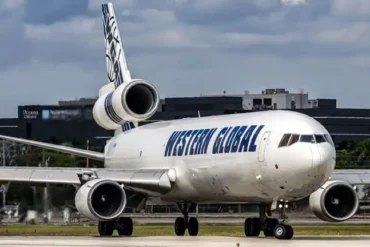
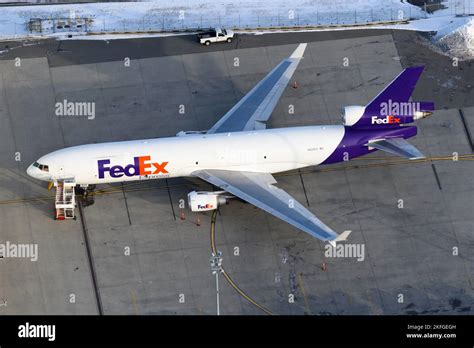
UPS was not alone in operating the MD-11 at the time of its grounding. FedEx Express maintained the world’s largest remaining fleet, with 58 aircraft, while Western Global Airlines operated a smaller group of 14 freighters. All are currently inactive, and the industry is watching closely to see whether any will ever fly again in commercial service.
The implications extend beyond individual airlines. The MD-11’s retirement underscores the end of the tri-jet era in mainstream commercial operations. Modern cargo networks now prioritize aircraft like the Boeing 777F and 767F, which offer lower fuel burn, simplified maintenance, and compliance with increasingly strict environmental and regulatory standards.
Legacy of a Cargo Icon
The MD-11 leaves behind a complex legacy. It was never universally loved in passenger service, yet it found enduring success as a freighter, where its performance characteristics and payload capacity shone. For UPS, it became a backbone of overnight logistics, enabling the precision and reliability that modern e-commerce depends upon.
Its retirement is not a rejection of what the aircraft achieved, but a recognition that aviation evolves relentlessly. Safety expectations rise, economics shift, and technology advances. The MD-11 served faithfully into its fourth decade, an impressive feat by any standard, and its departure marks both an ending and a quiet celebration of an aircraft that carried the global economy on its wings.
As the last UPS tri-jets fade into history, the skies grow a little quieter, a little more efficient, and undeniably different.