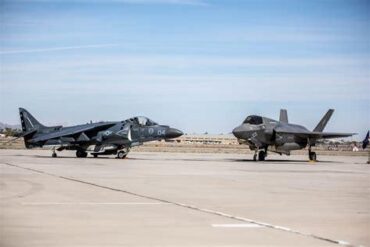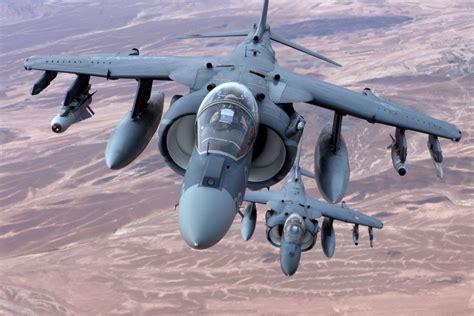
The retirement of the U.S. Marine Corps’ AV-8B Harrier II Jump Jet marks the end of one of the most remarkable stories in modern military aviation. For more than five decades, the aircraft demonstrated capabilities that many considered impossible when it first appeared, combining fighter performance with vertical and short takeoff and landing technology that fundamentally changed expeditionary air operations. Its final ceremonial flight in June 2026 closed a chapter defined by innovation, adaptability, and repeated combat success across multiple generations of conflict.
Although newer aircraft have surpassed the Harrier in stealth and digital sophistication, few have matched its reputation for operating where conventional fighters simply could not. From improvised forward bases to amphibious assault ships, the Jump Jet repeatedly proved that flexibility could become a decisive battlefield advantage. The aircraft became an enduring symbol of Marine Corps doctrine, emphasizing rapid deployment and support for forces operating close to the front lines.
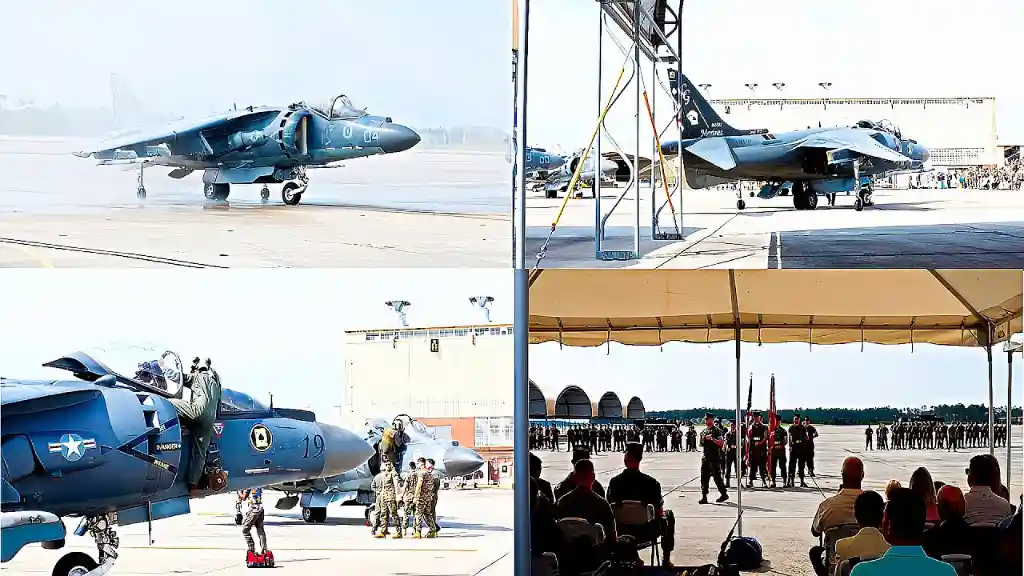
The final farewell came on June 3, 2026, when five aircraft from Marine Attack Squadron 223 departed Marine Corps Air Station Cherry Point for the service’s last official Harrier flypast. The event celebrated not only a legendary aircraft but also the generations of pilots, mechanics, and support personnel who kept the unique platform operational through decades of demanding missions.
The Revolutionary Technology Behind the Harrier Jump Jet
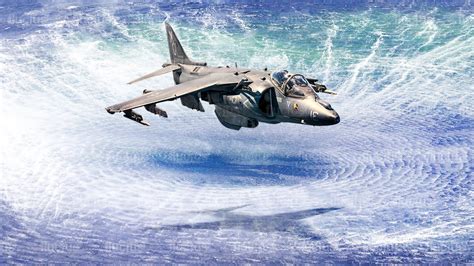
When the Harrier first emerged, its defining feature immediately distinguished it from virtually every other operational fighter aircraft in the world. Powered by a single turbofan engine equipped with vectored-thrust nozzles, the aircraft could redirect engine exhaust through rotating outlets, allowing vertical or extremely short takeoffs and landings.
Achieving stable flight under those conditions was an enormous engineering accomplishment, particularly during an era when today’s advanced flight-control computers did not exist. Pilots required exceptional skill to manage transitions between hovering and forward flight, making Harrier operations among the most technically demanding assignments in military aviation.
The resulting flexibility allowed Marine units to deploy combat aircraft from locations lacking traditional runways. Remote bases, damaged airfields, and amphibious assault ships suddenly became viable operating platforms, giving commanders options unavailable to forces relying solely on conventional jets.
British Origins and American Evolution
Despite becoming closely identified with the United States Marine Corps, the Harrier’s story began in the United Kingdom. Hawker Siddeley Aviation developed the original concept, producing an aircraft that immediately attracted international attention because of its unprecedented operational capabilities.
Recognizing the strategic potential of vertical takeoff technology, the U.S. Marine Corps ordered 102 AV-8A Harriers in 1970. These aircraft largely mirrored their British counterparts while incorporating American weapons systems, avionics, and flight controls. Deliveries began the following year, establishing the foundation for what would become a decades-long partnership between the Marines and the Jump Jet.
The platform later evolved substantially into the AV-8B Harrier II, a redesigned version led by McDonnell Douglas with British Aerospace serving as a major partner. Entering service in 1985, the upgraded aircraft featured significant aerodynamic improvements, increased payload capacity, and enhanced operational effectiveness. Approximately 337 AV-8B Harrier II aircraft were ultimately produced before manufacturing concluded in 2003.
Combat Performance That Cemented Legendary Status
Technical innovation alone rarely secures legendary status in military history. The Harrier earned lasting recognition by repeatedly proving itself under combat conditions.
One of the aircraft’s earliest defining moments occurred during the 1982 Falklands Conflict, when British Sea Harriers faced numerically superior Argentine forces. Despite expectations of heavy casualties, the Sea Harrier fleet achieved remarkable success, reportedly destroying around 20 Argentine aircraft while avoiding losses in air-to-air engagements. The campaign dramatically validated the platform’s effectiveness under challenging operational circumstances.
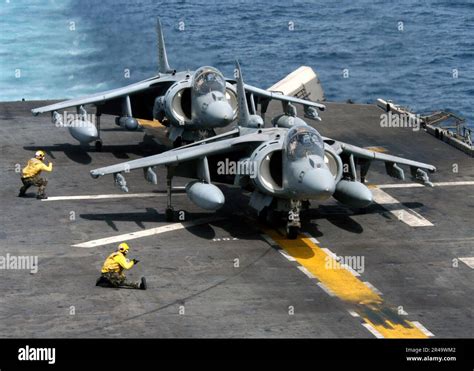
For the United States Marine Corps, the aircraft’s greatest demonstration arrived during Operation Desert Storm in 1991. The AV-8B Harrier II flew more than 3,300 combat missions, providing close air support and battlefield flexibility that aligned perfectly with Marine expeditionary doctrine. Its ability to operate close to frontline units reduced response times and strengthened coordination with ground forces.
Subsequent deployments extended the Harrier’s combat record through operations in Afghanistan, Operation Iraqi Freedom, missions over Syria, and activities in the Red Sea, ensuring that multiple generations of Marines relied on the aircraft during active service.
A Platform Built Around Expeditionary Warfare
The Harrier’s true strategic value lay in its ability to support expeditionary warfare. Rather than depending exclusively on large air bases, Marine aviation could disperse aircraft across smaller facilities and amphibious ships, reducing vulnerability while increasing operational reach.
This flexibility enabled rapid repositioning as battlefield conditions evolved. Units could establish temporary operating sites close to combat zones, allowing faster turnaround between sorties and more responsive air support for troops on the ground.
Such characteristics perfectly reflected Marine Corps doctrine, where mobility and adaptability often outweigh sheer numerical superiority. In many respects, the aircraft became not merely a fighter but a force multiplier capable of extending Marine capabilities into environments where traditional aviation assets faced significant limitations.
The F-35B Ushers in a New Generation
Every legendary aircraft eventually reaches the limits of modernization, and the Harrier was no exception. Advances in stealth technology, sensor integration, networking, and electronic warfare steadily shifted military priorities toward next-generation platforms.
The Lockheed Martin F-35B Lightning II, itself capable of short takeoff and vertical landing operations, represents the direct successor to the AV-8B’s unique mission profile. Combining stealth characteristics with sophisticated avionics and multi-domain connectivity, the F-35B offers capabilities unimaginable when the original Harrier entered service.
Its arrival ultimately made retirement inevitable, even as respect for the older aircraft remained widespread throughout the aviation community.
The End of an Iconic Era
The US Marine Corps’ retirement of the AV-8B Harrier II Jump Jet after 55 years of service concludes the operational career of one of military aviation’s most distinctive aircraft. Born from revolutionary engineering, refined through international collaboration, and validated in combat across multiple theaters, the Jump Jet consistently demonstrated that unconventional ideas could reshape battlefield strategy.
Long after its final flypast, the Harrier will remain remembered as the aircraft that transformed vertical flight from an experimental concept into a practical and highly effective combat capability, leaving behind a legacy that continues to influence modern military aviation.