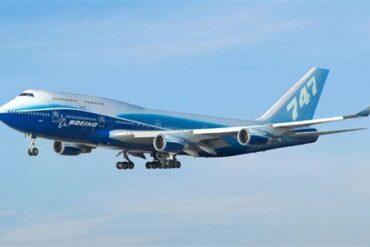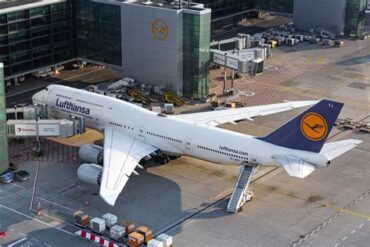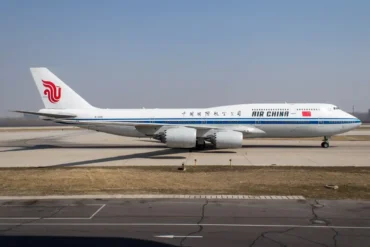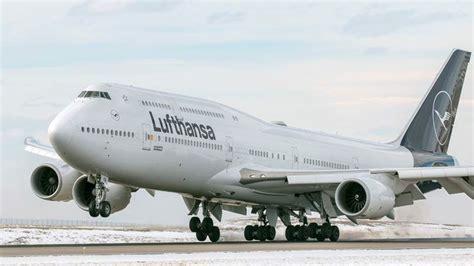
The United Kingdom’s long romance with the Boeing 747 has officially reached its final page. In 2026, no scheduled passenger flights to or from the UK will be operated by the iconic four-engine jumbo jet. The confirmation comes after Korean Air withdrew plans to deploy its Boeing 747-8 on the Seoul–London corridor, replacing it with the Boeing 777-300ER for the entire year. What might appear as a routine fleet adjustment in global aviation quietly marks a historic turning point: the end of scheduled passenger 747 operations in Britain.
For decades, the silhouette of the 747—its unmistakable upper deck hump rising above the fuselage—was a defining feature of the British long-haul landscape. From the runways of London Heathrow Airport to Manchester Airport, the aircraft symbolized scale, ambition, and global connectivity. Now, that era closes not with ceremony, but with a scheduling update.
Korean Air’s Strategic Swap Signals the Final Curtain
The shift centers on Korean Air’s route between Seoul Incheon International Airport and London Heathrow Airport. Initially, data indicated that the airline would again rotate its 747-8 onto the route during peak summer months, as it had in 2024 and 2025. Those seasonal deployments briefly revived the jumbo’s presence in the UK following its pandemic-era disappearance. However, updated scheduling confirms that three weekly 747-8 round trips planned for July through September 2026 have been shelved. The Boeing 777-300ER will now serve the route year-round.
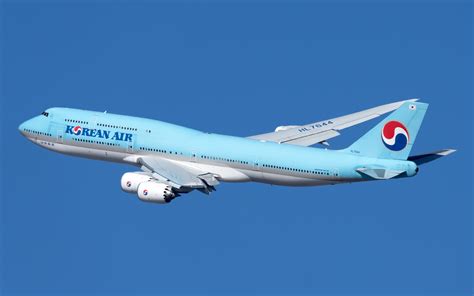
On the surface, this is a pragmatic capacity decision. The 777-300ER is more fuel-efficient, carries slightly fewer passengers, and offers airlines greater operational flexibility on ultra-long-haul sectors. Yet its substitution carries symbolic weight. With that swap, no airline schedules a passenger 747 departure from the UK in 2026.
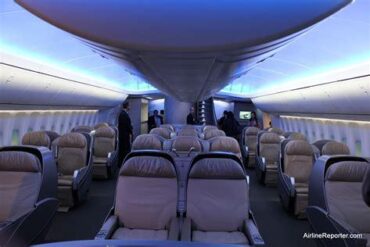
The numbers reinforce the magnitude of this shift. According to fleet data, Korean Air operates just four passenger 747-8 aircraft alongside seven freighters. The passenger variant, configured with six first-class suites, 48 business seats, and 314 economy seats, is increasingly reserved for high-demand transpacific markets rather than European routes.
The Pandemic’s Accelerated Farewell
The COVID-19 crisis did not invent the 747’s decline, but it accelerated it dramatically. High operating costs, four engines, and aging airframes placed the jumbo at a structural disadvantage against twin-engine widebodies such as the 777 and the Airbus A350. When global demand collapsed in 2020, airlines acted swiftly.
British Airways, once the world’s largest 747 operator, retired its entire fleet of the type in 2020. Virgin Atlantic followed suit. What had been gradual fleet modernization became immediate and irreversible. The jumbo’s absence from British skies after 2020 felt abrupt, yet Korean Air’s seasonal returns in 2024 and 2025 offered a brief epilogue—an encore that has now ended.
Where the 747-8 Still Flies
The aircraft itself is not extinct; it has simply retreated to selective strongholds. This month, Korean Air schedules 100 passenger 747-8 flights, with 88 operating between Seoul and Los Angeles International Airport. Eleven weekly rotations underline the enduring demand on that transpacific trunk route. Additional services connect Seoul with Hong Kong International Airport, Taiwan Taoyuan International Airport, and Narita International Airport.
Cargo operations, meanwhile, continue robustly. Boeing 747 freighters remain fixtures at UK airports, moving high-value and oversized freight across continents. The freighter variant’s nose door and cavernous hold give it unmatched versatility. But for passengers, the experience of ascending the spiral staircase to the upper deck lounge is now a memory rather than a booking option.
A Decade-by-Decade Contraction
The contrast with earlier decades is stark. In February 2016, the UK recorded 884 scheduled 747 departures. Most were operated by British Airways, yet other carriers—including El Al and Virgin Atlantic—maintained regular services. Go back another decade to February 2006 and the picture becomes almost surreal: 2,168 scheduled 747 departures in a single month, averaging more than 77 per day.
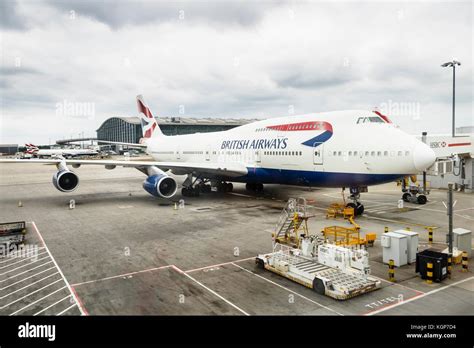
Airlines ranging from Air India and Air China to Qantas, Singapore Airlines, and United once brought their jumbos to British runways. Heathrow in particular functioned as a global 747 crossroads. The aircraft’s size matched the airport’s slot-constrained economics: when landing rights are scarce, bigger aircraft maximize revenue per movement. The 747 was, in that sense, an engineering solution to regulatory bottlenecks.
Why the Jumbo Couldn’t Compete
Technological progress ultimately sealed its fate. Modern twin-engine aircraft benefit from Extended-range Twin-engine Operational Performance Standards (ETOPS), allowing them to fly long oceanic routes once reserved for four-engine jets. Advances in materials, aerodynamics, and engine efficiency lowered per-seat costs dramatically. The 777-300ER and newer generation jets deliver similar passenger capacity with significantly reduced fuel burn.
In aviation economics, sentiment does not offset operating margins. Airlines optimize around yield, load factors, and fuel prices. The 747’s grandeur—its lounges, its sheer scale—proved commercially vulnerable in an industry that rewards efficiency above nostalgia.
The End of the UK’s Jumbo Identity
For Britain, the absence of passenger 747 flights represents more than a fleet adjustment. The aircraft was intertwined with the country’s aviation identity. Generations associated the 747 with transatlantic journeys, Commonwealth links, and the global reach of British carriers. Spotters gathered along Heathrow’s perimeter specifically to capture its landing approach, engines humming in synchrony.
Now, the skies above London are dominated by sleek twin-engine aircraft whose efficiency masks their complexity. Aviation has not shrunk; it has evolved. Yet something distinct—the theater of mass air travel embodied by the 747—has stepped aside.
The year 2026 will be remembered quietly in airline schedule archives. No farewell flypast, no commemorative service—just a data update confirming that the UK’s final scheduled Boeing 747 passenger flight has slipped into history. The jumbo jet still flies elsewhere, and its freighter cousins remain indispensable. But in Britain, the passenger era of the Queen of the Skies has conclusively, and perhaps inevitably, come to an end.