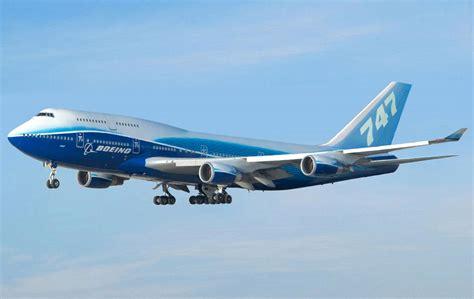
In March 2026, the Boeing 747 passenger flights schedule tells a story of resilience, contraction, and transformation. Once the undisputed monarch of long-haul aviation, the “Queen of the Skies” now operates in a dramatically reduced but still strategically vital role. Across the globe, just four airlines continue deploying the 747 in scheduled commercial passenger service. The numbers are no longer counted in thousands per week—but they are still significant, deliberate, and economically meaningful.
According to fleet and scheduling data, the Boeing 747 will operate 1,202 scheduled passenger flights worldwide in March 2026, offering a combined 323,504 seats. That figure, while a shadow of its peak decades, remains a testament to the aircraft’s enduring relevance. The routes span domestic trunk lines in China and Russia, as well as premium long-haul corridors from Germany and South Korea.
The landscape has changed. The 747-400 is fading fast. The newer 747-8 remains more competitive, but even it faces an unusual fate: retirement not purely from inefficiency, but from demand in military and governmental roles. The Jumbo’s twilight is not quiet—it is complex, strategic, and surprisingly active.
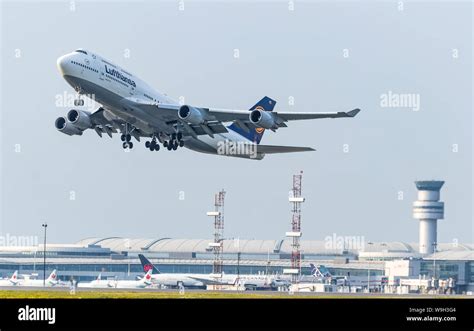
Total Boeing 747 Passenger Flights in March 2026
The global scheduled total breaks down as follows:
- Lufthansa 747-8: 552 flights
- Lufthansa 747-400: 368 flights
- Air China 747-400: 132 flights
- Korean Air 747-8: 96 flights
- Rossiya Airlines 747-400: 54 flights
This equals 1,202 total flights across all carriers.
What makes this remarkable is concentration. Lufthansa alone accounts for 920 of those flights, more than three-quarters of all scheduled Boeing 747 passenger operations worldwide in March. The German flag carrier has effectively become the final guardian of large-scale commercial Jumbo operations.
Lufthansa: The Last Major 747 Powerhouse
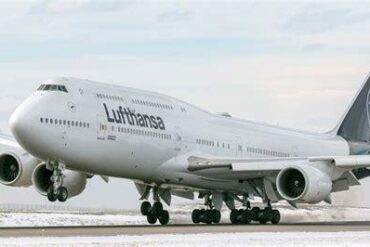
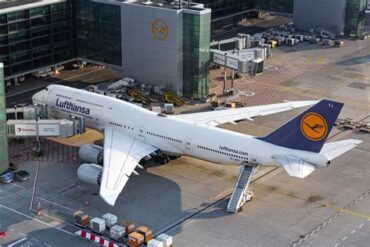
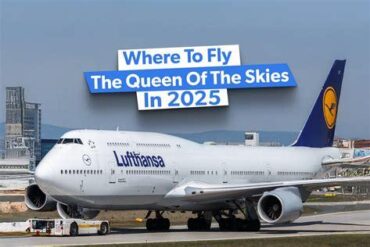
Lufthansa is not merely operating the Boeing 747—it is actively investing in it. The airline runs both the 747-400 and the 747-8, making it the only carrier still flying both variants in substantial scheduled passenger service.
In March 2026:
- The 747-8 fleet will operate 552 flights, offering 200,928 seats and generating approximately 1.1 billion Available Seat Miles (ASMs).
- The 747-400 fleet will operate 368 flights, offering 136,528 seats and generating roughly 666 million ASMs.
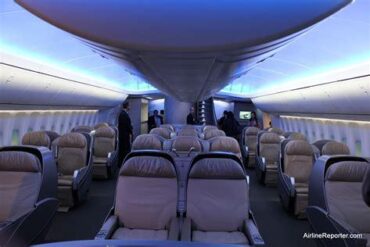
The 747-8 remains the flagship of Lufthansa’s long-haul network, primarily deployed from Frankfurt to major global hubs. The aircraft’s stretched upper deck and improved fuel efficiency give it an edge over its predecessor, while still delivering that unmistakable double-deck silhouette.
Yet even Lufthansa is trimming. Two 747-8 aircraft have been sold to the United States Air Force, with one already delivered. The airline has stated it will continue a gradual fleet rollover, removing both -400s and -8s as new-generation aircraft arrive. The delayed Boeing 777-9 is expected to replace the 747-400 fleet by 2028, while the 747-8 may continue flying into the 2030s.
The irony is delicious. The aircraft many assumed would be retired first—the 747-8—is being siphoned away not because it cannot compete commercially, but because governments want it.
Air China: Aging 747-400s and a Mysterious 747-8 Presence
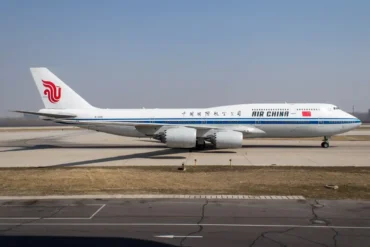
Air China’s 747 operations are smaller but still noteworthy. In March 2026, it is scheduled to operate 132 flights using the Boeing 747-400, offering 45,408 seats.
These aircraft average over 28 years of age. Retirement is imminent. The 747-400 has reached the outer boundary of economic viability in most markets, especially against twin-engine aircraft such as the Boeing 787 and Airbus A350.
But Air China also operates Boeing 747-8 aircraft. Boeing delivered seven 747-8s to the airline between 2014 and 2015. Two are configured for VIP government transport, leaving five in commercial configuration. Of those five, two are grounded for maintenance, leaving three operational aircraft flying both domestic and international routes.
Interestingly, some operational 747-8 flights do not consistently appear in certain schedule databases, despite aircraft being observed in service. Routes such as Washington Dulles to Beijing and Frankfurt to Beijing continue to see 747-8 activity.
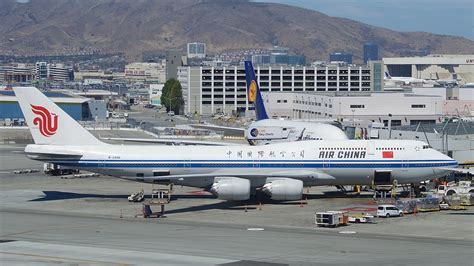
The aircraft’s deployment on both domestic trunk routes and intercontinental sectors demonstrates the flexibility that made the 747 legendary. Few aircraft can carry such payload across such distances with equal comfort.
Korean Air: A Shrinking but Strategic 747-8 Fleet
Korean Air’s role in Boeing 747 passenger flights is now focused entirely on the 747-8 passenger variant. In March 2026, it is scheduled to operate 96 flights, carrying 35,328 seats and generating approximately 212 million ASMs.
The airline originally acquired ten passenger 747-8s. Today, only four remain in commercial passenger service. One was transferred to the Korean Air Force. Five were sold to Sierra Nevada Corporation for conversion into the next-generation U.S. Air Force “Doomsday” aircraft fleet.
That transfer alone represents a dramatic reallocation of commercial aviation assets into strategic defense infrastructure. A quarter of the global passenger 747-8 fleet has already migrated out of airline service.
The remaining Korean Air 747-8s operate primarily long-haul premium routes. Their retirement timeline remains officially targeted for around 2031, but given the fleet’s minimal scale, further divestments cannot be ruled out.
Rossiya Airlines: Sanctions and a 747 Revival
The most unusual chapter in March 2026’s Boeing 747 story belongs to Russia.
Rossiya Airlines, part of the Aeroflot Group, retired its 747-400 passenger aircraft in 2020. Then came international sanctions. With limited access to Western aircraft parts and delayed domestic aircraft production, Russia’s commercial fleet began aging rapidly.
In response, Rossiya reactivated several 747-400s from storage.
By March 2026, the airline is scheduled to operate 54 flights, offering 28,188 seats and generating around 103 million ASMs. These aircraft are primarily deployed on high-demand domestic routes where capacity is essential.
Reports indicate refurbishment work may occur in “friendly countries” to bypass maintenance limitations. The situation illustrates a rare aviation reversal: while most airlines retire older quad-jets for efficiency, Russia is resurrecting them out of necessity.
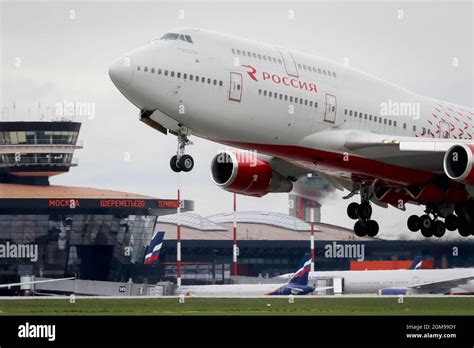
It is a reminder that aircraft retirement is rarely just about fuel burn. Geopolitics, sanctions, and industrial bottlenecks can reshape fleet strategies overnight.
Atlas Air and the Charter Exception
Atlas Air operates five Boeing 747-400 passenger-configured aircraft, but these do not appear in scheduled commercial flight data. They are deployed in charter roles, often configured for high-density or VIP layouts.
Configurations range from:
- A 189-seat premium-heavy layout with first and business class dominance
- A 528-seat high-density configuration for mass transport
These aircraft will continue flying in 2026, but they operate outside the scheduled network counted in the March total. Their existence proves the 747’s adaptability. Even as scheduled service contracts, niche demand persists.
Why the 747-8 Is Retiring Alongside the 747-400
Conventional logic suggests airlines should retire the older, less efficient 747-400 first. That is happening—but the 747-8 is disappearing too, and not strictly because of economics.
Only 48 Boeing 747-8s were ever delivered in passenger configuration. Of those, several were business jets or government aircraft. Just 34 standard passenger 747-8s entered airline service.
Now consider this: eight of those 34 have already been sold or transferred to military roles. That is nearly 25% of the commercial passenger 747-8 fleet removed from airline operations.
The aircraft’s unique attributes—range, internal volume, structural robustness—make it ideal for government transport and strategic missions. The 747’s second life is not retirement. It is militarization.
The March 2026 Bottom Line
In total, March 2026 will see:
- 1,202 scheduled Boeing 747 passenger flights
- 323,504 seats offered
- Operations concentrated in Germany, China, South Korea, and Russia
- A heavy dominance by Lufthansa
The numbers confirm what aviation observers already sense. The Boeing 747 is no longer ubiquitous—but it is far from extinct.
Every takeoff in March carries more than passengers. It carries legacy. It carries industrial history. It carries the final chapter of an aircraft that democratized intercontinental travel and defined long-haul aviation for half a century.
The skies are increasingly filled with efficient twin-engine jets. Yet when a 747 rotates off the runway, lifting its distinctive hump into the horizon, it remains unmistakable. Fewer flights, yes. Less dominance, certainly. But still flying. And still magnificent.