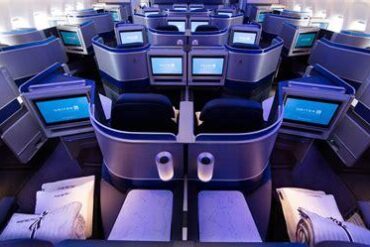
United Airlines has introduced one of the most ambitious inflight upgrades in its recent history, and passengers are taking notice. The airline’s new United Elevated Boeing 787-9 configuration represents a major change in how the carrier approaches international premium travel. Instead of focusing on carrying the maximum number of passengers, United is redesigning its aircraft around comfort, privacy, productivity, and high-value travelers.
The centerpiece of this transformation is the new Polaris Studio, a premium business-class suite designed to bridge the gap between traditional business class and first-class experiences. Alongside this exclusive seat, United has also introduced a dedicated social snack bar, improved connectivity through Starlink WiFi, and a cabin layout that dramatically increases premium seating capacity.
For passengers flying some of the world’s longest routes, these additions represent more than a simple cabin refresh. They signal United Airlines’ attempt to redefine what a modern long-haul experience should feel like.
United Airlines Introduces a New Era of Premium Long-Haul Travel
For years, American airlines have struggled to compete with international carriers known for luxurious long-haul products. Airlines such as Singapore Airlines, Qatar Airways, and Emirates have built global reputations around spacious cabins, exceptional service, and premium passenger experiences.
United Airlines has traditionally focused on operational scale, network strength, and frequent flyer loyalty. However, the airline’s latest Boeing 787-9 redesign shows a clear shift toward competing directly in the premium international market.
The new aircraft configuration removes a significant number of economy seats and replaces them with additional premium space. This approach allows United to target routes where passengers are willing to pay more for comfort, privacy, and convenience.
The strategy is especially important as airlines compete for corporate travelers and affluent leisure passengers who increasingly view the cabin experience as part of the overall journey rather than simply a way to reach a destination.
The new configuration is not just a cosmetic upgrade. It changes the entire philosophy behind aircraft utilization.
The Polaris Studio Creates a New Business-Class Category
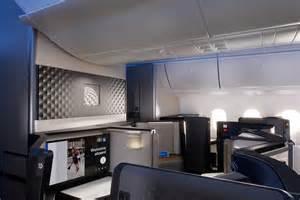
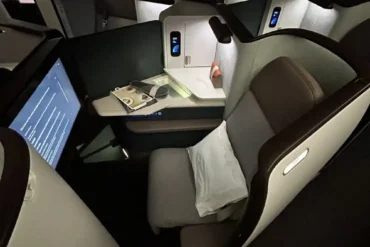
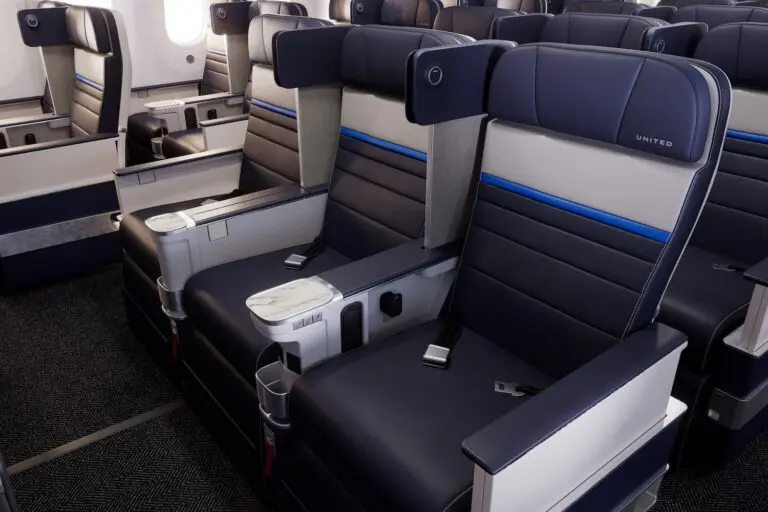
The most talked-about addition inside United’s redesigned Boeing 787-9 aircraft is the Polaris Studio.
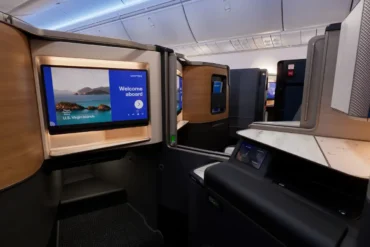
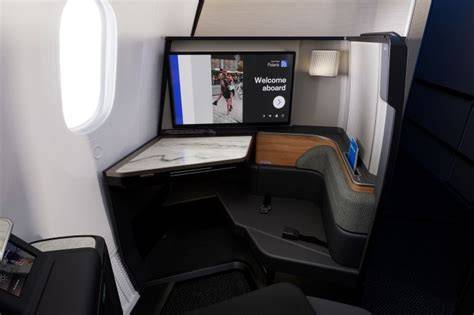
Located in the first row of each Polaris business-class section, these exclusive suites provide a noticeably larger personal area than standard Polaris seats. United has installed eight Polaris Studio suites on each aircraft, arranged in a 1-2-1 configuration to provide every passenger with direct aisle access.
The concept behind Polaris Studio is simple: many premium travelers want more than a traditional business-class seat but do not necessarily require the expense or formality of first class.
United has created a middle category that offers additional privacy, more living space, and enhanced amenities without completely moving into ultra-luxury territory.
According to the airline’s design philosophy, the Polaris Studio offers approximately 25% more space than a standard Polaris seat. The extra room comes from a larger footwell, improved storage areas, and a private environment created by sliding doors.
This is particularly valuable on ultra-long-haul flights where passengers may spend more than 15 hours onboard.
A normal business-class seat can provide a comfortable sleeping position, but Polaris Studio attempts to create a more complete personal space. It functions almost like a small private office, lounge, and bedroom combined.
A High-Tech Suite Designed for Work and Relaxation
The technology inside the Polaris Studio is another major attraction for passengers.
Each suite includes a 27-inch 4K OLED entertainment screen, making it the largest screen currently offered by any US airline. The high-resolution display is designed to provide a premium home-theater experience thousands of feet above the ground.
Passengers can also access modern connectivity features, including wireless charging, multiple USB-C ports, and Bluetooth audio connectivity. The ability to connect personal headphones directly to the aircraft entertainment system is particularly useful for travelers who prefer their own noise-canceling equipment.
The seat itself is designed with digital controls that allow passengers to adjust lighting, reclining positions, and other functions without manually searching for buttons.
For business travelers, these features transform the seat into a productive workspace. A passenger flying between San Francisco and Singapore can potentially work, relax, dine, and sleep without leaving their private suite.
Luxury Touches Bring a More Exclusive Experience
United has also expanded the service elements surrounding Polaris Studio.
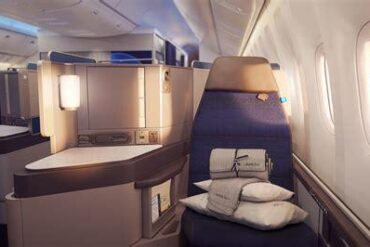
Passengers occupying these premium suites receive enhanced amenities that are not available in standard business class. These include upgraded bedding, hoodie-style pajamas, premium pillows, and exclusive food and beverage offerings.
One of the most notable additions is a special Ossetra caviar amuse-bouche service, paired with Laurent-Perrier Cuvée Rosé champagne.
While these details may appear small, they represent an important change in United’s approach. Luxury airlines often differentiate themselves through small moments rather than simply seat size.
The airline has recognized that premium passengers are not only purchasing space. They are purchasing an experience.
Another clever feature is the integrated ottoman with a passenger seatbelt. This allows a companion to sit across from the Polaris Studio passenger during meals or conversations.
The design creates a more social environment, allowing the suite to function as a private meeting space rather than only an individual seat.
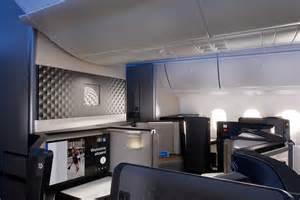
United Airlines Adds a New Social Snack Bar Concept
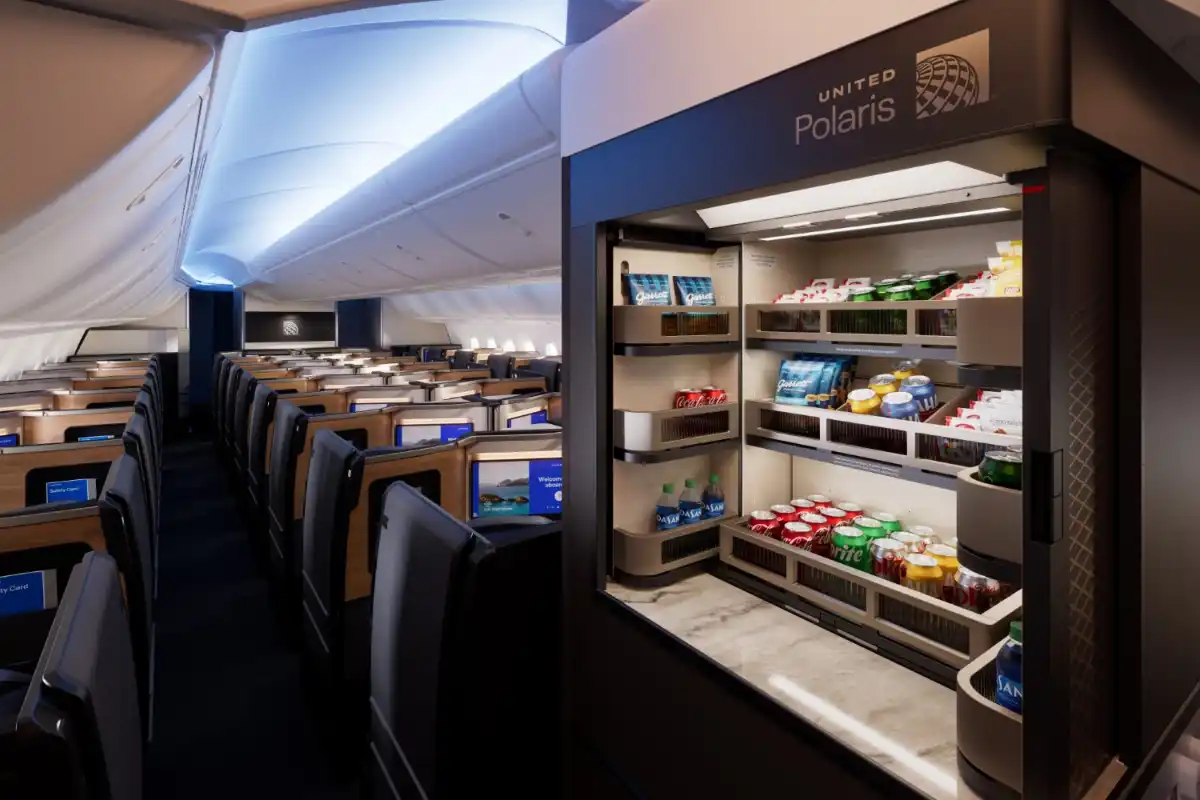
Beyond the Polaris Studio, the second major innovation attracting attention is United’s dedicated inflightsnack bar.
Traditionally, aircraft galleys are operational spaces hidden behind curtains. Passengers usually need to request additional snacks or drinks from flight attendants.
United’s new design changes this relationship by creating a walk-up area where premium passengers can independently access refreshments throughout the flight.
The snack bar includes refrigerated beverages, premium snacks, fresh fruit, chocolates, and savory items. Instead of remaining seated for an entire long-haul journey, passengers can walk around, stretch their legs, and interact with the cabin environment.
This feature is especially valuable on flights lasting more than 12 hours. Long-distance travel can disrupt normal eating patterns, especially when crossing multiple time zones.
A dedicated social area gives passengers a reason to move around the cabin and creates a more relaxed atmosphere.
Turning the Cabin Into a More Human Space
The introduction of a snack bar reflects a broader trend in modern aviation design.
For decades, aircraft interiors were designed primarily around maximizing seating capacity. Every available section of cabin space was evaluated by how many additional passengers it could hold.
United’s new Boeing 787-9 layout challenges that philosophy.
The airline is sacrificing potential seat revenue in economy class to create spaces that improve passenger experience. The snack bar is effectively a social lounge within the aircraft.
Lighting also plays an important role. The area uses customized mood lighting that changes depending on the flight phase, helping create a calmer environment during long journeys.
On a 17-hour flight across the Pacific, even small design improvements can significantly influence passenger comfort.
The ability to stand, walk, grab a drink, and leave the traditional seat environment can make the journey feel less restrictive.
A Premium-Heavy Boeing 787-9 Configuration
The biggest structural change in United’s new aircraft is the decision to dramatically increase premium seating.
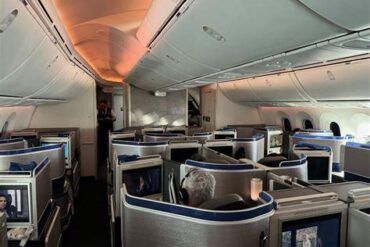
The redesigned Boeing 787-9 carries 222 passengers, compared with higher-density configurations used on other international aircraft.
The cabin includes:
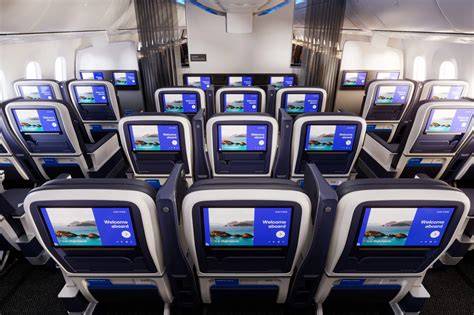
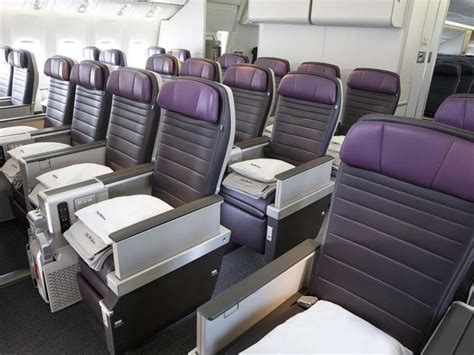
- 64 Polaris business-class seats
- 35 Premium Plus seats
- A larger economy section with fewer total seats
In total, United has created 99 premium seats on a single widebody aircraft, representing one of the highest premium concentrations among US airlines.
The decision comes with a significant trade-off. The aircraft loses approximately 65 economy seats compared with previous international configurations.
For United, this is a calculated decision. The airline believes that revenue from premium travelers will outweigh the income generated by additional economy passengers.
This strategy targets routes where business travelers, technology professionals, and high-spending international passengers create stronger demand for premium cabins.
Designed for the World’s Most Competitive Routes
United is not deploying these aircraft randomly.
The first major routes for the upgraded Boeing 787-9 include some of the airline’s most strategically important international markets.
The San Francisco to Singapore route is a particularly important test case. Covering roughly 8,400 miles, it is one of the longest nonstop routes operated by United.
The route connects Silicon Valley with one of Asia’s major financial and technology centers, making it ideal for a premium-focused aircraft.
The reduced passenger count also provides operational advantages. With fewer seats, the aircraft has improved payload flexibility on demanding ultra-long-haul missions.
United can carry a full premium cabin while managing fuel and weight limitations more effectively.
The airline is also expected to use the aircraft on major transatlantic markets such as San Francisco to London Heathrow, where competition from carriers including British Airways and Virgin Atlantic remains intense.
Starlink Connectivity Turns the Aircraft Into a Flying Office
Another important element of United’s premium strategy is improved internet connectivity.
For years, inflight WiFi has been one of the biggest frustrations for long-haul travelers. Traditional satellite systems often suffer from slow speeds and high latency, making professional work difficult.
United is addressing this challenge by introducing Starlink high-speed internet on its upgraded fleet.
Unlike traditional geostationary satellites, Starlink uses low-Earth orbit satellites positioned much closer to Earth. This allows significantly lower latency and faster response times.
For passengers traveling internationally, reliable connectivity can completely change the experience.
A 17-hour flight no longer needs to represent a complete disconnect from business operations. Travelers can participate in meetings, communicate with colleagues, and manage work tasks more effectively.
This capability supports United’s vision of creating an aircraft that functions as a premium office in the sky.
A Blueprint for United Airlines’ Future Fleet
The success of the United Elevated Boeing 787-9 configuration could influence the airline’s future aircraft strategy.
United has a large Boeing 787 order book, and the company may expand this premium-focused approach across future deliveries.
If customers continue responding positively to Polaris Studio, social spaces, and improved connectivity, the airline could gradually move away from traditional high-density international layouts.
However, the strategy also creates challenges.
Premium-heavy aircraft may increase ticket prices and reduce accessibility for travelers who depend on affordable economy fares. Additionally, carrying fewer passengers on the same aircraft can create concerns about emissions efficiency.
United must balance luxury improvements with broader environmental commitments.
The airline’s challenge will be proving that a more exclusive cabin experience can coexist with sustainable growth.
The Future of International Travel May Be More Premium
United Airlines’ latest inflight additions show how dramatically long-haul aviation is changing.
The new Polaris Studio, dedicated snack bar, upgraded technology, and premium-focused Boeing 787-9 design represent a major departure from traditional airline thinking.
Rather than simply adding more seats, United is investing in creating more valuable spaces.
For passengers, especially those flying long international routes, the difference is noticeable. A journey that once focused only on reaching a destination becomes a more comfortable, productive, and personalized experience.
The success of these aircraft will ultimately determine whether this approach becomes a permanent part of United’s global strategy. But one thing is already clear: the airline is no longer competing only on schedules and routes.
It is competing on how passengers feel during the hours spent between departure and arrival.