Cathay Pacific has never been an airline that settles for mediocrity. For decades, it has defined what premium air travel looks like in Asia, blending polished service with carefully engineered cabin products. Yet even the most admired carriers have blind spots—and for Cathay Pacific, that gap has long existed in its regional business class.
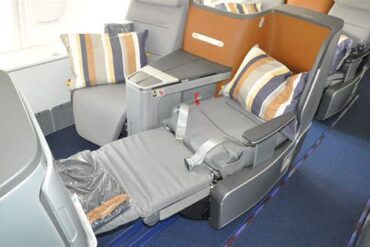
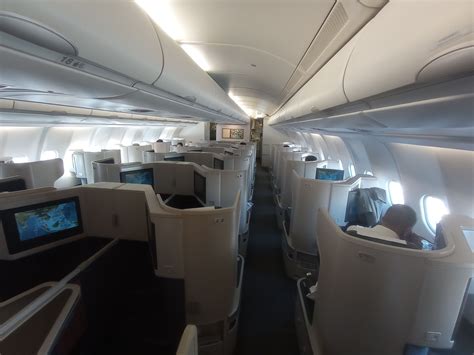
For years, passengers flying short- to medium-haul routes across Asia encountered a surprising inconsistency. While long-haul cabins delivered cutting-edge lie-flat seats, regional widebody aircraft offered angled recliners that felt closer to premium economy than true business class. The disconnect wasn’t subtle—it was a jarring step down.
Now, that gap is closing fast. Cathay Pacific’s Aria Studio signals a decisive shift, one that could fundamentally reshape expectations for regional business class. And perhaps more provocatively, it raises a question the industry can’t ignore: if lie-flat beds become standard on 5-hour flights, does premium economy still have a place?
The End of the Recliner Era in Regional Business Class
The traditional recliner seat has been quietly losing relevance. Once considered sufficient for shorter routes, it now feels increasingly outdated in an era where passengers expect seamless comfort regardless of flight duration.
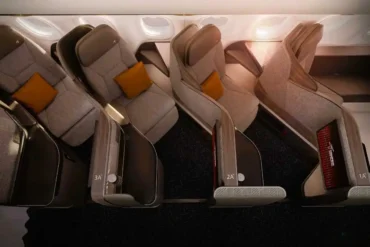
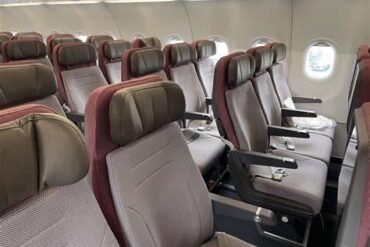
Cathay Pacific’s older Recaro CL5510 recliners, installed on its Airbus A330-300 and Boeing 777-300 regional fleets, date back to 2012. While they received cosmetic refreshes—new upholstery, USB-C charging—the underlying structure remained unchanged. The result? A seat that reclines, but never truly rests.
This limitation becomes painfully obvious on flights stretching beyond four hours. Routes like Hong Kong to Tokyo, Bangkok, or Singapore may not qualify as long-haul, but they are long enough for passengers to crave proper rest. Recliners simply don’t deliver that.
The Aria Studio eliminates that compromise. By introducing a fully lie-flat seat with direct aisle access, Cathay Pacific is effectively erasing the traditional boundary between regional and long-haul business class.
What Exactly Is the Aria Studio? A Closer Look at the Design
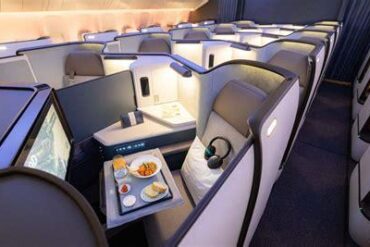
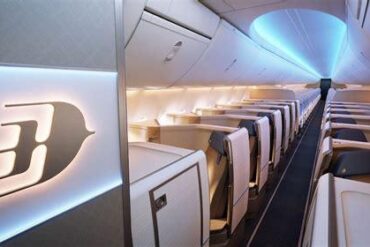
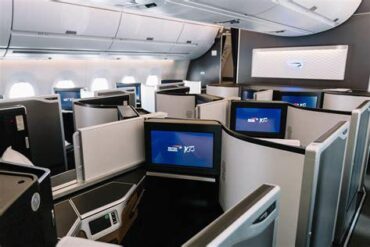
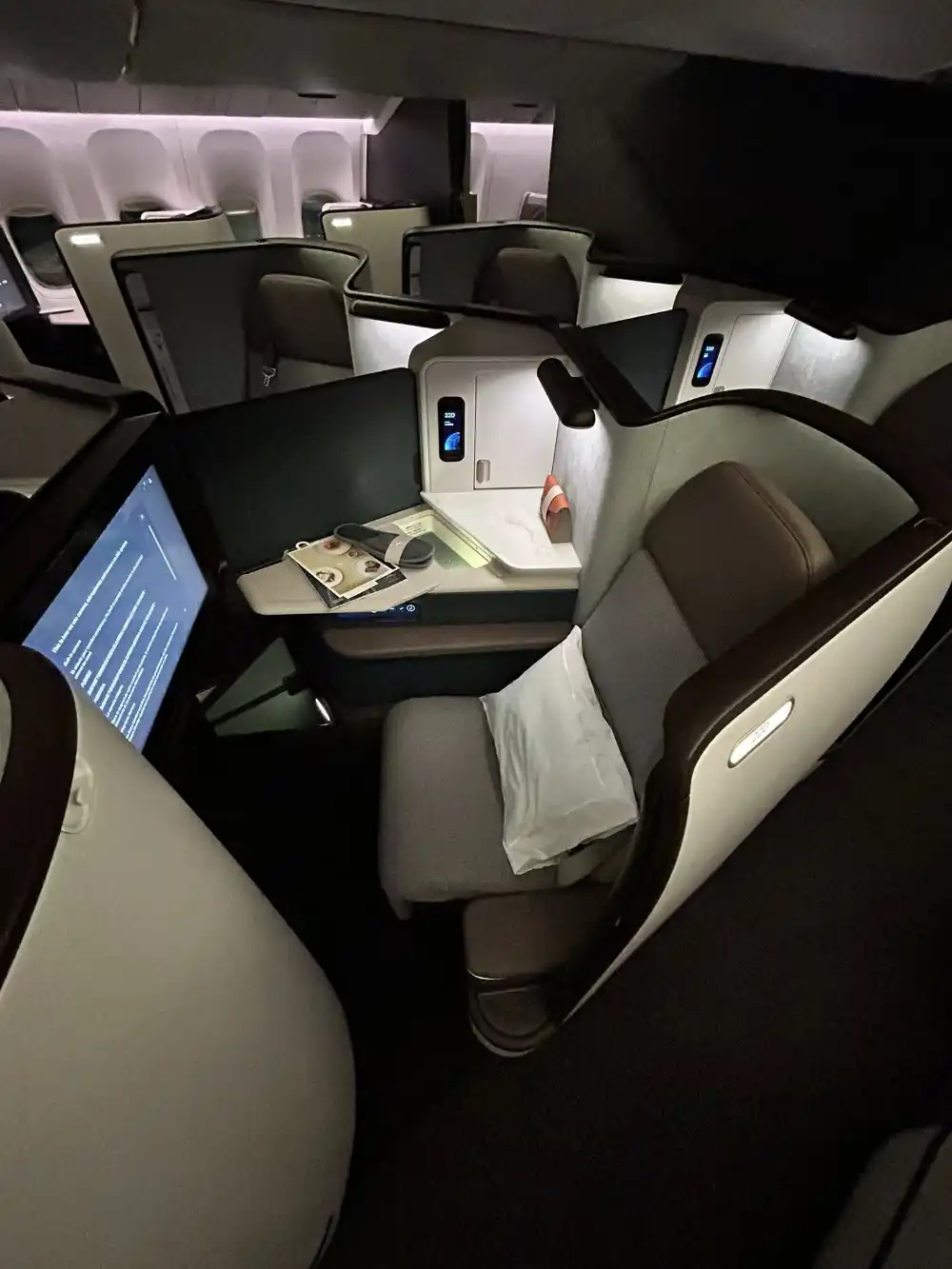
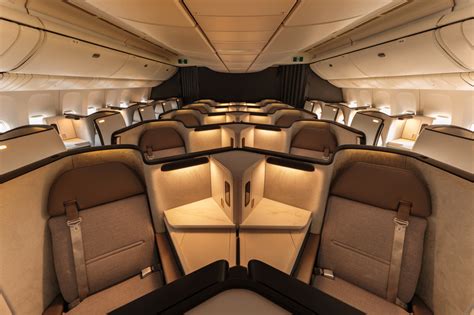
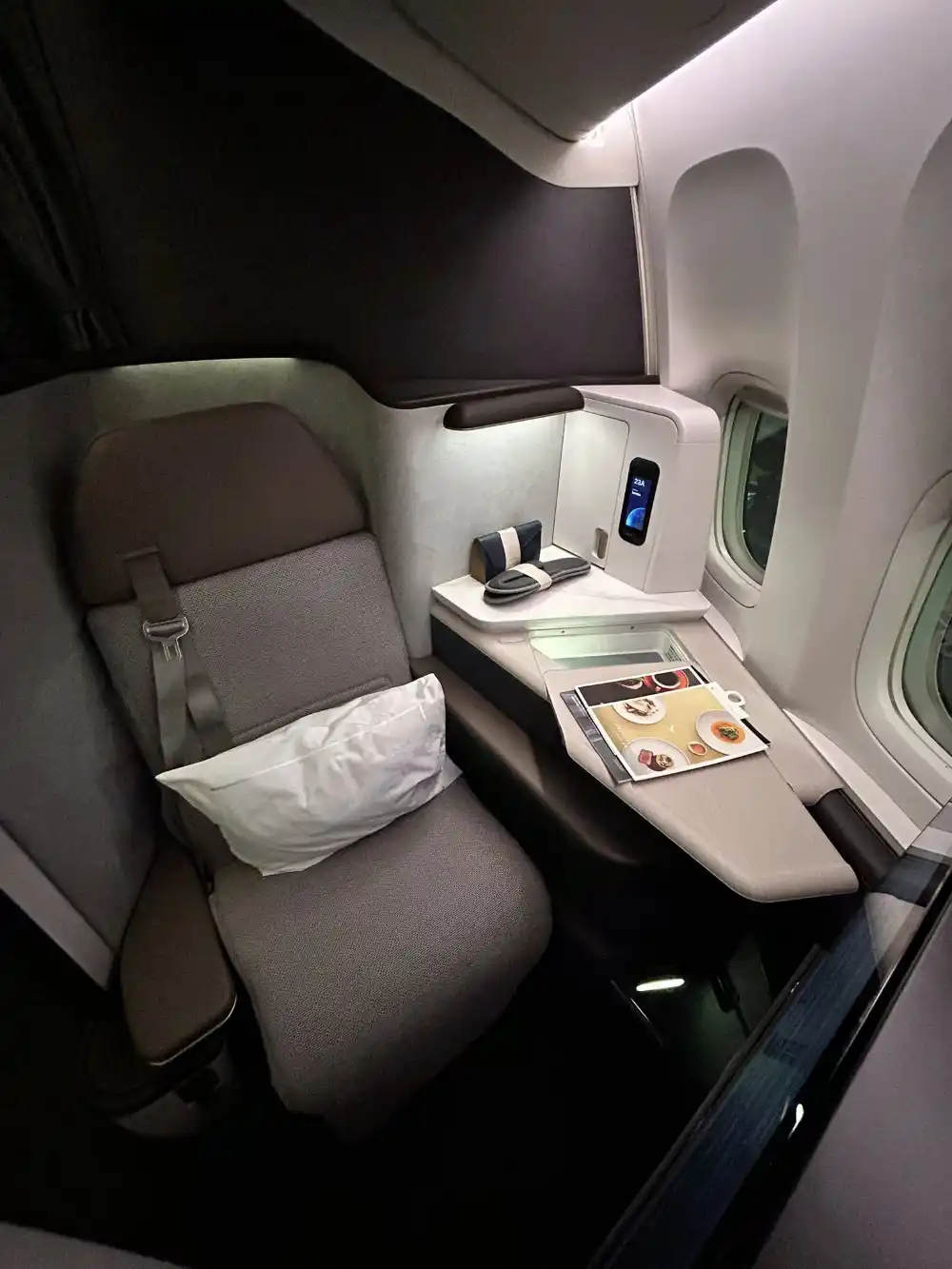
At its core, the Aria Studio is a refined adaptation of Cathay Pacific’s flagship Aria Suite, tailored for shorter routes. It retains the most critical elements of modern premium seating while trimming features that add weight or reduce cabin density.
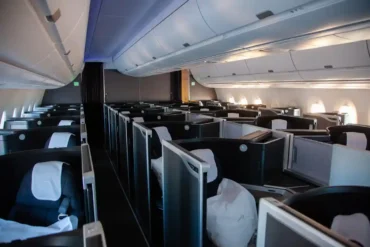
The seat adopts a reverse herringbone layout, one of the most efficient and passenger-friendly configurations in aviation. Every passenger faces slightly outward toward the window or aisle, creating a sense of personal space without requiring bulky partitions.
Unlike its long-haul counterpart, the Aria Studio does not include sliding privacy doors. This isn’t a downgrade—it’s a calculated decision. Doors add weight, complexity, and maintenance demands. For regional flights, where passengers spend less time sleeping, the trade-off favors efficiency without sacrificing comfort.
Passengers can still expect a deeply premium experience, including:
- Fully lie-flat bed functionality
- Direct aisle access for every seat
- 4K entertainment screens with Bluetooth connectivity
- Wireless charging and USB-C ports
- Thoughtfully integrated LED lighting
The result is a seat that feels unmistakably modern, even without the theatrical elements of long-haul suites.
Why 5-Hour Flights Now Deserve Lie-Flat Beds
Airlines once drew a clear line: lie-flat beds were reserved for overnight or ultra-long-haul flights. That logic is breaking down.
Today’s passengers—especially business travelers—value productivity and recovery over arbitrary distance thresholds. A five-hour daytime flight can be just as demanding as a red-eye, particularly for those crossing multiple time zones or working on tight schedules.
Cathay Pacific’s move reflects a deeper understanding of this shift. By offering lie-flat comfort on regional routes, the airline acknowledges that:
- Rest is valuable even on shorter flights
- Consistency across the network builds loyalty
- Premium passengers expect long-haul standards everywhere
In practical terms, this means a traveler flying from Hong Kong to Bali or Seoul could enjoy the same sleep quality previously reserved for intercontinental journeys.
That’s not an incremental improvement—it’s a category reset.
Fleet Transformation: Where the Aria Studio Will Fly First
Cathay Pacific’s rollout strategy is as strategic as the product itself. The airline operates 43 Airbus A330-300 aircraft, divided into multiple subfleets with varying configurations and ages.
The first installations of Aria Studio will appear on eight of the youngest A330-300s, specifically those that have not yet undergone recent cabin refreshes. This approach avoids wasting investment on aircraft nearing retirement while maximizing the lifespan of newer frames.
Interestingly, not every aircraft will receive the upgrade. Cathay Pacific is actively streamlining its fleet, with plans to:
- Retire older A330-300s, particularly those over 18 years old
- Introduce Airbus A330-900 (A330neo) aircraft starting in 2028
- Consolidate multiple subfleets into a single standardized regional configuration
This restructuring isn’t just about efficiency—it’s about delivering a consistent passenger experience, something Cathay Pacific has historically prioritized.
The Competitive Pressure: Asia’s Business Class Arms Race
Cathay Pacific isn’t making this move in isolation. Across Asia, competition in premium cabins has intensified dramatically.
Singapore Airlines has been offering lie-flat seats on regional routes since 2018, using advanced staggered configurations on Airbus A350-900s and Boeing 787-10s. Even its narrowbody Boeing 737 MAX fleet features lie-flat business class—a bold statement in itself.
Meanwhile:
- Starlux Airlines delivers lie-flat seats across its entire fleet
- EVA Air and China Airlines deploy a mix of recliners and lie-flats, often upgrading key routes
- Premium aircraft are increasingly rotated onto short-haul sectors between long-haul flights
In this context, Cathay Pacific’s older recliner seats began to look less like a compromise and more like a competitive liability.
The Aria Studio is a direct response—one designed not just to catch up, but to reassert leadership in cabin design.
Does This Spell the End of Premium Economy?
Here’s where the story becomes more disruptive.
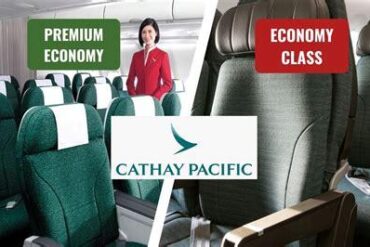
Premium economy has thrived by occupying the space between economy and business class. It offers wider seats, better meals, and extra legroom—without the cost of a lie-flat bed. But its value proposition depends on a clear distinction between cabins.
When business class recliners resemble premium economy, the segmentation works. But when business class becomes fully lie-flat—even on short routes—that boundary starts to blur.
Passengers now face a sharper contrast:
- Sit upright with extra space
- Or lie completely flat with full privacy and direct aisle access
There’s less middle ground.
This doesn’t mean premium economy will disappear overnight. It still plays a crucial role on long-haul flights where business class fares remain prohibitively expensive. But on regional routes, its relevance could erode quickly.
Airlines may eventually face a binary choice: upgrade business class or rethink premium economy entirely.
Engineering Efficiency: Balancing Comfort and Capacity
Designing a lie-flat seat for regional routes isn’t just about comfort—it’s a puzzle of space, weight, and economics.
The Airbus A330’s narrower fuselage presents a unique challenge. Unlike the wider Boeing 777, it limits how many reverse herringbone seats can fit without sacrificing aisle width or passenger comfort.
Cathay Pacific’s solution prioritizes space efficiency. The Aria Studio is expected to be lighter and denser than long-haul equivalents, allowing the airline to maintain viable seat counts while upgrading the product.
However, some trade-offs are inevitable. The older recliner configuration allowed for six-abreast seating, maximizing capacity. Transitioning to lie-flat seats will likely reduce the number of business class seats per aircraft.
From a revenue perspective, this is a calculated risk. Fewer seats, but significantly higher perceived value—and potentially higher fares.
A Broader Strategy: Aligning the Entire Fleet
The Aria Studio is not a standalone upgrade—it’s part of a broader, carefully orchestrated cabin strategy.
Cathay Pacific is aligning its products across aircraft types:
- Aria Suite for long-haul Boeing 777-300ER and future 777-9 aircraft
- Safran Cirrus seats across Airbus A350 fleets
- Aria Studio for regional widebody operations
- Modern recliners retained only for narrowbody Airbus A321neo aircraft
This layered approach ensures that each aircraft type serves a distinct purpose while maintaining a consistent brand identity.
At the same time, the airline is preparing for the future with the introduction of the “Halo Suite”, a next-generation first class product expected to debut on the Boeing 777-9. Early indications suggest a radical redesign, potentially featuring unprecedented privacy and space.
In this context, the Aria Studio is more than an upgrade—it’s a critical link in a fully modernized premium ecosystem.
Passenger Experience: What This Means in Real Terms
For passengers, the impact of the Aria Studio will be immediate and tangible.
A five-hour flight will no longer feel like a compromise. Instead of adjusting to a semi-reclined position, travelers can stretch out fully, sleep properly, and arrive refreshed.
The addition of Bluetooth connectivity also reflects evolving passenger habits. Travelers increasingly bring their own headphones, expecting seamless integration with onboard entertainment systems.
Wireless charging and high-resolution screens further enhance the experience, transforming the seat into a personalized, tech-enabled space rather than just a place to sit.
These details matter. In premium travel, small conveniences often define the overall perception of quality.
The Economics Behind the Upgrade
Upgrading to lie-flat seats isn’t cheap. It involves significant capital investment, certification processes, and downtime for aircraft retrofits.
So why commit to such an ambitious transformation?
The answer lies in yield optimization. Premium passengers are willing to pay a substantial premium for comfort—especially when the difference is as stark as recliner versus lie-flat.
By elevating its regional business class, Cathay Pacific can:
- Command higher fares on key routes
- Strengthen loyalty among corporate travelers
- Differentiate itself in a crowded market
In other words, the Aria Studio isn’t just about passenger comfort—it’s about maximizing revenue per seat while reinforcing brand prestige.
A Defining Shift in Regional Air Travel
The introduction of the Aria Studio marks a turning point. It signals that the era of “good enough” regional business class is coming to an end.
Passengers are no longer willing to accept downgraded experiences simply because a flight is shorter. Airlines that fail to adapt risk losing their most valuable customers.
Cathay Pacific’s decision is bold, but it’s also inevitable. As competitors push forward and passenger expectations rise, the industry must evolve.
And in that evolution, one thing becomes clear:
the future of premium travel is not defined by distance—it’s defined by experience.