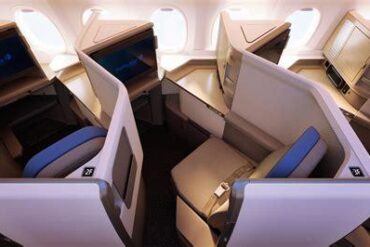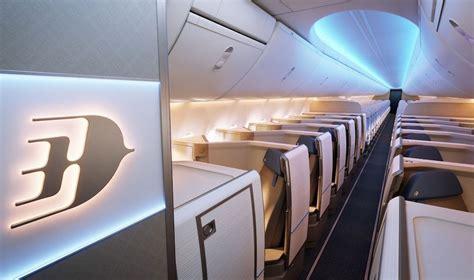
Malaysia Airlines is making a calculated move that could quietly reshape premium travel across Southeast Asia. Instead of treating regional routes as a necessary compromise between long-haul experiences, the airline is installing lie-flat business class seats on its Boeing 737 MAX 10 fleet, bringing widebody-style comfort to flights typically lasting between two and six hours. This is not a cosmetic upgrade. It is a structural shift in how the airline positions Kuala Lumpur International Airport (KUL) as a premium transit hub.
Regional aviation has long tolerated mediocrity in the front cabin. Recliners have been the norm, and passengers connecting from fully flat long-haul cabins often endure a jarring downgrade. Malaysia Airlines is betting that high-yield travelers—corporate executives, premium leisure passengers, and alliance-fed connecting customers—are no longer willing to accept that inconsistency. The narrowbody lie-flat concept is designed to eliminate that weak link.
The airline’s leadership frames this as part of a broader modernization under Malaysia Aviation Group (MAG), which includes next-generation widebodies and a comprehensive narrowbody renewal plan. With a commitment for 55 Boeing 737 MAX aircraft across the -8 and -10 variants, the carrier is executing a phased fleet strategy that blends efficiency, scalability, and premium differentiation.
By placing lie-flat seats on a narrowbody aircraft, Malaysia Airlines is sending a clear message: regional sectors are no longer second-tier. They are integral links in a global premium chain.
Why Regional Lie-Flat Business Class Matters Now
Premium travel behavior in Asia-Pacific has evolved. Corporations are scrutinizing travel policies, but they are not necessarily eliminating premium cabins. Instead, they are demanding consistency. A seamless experience from Sydney to Kuala Lumpur to Tokyo matters more than ever, especially when airlines compete fiercely for high-yield contracts.
A two-to-six-hour regional flight may not sound long enough to justify a flat bed. Yet in practical terms, a four-hour overnight hop from Kuala Lumpur to North Asia can determine whether a traveler arrives rested or fatigued. On complex itineraries stretching across continents, comfort gaps become brand liabilities.
Malaysia Airlines understands that perception drives loyalty. If a passenger connects from a modern Airbus A330neo flat-bed suite into an outdated regional recliner, the contrast undermines the premium promise. By installing lie-flat seats on the Boeing 737 MAX 10, the airline aligns product expectations across cabin classes and route lengths.
This is a strategy rooted in psychological continuity. When the short sector feels like an extension of the long-haul experience rather than a downgrade, Kuala Lumpur strengthens its identity as a premium transit hub.
Kuala Lumpur International Airport as a Sixth-Freedom Connector
The architecture of Malaysia Airlines’ network revolves around Kuala Lumpur. The goal is to capture both origin-and-destination traffic and sixth-freedom connecting passengers—travelers flying between two foreign countries via Malaysia.
This hub model depends on schedule precision and product reliability. Passengers connecting from Southeast Asia to Europe, Australia, North Asia, or South Asia require coordinated waves of arrivals and departures. Aircraft selection and cabin consistency are not minor operational details; they are core strategic levers.
The Boeing 737 MAX 8 serves as the frequency backbone. It supports high-demand regional routes and allows the airline to fine-tune departure times to match long-haul banks. Meanwhile, the Boeing 737 MAX 10 adds capacity and premium differentiation, particularly on trunk routes where demand justifies higher yields.
The lie-flat concept strengthens Kuala Lumpur’s value proposition. If the short leg matches the comfort of long-haul segments, the hub becomes less of a compromise and more of a competitive advantage.
Why the Boeing 737 MAX 10 Is the Ideal Platform
The choice of aircraft is not incidental. The Boeing 737 MAX 10, with its stretched fuselage, offers additional seating capacity compared to the MAX 8. That extra length matters. Lie-flat seats consume significantly more space than recliners, reducing total seat count and potentially increasing cost per available seat kilometer.
The MAX 10 offsets that penalty. By accommodating more seats overall, it preserves economic balance while allowing a premium-heavy configuration. In essence, the aircraft enables Malaysia Airlines to deploy flat beds without sacrificing unit economics.
Fuel efficiency also plays a pivotal role. The MAX family delivers up to 20% lower fuel burn compared to older-generation Boeing 737-800 aircraft. Lower fuel consumption translates directly into improved margins and reduced environmental impact. For an airline managing fluctuating fuel prices and carbon exposure, this is a strategic cushion.
Commonality across the MAX 8 and MAX 10 variants simplifies pilot training, spare parts inventory, and maintenance planning. Dispatch reliability improves. Utilization increases. When short-haul operations function like clockwork, profitability often follows.
Cabin Design: Long-Haul Comfort on a Narrowbody
Installing lie-flat seats on a narrowbody aircraft requires precision engineering. Space is finite. Weight distribution is critical. Every square inch counts.
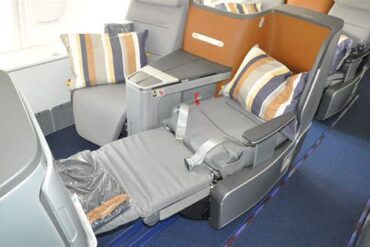
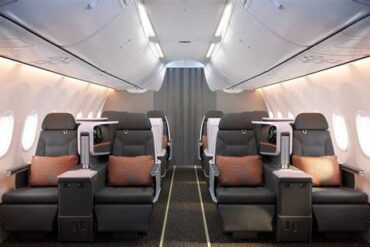
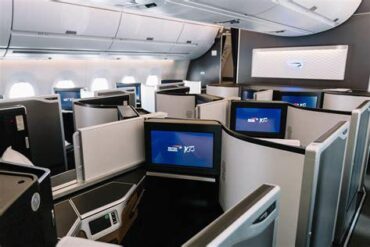
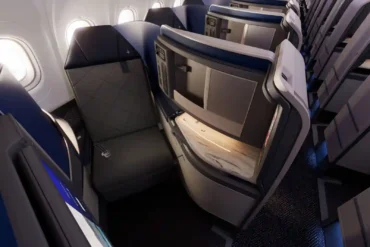
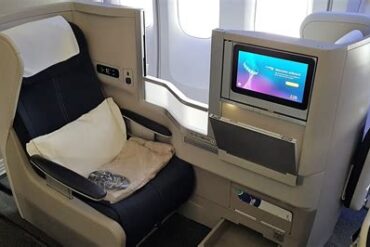
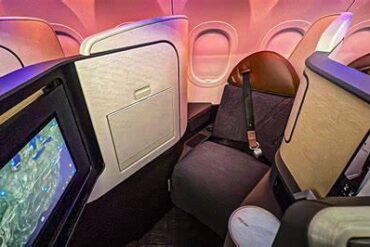
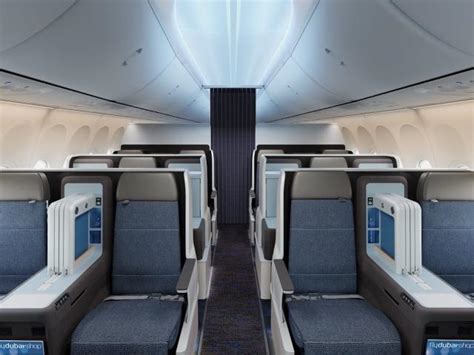
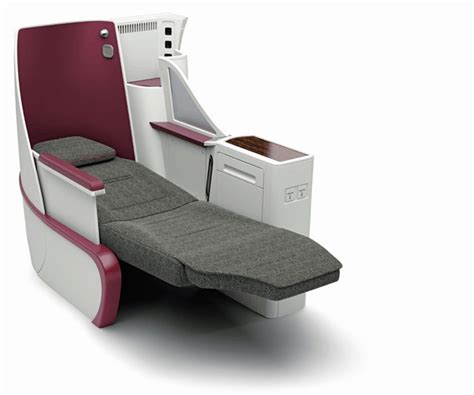
Malaysia Airlines is expected to configure its MAX 10 with a dedicated lie-flat business class cabin, likely in a 1-1 or 2-2 staggered arrangement depending on seat model selection. The objective is not simply to flatten the seat but to deliver privacy, direct aisle access where feasible, and a premium aesthetic aligned with its widebody cabins.
The psychological impact of a flat bed in a regional context cannot be overstated. It signals seriousness. It tells passengers that even a three-hour flight is worthy of investment. The airline is not merely transporting bodies between cities; it is curating an experience.
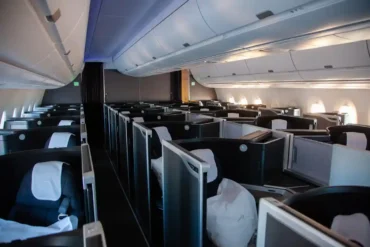
Lighting, materials, and cabin ambiance will likely mirror elements found on its Airbus A330neo fleet. Consistency builds brand memory. A cohesive design language across aircraft types reinforces the idea that Malaysia Airlines is rebuilding its premium identity with intention.
The Financial Logic Behind Premium Narrowbodies
Airline economics can be brutal. Narrowbody aircraft traditionally thrive on high-density seating and fast turnarounds. Introducing lie-flat seats seems, at first glance, counterintuitive.
Yet premium revenue changes the equation. A flat-bed business class seat can command significantly higher fares than a regional recliner. On routes feeding long-haul services, these seats also protect corporate contracts and alliance traffic.
By replacing older Boeing 737-800 aircraft, Malaysia Airlines reduces heavy maintenance exposure and fuel inefficiency. Lower operating costs create margin flexibility. That margin can be partially reinvested into cabin upgrades without eroding profitability.
Phased deliveries smooth capital expenditure. Instead of absorbing a sudden fleet overhaul, the airline integrates MAX aircraft gradually. Capacity grows in step with demand. Product upgrades align with route development.
This is not reckless ambition. It is a measured transition designed to balance yield enhancement with cost discipline.
Competitive Dynamics in Southeast Asia
Malaysia Airlines is not operating in a vacuum. Singapore Airlines already deploys lie-flat seats on certain Boeing 737 MAX 8 routes. This sets a benchmark in overlapping markets.
Cathay Pacific, by contrast, has opted to retain recliners on its Airbus A321neo regional fleet, leaning instead on ground experience and loyalty strength. The divergence highlights differing philosophies. Some carriers prioritize cabin hardware; others rely on brand and lounge superiority.
Etihad Airways and Qantas have also experimented with premium narrowbody configurations. The broader trend is unmistakable: premium travelers expect more, even on short sectors.
By adopting lie-flat seats on the MAX 10, Malaysia Airlines signals that it intends to compete head-on in premium markets rather than concede ground to larger regional rivals.
Operational Considerations and Route Deployment
Not every regional route will receive the lie-flat treatment. Deployment will likely focus on high-demand corridors such as Kuala Lumpur to Tokyo, Seoul, Sydney, Melbourne, and select Southeast Asian trunk routes.
Aircraft flexibility remains essential. The MAX 8 can operate thinner routes and higher-frequency services, while the MAX 10 targets premium-heavy sectors where yields justify the configuration.
Scheduling integration is crucial. To maximize connecting flows, arrivals from premium regional markets must align tightly with long-haul departures. A well-timed narrowbody with flat beds can protect onward bookings and reduce missed-connection risk.
This is where operational excellence intersects with cabin strategy. The aircraft becomes both feeder and flagship.
Brand Rehabilitation Through Product Consistency
Malaysia Airlines has faced turbulent years. Rebuilding brand perception requires tangible proof of progress. Fleet renewal is visible evidence. Cabin upgrades are experiential confirmation.
When passengers encounter modern interiors, efficient aircraft, and a consistent premium product across short and long-haul routes, confidence grows organically. Trust in an airline is rarely rebuilt through marketing slogans. It is rebuilt through experience.
The MAX 10 lie-flat initiative represents more than a seat installation. It is a statement of intent. It tells the market that Malaysia Airlines is aligning its hardware with its strategic ambition.
Sustainability and Future-Proofing
Sustainability considerations increasingly shape fleet decisions. The Boeing 737 MAX family’s improved fuel efficiency reduces emissions per seat. As environmental scrutiny intensifies, efficient aircraft become reputational assets.
Modern narrowbodies also provide flexibility for future cabin upgrades. Modular seat systems and lighter materials enable iterative enhancements without complete overhauls.
Malaysia Airlines is positioning its narrowbody fleet as scalable infrastructure. The MAX 8 and MAX 10 combination allows growth without fragmenting maintenance and training ecosystems.
A Strategic Bet on Premium Continuity
The introduction of lie-flat business class on the Boeing 737 MAX 10 is a calculated gamble, but it is rooted in data-driven network analysis and shifting traveler expectations.
Premium passengers compare products relentlessly. They notice inconsistencies. They remember discomfort. By closing the comfort gap on regional sectors, Malaysia Airlines strengthens the integrity of its end-to-end offering.
In the intensely competitive Asia-Pacific market, differentiation often hinges on details. A flat bed on a four-hour flight might appear extravagant. In reality, it can be the deciding factor for a corporate contract or a loyal frequent flyer.
Malaysia Airlines is not simply upgrading seats. It is reinforcing Kuala Lumpur’s role as a serious global connector. Through fleet modernization, cost discipline, and targeted premium investment, the carrier is crafting a network that treats regional travel as an extension of long-haul excellence rather than a compromise.
The Boeing 737 MAX 10 lie-flat strategy reflects a broader truth about modern aviation: the boundary between regional and long-haul comfort is dissolving. Airlines that recognize this shift early will define the next era of premium travel in Asia.