The evolution of premium air travel did not happen gradually. It pivoted—dramatically—around one idea: sleeping properly on an airplane. For decades, business class was little more than a wider economy seat with better food and a polite nod to comfort. Then one airline decided that wasn’t good enough.
When British Airways launched the first fully lie-flat business class seat in March 2000, the move quietly reshaped the economics, expectations, and competitive dynamics of long-haul aviation. Overnight flights stopped being endurance tests and became something entirely different: an environment where passengers could actually rest.
The decision triggered an industry-wide transformation that still echoes through modern aircraft cabins. Today’s sliding-door suites, massive privacy pods, and direct-aisle access designs all trace their philosophical lineage back to that moment.
Understanding how that happened requires stepping back into the late 1990s, when airlines were beginning to realize that premium cabins—not economy seats—paid the bills.
Before the Revolution: What Business Class Used to Be
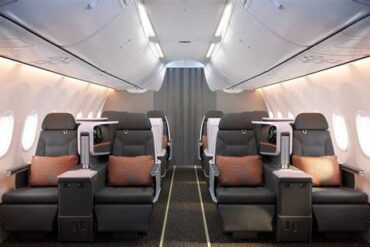
Prior to 2000, business class was a compromise. Airlines wanted to offer a more comfortable experience than economy, but they were also determined to keep as many seats on the aircraft as possible.
The result was the recliner seat era.
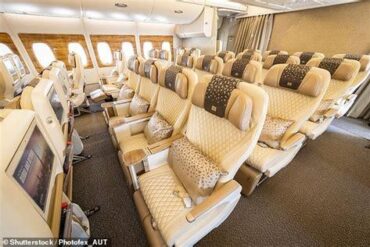
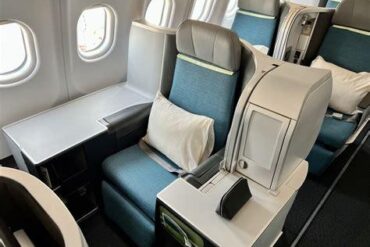
These seats were wider and more padded than economy seating. They tilted backward to create a more relaxed posture, sometimes approaching a 150-degree recline. For daytime flights, that was fine. For overnight journeys—especially transatlantic routes—it was far from ideal.
Passengers flying between London and New York often arrived exhausted. A reclining chair simply could not support genuine sleep. Gravity pulled passengers downward, sliding them into awkward positions that left backs stiff and necks sore.
Airlines compensated with perks rather than structural comfort.
Business class during the 1980s and 1990s typically emphasized:
- Improved meals and wine selections
- Priority check-in and boarding
- Dedicated airport lounges
- More generous baggage allowances
The seat itself, however, remained fundamentally limited. Airlines believed installing fully flat beds would reduce seat density and destroy profitability.
That assumption would soon be challenged.
British Airways: A Flag Carrier Built Around Premium Travel
Few airlines were better positioned to rethink business class than British Airways, the United Kingdom’s long-standing flag carrier.
With roots stretching back more than a century, the airline had evolved into a classic full-service global network carrier centered on London. Its main hub at London Heathrow Airport connected Europe to North America, Asia, Africa, and the Middle East through a vast hub-and-spoke system.
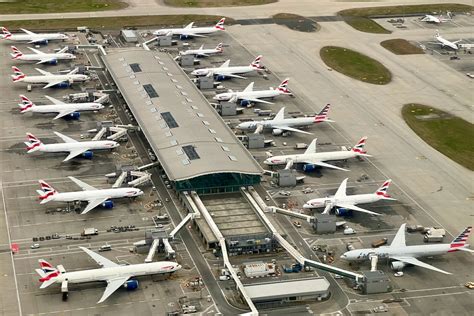
Heathrow was—and still is—one of the world’s most lucrative aviation markets. Corporate travel between London and major financial centers produced a steady flow of high-spending passengers willing to pay a premium for comfort and convenience.
British Airways understood a key economic truth about aviation: a small number of premium seats generate a large share of airline revenue.
On certain long-haul routes, especially across the North Atlantic, business class tickets could cost several times more than economy fares. Corporate travel contracts, loyalty programs, and last-minute bookings amplified those margins even further.
For an airline operating thousands of flights each year, improving the premium experience could dramatically influence overall profitability.
That realization led British Airways to pursue something bold—an entirely new conception of business class.
The Design Challenge: Creating a Bed Without Breaking Economics
In 1998, British Airways issued a design brief that sounded deceptively simple: build a true bed in business class.
The catch was brutal. The airline wanted the seat to lie completely flat, yet it also needed to maintain high passenger capacity. A luxurious first-class style bed would consume too much space, undermining the commercial logic of the cabin.
To solve the puzzle, the airline partnered with the London design firm Tangerine, which specialized in transportation interiors.
The challenge was not merely mechanical—it was spatial.
Aircraft cabins are narrow tubes. Every centimeter matters. If designers simply rotated standard beds sideways, they would lose too many seats.
The breakthrough came from an unconventional layout that would later become famous across the aviation industry: the yin-yang seating arrangement.
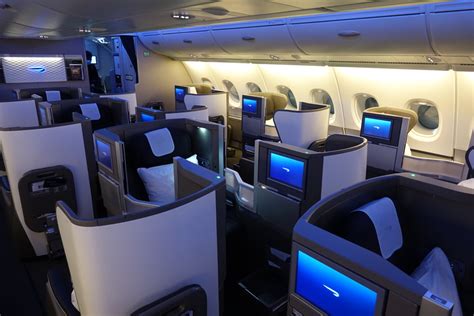
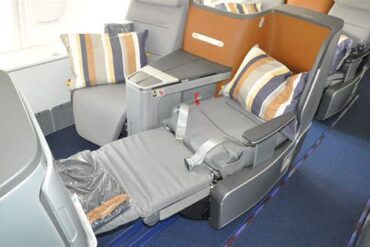
Instead of positioning every seat facing forward, the design alternated between forward-facing and rear-facing seats. By interlocking the footwells of adjacent passengers, the layout used cabin width far more efficiently.
This configuration allowed British Airways to install fully horizontal beds while maintaining enough seats to keep the cabin profitable.
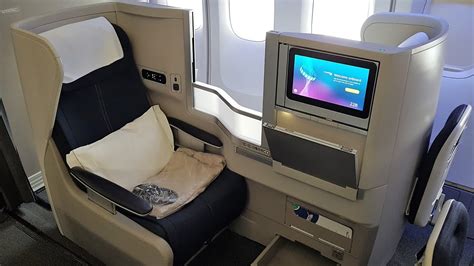
The result was the original Club World lie-flat bed.
March 2000: The First Fully Flat Business Class Takes Flight
In March 2000, British Airways introduced its groundbreaking product on one of the world’s most competitive routes: London Heathrow to New York’s John F. Kennedy International Airport.
The aircraft was the iconic Boeing 747, then the backbone of long-haul travel. Inside the upper and main decks, passengers encountered something they had never seen before in business class: a seat that transformed into a completely horizontal bed.
For overnight flights, the improvement was immediate and obvious.
Passengers could stretch out fully, sleep comfortably, and arrive refreshed rather than fatigued. The psychological impact was just as powerful. Business class had crossed a threshold from “better chair” to legitimate sleeping environment.
This shift fundamentally changed expectations.
Once travelers experienced true in-flight sleep, the old reclining seats suddenly felt antiquated.
Why the Innovation Worked Commercially
British Airways did not simply invent a more comfortable seat. It solved a strategic problem that had long constrained airline cabin design.
The yin-yang layout allowed the airline to install up to 96 business class seats on a Boeing 747, far more than many competitors expected for a lie-flat product.
That density made the concept financially viable.
Instead of sacrificing revenue, British Airways created a product that allowed the airline to:
- Charge higher fares for overnight business travel
- Win corporate contracts from competitors
- Strengthen loyalty among frequent flyers
- Differentiate itself in the premium market
The airline effectively reframed the role of business class. Rather than being a slightly upgraded economy seat, it became a true alternative to first class on long-haul routes.
Many travelers began downgrading from expensive first-class tickets to business class because the essential benefit—sleep—was now available at a lower price point.
The Shockwave Across the Aviation Industry
Airlines rarely ignore competitive advantages for long. Once British Airways demonstrated that lie-flat beds were commercially viable, the rest of the industry faced a choice: adapt or fall behind.
Some carriers responded cautiously.
Instead of installing fully horizontal beds, they introduced angle-flat seats that tilted deeply but did not become perfectly level. These designs were cheaper and easier to retrofit, but passengers quickly noticed the difference.
Gravity, as it turns out, is a stubborn travel companion.
Sliding downward during sleep defeated much of the intended comfort. As a result, angle-flat products gradually disappeared from premium cabins.
Other airlines moved more aggressively.
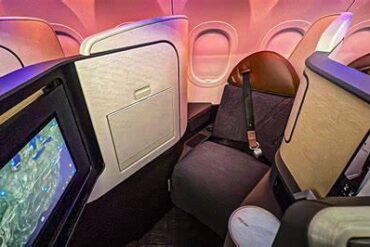
One notable competitor, Virgin Atlantic, introduced its Upper Class Suite in 2003. That product combined lie-flat beds with direct aisle access, another feature that would later become standard across the industry.
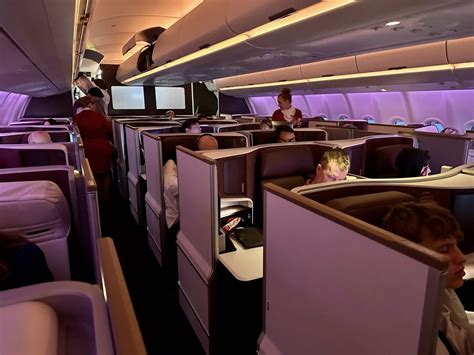
From that moment onward, business class became a battlefield of innovation.
Airlines began competing over features such as:
- Direct aisle access for every passenger
- Improved privacy partitions
- Larger entertainment screens
- Expanded storage areas
- Sliding doors and enclosed suites
Yet the conceptual foundation—a real bed in business class—remained the legacy of British Airways.
Why Premium Cabins Became the Heart of Airline Profitability
The success of lie-flat seats reinforced something airline executives already suspected: premium cabins were not decorative luxuries. They were core revenue engines.
Long-haul business class tickets can cost several thousand dollars, particularly on high-demand routes between financial capitals. Even a modest number of these passengers dramatically boosts the profitability of each flight.
For British Airways, the North Atlantic corridor became especially critical.
Routes linking London with cities like New York, Boston, Chicago, and Washington produce some of the highest yields in commercial aviation. Corporate travelers frequently book last-minute tickets, pushing prices even higher.
By offering superior sleep comfort, British Airways made its flights particularly attractive on overnight services departing the United States and arriving in Europe the next morning.
Passengers could work during the flight, sleep comfortably, and step off the aircraft ready for a full business day.
From an economic standpoint, the lie-flat seat was not merely a comfort upgrade—it was a productivity tool.
The Modern Evolution of British Airways Business Class
Two decades after launching the original lie-flat concept, British Airways continues refining its premium cabin strategy.
The airline’s long-haul business class product remains branded as Club World, but the seats themselves now come in multiple generations.
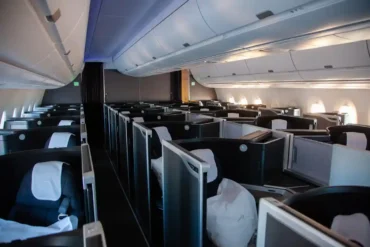
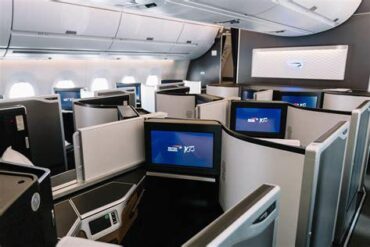
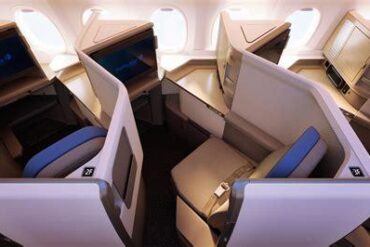
The newest design is the Club Suite, introduced on the Airbus A350 and later installed on select Boeing 777 and Boeing 787 aircraft.
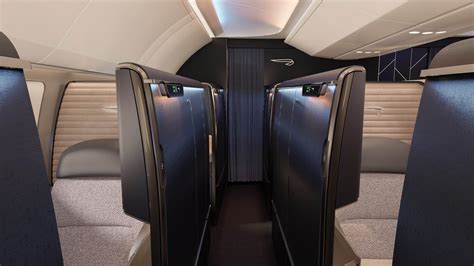
The Club Suite reflects modern expectations shaped by years of industry competition. Every seat offers:
- Direct aisle access
- A fully flat bed
- A sliding privacy door
- Substantial personal storage
- Large high-definition entertainment screens
In many ways, it represents the logical endpoint of a design journey that began in 2000.
Older aircraft still operate with the legacy yin-yang layout, which provides flat beds but less privacy. This creates some product inconsistency across the fleet, a challenge the airline continues addressing through cabin refurbishment programs.
Even so, the Club World brand retains significant recognition among frequent travelers.
How Passenger Expectations Permanently Changed
Before lie-flat seats existed, most travelers simply accepted the discomfort of overnight flights.
After 2000, that mindset evaporated.
Passengers began to view sleep as a basic expectation rather than a luxury. Airlines that failed to offer flat beds quickly appeared outdated, especially on long intercontinental routes.
The ripple effects extended far beyond seat design.
Cabin architecture began evolving toward privacy and personal space. Designers experimented with staggered seating arrangements, reverse herringbone layouts, and enclosed suites.
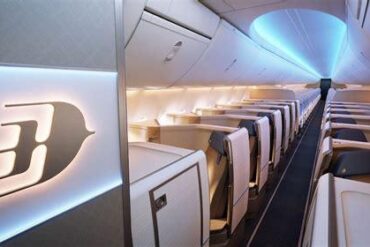
Some of the most advanced modern business class cabins now resemble miniature hotel rooms more than airline seats.
Airlines such as Qatar Airways, Singapore Airlines, and Emirates have pushed the concept even further, introducing doors, larger beds, and ultra-spacious suites.
Yet every one of those innovations traces its lineage back to the moment British Airways proved something revolutionary: business class passengers wanted—and would pay for—real sleep.
The Legacy of a Quiet Revolution
Looking back, the introduction of the lie-flat business class seat may seem inevitable. Today nearly every long-haul airline offers one in some form.
But at the turn of the millennium, the concept required a leap of faith.
British Airways gambled that travelers valued sleep enough to justify a major redesign of aircraft cabins. The airline also bet that it could maintain seat density and profitability while introducing a bed-like product.
Both assumptions proved correct.
The result was one of the most influential cabin innovations in aviation history.
More than two decades later, passengers boarding long-haul flights take flat beds for granted. They stretch out, dim their reading lights, and drift into sleep somewhere above the Atlantic or Pacific.
That quiet comfort—once unimaginable in business class—began with a bold idea launched in March 2000.
And it all started with British Airways redefining what business travel in the sky could be.