The Birthplace of Commercial Aviation
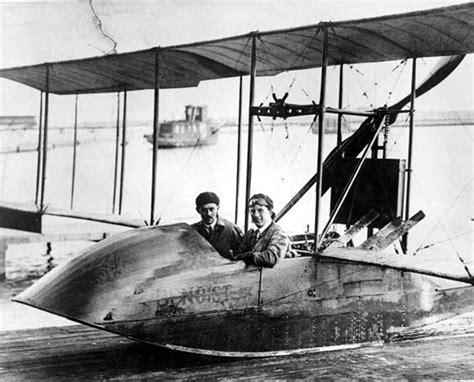
In the early hours of January 1, 1914, history unfolded over the calm waters of Tampa Bay. As Tony Jannus eased the Benoist XIV airboat into the sky, he carried not only Abe Pheil, the first paying passenger, but also the weight of a revolution in transportation. With that brief, twenty-three-minute flight from St. Petersburg to Tampa, the world witnessed the first regularly scheduled, heavier-than-air commercial airline service.
This milestone was the result of visionaries, risk-takers, and inventors who defied the status quo. It was the beginning of an era that would ultimately shrink continents, bring cultures closer, and redefine global commerce.
Visionaries Behind the First Flight
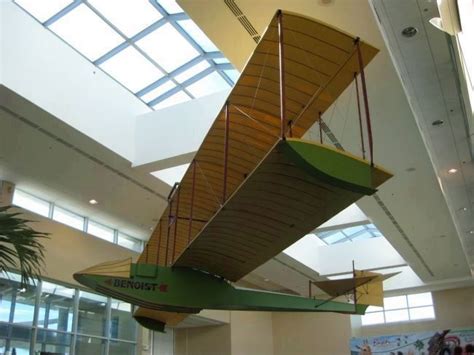
Percival E. Fansler, a forward-thinking electrical engineer from Jacksonville, Florida, conceived the idea of a commercial air service. Fansler recognized the logistical advantages aviation could bring to Florida’s booming tourism economy and approached Thomas W. Benoist, an early airplane manufacturer from Missouri. Benoist provided more than just machines—he supplied the Benoist XIV airboats, built to land and take off from water, essential in a city like St. Petersburg which had no airport.
Together, they launched the St. Petersburg–Tampa Airboat Line, an enterprise that would become aviation’s equivalent of the Wright brothers’ Kitty Hawk flight in terms of commercial impact.
From Pier to Sky: The Historic Takeoff
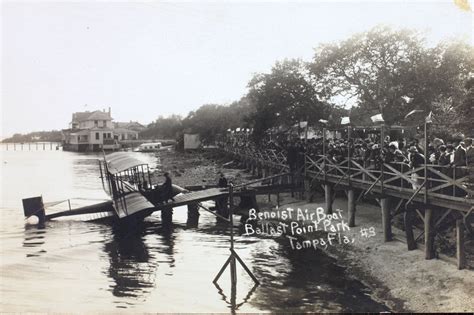
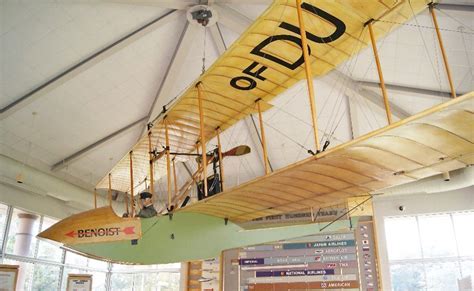
St. Petersburg’s Municipal Pier served as the airboat’s first runway. The Benoist XIV, a fragile biplane with a wooden hull and a single passenger seat, was little more than a box kite with an engine, yet it represented a monumental leap in transport innovation.
On that crisp morning, a crowd of 3,000—nearly half the city’s population—gathered to witness the flight. Humorist Will Rogers was among them, a testament to the cultural magnitude of the event. Former mayor Abe Pheil won a charity auction for the honor of being the first passenger, paying $400, equivalent to over $10,000 today.
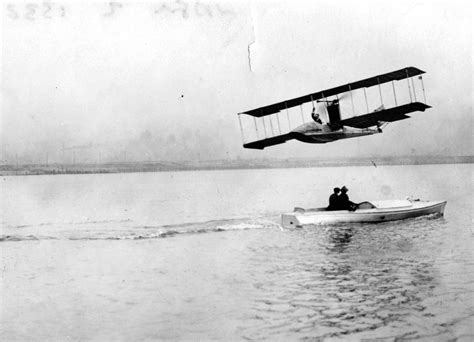
Jannus, already an accomplished test pilot, skimmed the waves at 50 feet, briefly landed on the bay to adjust the propeller chain, then soared to Tampa where 3,500 more spectators waited. After 23 minutes, the flight concluded on the Hillsborough River, met with cheers and accolades.
Pioneering the Model of Commercial Aviation
The St. Petersburg–Tampa Airboat Line operated with only two aircraft: the original No. 43, also known as the Lark of Duluth, and the larger No. 45, which carried two passengers. Each flight cost $5—about $115 in today’s money—making it a luxury reserved for the curious and well-off.
Despite this, the service completed multiple daily round trips, transporting not just passengers but freight like hams and newspapers. Over the course of its brief operation—from January 1 to May 5, 1914—the airline proved both the feasibility and allure of air travel.
Operational Challenges and Closure
The airline didn’t turn a profit, though it nearly broke even in February and March. Operational costs were steep, and maintenance issues plagued the delicate wooden planes. Thomas Benoist admitted he was operating at a loss but believed that proving the viability of commercial flight would pay off in the long term. His conviction was prescient.
By May 5, 1914, operations ceased, but the impact remained. As Tony Jannus wrote in Aero and Hydro, the project “stamped St. Petersburg as the aviation headquarters of Florida.”
The Legacy of Tony Jannus
Antony Habersack Jannus, or Tony Jannus, became a symbol of aviation’s promise. A charismatic pilot, he had previously made headlines as the first to fly a passenger more than 1,900 miles and as the pilot for the first successful parachute jump by Albert Berry.
Jannus held the first federal airline license in the U.S. and quickly became the face of the Airboat Line. Tragically, he died in 1916 while training Russian pilots for Curtiss Aeroplane Company over the Black Sea during World War I.
Recognition and Commemoration
In the decades following his death, Jannus’ contributions were increasingly recognized. The Tony Jannus Distinguished Aviation Society, founded in 1964, began awarding the Tony Jannus Award, regarded as one of civil aviation’s top honors. Past recipients include Charles Yeager, Frank Borman, and Sir Freddie Laker.
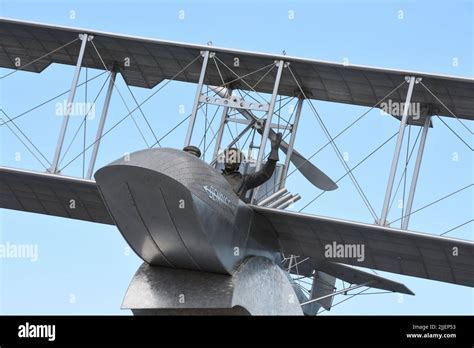
The city of St. Petersburg has since celebrated its pivotal role in aviation history with museums, statues, and even a working replica of the Benoist XIV. His goggles and pennant, once handed to 10-year-old Judy Bryan after the inaugural flight, now reside in a permanent exhibit.
The Unsung Heroes: Fansler and Benoist
While Jannus is the name most associated with the first commercial flight, it was Fansler’s vision and Benoist’s engineering that laid the foundation. Fansler garnered local business support, secured funding, and oversaw daily operations. Benoist provided the airboats, pilots, and operational logistics.
Both were posthumously inducted into the Florida Aviation Hall of Fame—Fansler and Jannus in 2003, and Benoist in 2012. Their work laid the groundwork for an industry that now serves over 4.5 billion passengers annually worldwide.
The First Flight’s Place in Global History
The impact of the St. Petersburg–Tampa Airboat Line cannot be overstated. It offered a blueprint for regular air travel, complete with scheduled routes, fare structures, and municipal support. It proved that people were willing to pay for speed and convenience, setting the precedent for every commercial airline that followed.
Tom Benoist summed it up best: “Someday people will be crossing oceans on airliners like they do on steamships today.” That dream became reality because of what took place in Florida over a century ago.
FAQ
What was the world’s first commercial flight?
The first commercial flight took place on January 1, 1914, when pilot Tony Jannus flew the Benoist XIV airboat from St. Petersburg to Tampa, Florida, carrying the first paying passenger, Abe Pheil. It marked the beginning of scheduled air passenger service.
Who was Tony Jannus and why is he significant?
Tony Jannus was a pioneering aviator and test pilot known for his record-setting flights and role as the pilot of the first commercial airline. He also piloted the first successful parachute jump and was one of the earliest recipients of a federal airline license. His contributions are commemorated by the Tony Jannus Distinguished Aviation Society.
Why did the St. Petersburg–Tampa Airboat Line shut down?
The airline ceased operations on May 5, 1914, due to seasonal tourist declines, high operational costs, and mechanical challenges. Although it nearly broke even financially, it served more as a proof-of-concept than a long-term business model.