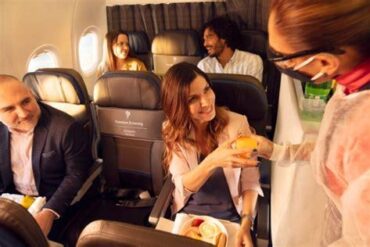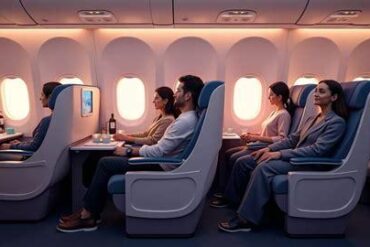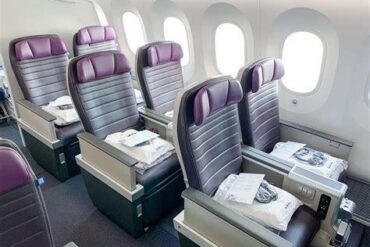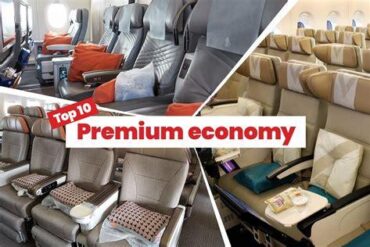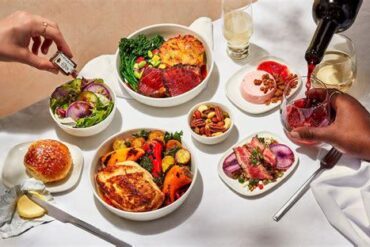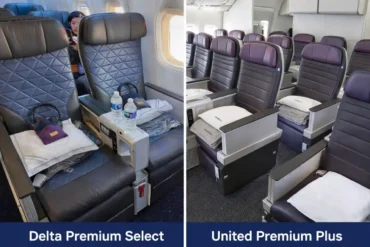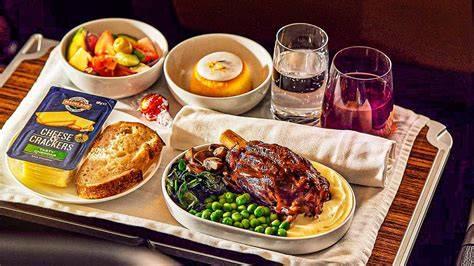
Premium economy has quietly evolved from a bigger economy seat into one of the most competitive cabins in long-haul aviation. In 2026, airlines are increasingly using food, beverages, tableware, and service rituals to distinguish their premium economy products, particularly on long-distance routes between North America, Europe, Asia, and Australia. The seat still matters, but the meal placed in front of the passenger increasingly determines whether the cabin feels genuinely premium.
Modern premium economy dining is also becoming more sophisticated because passengers expect more than a larger tray and an extra entrée. Airlines are experimenting with chef partnerships, regional menus, higher-quality beverages, porcelain tableware, flexible meal timing, and pre-order services. The best products understand that a passenger spending 10, 15, or even 20 hours aboard an aircraft needs an experience that feels deliberately designed rather than simply enlarged from economy.
That shift is particularly visible on newer Airbus A350 and Boeing 787 aircraft, where premium economy cabins have become important revenue products in their own right. Dining quality now works as part of the entire premium economy proposition, combining comfort, hospitality, branding, and a sense of occasion. Based on the strengths outlined below, these six airlines stand out for delivering some of the world’s most compelling premium economy dining experiences in 2026.
6. Cathay Pacific: Hong Kong Flavors With a Personal Touch
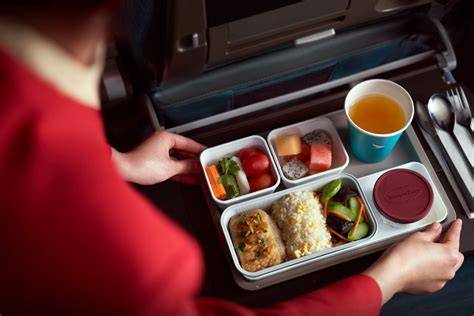
Cathay Pacific takes a fundamentally different approach from airlines that attempt to imitate restaurant-style luxury. Its premium economy dining is strongest when it embraces the food culture of Hong Kong and combines it with familiar international choices. The result is an experience that feels connected to the airline’s home market rather than designed by committee for a generic international audience.
Passengers can expect Cantonese-inspired dishes, international favorites, vegetarian choices, freshly brewed coffee, and warm Hong Kong egg tarts served between meals. Cathay’s current premium economy offering specifically highlights the egg tarts as a signature mid-flight moment, while its broader dining program emphasizes Hong Kong flavors and collaborations with local culinary partners.
That attention to smaller details is important on long-haul flights. A warm egg tart arriving several hours after the main meal can be more memorable than another elaborate entrée because it provides a spontaneous moment of comfort. Cathay also offers carefully selected wines and Betsy beer, its beer created specifically for enjoying at altitude.
The airline’s premium economy seats support the dining experience with generous recline, calf rests, padded footrests, and a larger meal table. Cathay therefore delivers a polished and culturally distinctive product, although its dining lacks the overt luxury and culinary theater offered by the airlines higher in this ranking.
5. Emirates: Royal Doulton and Business-Class-Level Presentation
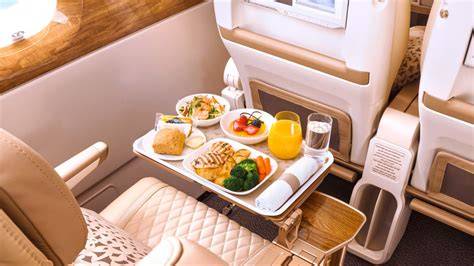
Emirates approaches premium economy dining from the perspective of presentation and perceived luxury. The airline understands that even a relatively conventional aircraft meal can feel dramatically more premium when it is served using proper tableware and accompanied by a carefully designed beverage program.
Passengers receive multicourse meals on Royal Doulton china with stainless-steel cutlery, while the beverage selection includes sparkling wine and a wider range of wines. Emirates describes its premium economy menu as combining global flavors with quality ingredients and multiple courses.
The presentation is reinforced by the cabin itself. On selected aircraft, Emirates premium economy provides wide seats, leg rests, adjustable headrests, generous recline, and a refined cabin interior. The airline has also introduced its premium economy product to additional destinations, making the experience increasingly visible across its international network.
What makes Emirates especially convincing is the consistency of the visual experience. The meal tray does not feel like an economy service with upgraded food. The china, glassware, linen, cutlery, and beverage choices establish a clear distinction. Emirates still falls short of the top contenders in culinary personalization and originality, but its premium presentation remains exceptionally strong.
4. Qantas: Flexible Dining Built for Ultra-Long-Haul Flights
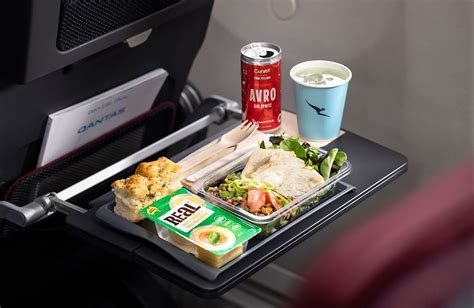
Qantas has a particularly strong argument in premium economy because it understands one of the biggest problems with ultra-long-haul travel: passengers do not always want to eat according to the clock printed on the flight schedule. On routes where travelers can remain airborne for well over 15 hours, flexibility becomes almost as important as the food itself.
Qantas provides a multicourse dining experience served on stylish David Caon-designed tableware, beginning with sparkling wine or water. Its international premium economy service also includes access to snacks and drinks from self-service bars on selected Boeing 787-9 and Airbus A380 aircraft.
The airline’s wine program adds another layer of sophistication. Its Sommeliers in the Sky can recommend wines from an award-winning selection to complement the meal, transforming beverage service from an afterthought into an important part of the experience.
Qantas also benefits from strong regional identity. Australian ingredients, wines, and menu concepts help differentiate the airline from competitors offering more standardized international cuisine. Its premium economy seats on the 787 and A380 are designed specifically for long-distance comfort, with wide seating, specialized recline, and improved foot support.
The weakness is that Qantas does not always deliver the same sense of luxury theater associated with Emirates or the culinary prestige associated with Air France. Yet for passengers flying extremely long distances, flexibility and practicality are powerful forms of luxury.
3. Singapore Airlines: Personalization Takes Center Stage
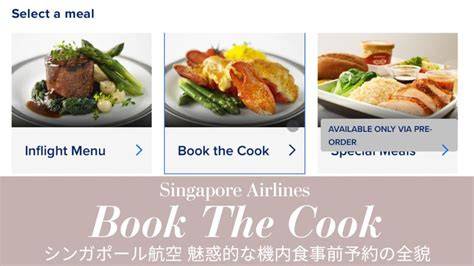
Singapore Airlines sits near the top because its premium economy dining combines presentation, service discipline, and one of the industry’s strongest personalization tools. The centerpiece is Book the Cook, allowing eligible premium economy passengers to pre-select their main course before departure.
As of the current program, Singapore Airlines allows premium economy passengers to choose from a rotating selection that can reach 20 main courses on eligible itineraries, with pre-ordering available before departure. The airline also offers a structured meal including an appetizer, main course, bread, dessert, cheese and crackers, accompanied by Champagne, wine, and other beverages.
This is particularly valuable because aircraft catering has an unavoidable limitation: a meal that looks appealing on paper may not suit every traveler. Pre-selection reduces that uncertainty and gives passengers a degree of control normally associated with business class. Singapore Airlines’ menus also demonstrate meaningful regional variation. On flights from Tokyo, for example, Book the Cook choices can include Japanese dishes alongside Western and Singaporean favorites.
The service is completed by porcelain tableware, premium beverages, and the airline’s famously controlled service style. Singapore Airlines does not rely on flamboyant luxury. Instead, it creates an impression of precision and predictability, which matters enormously when evaluating premium economy on long-haul routes.
2. Air France: Michelin-Starred Thinking at 35,000 Feet
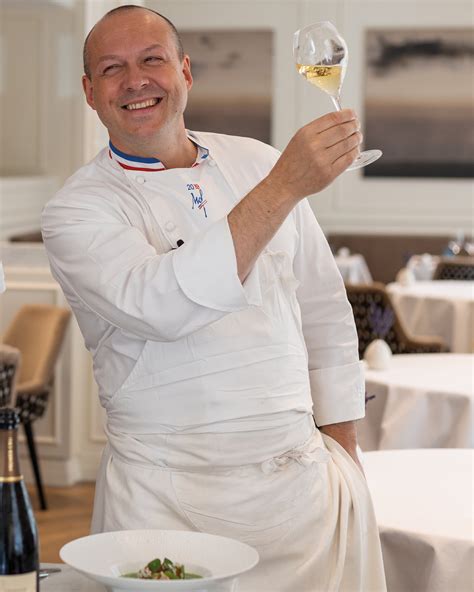
Air France may have the most exciting premium economy culinary story in 2026. Its partnership with Michelin-starred chef Frédéric Simonin gives the cabin something that many competitors still struggle to replicate: genuine culinary authorship.
Since 2023, Simonin has created dishes specifically for Air France’s Premium cabin. In February 2026, the airline expanded those signature dishes to all flights departing from the United States and Canada, significantly widening the reach of the program.
The menu demonstrates why the partnership matters. Dishes such as scallops with tapioca pearl sauce and asparagus pasta reflect techniques and combinations that feel closer to contemporary French restaurant cuisine than traditional airline catering. Simonin works with Servair and emphasizes fresh, seasonal ingredients while adapting his cooking specifically for the constraints of aircraft service.
Air France also builds the experience around French hospitality. Champagne, stainless-steel cutlery, desserts, and carefully designed service reinforce the idea that premium economy can be more than a halfway point between economy and business class.
Air France ranks second because the product’s biggest strength is also its current limitation. Its most ambitious culinary proposition is not yet equally established across every premium economy route worldwide. Nevertheless, for travelers flying eligible North American departures, it is arguably the most inventive dining concept in the cabin.
1. Virgin Atlantic: The Most Complete Premium Economy Dining Experience
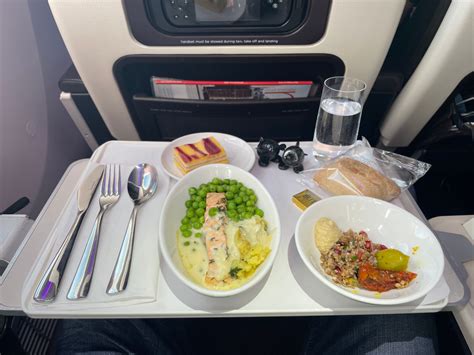
Virgin Atlantic earns the top position because it does not depend on one spectacular feature. Instead, its premium economy product combines dining, beverages, presentation, seating, and service into a cohesive experience.
The airline’s premium economy meals are served on Royal Doulton china, while the menu draws inspiration from British and international cuisine. Passengers can also enjoy snacks, cocktails, and sparkling wine, creating a service style that feels deliberately closer to the airline’s upper cabins than traditional premium economy. That broader consistency is one reason Virgin Atlantic continues to dominate independent rankings.
The evidence from Skytrax is especially significant. In the 2025 World Airline Awards, Virgin Atlantic was named World’s Best Premium Economy Class Airline and also won World’s Best Premium Economy Class Onboard Catering. It ranked ahead of Japan Airlines and Emirates overall, while Singapore Airlines finished fourth.
Those awards align closely with what makes the onboard experience compelling. Virgin Atlantic does not simply put better food on a larger seat. Its cabin has a recognizable personality, and the meal service feels like part of that personality. The beverage program, branded presentation, generous seating, and cabin atmosphere work together rather than competing for attention.
That matters because the best premium economy dining experience is not necessarily the meal with the most expensive ingredient. It is the product in which food, drinks, tableware, timing, service, and comfort all feel intentional.
Why Premium Economy Dining Is Becoming a Bigger Competitive Advantage
The six airlines demonstrate six different approaches to premium economy. Cathay Pacific relies on cultural identity, Emirates on luxury presentation, Qantas on flexibility, Singapore Airlines on personalization, Air France on culinary innovation, and Virgin Atlantic on overall balance.
The broader trend is unmistakable. Airlines increasingly recognize that premium economy passengers are not simply economy travelers who paid for extra legroom. They are often long-haul passengers making a conscious decision to spend more for comfort, service, privacy, and quality without paying business-class fares.
That is why dining has become such a valuable battleground. A better seat is immediately noticeable, but a thoughtfully designed meal can influence the entire emotional impression of a flight. Real china changes presentation. A better wine list changes the atmosphere. A chef partnership creates credibility. Pre-ordering creates control. Flexible snacks make long flights easier to manage.
The Best Premium Economy Dining Depends on What You Value Most
There is no single winner for every traveler, even though Virgin Atlantic takes the overall top position in this 2026 ranking. A passenger who values French gastronomy may prefer Air France, particularly on a North American departure. Someone who wants maximum meal personalization may find Singapore Airlines more compelling, while a passenger crossing the world on a Qantas ultra-long-haul service may value its flexibility more than elaborate plating.
Emirates remains difficult to overlook for anyone who associates premium travel with elegant tableware and polished presentation. Cathay Pacific, meanwhile, demonstrates that memorable food does not have to be extravagant. A warm egg tart, authentic Cantonese flavors, and a carefully selected beverage can create a more distinctive experience than a generic luxury menu.
Ultimately, premium economy dining in 2026 is no longer about simply serving a better meal than economy. The leading airlines are designing complete culinary experiences that reflect their national identity, service philosophy, aircraft product, and long-haul strategy. Virgin Atlantic currently offers the strongest all-round package, while Air France is pushing the boundaries of innovation and Singapore Airlines continues to set a high standard for personalization.
For passengers choosing between premium economy cabins, that means looking beyond seat dimensions. The menu matters. The wine matters. The tableware matters. The timing matters. And, after hours in the sky, those details can make the difference between a flight that merely feels longer than economy and one that genuinely feels like an upgraded way to travel.