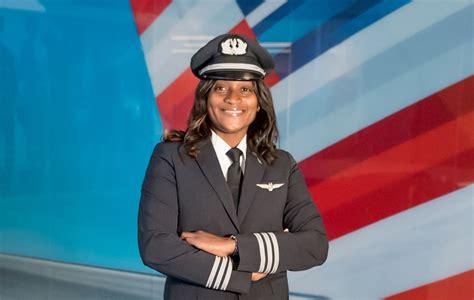
Yes, US airline pilots can and frequently do start their careers in the Air Force. For decades, the United States Air Force (USAF) has functioned as the most prestigious finishing school in American aviation, and a substantial share of the men and women now commanding Boeing 737s and Airbus A320s learned their trade in cockpits built for fighters, tankers, and transports. The pathway is real, well-trodden, and formally sanctioned by the Federal Aviation Administration (FAA). It is also longer, more demanding, and more bureaucratically tangled than the glossy recruiting brochures suggest. Understanding exactly how the military-to-airline pipeline works — from the first commissioning oath to the moment a newly minted first officer straps into a commercial jet — reveals a career arc shaped by ten-year service commitments, 750-hour regulatory concessions, and an intensifying bidding war between the Pentagon and the major carriers for a finite pool of qualified aviators.
Commissioning Comes Before Wings in the Air Force Pilot Path
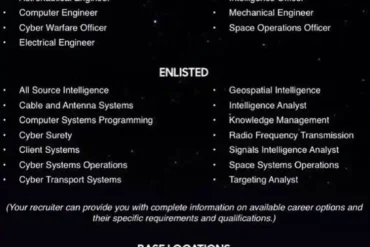
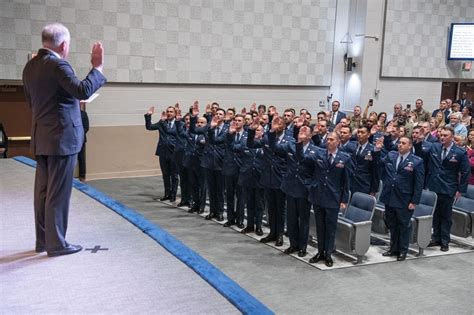
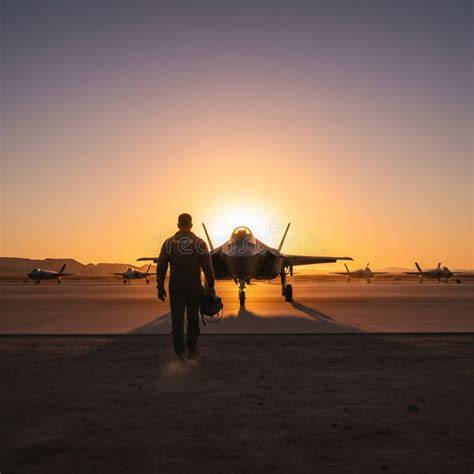
The road to a US Air Force flight deck does not begin with a throttle quadrant; it begins with an officer’s commission. Prospective pilots must first graduate from the Air Force Academy, a Reserve Officers’ Training Corps (ROTC) detachment, or Officer Training School before they are even eligible to don a flight suit. Only then does the aviation-specific phase begin, typically a year of Undergraduate Pilot Training (UPT) covering aerodynamics, instrument procedures, navigation, and the stick-and-rudder fundamentals that separate a competent aviator from a passenger. That initial year is followed by Advanced Flight Training, where students are tracked into fighters, bombers, mobility aircraft, or special operations platforms based on aptitude, performance, and the needs of the service.
The service commitment that governs everything afterward does not start when a candidate reports to pilot training. It starts only after the aviator earns their wings. That distinction matters enormously. Military officers in most non-flying specialties owe roughly four or five years of active duty, but pilots and weapon systems officers begin their ten-year clock at the moment they are designated fully qualified aviators. Because initial flight screening, officer training, and the better part of UPT do not count toward the obligation, a typical pilot routinely spends up to twelve years in uniform before they can legally walk into an airline recruiting office. That decade is the true price of admission, and it is paid in full regardless of whether the pilot is flying an F-35 over the Nevada desert or a C-17 into a forward operating base.
Why the FAA Credits Military Flight Training at Half the Civilian Hours
The single greatest structural advantage of the military route is a regulatory carve-out that civilian-trained pilots can only envy. Under FAA rules, graduates of a primary armed forces flight school may apply for a restricted airline transport pilot (ATP) certificate at just 750 total flight hours, half the standard 1,500-hour civilian baseline. For helicopter-trained military aviators, the threshold drops further to 500 hours, while time logged in remotely piloted aircraft is excluded entirely from the calculation. That asymmetry means two officers can leave the service after a decade with dramatically different career prospects depending on the airframe the Air Force happened to assign them.
The FAA’s rationale for the discount is not sentimentality. It reflects a formal recognition that military flight training is brutally selective, academically rigorous, and expensive to fail, with attrition rates that weed out candidates long before they reach a cockpit. Military trainees also accumulate hours in complex, multi-engine, frequently jet-powered aircraft, and they receive tactical instruction in aerodynamic stalls, spins, and unusual attitude recovery that few civilian flight schools can replicate. Still, the restricted certificate carries a hard limit: holders may serve immediately as an airline first officer but are legally barred from acting as captain until they log the full 1,500 hours. The discount accelerates entry into the right seat; it does not waive a single FAA written exam, check ride, or type rating.
When Airline Job Offers Arrive Before the Military Contract Ends
Commercial carriers do not wait politely for a pilot’s separation date. Major airlines routinely extend conditional job offers to active-duty pilots up to two years before they leave the service, a practice that reflects both the severity of the pilot shortage and the peculiar economics of airline seniority. In commercial aviation, seniority determines schedule, base, aircraft assignment, and lifetime earnings, so every month spent waiting in uniform effectively costs a new hire tens of thousands of dollars over the arc of a career. That compounding financial pressure creates an overwhelming incentive for experienced military aviators to head for the exit the instant their contracts permit.
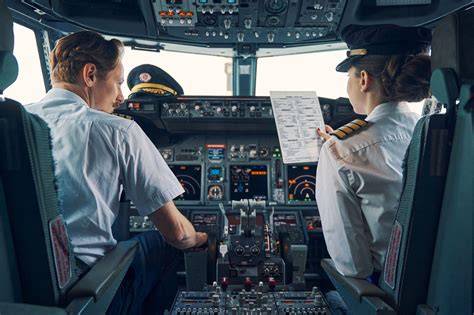
The Air Force has responded not by blocking departures but by channeling them. The Palace Front program allows separating active-duty pilots to transition seamlessly into the Air Force Reserve or Air National Guard, continuing to fly familiar aircraft as part-time “weekend warriors” while building airline seniority. The newer Total Force Shared Service initiative goes further, permitting pilots at bases including Luke, Travis, and Laughlin AFB to leave active duty with a year remaining on their contract in exchange for a three-year Reserve or Guard commitment. The framework includes a mandatory twelve-month active tour with the pilot’s original squadron, with one variant allowing that tour to be deferred for up to a year — a deliberate grace window that lets aviators complete commercial training while the service retains a hedge against staffing downturns.
Even a perfectly timed exit runs into administrative quicksand. Every separating officer transferring to the Reserve must be formally nominated by the President and confirmed by the Senate through a process known as “scrolling,” which frequently stalls for six months or more. Reserve squadrons also select their own pilots through a sponsorship system, creating a matching problem that the top brass has tried to solve by standing up a dedicated unit to pair departing active-duty aviators with local Reserve and Guard units. The existence of that bureaucracy is itself telling: the Air Force treats the departure of its pilots to the airlines as an inevitability to be managed, not a crisis to be prevented.
How the Air Force Pays to Keep Pilots in Uniform Longer
Retention economics have become a blunt instrument. The Air Force’s fiscal 2026 aviation bonus program offers multi-year contracts spanning three to twelve years, with annual payouts reaching up to $50,000 depending on career field and flight experience. The program covers traditional pilots, remotely piloted aircraft operators, air battle managers, and combat systems officers, and it extends eligibility to Reserve and Guard members filling active-duty operational vacancies. The logic behind the cash is straightforward: military pilots are extraordinarily expensive national assets, routinely costing tens of millions of dollars to train, and replacing a departing squadron commander is far costlier than paying one to stay.
The retention data suggests the strategy works better than the raw shortage headlines imply. Air Force Reserve Command reports that 91% of active-duty pilots who transition into the Reserves stay in uniform for 20 years, with 86% reaching the full 30-year milestone. Those figures demonstrate that logging an early airline seniority number and maintaining a long part-time military flying career can coexist for decades. Yet the Reserve still misses its own internal targets, with prior-service aviators accounting for roughly 67% of total Reserve pilot inventory, below the command’s preferred 70% threshold. Because the Reserve depends on absorbing talent already trained by the active-duty force, every pilot who walks straight to a major airline without affiliating leaves a gap that the Pentagon must fill from an ever-shrinking pool.
A Smaller Share of Airline Hires, but a Door That Stays Open
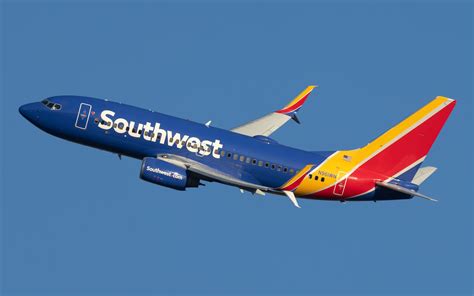
The military’s grip on airline hiring has loosened considerably. In the late 1980s, major carriers drew more than 80% of their new hires from the armed forces; today that proportion is far smaller, and it fluctuates inversely with airline expansion — rising when recruitment slows, collapsing when carriers grow rapidly. The pattern reveals a structural ceiling: the armed forces can only train a finite number of aviators each year, so during boom cycles the airlines must aggressively tap civilian training pipelines to fill the gap. That reality has spawned tailored transition programs such as Southwest Airlines’ Destination 225° Military Pathway, which partners with flight training providers like SkyWarrior to serve military pilots who hold extensive flight experience but lack an unrestricted multi-engine certificate or recent fixed-wing time. Completing that pipeline allows candidates to bypass the standard pilot interview and step directly into a first officer’s seat.
What emerges is a career ladder with two distinct entry points and one shared destination. The Air Force route offers unrivaled training, a federal hour discount, and the prestige of military command, purchased with a decade of service, months of administrative delay, and the risk of an unlucky airframe assignment. The civilian route offers control over one’s timeline at the cost of full-hour accumulation and self-funded training. Neither path is a shortcut in any meaningful sense — but for the aviator willing to trade years for credentials, the Air Force remains one of the most reliable, and most respected, launching pads into the flight deck of a commercial airliner.