Deutsche Lufthansa AG, universally recognized as Lufthansa, stands as a titan in the global aviation industry. As the flag carrier of Germany, it has not only connected the nation to the world but has also evolved into one of Europe’s largest airline groups. Headquartered in Cologne, with its primary operational hubs strategically located at Frankfurt Airport and Munich Airport, Lufthansa has carved a significant niche for itself. Its journey began with its founding in 1953, and it commenced flight operations in 1955, rapidly expanding its reach and services. Lufthansa is also a founding member of Star Alliance, the world’s largest airline alliance, established in 1997, a testament to its commitment to global connectivity and passenger service. The airline’s rich history, expansive network, diverse fleet, and multifaceted corporate structure paint a picture of a dynamic entity constantly adapting to the ever-changing landscape of international air travel.
The Lufthansa Group, the parent company, oversees a vast portfolio that extends beyond Lufthansa German Airlines. This includes prominent carriers such as Austrian Airlines, Brussels Airlines, Swiss International Air Lines, Discover Airlines, and Eurowings, along with a significant stake in ITA Airways. The group’s influence also permeates various aviation-related sectors through subsidiaries like Lufthansa Technik (maintenance, repair, and overhaul), Lufthansa Cargo (air freight), and Lufthansa Systems (aviation IT services). This integrated approach allows the Lufthansa Group to leverage synergies across its operations, maintaining a competitive edge. As of 2023, the Lufthansa Group reported substantial revenues of €35.44 billion, reflecting its significant market presence and operational scale. The core airline, Lufthansa German Airlines, operates a fleet of approximately 274 aircraft, serving 229 destinations worldwide, and employs a vast workforce dedicated to maintaining its high standards of service and safety. The airline’s frequent-flyer program, Miles & More, is one of the largest in Europe, further solidifying its customer loyalty base.
A Storied History: From Post-War Rebirth to Global Prominence
Lufthansa’s origins, while officially dating to the post-World War II era, carry echoes of an earlier chapter in German aviation. The name itself harks back to Deutsche Luft Hansa A.G., which was formed in 1926 through the merger of Deutscher Aero Lloyd and Junkers Luftverkehr. This predecessor was Germany’s flag carrier until its operations ceased and it was eventually liquidated in 1951 due to its associations during the war. The modern Lufthansa emerged from a company named Aktiengesellschaft für Luftverkehrsbedarf (Luftag), founded in Cologne on January 6, 1953. This new entity was established by former staff of the pre-war Deutsche Luft Hansa, aiming to resurrect a national airline for West Germany. In a symbolic and strategic move, Luftag acquired the name and the iconic crane logo of the liquidated Deutsche Lufthansa on August 6, 1954, for DM 30,000, thus consciously linking itself to the legacy of German air travel while forging a new path in a divided nation.
The Dawn of a New Era: The 1950s
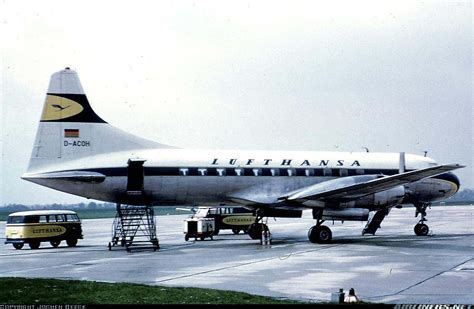
The early years were marked by careful planning and strategic fleet acquisition. Even before West Germany regained full sovereignty over its airspace, Luftag placed orders for four Convair CV-340 aircraft and four Lockheed L-1049 Super Constellations, establishing a maintenance base at Hamburg Airport. The official green light for scheduled domestic flights came on April 1, 1955, with initial routes connecting key German cities: Hamburg, Düsseldorf, Frankfurt, Cologne, and Munich. International services commenced shortly thereafter, on May 15, 1955, with flights to London, Paris, and Madrid. A significant milestone was the launch of transatlantic flights to New York City using the Super Constellations from June 1, 1955, followed by South Atlantic routes in August 1956. However, the geopolitical landscape of the Cold War imposed limitations; Lufthansa was barred from flying to any part of divided Berlin, a restriction that would last until German reunification. This led to Frankfurt Airport becoming the airline’s primary hub in 1958, a status it retains to this day. The airline also began to play a role in shaping West Germany’s image abroad, promoting tourism and connectivity as the nation rebuilt itself. During this period, East Germany’s attempt to establish its own “Lufthansa” was thwarted by legal challenges, leading to the formation of Interflug as its national carrier in 1963.
Embracing the Jet Age: The 1960s
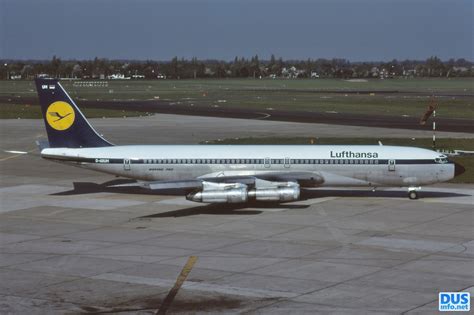
Lufthansa decisively entered the jet age in 1958 with an order for four Boeing 707 aircraft. This transformative acquisition enabled the launch of jet flights between Frankfurt and New York City in March 1960, dramatically reducing travel times and enhancing passenger comfort. The fleet was further augmented with Boeing 720B aircraft, a derivative of the 707 designed for shorter runways and routes. Network expansion continued apace: Far East routes extended beyond Bangkok to include Hong Kong and Tokyo in February 1961, and African destinations like Lagos, Nigeria, and Johannesburg, South Africa, were added in 1962. The introduction of the versatile Boeing 727 in 1964 allowed Lufthansa to pioneer new routes, including a Polar route from Frankfurt to Tokyo via Anchorage in May of that year. A landmark decision was made in February 1965 with an order for twenty-one Boeing 737 aircraft, which entered service in 1968. Significantly, Lufthansa was the launch customer for the Boeing 737, one of the most successful commercial aircraft in history. It was one of only four initial buyers of the 737-100 model, solidifying its role as an influential player in aircraft development and a pioneer in adopting new aviation technologies.
The Wide-Body Revolution: 1970s–1980s
The 1970s ushered in the era of wide-body jets, and Lufthansa was at the forefront. The iconic Boeing 747, the original “Jumbo Jet,” made its debut in Lufthansa’s fleet on April 26, 1970, revolutionizing long-haul travel with its unprecedented capacity and range. This was followed by the introduction of the McDonnell Douglas DC-10-30 on January 14, 1974, and the European-built Airbus A300 in 1976, the world’s first twin-engine wide-body. Lufthansa, along with Swissair, became a launch customer for the Airbus A310 in 1979, placing an order for twenty-five aircraft and demonstrating its continued commitment to fleet modernization and support for the burgeoning European aerospace industry. The 1980s saw further strategic fleet development. A major modernization program began on June 29, 1985, with orders for fifteen Airbus A320s and seven Airbus A300-600s. Shortly thereafter, ten Boeing 737-300s were ordered. These aircraft were delivered between 1987 and 1992. Lufthansa also expanded its fleet with Airbus A321s, long-range Airbus A340s, and the updated Boeing 747-400s. In 1987, Lufthansa, in collaboration with Air France, Iberia, and Scandinavian Airlines, co-founded Amadeus, a global distribution system (GDS) company, which streamlined travel agency bookings and became an industry standard. A significant rebranding occurred in 1988, with a new corporate identity that included a refreshed livery for the fleet and redesigned cabins, city offices, and airport lounges, projecting a more modern and unified image.
Expansion and Alliances: 1990s–2000s
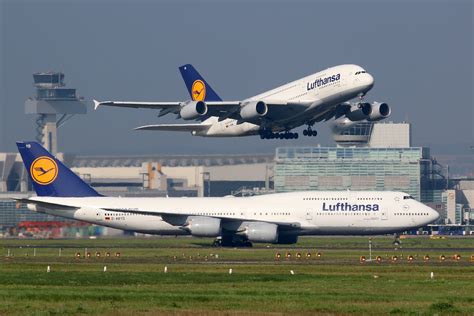
The fall of the Berlin Wall and subsequent German reunification on October 3, 1990, had an immediate impact on Lufthansa. Within 25 days, the airline reintegrated Berlin into its network, restoring a vital link to the historic capital. The mid-1990s were a period of profound strategic restructuring. Lufthansa transformed into the Lufthansa Group, establishing independent operating companies for specialized services: Lufthansa Technik for maintenance, Lufthansa Cargo for freight, and Lufthansa Systems for IT solutions. This structure was later expanded to include LSG Sky Chefs (catering), Condor (leisure travel, later divested), and Lufthansa CityLine (regional operations). A pivotal moment came on May 18, 1997, when Lufthansa, alongside Air Canada, Scandinavian Airlines, Thai Airways International, and United Airlines, formed Star Alliance, the world’s first and largest multilateral airline alliance. This significantly expanded Lufthansa’s global reach through codesharing and reciprocal benefits for passengers. During this period, Lufthansa also began to address its historical legacy, participating in a German initiative in 1999 to resolve wartime misdeeds, acknowledging the use of forced labor by its predecessor, Deutsche Luft Hansa, and reportedly contributing significantly to a compensation fund. The early 2000s, despite the severe industry downturn following the September 11 attacks, saw Lufthansa maintain profitability and strategically avoid mass layoffs, showcasing its resilience. In 2004, it became the launch customer for Connexion by Boeing, offering in-flight internet connectivity. Strategic acquisitions further cemented its position as a leading European airline group: Swiss International Air Lines was acquired in 2005, Brussels Airlines in a staged process between 2009 and 2017, and Austrian Airlines in 2009. The late 2000s also saw a significant commitment to very large aircraft, with the introduction of its first Airbus A380 in 2010 and becoming the launch customer for the Boeing 747-8I in 2012, eventually operating 19 of the latter.
Navigating Turbulence: The 2010s
The 2010s presented a mixed bag of ambitious growth, financial pressures, and labor disputes for Lufthansa. Early in the decade, the airline outlined significant expansion plans for the anticipated opening of Berlin Brandenburg Airport. However, financial headwinds, including a €298 million loss in Q1 2010 and a €13 million loss in 2011 due to economic recession and restructuring costs, led to austerity measures. In 2012, Deutsche Lufthansa AG announced the cutting of 3,500 administrative positions. The SCORE restructuring program was launched to improve operating profit, part of which involved transferring short-haul flights outside its main hubs of Frankfurt, Munich, and Düsseldorf to its rebranded low-cost carrier, Germanwings. Despite these challenges, Lufthansa continued to invest in its future fleet, announcing its largest-ever order in September 2013 for 59 wide-body aircraft valued at over €14 billion, alongside an earlier order for 100 next-generation narrow-body aircraft. The decade was also marked by protracted disputes with the Vereinigung Cockpit union over pilot retirement and pay, leading to multiple disruptive strikes. In a lighter note, during the 2014 FIFA World Cup, part of the fleet was temporarily rebranded as “Fanhansa”. A significant IT outsourcing deal worth $1.25 billion was signed with IBM in November 2014. The tragic Germanwings Flight 9525 crash in March 2015, where a co-pilot deliberately crashed an aircraft, was described by then-CEO Carsten Spohr as “the darkest day for Lufthansa in its 60-year history.” The airline faced criticism for its handling of information regarding the co-pilot’s mental health. Operational adjustments included the closure of its small long-haul base at Düsseldorf Airport by October 2015 for economic reasons. Lufthansa retired its last Boeing 737 (a 737-300) on October 29, 2016, ending nearly 50 years of service with the type. In 2017, Lufthansa acquired 81 aircraft from the insolvent Air Berlin, further consolidating its market position. A notable achievement came on December 4, 2017, when Lufthansa became the first European airline to receive the prestigious Skytrax 5-star certification, partly based on the anticipated introduction of a new Business Class cabin. However, the airline also faced criticism for its role in deportation flights on behalf of the German government.
Pandemic and Path to Recovery: The 2020s
The onset of the COVID-19 pandemic in early 2020 delivered an unprecedented shock to Lufthansa and the entire aviation industry. By March 19, 2020, Lufthansa had cancelled 95 percent of all flights due to global travel bans. The financial impact was staggering, with losses reported at €1 million per hour in April 2020. To navigate this crisis, on June 25, 2020, Deutsche Lufthansa AG shareholders approved a €9 billion government bailout package, which included the German government taking a 20% stake in the airline. The pandemic necessitated drastic fleet adjustments; the entire Airbus A340-600 fleet was initially announced for retirement (though some later returned to service), and the Airbus A380 fleet was grounded. Lufthansa also made headlines for operating over 18,000 empty or near-empty flights, so-called “ghost flights,” to retain valuable airport slots during the pandemic, a practice that drew considerable criticism. In June 2021, Lufthansa announced a shift towards more gender-neutral and inclusive language in its communications, moving away from traditional greetings like “Ladies and Gentlemen.” As travel demand began to recover, the airline reversed its decision on the A380s, announcing in June 2022 plans to return some of these superjumbos to service by 2023, partly due to delays in Boeing 777-9 deliveries. However, in May 2022, Skytrax demoted Lufthansa from its 5-star rating back to a 4-star rating. An IT glitch in early 2023, caused by severed fiber optic cables, led to widespread flight disruptions. A significant strategic move occurred in May 2023, when the Lufthansa Group announced an agreement to acquire a 41 percent stake in ITA Airways, the successor to Alitalia, with options for full ownership in the future, signaling its continued ambition to consolidate its leading position in European aviation.
Corporate Affairs: Structure and Performance
Lufthansa’s corporate structure and financial performance are key indicators of its standing in the competitive airline industry. Originally a state-owned enterprise, Lufthansa was privatized in 1994. Its shares (Deutsche Lufthansa AG) have been publicly traded on all German stock exchanges since 1966 and are a constituent of the DAX index, listed in the Frankfurt Stock Exchange’s Prime Standard. Shareholder composition is diverse, with German investors historically holding the largest portion. The COVID-19 pandemic necessitated a significant German government bailout in 2020, amounting to €9 billion, which temporarily increased the government’s stake to 20% to ensure the airline’s survival. This stake was subsequently divested as the airline recovered.
Business Trends and Financial Health
Lufthansa Group’s financial and operational metrics illustrate its journey through various economic cycles and industry challenges. For instance, in 2019, prior to the pandemic, the Group reported total revenue of €36.4 billion and a net profit of €1.2 billion, carrying 145 million passengers. The pandemic’s impact was starkly evident in 2020, with revenue plummeting to €13.5 billion and a net loss of €6.7 billion, with passenger numbers falling to 36.4 million. Recovery has been progressive; by 2023, revenue had rebounded to €35.4 billion, with a net income of €1.67 billion and 122 million passengers carried. The passenger load factor, a key efficiency metric, also recovered to 82.9% in 2023, close to pre-pandemic levels. The number of employees in the Lufthansa Group stood at 96,677 at the end of 2023. These figures underscore the airline’s resilience and its path toward sustained profitability in the post-pandemic era. The Lufthansa Airlines segment itself, while also impacted, has shown similar recovery trends, focusing on optimizing its route network and fleet utilization.
Headquarters and Operational Centers
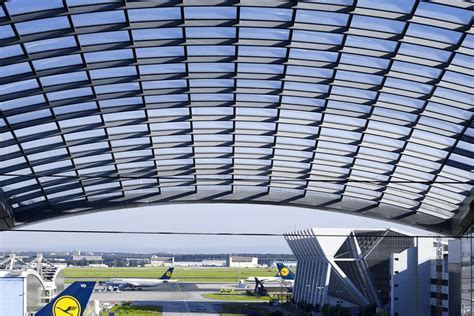
Lufthansa’s corporate headquarters are located in Cologne, North Rhine-Westphalia, Germany. While the official seat is in Cologne, the main operations base, known as the Lufthansa Aviation Center (LAC), is situated at Frankfurt Airport, which serves as the airline’s primary hub. The LAC is a state-of-the-art facility housing many central administrative and operational functions, including Corporate Communications and Investor Relations. Designed by architect Christoph Ingenhoven, the LAC is noted for its innovative, energy-efficient design. Lufthansa also maintains a significant secondary hub at Munich Airport, which includes its Flight Operations Centre, further distributing its operational capacity and reach within Germany and Europe.
Employment Relations
Lufthansa’s relationship with its workforce, particularly its pilot unions such as Vereinigung Cockpit (VC), has seen periods of tension and negotiation. Disputes over pay, working conditions, and retirement benefits have, at times, led to strikes, causing significant disruptions to flight schedules and financial losses for the company. A major dispute with the pilot’s union that spanned nearly five years and involved 14 strikes was settled in December 2017. The COVID-19 pandemic also led to significant job cuts across the Lufthansa Group as the airline restructured to cope with the unprecedented downturn in travel. In 2022, the trade union Verdi called for warning strikes among ground staff, highlighting ongoing negotiations regarding wage adjustments in the face of inflation.
The Lufthansa Group: A Constellation of Airlines
The Lufthansa Group is a complex and expansive aviation conglomerate, comprising several distinct airline brands and service companies, each catering to specific market segments or geographical areas. This multi-brand strategy allows the group to optimize its offerings and compete effectively across different sectors of the air travel market.
Network Airlines: These form the core of the group’s premium, full-service offerings, connecting major hubs with a global network.
- Lufthansa German Airlines: The flagship carrier, based in Frankfurt and Munich.
- Austrian Airlines: The flag carrier of Austria, based at Vienna International Airport.
- Swiss International Air Lines: The flag carrier of Switzerland, based at Zurich Airport.
- Brussels Airlines: The flag carrier of Belgium, based at Brussels Airport.
- ITA Airways: The flag carrier of Italy, based at Rome Fiumicino Airport (Lufthansa Group holds a 41% stake with options for full ownership).
- airBaltic: The flag carrier of Latvia, based at Riga International Airport (Lufthansa Group holds a 10% stake).
Feeder Airlines: These regional carriers provide essential connectivity to the mainline hubs, feeding passengers into the broader network.
- Lufthansa CityLine: A German regional airline operating feeder services primarily for Lufthansa, headquartered in Munich.
- Lufthansa City Airlines: A newer regional airline based in Munich, which commenced operations in June 2024, also providing feeder services.
- Air Dolomiti: An Italian regional airline, based in Munich and Frankfurt, operating feeder flights for Lufthansa.
Low-Cost Airlines: These cater to budget-conscious travelers, typically on point-to-point routes.
- Eurowings: A German low-cost airline headquartered in Düsseldorf.
- Eurowings Europe: A low-cost subsidiary of Eurowings Group, registered in Malta.
Leisure Airlines: These focus on holiday destinations, often operating charter and scheduled flights to popular tourist spots.
- Discover Airlines: A German long- and medium-haul leisure airline, previously known as Eurowings Discover.
- Edelweiss Air: A Swiss leisure airline, a subsidiary of Swiss International Air Lines.
Cargo Airlines: Dedicated to air freight operations.
- Lufthansa Cargo: A leading global cargo airline headquartered in Frankfurt.
Joint Ventures: Collaborative airline operations.
- AeroLogic: A German cargo airline, a 50/50 joint venture between Lufthansa Cargo and DHL.
- SunExpress: A Turkish leisure airline, a 50/50 joint venture between Lufthansa Group and Turkish Airlines.
The group has also divested or integrated several former subsidiaries over the years, including British Midland International (BMI), Condor Flugdienst, and Germanwings (brand retired).
Beyond the Cockpit: Other Lufthansa Subsidiaries
Beyond its extensive airline operations, the Lufthansa Group encompasses a range of aviation-affiliated subsidiaries that provide critical support services and generate additional revenue streams. These include:
- Global Load Control: A specialist in remote weight and balance services for airlines worldwide.
- Lufthansa Consulting: An international aviation consultancy firm serving airlines, airports, and related industries.
- Lufthansa Aviation Training: A provider of flight crew training services, not only for Lufthansa Group airlines but also for external customers.
- Lufthansa Industry Solutions: An IT service company offering solutions for various industries beyond aviation.
- Lufthansa Systems: A major European aviation IT provider, developing and implementing solutions for the airline industry.
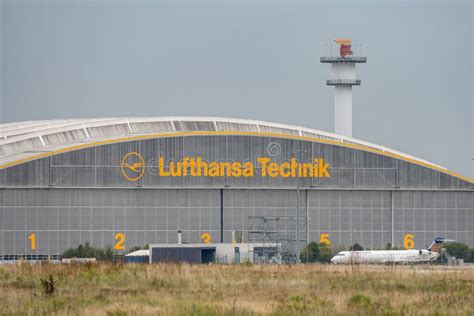
- Lufthansa Technik: One of the world’s leading providers of aircraft maintenance, repair, and overhaul (MRO) services, serving a global customer base.
Branding: The Iconic Crane and Evolving Identity
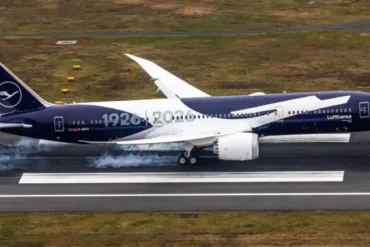
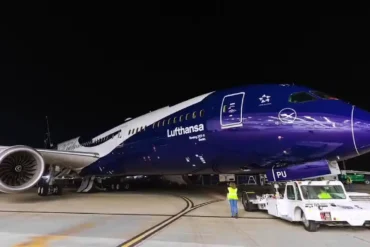
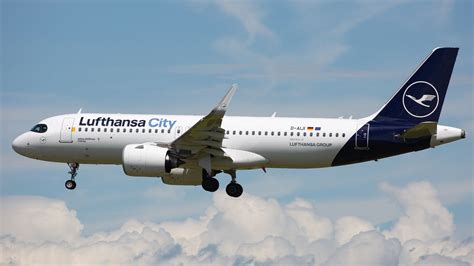
The Lufthansa logo, an encircled stylized crane in flight, is one of the most recognizable symbols in the aviation world. Its genesis dates back to 1918, when it was designed by Otto Firle for Deutsche Luft-Reederei (DLR), Germany’s first airline. Deutsche Luft Hansa adopted this emblem in 1926. When the modern Lufthansa was formed, it consciously chose to continue this legacy, adopting the crane logo in 1954. A refined version, designed by Robert Lisovskyi, was introduced in 1963. The name “Lufthansa” itself is attributed to F.A. Fischer von Puturzyn, who published a book titled “Luft-Hansa” in 1925. The airline’s traditional colors have been blue and yellow. In the 1960s, Helvetica became the standard typeface for the company name in its livery. A comprehensive corporate design was developed by renowned German designer Otl Aicher in 1967. This design featured the crane logo consistently displayed within a yellow circle on a blue tailfin, and Helvetica remained the primary typeface. This concept largely endured through the 1988 livery update, which saw the fuselage painted grey and the window band removed. In 2018, Lufthansa undertook a significant livery refresh. While the iconic crane was retained, the yellow background of the circle on the tail was changed to dark blue, with the tailfin and rear fuselage also painted in this deeper blue. The main fuselage became all-white, and the “Lufthansa” brand name, still in its distinctive typeface, was painted in dark blue above the windows. The company’s current slogan is “Say yes to the world.”
Alliances, Partnerships, and Technological Backbone
Lufthansa’s global reach and operational efficiency are significantly enhanced by its strategic alliances, partnerships, and investment in technology.
Commercial Collaborations and Strategic Stakes
Lufthansa has a long history of strategic investments and commercial agreements. It once held a 19% stake in JetBlue Airways, a pioneering move for a European carrier in the US market post-Open Skies agreement, though this stake was sold in 2015. The acquisitions of Austrian Airlines (2009), Brussels Airlines (completed 2017), and Swiss International Air Lines (2005) were pivotal in creating the modern Lufthansa Group. The airline also acquired the majority of BMI (British Midland International) in 2009, before selling it to International Airlines Group (IAG) in 2012. As a founding member of Star Alliance, Lufthansa benefits from extensive codesharing, network coordination, and reciprocal frequent flyer benefits with numerous global partners. Beyond Star Alliance, Lufthansa engages in joint ventures, such as with All Nippon Airways (ANA) and Singapore Airlines on specific routes, requiring regulatory approval to ensure fair competition. It also has numerous codeshare agreements with airlines outside the alliance, further broadening its network.
Technological Infrastructure
Lufthansa has historically relied on sophisticated IT systems for its complex operations. Its inventory and departure control systems were once managed by LH Systems, based on Unisys. In the early 1990s, reservations systems were outsourced to Amadeus. Subsequently, Lufthansa migrated its entire Passenger Service System (PSS) to the Amadeus Altéa platform. Lufthansa Systems, the IT arm of the group, utilizes solutions like Actian’s Ingres database and OpenROAD platform for its Lido/FlightPlanning solution, which is widely used by airlines globally. Lufthansa Cargo employs the Zeenea Data Discovery Platform for its data catalog needs, highlighting the group’s ongoing investment in data management and analytics capabilities to optimize operations and customer service.
Destinations: Connecting the World
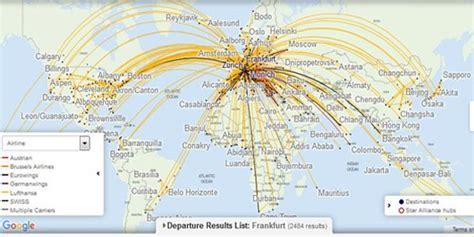
Lufthansa, along with its group airlines, serves an extensive network of destinations spanning across Europe, the Americas, Asia, Africa, and the Middle East. As of 2023, Lufthansa German Airlines alone flew to 229 destinations. The primary hubs at Frankfurt (FRA) and Munich (MUC) are critical intercontinental gateways, offering a vast array of connecting flights. Frankfurt, in particular, is one of Europe’s busiest airports and a cornerstone of Lufthansa’s global operations. Munich has grown significantly as Lufthansa’s second major hub, increasingly handling long-haul traffic and providing alternative connection options. The airline continuously evaluates and adjusts its route network based on market demand, economic conditions, and strategic priorities, including the introduction of new destinations and frequency adjustments on existing routes.
Codeshare and Interline Agreements
To supplement its own network and that of its Star Alliance partners, Lufthansa maintains codeshare agreements with a wide range of airlines. These agreements allow Lufthansa to market flights operated by partner carriers under its own “LH” flight number, offering passengers more destinations and seamless travel experiences. Key codeshare partners include airlines like Air Astana, airBaltic, Air China, Air India, Cathay Pacific, Etihad Airways, LATAM Airlines, LOT Polish Airlines, and United Airlines, among many others. Additionally, interline agreements with an even broader set of carriers facilitate baggage transfer and ticketing on multi-airline itineraries, further enhancing global connectivity for Lufthansa passengers.
The Fleet: Modern, Diverse, and Evolving
Lufthansa operates a diverse and modern fleet of aircraft, carefully selected to match the requirements of its varied route network, from short-haul domestic flights to ultra-long-haul intercontinental journeys. The airline has a long-standing tradition of operating both Boeing and Airbus aircraft, often being a launch customer for new types or significant variants.
Aircraft Naming Conventions
A charming tradition at Lufthansa is the naming of its aircraft, primarily after German cities, towns, or federal states. This practice began in September 1960 when a Boeing 707 was christened “Berlin” by then-mayor Willy Brandt. Generally, the size or importance of the aircraft corresponds to the size or importance of the namesake city. There have been notable exceptions, such as an Airbus A340-300 named “Gander/Halifax” to honor the Canadian communities that hosted stranded flights after the September 11 attacks, and an Airbus A321-100 named “Finkenwerder” after the Airbus manufacturing site in Hamburg. The first Airbus A380s were named “Frankfurt am Main” and “München” after Lufthansa’s two main hubs, with subsequent A380s named after other Group or Star Alliance hub cities and major German cities. Some aircraft may not carry names, or names may be reassigned to newer aircraft.
The Airbus A380 Saga
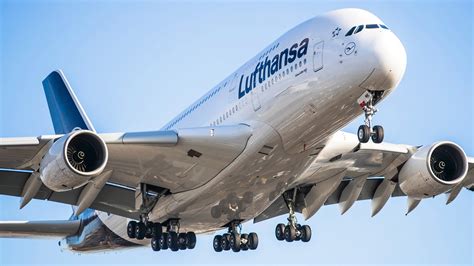
Lufthansa was a significant operator of the Airbus A380, initially ordering fifteen and eventually taking delivery of fourteen. These superjumbos were primarily deployed on high-demand routes from Frankfurt and later Munich. However, the COVID-19 pandemic led to the grounding of the entire A380 fleet in March 2020, and in March 2019, prior to the pandemic, the airline had already announced plans to remove six A380s from the fleet. For a time, the future of the remaining A380s was uncertain, with initial announcements suggesting their permanent retirement. However, in June 2022, driven by stronger-than-anticipated travel demand and delays in the delivery of new Boeing 777-9 aircraft, Lufthansa announced the reactivation of its remaining eight A380s. The first reactivated A380, D-AIMK, returned to Frankfurt in December 2022 after three years in storage and underwent extensive maintenance. These aircraft began returning to revenue service in summer 2023, primarily operating from Munich to destinations like Boston, New York, Los Angeles, and Bangkok, underscoring the A380’s continued value on high-capacity routes.
Passenger Experience: Services and Cabins
Lufthansa places a strong emphasis on passenger experience, offering a range of services and cabin products designed to cater to different traveler needs and preferences, from the luxurious First Class to the efficient Economy Class.
Miles & More: The Loyalty Programme
Miles & More is Lufthansa’s comprehensive frequent-flyer program, shared with several other European airlines, including its subsidiary airlines and partners like LOT Polish Airlines and Croatia Airlines. Members can earn miles on flights with Lufthansa, Star Alliance partners, and through various non-flying partners, including credit cards and retail purchases. Status tiers – Member, Frequent Traveller (Silver), Senator (Gold), and HON Circle (Black) – are achieved based on miles flown or flight segments within a calendar year. Higher status levels offer benefits such as lounge access, priority boarding, and bonus miles.
Cabin Classes: A Spectrum of Comfort
- First Class: Offered on select long-haul aircraft, including the Boeing 747-8s and Airbus A340-600s, and the upper deck of Airbus A380s. Seats convert into fully flat beds, complemented by premium dining, dedicated check-in, and exclusive lounges, including a First Class Terminal in Frankfurt. Lufthansa is introducing a new suite-style First Class product, “Suite Plus,” on new Airbus A350 deliveries.
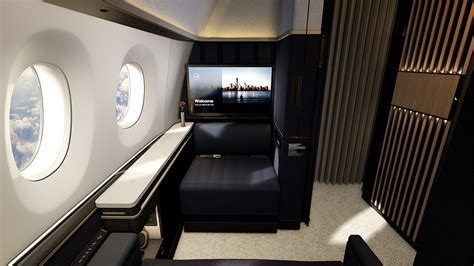
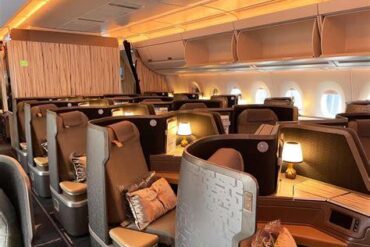
- Business Class: Available on all long-haul aircraft, featuring lie-flat seats, enhanced dining, and access to Business Class lounges. Lufthansa is progressively rolling out a new Business Class concept, “Allegris,” offering various seating options, including suites with closing doors, starting with new Boeing 787-9 and Airbus A350 deliveries, and retrofitting existing long-haul fleet.
- Premium Economy Class: Introduced in 2014, this cabin offers more space, comfort, and enhanced services compared to Economy Class on long-haul flights. Seats provide greater pitch, width, and recline, along with larger entertainment screens and an increased baggage allowance.
- Economy Class: Lufthansa’s standard offering on all flights, providing ergonomic seating, in-flight entertainment on long-haul routes, and meals or snacks appropriate to flight length. The “Allegris” concept also includes new Economy Class seating options, such as seats with extra legroom or the ability to book an empty adjacent seat.
Ground Services and Connectivity
Lufthansa provides various ground services, including dedicated check-in areas for premium passengers and extensive lounge facilities at its hubs and major airports worldwide. The airline has also reinstated a bus service between Nuremberg Airport and Munich Airport, offering an alternative to short-haul flights and reflecting a commitment to intermodal transport solutions where practical.
Safety and Security: A Look at Incidents
Lufthansa maintains a strong safety record, adhering to rigorous international and national safety standards. However, like any major airline with a long history of operations, it has experienced accidents and incidents.
Notable Fatal Accidents:
- Lufthansa Flight 502 (January 11, 1959): A Lockheed Super Constellation crashed near Rio de Janeiro, resulting in 36 fatalities.
- Lufthansa Flight 005 (January 28, 1966): A Convair CV-440 crashed near Bremen Airport, killing all 46 people on board.
- Lufthansa Flight 540 (November 20, 1974): A Boeing 747-100 crashed after takeoff in Nairobi, the first fatal accident involving a 747, resulting in 59 fatalities.
- Lufthansa Flight 527 (July 26, 1979): A cargo Boeing 707 crashed near Rio de Janeiro, killing the three crew members.
- Lufthansa Flight 2904 (September 14, 1993): An Airbus A320-200 overran the runway in Warsaw, resulting in two fatalities.
Hijackings and Criminal Events:
Lufthansa aircraft were subject to several hijackings, particularly in the 1970s, a period of heightened global political tension and terrorism. The most infamous was the hijacking of the Landshut (Flight 181), a Boeing 737, in October 1977 by Palestinian terrorists. The ordeal ended in Mogadishu when German GSG 9 special forces stormed the aircraft, freeing the hostages. Other incidents involved ransom demands and political motivations. In 1993, Lufthansa Flight 592, an Airbus A310, was hijacked by an Ethiopian asylum seeker and diverted to New York; the hijacker surrendered peacefully. The Lufthansa heist at John F. Kennedy International Airport in December 1978, though not involving an aircraft in flight, resulted in a significant robbery of cash and jewels from the airline’s cargo facility.
Addressing Customer Issues and Controversies
In May 2022, Lufthansa faced significant criticism following an incident where over a hundred visibly Jewish passengers were barred from a connecting flight from Frankfurt to Budapest. This decision was reportedly made after some passengers on the preceding flight from New York allegedly did not comply with mask mandates. The airline’s action to collectively punish a group identifiable by their appearance drew widespread condemnation, including from the American Jewish Committee and the US antisemitism envoy, who termed it “textbook antisemitism.” Lufthansa initially defended its actions by stating staff could not identify individual rule-breakers but later apologized for the incident. Subsequently, in August 2022, Lufthansa adopted the IHRA Working Definition of Antisemitism and appointed a senior manager to oversee the prevention of antisemitism and discrimination. In October 2024, Lufthansa agreed to pay a $4 million penalty to the U.S. Department of Transportation related to this episode, stating it made the payment to avoid litigation while denying discrimination.
Lufthansa’s journey from its post-war re-establishment to its current status as a global aviation leader is a compelling narrative of resilience, strategic growth, and adaptation. Navigating economic downturns, technological shifts, and intense competition, the airline, along with the broader Lufthansa Group, continues to shape the future of air travel, connecting Germany to the world and upholding a legacy of engineering precision and service in the skies.