Origins and Early Expansion
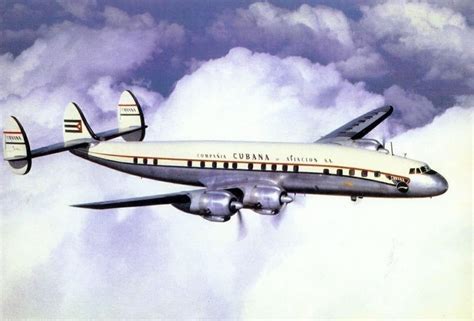
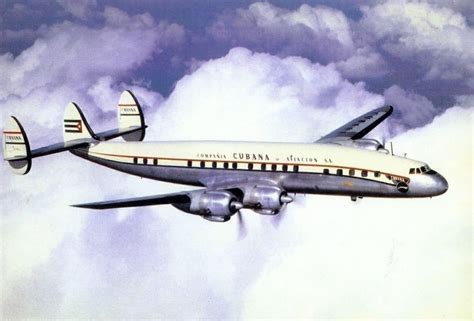
Cubana de Aviación, Cuba’s national flag carrier, was founded on 8 October 1929 and began operations on 30 October 1930. Originally established as Compañía Nacional Cubana de Aviación Curtiss, the airline initially operated as both a flying school and a charter service, using a diverse fleet that included Curtiss Robin, amphibious Sikorsky S-38, Ford Trimotor, and Lockheed Electra aircraft. In 1932, the airline came under the control of Pan American World Airways, which resulted in the removal of Curtiss from its name, reflecting the shift from its manufacturing roots to a broader commercial aviation focus. This transition marked a critical point in Cubana’s early growth, aligning it with one of the world’s leading aviation pioneers.
As a founding member of both the International Air Transport Association (IATA) in 1945 and the International Civil Aviation Organization (ICAO), Cubana played a significant role in the development of global commercial aviation. Its inaugural international service to Miami in 1945, using Douglas DC-3 aircraft, marked it as the first Latin American airline to establish a scheduled passenger route to the United States. In 1948, Cubana expanded into transatlantic operations, launching flights from Havana to Madrid with Douglas DC-4 aircraft, later extending this service to Rome by 1950. This made Cubana one of the earliest Latin American airlines to connect the Americas with Europe, positioning it as a pioneer in long-haul air travel.
Nationalization and the Revolutionary Era
Following the Cuban Revolution, the airline underwent a dramatic transformation. In May 1959, Cuba’s revolutionary government expropriated Cubana, merging it with smaller domestic carriers like Aerovías Q, Cuba Aeropostal, and Expreso Aéreo Interamericano to form Empresa Consolidada Cubana de Aviación. This restructuring, completed on 27 June 1961, placed the airline firmly under state control, aligning it with the socialist vision of the new Cuban state. This move significantly altered the airline’s operational strategy, cutting off its access to U.S. markets due to the American embargo imposed in 1961-1962. As a result, Cubana turned to the Soviet Union for support, becoming the first airline in the Americas to operate Soviet-built aircraft. This fleet included Ilyushin Il-14 and Il-18 airliners, as well as Antonov An-12 and An-24 models, marking a decisive pivot towards Eastern Bloc technology.
Cubana’s partnership with Aeroflot, the Soviet Union’s flag carrier, enabled it to maintain long-haul international connections. This collaboration included training Soviet crews on the operation of the Bristol Britannia 318 and establishing pioneering routes like the 18-hour nonstop Moscow-Havana service using the Tupolev Tu-114, then the longest scheduled nonstop flight in the world. In the 1970s, Cubana’s fleet further expanded to include the Tupolev Tu-154, Ilyushin Il-76, Yakovlev Yak-40, and Yak-42, supporting its growing network across Latin America, the Caribbean, and Africa, including routes to Angola, Guinea-Bissau, and Cape Verde.
Challenges and Modernization in the Post-Soviet Era
With the dissolution of the Soviet Union in the early 1990s, Cubana faced a severe logistical challenge as spare parts for its Soviet fleet became increasingly scarce. U.S. embargo restrictions further compounded these difficulties, making it difficult to procure Western aircraft or components. Despite these hurdles, Cubana continued to operate its aging Il-62Ms into the 1990s while temporarily leasing Western-built Airbus and Boeing aircraft to maintain critical international routes as Cuba’s tourism sector expanded.
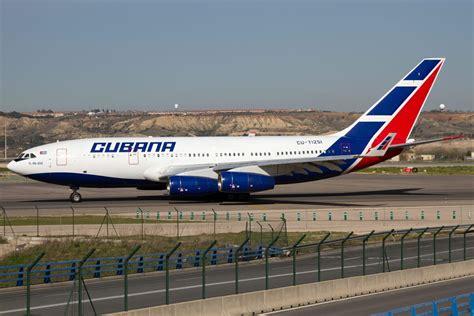
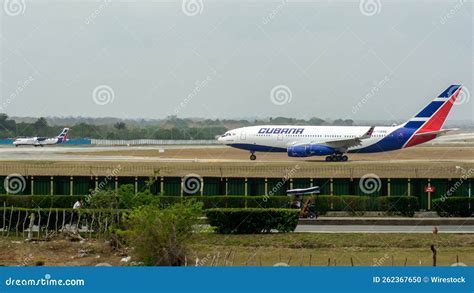
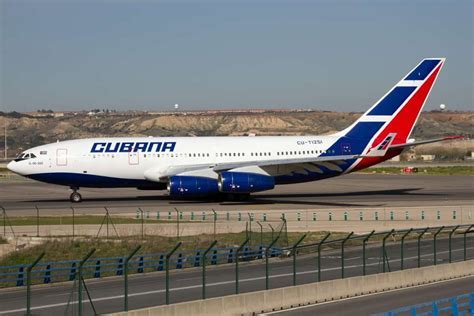
In the 2000s, the airline initiated a significant fleet modernization program, committing to a $100 million annual investment in new Russian aircraft. This included orders for Ilyushin Il-96-300s and Tupolev Tu-204s, with the first of these arriving in 2005, making Cubana the first international customer for the Il-96 outside Russia. The modernization also included the introduction of Antonov An-158 jets, although these faced technical challenges and have been stored since 2018.
Current Operations and Fleet
As of 2025, Cubana’s fleet consists of eight aircraft, including four Il-96-300s (three of which are stored), two Tupolev Tu-204-100s, two Tu-204-100CE freighters (also stored), and a single ATR 72-200 for regional operations. The airline currently serves two domestic routes within Cuba and maintains international connections to Venezuela and Spain, reflecting a significant scaling back from its peak in the mid-20th century.
Cubana maintains codeshare agreements with international carriers like Aeroflot, Air Caraïbes, Avianca, and Neos, alongside interline arrangements with Hahn Air, which helps extend its global reach despite ongoing operational challenges.
Legacy and Future Prospects
As one of Latin America’s oldest and most historically significant airlines, Cubana de Aviación remains a symbol of Cuba’s resilience and adaptability. Despite its reduced footprint in global aviation, it continues to operate in a challenging geopolitical environment, reflecting the enduring legacy of a pioneering flag carrier that once connected Cuba to the world.