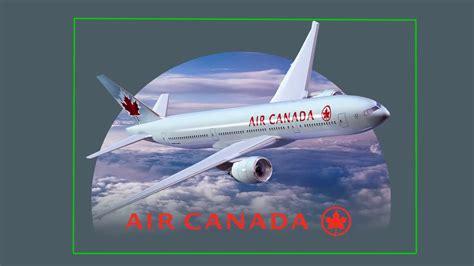
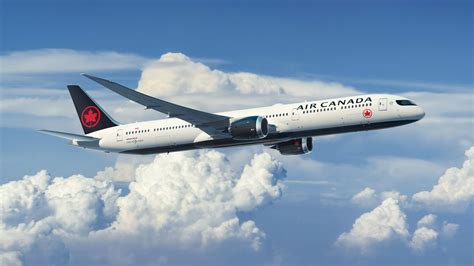
Founded in 1937 as Trans-Canada Air Lines, Air Canada has grown into a globally recognized brand and the flag carrier of Canada, embodying innovation, resilience, and world-class service. Headquartered in Saint-Laurent, Montreal, the airline today operates a vast network of 353 aircraft across 192 destinations, including domestic, transborder, and international routes. With key hubs in Montréal–Trudeau, Toronto–Pearson, and Vancouver, Air Canada’s influence in global aviation is both expansive and strategically rooted.
Air Canada’s complex evolution spans over eight decades, marked by groundbreaking innovations, strategic mergers, and resilience through economic turbulence. From introducing the ReserVec system to co-founding Star Alliance, its story is one of adaptation and ambition.
The Origins: Trans-Canada Air Lines (1937–1965)
Established through federal legislation and backed by the Canadian National Railway (CNR), Trans-Canada Air Lines commenced its first passenger flights on September 1, 1937. Within just two years, it launched transcontinental service from Montreal to Vancouver. In 1953, TCA made aviation history with the introduction of ReserVec, one of the world’s first computerized reservation systems.
The airline’s early strategy emphasized connectivity and safety, positioning Canada as a reliable air corridor during a time when global air travel was in its infancy. TCA rapidly expanded its fleet and route network, aligning itself with post-war economic growth and rising travel demand.
Rebranding and Expansion (1965–1990)
On January 1, 1965, TCA officially became Air Canada, reflecting its broader national identity. The airline, a Crown corporation at the time, undertook significant fleet upgrades, introducing Boeing 727s, 747s, and Lockheed Tristars into service. In 1978, Air Canada made headlines by hiring Judy Cameron, its first female pilot—an industry milestone.
Regulatory changes in the 1980s dramatically reshaped the airline’s future. The National Transportation Act of 1987 deregulated the industry, and Air Canada began its transition toward privatization. By 1988–89, it was a fully privatized entity, listed on the Toronto Stock Exchange under the symbol TSX:AC. In a pioneering move, Air Canada implemented a fleet-wide non-smoking policy in 1987, years before such policies became the norm worldwide.
Strategic Leadership and Recovery (1990s)
The early 1990s brought financial turbulence. The Gulf War, rising fuel costs, and sluggish demand led to significant losses. In response, the board appointed Hollis L. Harris as CEO in 1992. Under his guidance, Air Canada underwent operational restructuring and returned to profitability by 1994.
The U.S.–Canada Open Skies Agreement in 1995 allowed Air Canada to aggressively expand its trans-border routes, adding over 30 new U.S. destinations. More importantly, the airline became a founding member of Star Alliance in 1997, alongside Lufthansa, United Airlines, and others, enhancing its global connectivity.
Labor unrest was also a factor, including a major pilots’ strike in 1998, which temporarily halted operations. However, the groundwork for modernization and global integration had been firmly laid.
The Merger with Canadian Airlines and Financial Crisis (2000s)
In January 2000, Air Canada acquired Canadian Airlines International, then its largest domestic competitor. The merger created one of the world’s top 12 airlines by size, consolidating Canada’s aviation market under one banner. However, the integration process was plagued by delays, operational issues, and mounting losses.
In April 2003, Air Canada filed for creditor protection under the Companies’ Creditors Arrangement Act (CCAA). A complex restructuring followed, resulting in the creation of ACE Aviation Holdings, its new parent company. By September 30, 2004, Air Canada emerged from bankruptcy. That same year, international pop icon Céline Dion was introduced as a brand ambassador to revive its public image.
Fleet Modernization and Premium Experience
As part of its reinvention, Air Canada retired its last Boeing 747 in 2004 and unveiled the ‘Frosted Leaf’ livery, signaling a new era. The airline ordered Boeing 777s and 787 Dreamliners, with deliveries commencing in 2007 and 2014, respectively. These fuel-efficient wide-body aircraft transformed Air Canada’s long-haul service standards.
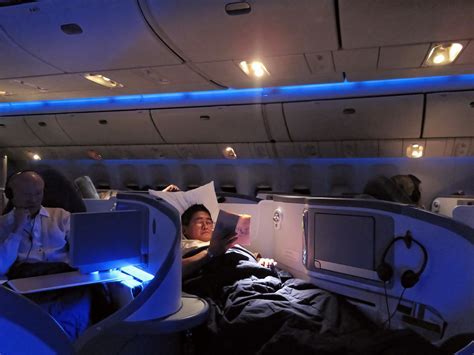
In 2006, Air Canada launched Project XM, a CA$300 million cabin overhaul initiative. This program introduced:
- Fully-flat beds in Executive First (now Signature Class)
- Personal AVOD entertainment systems
- USB and AC power outlets at every seat
- Mood lighting across all cabins
These enhancements positioned Air Canada competitively against leading transatlantic and transpacific carriers.
Economic Downturn and Strategic Pivot (2008–2012)
Like many carriers, Air Canada was hit hard by the 2008 global financial crisis and volatile fuel prices. Over 2,000 job cuts were announced, and by 2009, Calin Rovinescu replaced Montie Brewer as CEO. Rovinescu led negotiations for pension relief and helped secure CA$1 billion in financial aid, ensuring the company’s short-term survival.
Under his leadership, Air Canada began implementing longer-term strategies focused on profitability, route optimization, and cost efficiency. By 2012, ACE Aviation had divested its remaining shares, leaving Air Canada fully independent.
Growth, Innovation, and New Market Ventures (2013–2019)
With financial footing restored, Air Canada launched a series of bold ventures and enhancements. These included:
- New retro livery (2017) by Canadian designer Tyler Brûlé
- Introduction of Boeing 737 MAX and Airbus A220 aircraft
- Re-launch of Premium Economy (2017) and Signature Class (2018) for high-yield customers
- Joint venture with Air China (2018) to strengthen transpacific ties
Air Canada also attempted to acquire Transat A.T., a major Canadian tour operator, between 2019–2021. Though the acquisition was eventually abandoned, the bid reflected Air Canada’s ambition to dominate both scheduled and leisure segments.
COVID-19 and Government Support (2020–2022)
The onset of the COVID-19 pandemic devastated global aviation. By March 31, 2020, Air Canada had suspended most international and domestic operations. The first quarter alone resulted in a CA$1.05 billion loss. Recovery was gradual and painful, with operations resuming cautiously by May 2020.
Recognizing the airline’s critical role, the Canadian government acquired a 6.4% equity stake in October 2021, ensuring liquidity. Full lifting of travel restrictions occurred by September 2022, ushering in a new phase of recovery.
Recent Milestones and Forward Strategy (2023–Present)
By 2023, Air Canada had returned to profitability, posting CA$2.271 billion in net income and revenue of CA$21.8 billion. Key focus areas today include:
- Fleet efficiency: Continued integration of fuel-efficient aircraft like the 787 and A220
- Customer experience: Expansion of Wi-Fi, with fast, free service for Aeroplan members starting 2025/26
- Global reach: Maintaining 222 destinations in 47 countries, including fifth-freedom routes like São Paulo–Buenos Aires and Heathrow–Delhi
- Sustainability and innovation: Commitment to reducing emissions and leveraging data for smart operations
Corporate Structure and Loyalty
Air Canada operates with a broad portfolio of subsidiaries and service brands, including:
- Air Canada Rouge: Low-cost leisure travel
- Air Canada Jetz: Charter services for executives and sports teams
- Air Canada Cargo: Freight services using dedicated 767 freighters
- Air Canada Vacations: Package holiday arm
- Aeroplan: Unified loyalty program merged with Altitude in 2020
Its cabin crew uniforms, designed by Christopher Bates (2017), reflect a premium, cosmopolitan aesthetic. These details—though subtle—contribute meaningfully to brand identity and customer perception.
Conclusion: A Symbol of Canadian Excellence
Air Canada’s transformation from a federally operated utility to a competitive global airline stands as a case study in strategic resilience. Its ability to weather crises, integrate new technologies, and prioritize the passenger experience affirms its status as a leader in international aviation.
As we look ahead, Air Canada is positioned to embrace sustainable aviation, digital transformation, and renewed global demand. Its journey from 1937 to today reflects not just the growth of a carrier, but the evolution of an entire nation’s place in the sky.