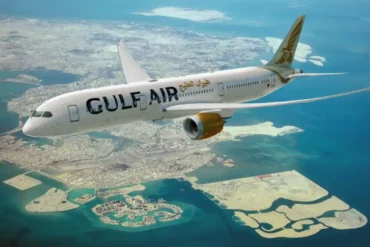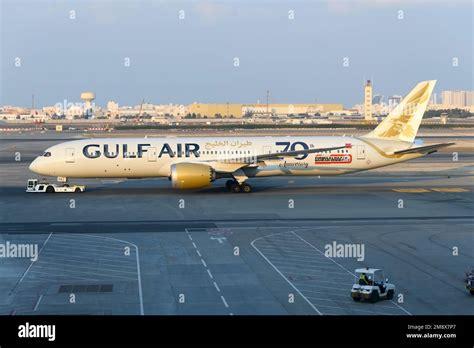
Bahrain’s national airline, Gulf Air, has signed a landmark agreement to acquire twelve new Boeing 787 Dreamliners, marking a transformative moment in the airline’s fleet modernization strategy and its global ambitions. This decisive move signals a strong commitment to scaling up long-haul operations, increasing international market penetration, and advancing sustainability through next-generation aircraft technology.
The announcement, made on July 18, 2025, has drawn significant attention not only for its size and scope but also for its strategic alignment with Gulf Air’s long-term vision. The deal places the airline in a stronger position to compete in an increasingly dynamic and competitive international aviation market.
A New Era of Fleet Modernization and Expansion
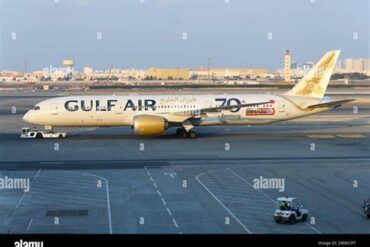
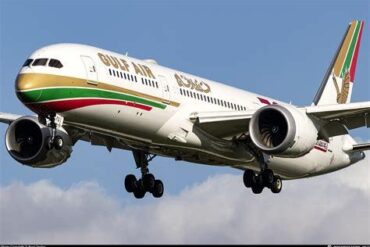
At the heart of this major procurement is Gulf Air’s commitment to modernization. The Boeing 787 Dreamliner, celebrated globally for its fuel efficiency, advanced aerodynamics, and passenger-centric design, represents a key enabler for Gulf Air to boost operational efficiency while delivering a superior onboard experience. These twelve aircraft will complement the airline’s existing fleet of ten 787s, reinforcing their role as the flagship workhorses for Gulf Air’s long-haul services.
Incorporating these state-of-the-art aircraft is more than a fleet update — it’s a strategic shift toward elevated service quality, lower operational costs, and sustainability. Equipped with the latest in aviation technology, the Dreamliners will serve as powerful tools for enhancing connectivity from Bahrain to new and existing destinations across Asia, Europe, and North America.
Strengthening Bahrain’s Global Aviation Footprint
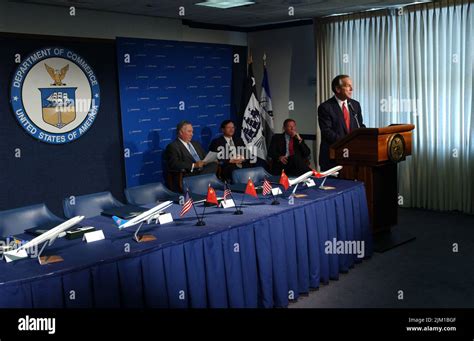
Gulf Air’s deal is not only a commercial triumph for the airline but also a national milestone for Bahrain’s position in global aviation. Speaking at the signing ceremony, Khalid Taqi, Chairman of Gulf Air Group, emphasized the strategic intent behind the purchase:
“This agreement marks a transformative step in Gulf Air’s strategic growth journey as we expand our global footprint and modernize our fleet with one of the industry’s most advanced and efficient aircraft.”
Taqi added that the 787s would play a central role in achieving the airline’s sustainability goals, citing the aircraft’s lower emissions and reduced noise profile. Gulf Air aims to become a driving force for economic development and aviation innovation in the Gulf region, with Bahrain as a pivotal hub.
The participation of high-level figures — including Bahrain’s Minister of Finance and National Economy Shaikh Salman bin Khalifa Al Khalifa, U.S. Commerce Secretary Howard Lutnick, and Boeing Commercial Airplanes CEO Stephanie Pope — reflects the global significance of the deal. It also highlights the enduring strategic relationship between Bahrain and the United States, a partnership that continues to be reinforced through major aerospace investments.
Supporting the U.S. Economy and Transatlantic Trade
This transaction also carries substantial economic weight for the United States. According to Boeing, the deal is expected to support approximately 30,000 jobs across its American industrial base, encompassing manufacturing, supply chain operations, and aerospace engineering roles.
This aligns with Boeing’s broader mission as one of the United States’ largest exporters, and highlights the mutually beneficial nature of aerospace trade. It also underscores the international dimension of airline procurement, where national carriers like Gulf Air contribute to economic growth on both sides of the Atlantic.
Unlocking New Routes and Passenger Experiences
The Boeing 787 Dreamliner has earned a global reputation for redefining long-haul travel. Its unique blend of extended range capabilities, improved fuel economy (up to 20% more efficient than previous-generation aircraft), and advanced comfort features makes it ideal for Gulf Air’s strategic expansion.
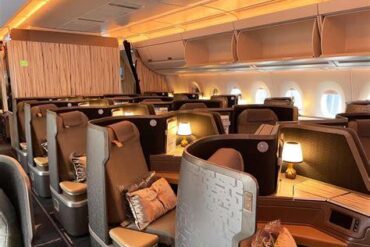
Each Dreamliner boasts oversized, dimmable windows, superior air quality through advanced filtration systems, and a lower cabin altitude that reduces passenger fatigue. Enhanced humidity levels and noise-cancelling engine designs ensure a smoother and more restful journey. These features are central to Gulf Air’s plan to elevate its onboard product and attract discerning international travelers.
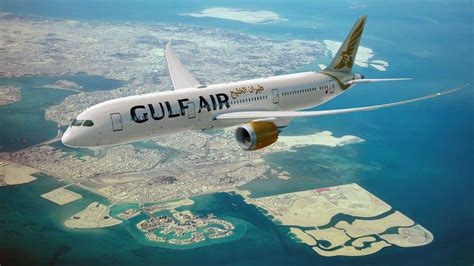
Furthermore, the 787’s performance allows for nonstop routes that were previously unfeasible, thanks to its long-range reach and lower operating costs. This flexibility will enable Gulf Air to pursue lucrative city pairs in Asia and Europe while enhancing its competitiveness in key North American gateways.
A Longstanding Partnership with Boeing
Gulf Air’s history with Boeing dates back over six decades. The airline introduced its first Boeing aircraft — the legendary DC-3 — in 1961, marking the beginning of a partnership that has shaped the airline’s fleet evolution. Over the years, Gulf Air has operated a total of 37 Boeing aircraft, underscoring a consistent trust in Boeing’s engineering, reliability, and performance.
This latest order deepens that legacy. As Stephanie Pope, Boeing Commercial Airplanes President and CEO, remarked:
“We are excited to build on our more than 60-year partnership with Gulf Air. This investment in the 787 Dreamliner demonstrates Gulf Air’s commitment to new technology and sustainable development.”
The collaboration is emblematic of Boeing’s global strategy: working hand-in-hand with national carriers to facilitate fleet modernization, expand access to global markets, and promote economic and environmental progress.
Sustainability at the Core of Gulf Air’s Vision
Beyond expansion, the acquisition of Boeing 787s supports Gulf Air’s pledge to become a more environmentally responsible carrier. With commercial aviation under increasing scrutiny for its carbon footprint, airlines are racing to adopt cleaner technologies.
The 787 Dreamliner is crafted with composite materials that reduce aircraft weight, helping to achieve lower fuel consumption and greenhouse gas emissions. Coupled with next-generation engines and aerodynamics, this makes the aircraft an important part of any airline’s sustainability playbook.
Gulf Air’s decision to further invest in these aircraft is a reflection of both ecological consciousness and economic rationality, as fuel represents a significant share of airline operating costs. Lower consumption translates into not just emissions savings but also improved profit margins, reinforcing the business case for green aviation.
A Stepping Stone to Future Innovation
With the world’s air travel industry rapidly evolving — from AI-driven route optimization to zero-emission propulsion systems in development — Gulf Air’s move is a forward-looking signal. By embracing advanced aircraft today, the airline sets the groundwork for more transformative innovation tomorrow.
The Dreamliners will serve as testbeds for future technologies, including real-time operational analytics, predictive maintenance systems, and enhanced passenger personalization tools. These innovations align with Gulf Air’s broader strategy to become a digitally driven, customer-first airline in the Gulf and beyond.
Conclusion: A Bold Step for Gulf Air and Bahrain’s Future in Aviation
This twelve-aircraft deal is far more than a fleet expansion. It is a strategic realignment of Gulf Air’s global posture, an affirmation of Bahrain’s vision to become a pivotal aviation hub, and a strengthening of U.S.–Bahraini commercial ties. The Dreamliners will not only increase the airline’s reach and passenger satisfaction but also advance Gulf Air’s goals in economic sustainability, digital transformation, and regional leadership.
As these new Boeing 787s join the fleet in the coming years, Gulf Air’s trajectory is clear: upward, outward, and toward a future of smarter, cleaner, and more connected air travel.