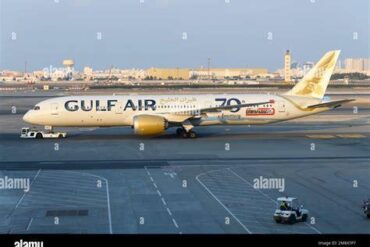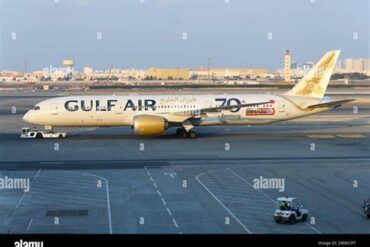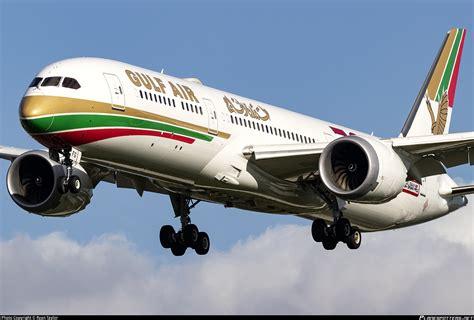
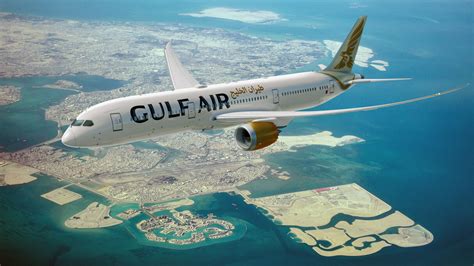
Gulf Air’s landmark decision to acquire 12 Boeing 787-9 Dreamliners, with options for six more, marks a pivotal moment in the Middle Eastern aviation landscape. This move is not merely a fleet upgrade — it is a meticulously calculated strategic evolution designed to reshape Gulf Air’s operational capabilities, environmental footprint, and global partnerships. Bahrain’s flag carrier, known for its historic significance and regional stature, is now positioning itself with surgical precision on the international aviation stage.
The Boeing 787 Dreamliner, often hailed as the world’s most advanced long-haul aircraft, represents a leap forward in efficiency, passenger experience, and sustainability. For Gulf Air, this acquisition is far more than an aircraft order — it’s an inflection point signaling a shift in regional power dynamics, industrial collaborations, and the airline’s brand identity.
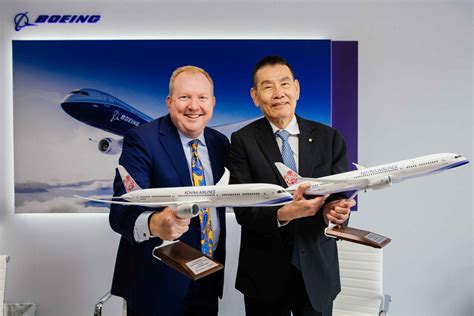
A Legacy Strengthened: Gulf Air and Boeing’s Enduring Partnership
This latest deal adds a profound chapter to the multi-decade relationship between Gulf Air and Boeing, a partnership that dates back to 1961 with the delivery of a Douglas DC-3. Over the years, Gulf Air has often been the first mover in technology adoption, including being the first Middle Eastern airline to operate the A320neo in 2018. Now, the airline aims to transition into a fully Dreamliner-equipped widebody fleet, growing its Boeing 787-9 roster from the current 10 to a potential 22 units if all options are exercised.
This transformation isn’t about prestige alone. It’s a deliberate recalibration of the airline’s core strength: serving as Bahrain’s aviation emissary. By investing in a long-term, dependable widebody solution, Gulf Air is building toward operational resilience, greater route flexibility, and deeper integration with intercontinental traffic corridors.
Strategic Aviation Shift: Reinforcing Bahrain as a Global Air Hub
The decision to adopt the Dreamliner platform is not just a fleet replacement strategy — it is a calculated regional repositioning. With Bahrain International Airport as its home base, Gulf Air is working to elevate the country’s role as a key access point to Asia, Europe, and the Americas. In an arena traditionally dominated by major Gulf carriers like Emirates, Qatar Airways, and Etihad, this move is both a statement and a challenge.
The Boeing 787-9’s hallmark characteristics — 25% improved fuel efficiency per seat, enhanced payload capacity, and extended range — give Gulf Air a potent edge. The ability to connect distant global city pairs without stopovers not only expands its reach but reduces the complexity of transit hubs, improving the passenger journey.
US Economic Reverberations: A Transcontinental Boost
Though the primary beneficiary is Gulf Air, the ripple effect of this order stretches across the United States. Boeing noted that the deal will help support around 30,000 American jobs, spanning engineering, assembly, avionics, and the extended aerospace supply chain. That impact reflects the economic interconnectedness of major commercial aviation deals, which stretch far beyond the point of delivery.
In a high-profile announcement event in Washington, DC, U.S. Commerce Secretary Howard Lutnick and Bahrain’s Minister of Finance Shaikh Salman bin Khalifa Al Khalifa jointly underscored the strategic and diplomatic gravity of the agreement. It is not simply a sale — it’s a convergence of economic priorities, workforce sustenance, and bilateral engagement between two allies.
Technology and Passenger Comfort: Elevating the In-Flight Experience
Since its global debut in 2011, the Boeing 787 Dreamliner has consistently been regarded as a game-changer in modern aviation. With more than 425 new nonstop routes enabled and over a billion passengers flown, its global impact is undeniable. Now Gulf Air joins the ranks of leading airlines optimizing their product around the aircraft’s standout features.
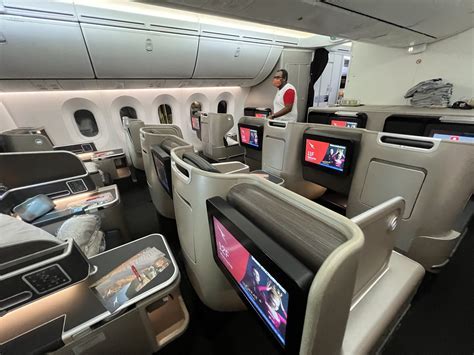
The Dreamliner’s cabin offers significantly improved air quality, lower cabin altitude, higher humidity, and larger dimmable windows, creating a superior passenger experience for both business and economy class travelers. The aircraft is also equipped with cutting-edge turbulence reduction systems, making flights smoother and more comfortable.
This attention to passenger well-being is central to Gulf Air’s repositioning as a premium, customer-first airline, especially as competition in the long-haul segment intensifies. Gulf Air’s newer generation Dreamliners will allow it to differentiate its soft product through hardware superiority.
Green Skies Ahead: Aligning With Environmental Commitments
Sustainability remains one of the most pressing concerns in aviation, and Gulf Air’s decision is directly aligned with this global imperative. The Boeing 787 incorporates composite materials, lightweight structures, fuel-efficient engines, and optimized aerodynamics, all contributing to a significant reduction in carbon emissions.
This move is a cornerstone of Bahrain’s national sustainability roadmap, and Chairman Khalid Taqi emphasized the order as part of the airline’s commitment to environmental leadership in the Gulf. As governments and regulators impose stricter carbon targets, Gulf Air is staking its claim early in the race toward greener skies.
More than a public relations point, the switch to Dreamliners will give Gulf Air a tangible cost and environmental edge, as older aircraft are phased out in favor of these next-gen models.
Competitive Posture: Sending a Signal to Regional Players
This major fleet announcement comes as the global aviation sector continues to recover from the COVID-19 downturn. Airlines are recalibrating their networks, capacity plans, and long-term fleet structures. Gulf Air, by making this order now, is positioning itself ahead of the curve — prepared for traffic recovery and long-haul demand resurgence.
The order sends a clear message to competitors: Gulf Air is not merely surviving; it is evolving. Carriers in the region still operating legacy or mixed widebody fleets may now be pressured to respond, particularly given the cost advantages and fleet harmonization benefits of Dreamliner operations.
In choosing to standardize around the 787, Gulf Air is also simplifying crew training, maintenance logistics, and fuel efficiency management — factors that directly influence profit margins in the highly volatile airline industry.
Beyond Commerce: A Geostrategic Alignment
At its core, the Gulf Air-Boeing agreement reflects more than just corporate calculus. It is emblematic of a broader alignment between national aspirations, technological advancement, and global diplomacy. As aviation becomes increasingly intertwined with soft power and economic statecraft, deals like this act as channels for cross-border collaboration.
For the United States, Boeing remains a symbol of industrial excellence and export strength. For Bahrain, Gulf Air is not just an airline; it is a vehicle for economic diversification, global branding, and regional influence. And in this transaction, both stakeholders find mutual value — economically, symbolically, and strategically.
Conclusion: A Flight Path Into the Future
This order is a decisive step forward for Gulf Air and for Bahrain’s ambitions in the global aviation sector. By doubling down on the Boeing 787 Dreamliner, the airline secures not only fuel savings and operational efficiency, but also a brand renaissance that resonates across economic, diplomatic, and technological dimensions.
It is an investment in long-term relevance — an affirmation that Gulf Air intends to be not just present in the skies of tomorrow, but prominent. For the global aviation industry, this is a blueprint of how smaller national carriers can strategically assert themselves on the international map through smart procurement, sustainability-driven choices, and alliances built on legacy and future vision.