Air China, officially known as Air China Limited, stands as the national flag carrier of the People’s Republic of China, embodying the nation’s ambitions in aviation excellence, global connectivity, and technological modernization. Headquartered in Shunyi District, Beijing, this aviation titan represents far more than a transportation company—it is a symbol of China’s strategic intent to dominate the skies through infrastructure, innovation, and global diplomacy.
Origins Rooted in Strategic National Division
The airline was born from a calculated reorganization. On July 1, 1988, the Civil Aviation Administration of China (CAAC) divided its operations into six independent carriers to improve competitiveness and specialization. Air China was granted the most prestigious responsibility: intercontinental services. Inheriting long-haul aircraft like the Boeing 707, 747, and 767, Air China was instantly positioned as China’s international face in the skies.
The airline grew rapidly in both scale and complexity. In 2001, Air China merged with China Southwest Airlines, dramatically boosting its aircraft fleet and domestic connectivity. The merger created an entity with ¥56 billion in assets and 118 aircraft. A further step came in 2002, when Air China consolidated with China National Aviation Holding, establishing a dominant state-backed entity capable of strategic expansion.
Public Offering and Global Partnerships
A landmark moment came in 2004, when Air China listed on the Hong Kong and London Stock Exchanges, signaling its readiness to embrace global capital markets. This transparency and modernization were further amplified in 2007, when it joined the Star Alliance, enhancing connectivity and operational synergy with other major international carriers such as Lufthansa, United Airlines, and Singapore Airlines.
Its expansionist strategy continued. By 2009, Air China had deepened its stake in Cathay Pacific, investing over HK$6.3 billion to become a 30% stakeholder—gaining vital access to the South China market and the premium Hong Kong hub.
Technological Modernization and Market Innovation
From 2010 onwards, Air China committed itself to digital transformation and fleet modernization. In 2011, it became the first Chinese carrier to introduce in-flight Wi-Fi, initially for tablets and laptops, a bold move signaling its desire to match and surpass Western competitors in passenger experience.
It also began integrating combined air-ground travel products, such as bundled flight and shuttle bus tickets between Tianjin and Beijing, providing a seamless intermodal travel solution—unheard of in Chinese aviation at the time.
Meanwhile, the airline continued modernizing its fleet. By 2015, it was finalizing a deal for 60 new Boeing 737 aircraft, including the Next Generation and MAX series, in a deal worth more than US$6 billion.
Corporate Structure and Infrastructure Footprint
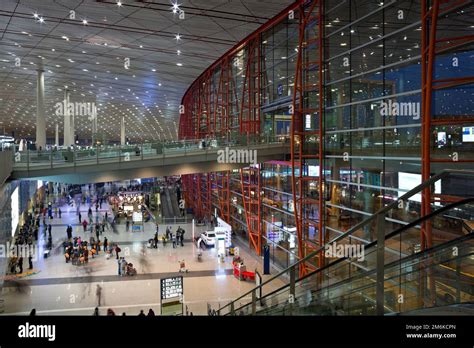
Today, Air China’s corporate power lies in its backing by China National Aviation Holding, which owns 53.46% of the airline. Its registered offices reside in Zone A of the Tianzhu Airport Industrial Zone, directly adjacent to Beijing Capital International Airport (PEK)—the heart of Air China’s global operations.
Its primary hubs include:
- Beijing Capital International Airport (PEK) – international flagship
- Beijing Daxing International Airport (PKX) – new-generation mega-hub
- Chengdu Shuangliu and Chengdu Tianfu – central and western China gateway
- Shanghai Pudong International Airport (PVG) – key for European and transpacific flights
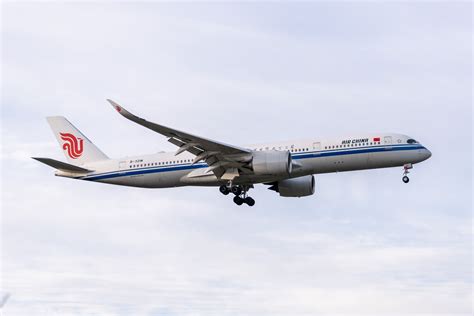
These hubs allow Air China to strategically connect its 210 destinations across six continents.
Visual Identity: The Cultural Elegance of the Phoenix
One of Air China’s most enduring brand elements is its logo, a stylized phoenix or “Fenghuang,” crafted in the shape of the letters “VIP.” The calligraphy for the brand name was personally written by Deng Xiaoping, emphasizing its national importance.
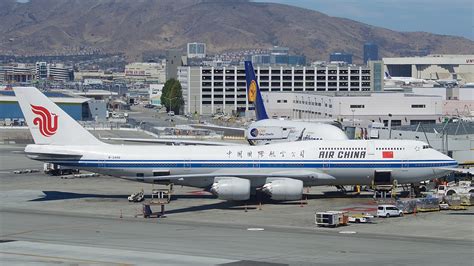
Its liveries have evolved over decades. The original CAAC livery gave way to a more streamlined phoenix theme, with modern aircraft showcasing a bolder, cleaner design. On flights to Taiwan, PRC flags are purposefully omitted, highlighting the political nuances embedded in every detail of Air China’s operations.
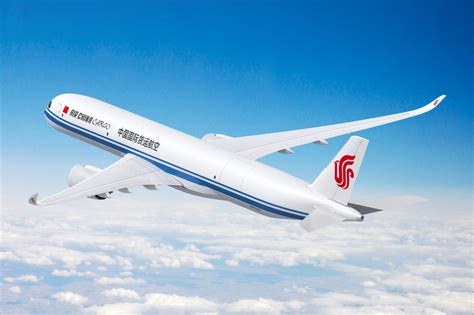
Fleet Strength and Composition (As of May 2025)
Air China boasts a diverse and formidable fleet of 505 aircraft, one of the largest in Asia. It combines European efficiency and American power, supplemented by domestically produced COMAC aircraft. Key highlights include:
- Airbus: 23 A319s, 53 A320neos, 30 A350-900s
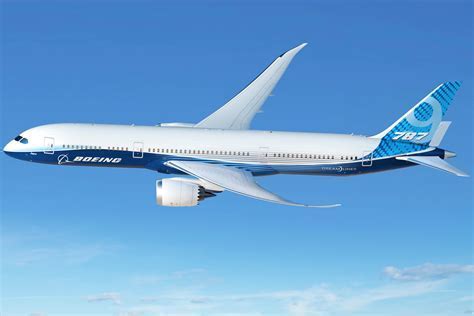
- Boeing: 87 737-800s, 28 777-300ERs, 14 787-9 Dreamliners
- COMAC: 35 ARJ21s, 4 C919-100ERs (with 101 more on order)
The Boeing 747-8Is and 777-300ERs dominate long-haul premium routes, while COMAC jets are reshaping domestic and regional networks in line with China’s aviation self-reliance strategy.
Global Network and Long-Haul Powerhouse
Few airlines match Air China’s geographical spread. From its Beijing and Chengdu bases, it serves every inhabited continent, with a stronghold in:
- North America: Los Angeles, San Francisco, New York, Washington D.C., Houston, Honolulu, Vancouver, Montreal
- Europe: London, Frankfurt, Milan, Paris, Düsseldorf, Madrid
- Asia-Pacific: Tokyo, Seoul, Bangkok, Singapore, Sydney, Melbourne
- Middle East and Africa: Tel Aviv, Johannesburg
- South America: São Paulo (via Madrid)
One of the most iconic routes is the Beijing–São Paulo connection launched in 2006, representing Air China’s long-range capability. Over the years, routes have expanded to Havana, Mumbai, and Honolulu, reflecting geopolitical and economic objectives.
Codeshare and Interline Agreements: A Global Web
As a core Star Alliance member, Air China is deeply integrated into the global aviation ecosystem. It maintains codeshare agreements with over 30 airlines, including:
- Air Canada
- United Airlines
- Singapore Airlines
- Cathay Pacific
- EVA Air
- TAP Air Portugal
Interline agreements further extend its reach, notably with Pakistan International Airlines, giving it access to secondary markets across South Asia.
Environmental and Ethical Initiatives
Air China has shown responsiveness to public and environmental pressure. In 2012, following protests by PETA, it became the first Chinese airline to cease transporting monkeys to laboratories, signaling a willingness to adjust corporate ethics based on international norms.
Additionally, the introduction of next-generation aircraft, such as the A350-900 and 787-9, has helped improve fuel efficiency and emissions performance, aligning with China’s broader carbon-neutral goals.
Frequent Flyer and Premium Services
The PhoenixMiles loyalty program, launched in tandem with Star Alliance membership, rewards both domestic and international travelers. Benefits scale with status tiers and offer global reciprocity through alliance partners.
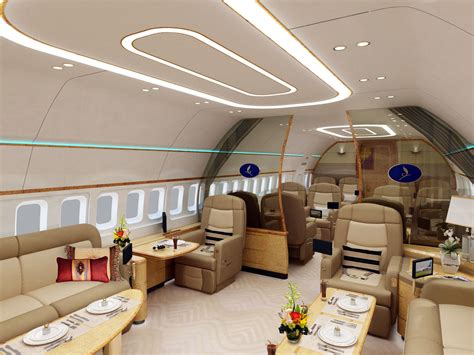
In the premium space, Air China Business Jets caters to government officials and corporate elites, operating Boeing BBJs and Dassault Falcons, symbolizing China’s diplomatic outreach and high-net-worth clientele.
Challenges and Competitive Landscape
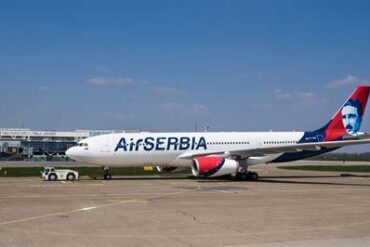
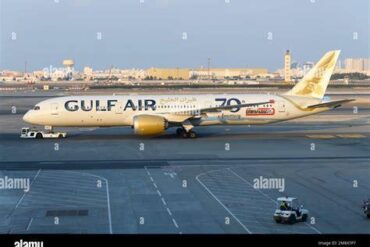
Air China, despite its enormous scale, operates in a fiercely competitive environment. It faces intense domestic rivalry from China Southern, China Eastern, and newer players like Hainan Airlines. Internationally, Gulf carriers and major Asian rivals such as ANA and Korean Air are constantly improving connectivity and service standards.
Moreover, the COVID-19 pandemic placed immense financial strain on all Chinese carriers. Air China’s government-backed structure allowed it to weather the storm better than most, but the recovery period has forced the company to re-strategize, particularly regarding fleet utilization and international route viability.
Conclusion: A Pillar of National Strategy in the Sky
Air China is far more than a flag carrier. It is an instrument of Chinese statecraft, connecting global capitals with Beijing, and projecting Chinese influence across continents. With its continued investment in modern aircraft, premium services, and strategic alliances, it remains at the forefront of Asia’s aviation industry.
The future of Air China hinges on its ability to balance political mandates with market demands, maintain safety and quality while expanding into frontier markets, and retain cultural relevance in an industry increasingly dominated by digital transformation. As of 2025, it continues to evolve—resilient, strategic, and unequivocally central to China’s global aspirations.