Ukraine International Airlines (UIA) has long stood as a symbol of national pride and international connectivity for Ukraine. Established in the immediate post-Soviet period, UIA played a crucial role in reshaping the country’s aviation sector. From its ambitious inception to its forced suspension during wartime, UIA’s journey is one of resilience, transformation, and tragedy. This article delves deep into the airline’s history, operations, fleet evolution, and the geopolitical tremors that grounded its wings.
Founding and Early Development of Ukraine International Airlines
In October 1992, Ukraine International Airlines was born in Kyiv as a strategic alternative to the crumbling Soviet aviation structure. It quickly set itself apart by becoming the first airline in the Commonwealth of Independent States (CIS) to operate Western aircraft—leasing two Boeing 737-400s from Guinness Peat Aviation. Its inaugural flight took off from Kyiv to London on 25 November 1992, marking a milestone for Ukraine’s aviation sovereignty.
The airline’s network expanded rapidly through the early 1990s, with destinations such as Berlin, Paris, Frankfurt, Vienna, and Amsterdam soon added to its European portfolio. Cargo operations began in 1994, and UIA demonstrated its commercial foresight by tapping into logistics even in its infancy.
Significant foreign investment followed. Austrian Airlines and Swissair became shareholders in 1996, bringing both capital and operational expertise. In 2000, the European Bank for Reconstruction and Development (EBRD) joined as a stakeholder, reinforcing the airline’s institutional credibility and supporting its modernization.
Cargo Services and Expansion of Operational Capabilities
By 2006, UIA introduced a new freight classification system and express services to improve efficiency and profitability in its cargo division. This was a pivotal moment in UIA’s development, allowing it to diversify beyond passenger transport and establish itself as a serious player in Eastern European cargo aviation.
Through the first decade of the 2000s, UIA grew steadily, continuing to serve Ukraine’s international connectivity needs while maintaining a fleet of modern Boeing aircraft and a customer-friendly fare structure.
Strategic Growth and Competitive Positioning (2013–2019)
In the first half of 2013, Ukraine International Airlines experienced a 60% increase in passenger traffic, handling 2.2 million passengers, with projections to double that by year’s end. The collapse of local competitor Aerosvit provided UIA with a chance to fill market gaps, particularly on Eurasian routes.
In April 2014, UIA launched nonstop service from Kyiv to New York’s JFK, a significant milestone in its intercontinental ambitions. This service targeted the large Ukrainian diaspora and business community in North America.
However, political tensions complicated expansion plans. In October 2015, the Russian government banned UIA from its airspace, a retaliatory move amid growing diplomatic hostility. Despite these setbacks, UIA forged ahead, introducing hand-luggage-only fare options in 2016 to stay competitive in the low-cost market and utilizing wet-leased Embraer ERJ 145 aircraft for regional connectivity, including underserved airports like Chernivtsi.
However, 2016 also marked the beginning of increased regulatory scrutiny. A corruption investigation targeted the airline in June 2016, casting shadows over its internal practices, though the company remained operational and continued to expand its fleet.
In 2018, a significant fleet modernization initiative introduced Boeing 777-200ERs for long-haul services and Embraer 195s for regional routes. These acquisitions represented a bold vision for UIA’s future, with ambitions to serve both business and leisure travelers more effectively.
Changes in Loyalty Programs and Corporate Leadership
UIA parted ways with the Flying Blue frequent flyer program in January 2019, opting instead for independent customer engagement strategies. That same year, internal restructuring led to the departure of President Yuri Miroshnikov, who was replaced by Yevhenii Dykhne. These moves were aimed at rejuvenating the airline’s strategic direction and improving profitability.
However, the airline’s finances were under immense pressure. In 2017, UIA reported losses of ₴304 million, and by 2018, this had ballooned to ₴2.7 billion, driven largely by fuel costs, currency fluctuations, and a state-imposed fee debt of over ₴1 billion.
The Impact of War: Suspension of Operations in 2022
On 24 February 2022, the Russian invasion of Ukraine forced UIA to suspend all flights indefinitely. The company moved several of its aircraft to storage in Spain and others were grounded in Kyiv. While initial estimates suggested a temporary halt, the closure was extended continuously through 2023.
By 2024, seven of the airline’s aircraft had been arrested by tax authorities, and bankruptcy proceedings had begun. With trademarks sold at auction, the airline’s operational viability entered a state of long-term uncertainty.
Despite the grounded fleet and financial woes, UIA’s corporate structure remains of interest. As of 2013, ownership was divided between Capital Investment Project LLC (74%) and Ontobet Promotions (26%). These stakeholders have yet to issue clear statements about the airline’s revival prospects, leaving the brand in a state of administrative limbo.
Destinations and Codeshare Partnerships
Before suspension, UIA operated over 1,000 weekly flights to more than 80 destinations, maintaining a robust European presence and important intercontinental connections. Key destinations included Amman, Riga, Beijing, Minsk, Bangkok, and Krakow, though many of these were already suspended by 2020 due to route optimization and geopolitical barriers.
UIA’s international appeal was further enhanced through codeshare agreements with major carriers including:
- Air Astana
- Air France
- Austrian Airlines
- Turkish Airlines
- KLM
- TAP Air Portugal
- Iberia
- Air Moldova
- EgyptAir
- Azerbaijan Airlines
- airBaltic
These strategic alignments broadened UIA’s global reach and positioned it as a viable transit hub between Europe and Asia.
Fleet Overview: Evolution and Current Status
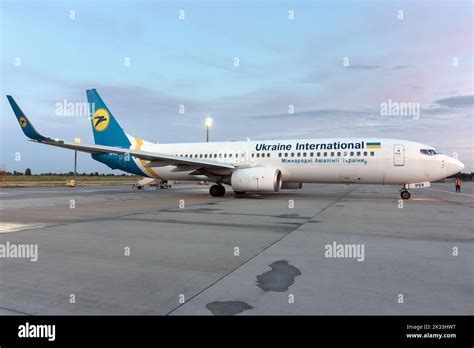
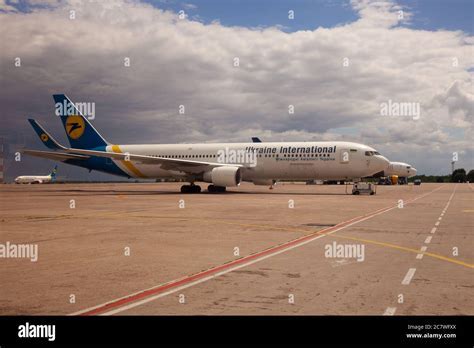
As of July 2024, UIA’s fleet includes 11 stored aircraft, a significant reduction from its peak operational strength. The current inactive lineup comprises:
- Boeing 737-800/900ER
- Boeing 767-300ER
- Embraer 190/195
The airline previously operated a diverse mix, including the Boeing 737 Classics (200/300/400/500), 777-200ER, and the Ukrainian-made Antonov An-148, which was phased out in favor of Western jets.
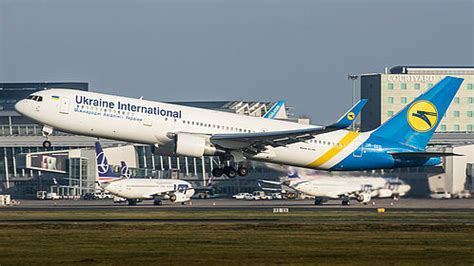
These aircraft remain in limbo, subject to leasing contracts, tax seizures, and future legal determinations that will impact whether UIA can feasibly return to the skies.
Flight 752 Tragedy and UIA’s Only Fatal Crash
On 8 January 2020, UIA experienced the only fatal accident in its operational history when Flight 752, a Boeing 737-800 (registration UR-PSR), was shot down by the Iranian Revolutionary Guard Corps shortly after departing from Tehran. All 167 passengers and 9 crew aboard perished.
The event shocked the global aviation community and ignited a diplomatic crisis. Investigations revealed that human error and misidentification during heightened military tensions led to the shootdown. While UIA was not found at fault, the tragedy indelibly marked its legacy.
Conclusion: Will UIA Fly Again?
Ukraine International Airlines represents more than an aviation business—it embodies Ukraine’s ambition, resilience, and struggle for international integration. From pioneering Western operations in the post-Soviet space to withstanding financial hardship and geopolitical storms, UIA carved a path few carriers in its region have matched.
However, its future hangs precariously in the balance. The devastating impact of war, economic instability, and administrative uncertainty have combined to paralyze its operations, casting doubt on whether the UIA brand can be revived in its original form.
Yet for many Ukrainians and global travelers, the blue and yellow tailfin of UIA remains a potent symbol—a memory of open skies, global connection, and national identity at cruising altitude.