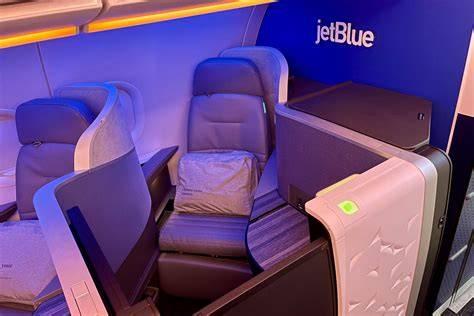
Before Qatar Airways Qsuite transformed the meaning of privacy in business class, and before Delta One Suites made closing a door at 35,000 feet feel almost ordinary, another airline had already introduced the idea. In June 2014, JetBlue Airways launched Mint, its new premium cabin for transcontinental flights, and quietly placed four business class seats with sliding privacy doors on its Airbus A321-200. It was a remarkably bold move for an airline better known at the time for affordable fares, generous legroom, and an unconventional approach to the US domestic market.
The significance of that decision is easy to overlook today. Modern business class has become increasingly focused on privacy, with enclosed suites, sliding doors, direct aisle access, large entertainment screens, and carefully designed personal spaces becoming common on long-haul aircraft. In 2014, however, a business class seat with a door was still an extraordinary concept. First class had embraced doors on some of the world’s most luxurious aircraft, but the business class cabin remained dominated by open seats arranged in pairs or staggered configurations.
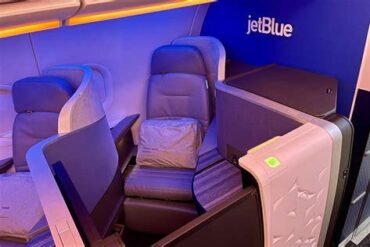
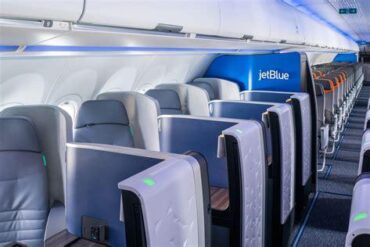
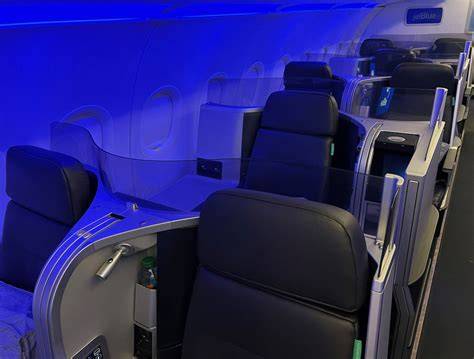
JetBlue’s answer was not a huge enclosed suite with a floor-to-ceiling door. Instead, the airline incorporated relatively small sliding doors into four individual seats within a 16-seat Mint cabin. The result was subtle but groundbreaking. Passengers sitting in those four so-called throne seats could create a more private personal space while flying across the United States. Years before Qsuite became synonymous with business class privacy, JetBlue had already demonstrated that a door could make a premium seat feel fundamentally different.
JetBlue Mint Introduced Business Class Doors in 2014
When JetBlue announced Mint in 2013, the airline was entering a market dominated by established US legacy carriers. Its fleet was primarily composed of Airbus A320-family aircraft and Embraer E190s, and its reputation had been built around an unusual combination of low-cost pricing and passenger-friendly amenities. JetBlue offered generous economy-class legroom, seatback entertainment, leather seating, and a service philosophy that differed noticeably from the traditional low-fare model.
The launch of Mint represented something much more ambitious. JetBlue wanted to compete directly for high-value passengers traveling between New York and California, particularly on routes connecting New York’s John F. Kennedy International Airport with Los Angeles and San Francisco. These were among the most competitive premium domestic markets in the United States, where American Airlines, Delta Air Lines, and United Airlines had long fought for corporate travelers and affluent leisure passengers.
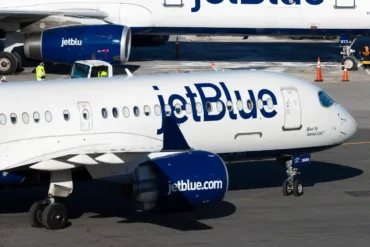
The aircraft selected for this challenge was the Airbus A321-200, a narrowbody jet that could offer the range and capacity needed for premium transcontinental flying. JetBlue’s first four A321s had been configured entirely for economy, but the fifth aircraft introduced an entirely different concept. Instead of simply adding larger reclining seats at the front, JetBlue created a dedicated premium cabin with lie-flat seating and an unusual amount of privacy.
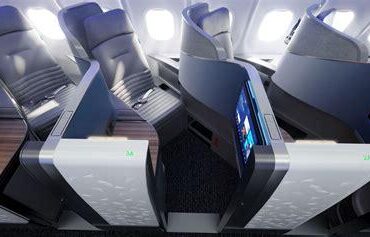
There were 16 Mint seats, based on the Thompson Vantage platform. The Vantage design used a staggered arrangement that alternated between pairs of seats and individual seats. This configuration had already appeared on widebody aircraft, but JetBlue adapted it to a narrowbody business class cabin. The most important detail was that the four individual seats received sliding doors.
That made JetBlue’s original Mint product historically significant. It was not the first premium aircraft seat to offer privacy, nor was it the first aircraft seat with a door of any kind. But within the business class category, it introduced something that would later become one of the industry’s defining features: a dedicated suite-like seat separated from the aisle by a sliding door.
Why the Original JetBlue Mint Seat Was So Different
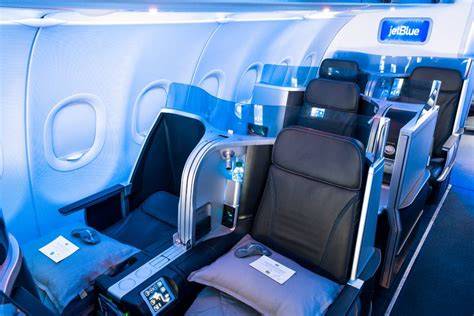
The original Mint throne seats were distinctive because they provided something that business class passengers had traditionally struggled to obtain: genuine personal separation without sacrificing a lie-flat bed. The paired seats in the cabin remained attractive, but the solo seats were clearly the stars of the product.
Their doors were modest compared with the enormous barriers later found in first-class products from airlines such as Emirates and Singapore Airlines. They were relatively low and did not completely enclose the passenger from head to toe. Nevertheless, they changed the atmosphere around the seat. A passenger could slide the door closed and create a noticeably more secluded environment while working, eating, relaxing, or sleeping.
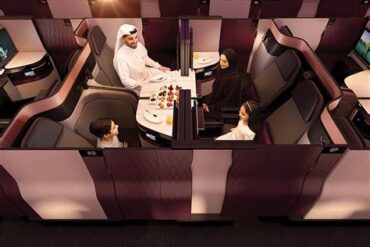
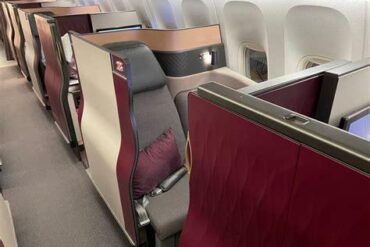
The distinction is important because later products are often remembered as if privacy doors suddenly appeared with Qatar Airways Qsuite. Qsuite certainly deserves enormous credit for popularizing the concept on a much broader scale, but JetBlue had already taken the first step several years earlier. Qatar’s innovation was partly about scale and flexibility: Qsuite placed doors throughout the business class cabin and introduced an entirely new level of privacy and social configuration.
JetBlue’s 2014 cabin was much smaller in ambition, but arguably more daring because it appeared on a narrowbody aircraft operated by an airline that was not traditionally associated with premium aviation. It showed that an airline did not need a Boeing 777 or Airbus A380 to create a compelling premium experience.
JetBlue Was Building a Premium Product From Scratch
The introduction of Mint was also an important strategic moment for JetBlue. The airline had always occupied an unusual position between traditional low-cost carriers and full-service airlines. It could compete aggressively on price while offering features that passengers associated with more expensive airlines.
That formula worked particularly well in New York and Boston, where JetBlue had strong brand recognition. Yet the airline lacked a true premium cabin. That became increasingly problematic as it expanded into markets where travelers were willing to pay substantially more for comfort, privacy, and lie-flat seating.
Business class was not merely about making passengers happier. Premium seats can generate disproportionately higher revenue, making them particularly valuable on long flights where a small number of high-paying passengers can materially improve the economics of the route. For JetBlue, Mint provided a way to compete for those passengers without abandoning the airline’s distinctive identity.
The timing was also important. On transcontinental routes, lie-flat seats had become an increasingly important expectation for premium travelers. JetBlue could not simply offer a conventional domestic first-class recliner and expect to take significant market share from legacy airlines. It needed a product that looked different.
Mint delivered exactly that.
The individual Vantage seats were visually impressive, spacious, and more private than conventional business class seating. The sliding doors were an especially effective marketing feature because passengers could immediately understand their value. A seat with a door feels more exclusive than an open seat, even when the physical differences are relatively small.
The Throne Seats Were Not Available at Every Position
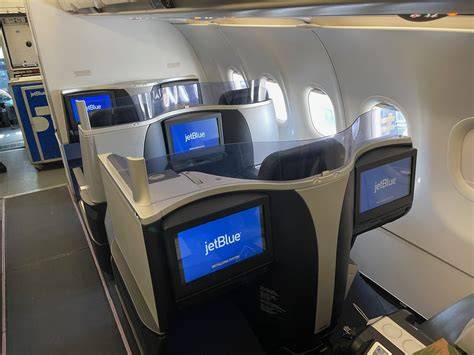
One important distinction separates the original Mint product from later enclosed business class suites. Only four of the 16 Mint seats had doors. Passengers therefore could not assume that every seat in the cabin offered the same level of privacy.
The four solo seats were the prized positions, and JetBlue did not initially impose an additional charge simply to select them. That made the product particularly compelling for travelers who understood the cabin layout and knew which seats to choose.
The arrangement also created an interesting balance. Rather than filling the entire cabin with expensive individual suites, JetBlue used the existing Vantage architecture to create a mixture of paired and solo positions. This allowed the airline to provide a premium product without sacrificing too much capacity on a narrowbody aircraft.
From a design perspective, that compromise was clever. The paired seats could accommodate passengers traveling together, while the solo seats offered a more private experience for individual travelers. The same cabin therefore served several different types of premium passengers.
The doors themselves were also a reminder of how quickly aviation design evolves. By today’s standards, they appear small. Modern business class suites often use taller doors and more substantial privacy walls. Yet the fundamental idea was already there in 2014: close a door, create a personal space, and turn a business class seat into something resembling a suite.
Why Qatar Qsuite Became More Famous
If JetBlue did it first, why is Qsuite so often associated with the beginning of business class suites?
The answer is scale, visibility, and execution. Qatar Airways unveiled Qsuite in March 2017, with the product entering service later that year. Unlike JetBlue’s original Mint cabin, Qsuite offered a privacy door at every business class position. The product also introduced configurations that allowed passengers to create larger shared spaces.
That transformed the door from an interesting feature into the central architectural element of the cabin.
Qsuite could accommodate travelers who wanted privacy as individuals while also allowing certain seats to be configured for couples or groups. This made the product feel more like a miniature private cabin than a conventional business class seat. Its influence across the industry was enormous.
Delta followed with Delta One Suites, announced in 2016 and introduced into service in 2017. These suites also placed doors around every seat and helped establish enclosed business class as a major premium-cabin trend.
Consequently, JetBlue’s achievement became increasingly buried beneath the success of the products that followed. The industry’s memory often favors the product that popularized an innovation rather than the airline that introduced the concept first.
JetBlue’s Soft Product Made Mint Even Stronger
The original Mint experience was not built entirely around the seat. JetBlue also invested heavily in the service surrounding it.
The airline became known for friendly cabin crews, substantial catering, quality bedding, and useful amenity kits. Its complimentary Fly-Fi Wi-Fi service added another advantage, particularly as reliable connectivity became increasingly important to business travelers.
This combination mattered because an excellent hard product can be undermined by poor service. JetBlue’s reputation for attentive crews helped Mint stand apart from competitors even when the physical seat was not necessarily superior in every technical measurement.
The footwell on the Mint Vantage seats was also regarded favorably, while the lie-flat capability made the cabin particularly attractive on overnight or coast-to-coast journeys. For passengers accustomed to conventional domestic first class, the difference was substantial.
In that sense, Mint was more than a seat. It was JetBlue’s argument that a relatively young airline could challenge the established carriers by designing a better overall experience.
The Original Mint Design Has Aged Surprisingly Well
More than a decade after its introduction, the original Mint seat remains interesting because it has not become completely obsolete. Aviation interiors can age quickly, particularly when new generations of suites arrive with larger screens, better storage, taller doors, wireless charging, and increasingly elaborate privacy features.
Yet the basic proposition behind the 2014 Mint throne seat remains sound.
A passenger receives a lie-flat bed, direct personal space, and a sliding privacy barrier. Those features still represent the foundation of modern international business class. The surrounding technology may have changed, but the fundamental passenger needs have not.
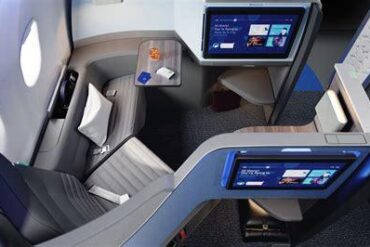
JetBlue itself eventually introduced a much more comprehensive version of the concept. In 2021, the airline unveiled new Mint Suites for its Airbus A321neo fleet. These seats are based on the Thompson VantageSOLO platform and provide sliding doors at every position. Instead of having only four private seats in a 16-seat cabin, the new configuration turns privacy into the standard experience.
The new aircraft also introduced Mint Studios at the front of the cabin, offering additional space and an ottoman. These positions effectively created a premium tier above standard Mint, demonstrating how far the concept had evolved since 2014.
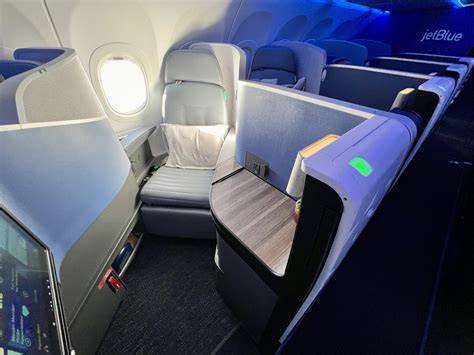
From Four Doors to a Cabin Full of Suites
The evolution from the original Mint cabin to today’s suite-heavy business class market illustrates how rapidly premium aviation has changed. In 2014, putting doors on four seats was enough to make JetBlue’s product exceptional. By the late 2010s and early 2020s, passengers increasingly expected privacy to be available across an entire premium cabin.
The progression was logical. Once airlines demonstrated that passengers valued doors, competitors had a strong incentive to offer them more widely. Privacy became especially important for solo travelers, who could otherwise find themselves sitting only inches away from another passenger despite paying thousands of dollars for a premium ticket.
JetBlue’s original solution was therefore both limited and visionary. It did not create the enormous private business class suites we see today, but it proved that a door could work in a business class cabin on a narrowbody aircraft.
That is perhaps the most overlooked part of the story. JetBlue did not wait for the industry to make business class suites normal. It experimented with the concept when the idea was still unusual.
JetBlue Mint Deserves Its Place in Business Class History
The history of premium aviation is full of innovations that become difficult to recognize once they become commonplace. Sliding doors are now associated with some of the world’s most celebrated business class products, but they were not always standard.
In June 2014, JetBlue placed four business class seats with sliding privacy doors aboard an Airbus A321-200. The cabin contained only 16 Mint seats, and the doors were smaller than those introduced by later competitors. Nevertheless, the concept was there years before Delta One Suites and Qatar Airways Qsuite made enclosed business class a global benchmark.
That makes the original JetBlue Mint more than an interesting footnote. It was an early experiment that anticipated where premium aviation was heading. JetBlue recognized that passengers wanted more than a lie-flat seat; they wanted a space that felt genuinely private.
Qsuite may have made the business class suite famous. Delta may have helped make doors mainstream across the US legacy market. But when we trace the idea back to its earlier roots, JetBlue was already sliding a door shut in 2014.
The airline’s original Mint throne seats ultimately proved an important point: sometimes the most influential aviation innovations do not arrive on the largest aircraft or from the most prestigious airline. Sometimes they appear quietly on a narrowbody jet, with four small doors, and change the premium cabin forever.