For decades, Hartsfield-Jackson Atlanta International Airport (ATL) has been the benchmark against which the world’s largest airports are measured. Its extraordinary passenger volumes, huge domestic network, and central role as the primary hub of Delta Air Lines have kept Atlanta at or near the top of global airport rankings year after year. Yet in 2026, Dubai International Airport (DXB) achieved something remarkable: it overtook Atlanta in scheduled airline seat capacity, creating a new definition of what it means to be the world’s busiest airport.
At first glance, the development seems contradictory. Atlanta handled more than 100 million passengers in 2025, while Dubai recorded approximately 95.2 million passengers. If passenger numbers are the traditional measure of airport popularity and scale, ATL still appears to have the stronger claim. But aviation rankings depend heavily on the metric being used, and scheduled seat capacity reveals a very different picture of the two airports.
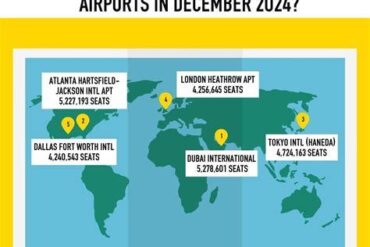
The key distinction is simple but important. Passenger throughput measures the number of travelers who actually pass through an airport, while seat capacity measures how many seats airlines schedule for passengers to purchase. In January 2026, DXB offered roughly 5.5 million scheduled seats, compared with approximately 4.9 million at Atlanta. That was enough to put Dubai ahead in one of the industry’s most closely watched measurements, even though ATL continued to process more passengers overall.
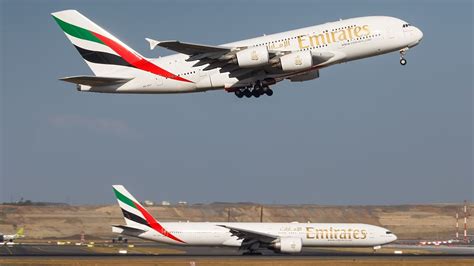
Dubai International Airport’s Seat Capacity Overtakes Atlanta
The shift did not happen overnight. During 2025, Atlanta still maintained a narrow advantage in annual scheduled seat capacity, with approximately 63.1 million seats compared with Dubai’s 62.4 million. The difference was relatively small, however, and it showed how rapidly DXB had been closing the gap.
By January 2026, the balance had shifted decisively in Dubai’s favor. The airport scheduled around 5.5 million seats during the month, exceeding Atlanta’s roughly 4.9 million. The change was significant because it demonstrated that Dubai’s network had reached a scale where its aircraft could collectively offer more seats even without matching Atlanta’s enormous number of aircraft movements.
That distinction is fundamental to understanding the story. An airport can handle a tremendous number of flights without offering the same number of seats as another airport operating fewer flights. A schedule dominated by smaller narrowbody aircraft produces a very different capacity profile from one built around large widebody aircraft.
Atlanta’s enormous passenger numbers are therefore not contradicted by Dubai’s seat-capacity lead. Instead, the two airports are demonstrating how different hub strategies can produce different forms of aviation scale.
Widebody Aircraft Give DXB a Major Capacity Advantage
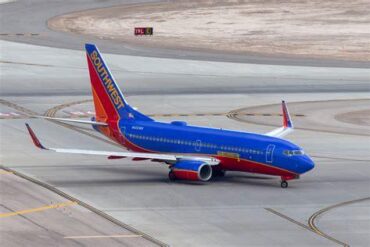
The most important piece of the puzzle is aircraft size. Atlanta’s schedule contains a huge number of domestic flights, many operated by aircraft such as the Boeing 737 and Airbus A321. Depending on configuration, these aircraft generally provide roughly 150 to more than 200 seats.
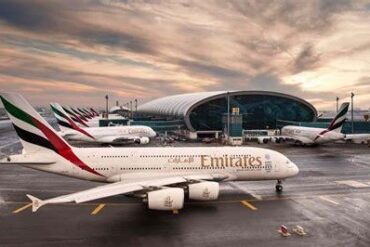
Dubai’s fleet mix is dramatically different. Emirates has built its long-haul network around aircraft such as the Boeing 777-300ER and Airbus A380, both of which can carry substantially more passengers than a typical domestic narrowbody aircraft.
The Airbus A380 is particularly important. In high-density configurations, the world’s largest passenger aircraft can carry more than 500 passengers, while Emirates operates one of the largest A380 fleets ever assembled. The Boeing 777-300ER also commonly carries well above 300 passengers in airline configurations.
That means one departure from Dubai can represent the equivalent of multiple narrowbody departures in terms of available seats. When that difference is multiplied across hundreds of daily flights, the mathematical effect becomes enormous.
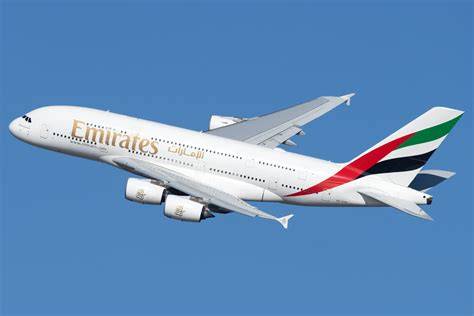
Emirates’ fleet illustrates the scale of this strategy. The airline’s fleet includes 116 Airbus A380s and 117 Boeing 777-300ERs, alongside Boeing 777-200LR aircraft and newer-generation widebodies. The carrier also has substantial orders for the Boeing 777-9, 777-8, Airbus A350-900, and Boeing 787 Dreamliner, indicating that its capacity strategy is designed to remain firmly centered on long-haul international connectivity.
This fleet structure gives DXB an inherent advantage when the ranking is based on scheduled seats. Dubai does not necessarily need more aircraft movements than Atlanta. It needs more seats per movement, and its widebody-heavy operation is exceptionally well suited to that objective.
Atlanta and Dubai Were Built Around Different Hub Models
The difference becomes even clearer when the two airports’ business models are examined. Atlanta is fundamentally a frequency-driven domestic hub, while Dubai is a capacity-driven international connecting hub.
Atlanta’s location within the United States gives it access to an enormous domestic market. Passengers from smaller American cities can connect through ATL before continuing to another US destination or an international gateway. This system depends heavily on frequency. Travelers benefit when an airline offers multiple departures each day rather than forcing everyone onto one enormous aircraft.
That model helps explain why Atlanta can generate extraordinary passenger numbers using relatively smaller aircraft. A route between Atlanta and Orlando, for example, does not necessarily require an A380. Airlines can offer frequent departures throughout the day, allowing passengers to choose flights that fit their schedules.
The busiest Atlanta routes in 2025 reflected this domestic orientation. Orlando, New York LaGuardia, Fort Lauderdale, and Tampa ranked among the airport’s largest passenger markets, while Paris Charles de Gaulle was the notable international route among the leading destinations. These are markets where frequency and connectivity are especially valuable.
Dubai operates according to a very different philosophy.
Its geographic position between Europe, Asia, Africa, and Oceania allows it to function as an enormous international transfer point. Rather than primarily connecting American cities with one another, DXB connects passengers from distant regions that may be thousands of miles apart.
A passenger traveling from Europe to Australia, for instance, may have little reason to fly directly because nonstop services are limited or unavailable. Dubai provides an intermediate connection point, allowing Emirates to consolidate travelers from multiple European cities onto long-haul services heading toward Australia and Asia.
That is where the economics of the widebody become powerful. Instead of operating several smaller aircraft across numerous individual city pairs, an airline can gather demand at a central hub and place hundreds of passengers onto a single long-haul aircraft.
Emirates Is Central to Dubai’s Extraordinary Capacity
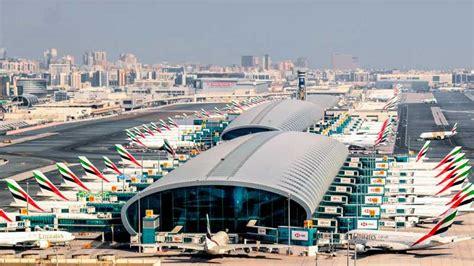
Dubai International Airport’s rise cannot be separated from the strategy of Emirates. The airline has developed one of the world’s most extensive long-haul networks and has deliberately built its fleet around aircraft capable of carrying large numbers of passengers across intercontinental distances.
The airline’s enormous A380 fleet is particularly symbolic of Dubai’s hub model. At many airports, the A380 became an operational challenge because demand was insufficient to justify such a large aircraft or because airport infrastructure could not efficiently handle it. Dubai, by contrast, was designed around high-volume international transfers, making it one of the natural homes for the aircraft.
Emirates also operates a huge fleet of Boeing 777s, allowing it to match aircraft capacity with demand across different markets. The result is a network where large aircraft are not an occasional spectacle but an integral part of everyday operations.
Dubai’s aviation ecosystem is further strengthened by flydubai. While Emirates concentrates heavily on long-haul international services, flydubai provides extensive connectivity across regional markets, including destinations in the Middle East, Central Asia, Eastern Europe, and Africa.
The combination creates a powerful feeding system. Passengers arriving from regional destinations can connect onto Emirates’ intercontinental flights, while Emirates passengers can use flydubai services to reach destinations that may not support direct Emirates operations.
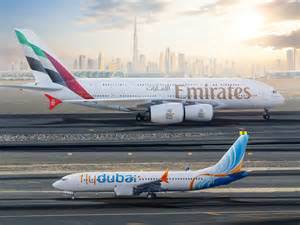
This relationship allows Dubai to capture traffic from a remarkably broad geographic area. It also helps explain why DXB can continue increasing seat capacity without relying primarily on a huge domestic population.
Dubai’s International Seat Growth Is Accelerating
The January 2026 milestone was not simply a one-month statistical anomaly. Dubai continued to demonstrate strong international capacity growth during the year.
By July 2026, DXB was offering approximately 4.35 million international seats, an increase of around 18% compared with the same month a year earlier. That growth reinforced the argument that Dubai’s rise is structural rather than temporary.
The airport’s position within the broader Middle Eastern aviation system is also important. Dubai competes within a region that has invested heavily in global connectivity, with major hubs including Abu Dhabi International Airport and Hamad International Airport in Doha. Together, major Middle Eastern hubs support thousands of daily flights, many involving widebody aircraft and long-distance international markets.
This model has transformed the region into a major crossroads for global aviation. Instead of depending primarily on local passengers, airlines can draw travelers from multiple continents and transfer them through strategically positioned hubs.
Dubai is perhaps the clearest example of this strategy. In 2025, DXB handled a record 95.2 million passengers, and projections for 2026 point toward approximately 99.5 million. If those figures are achieved, Dubai would move even closer to Atlanta in annual passenger throughput while maintaining its advantage in scheduled capacity.
Why Atlanta Still Boards More Passengers Than Dubai
Despite Dubai’s seat-capacity victory, Atlanta remains the stronger airport when measured by annual passenger throughput. That distinction matters because seats are only potential passengers. The actual number of travelers depends on how many of those seats are occupied.
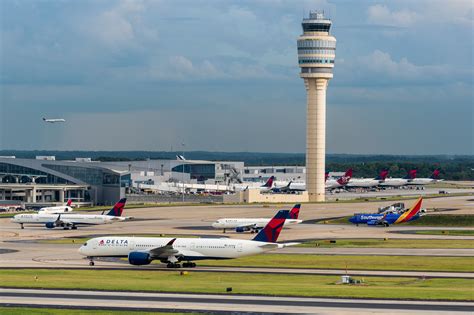
Atlanta benefits enormously from the strength of the US domestic aviation market. Americans travel frequently between major cities, regional centers, vacation destinations, and business hubs. Delta’s massive Atlanta operation creates a continuous flow of connecting passengers throughout the day.
Delta’s dominance at ATL is extraordinary. The airline accounted for approximately 80% of the airport’s market share, far ahead of Frontier, Southwest, American, and United. Such concentration gives Delta enormous control over schedules, connections, aircraft deployment, and passenger flows.
This hub structure allows Atlanta to sustain remarkable passenger volumes. A traveler might fly from a small city in the southeastern United States to Atlanta, connect there, and continue to another American city. That journey generates two airport movements for the passenger at ATL, even though the journey may involve relatively modest aircraft.
Dubai’s international transfer model also generates connecting passengers, but the structure is different. Long-haul travelers generally require fewer flight segments through the hub, and the airport’s capacity is heavily concentrated into large aircraft.
Atlanta therefore benefits from high frequency and high connection volume, while Dubai benefits from high capacity per flight and global geographic reach.
The Meaning of “Busiest Airport” Has Changed
The most interesting lesson from the Atlanta-Dubai rivalry is that there is no single definition of the world’s busiest airport.
Passenger throughput measures travelers. Aircraft movements measure takeoffs and landings. Cargo statistics measure freight. Scheduled seat capacity measures the amount of passenger supply airlines place into the market.
Each metric tells a different story.
Atlanta’s position as the world’s passenger leader demonstrates the power of the US domestic market and Delta’s hub operation. Dubai’s seat-capacity leadership demonstrates the extraordinary scale of international widebody connectivity and the growing influence of Middle Eastern aviation hubs.
Calling DXB the “busiest airport in the world” without explaining the metric can therefore be misleading. Dubai has not suddenly started handling more passengers than Atlanta simply because it has surpassed ATL in scheduled seats. Instead, it has become the world’s largest airport under a particular measure of aviation capacity.
That distinction is increasingly important as airports become more specialized. Some hubs prioritize frequency, others maximize aircraft size, while others focus on cargo, long-haul transfers, or point-to-point traffic.
DXB’s Rise Signals a New Era of Global Aviation
Dubai’s emergence as the world’s leading airport for scheduled seat capacity says something larger about the future of commercial aviation. The center of global connectivity is no longer defined exclusively by airports in the United States and Western Europe.
Middle Eastern airlines have spent decades building networks that exploit geography, modern infrastructure, and large widebody fleets. Dubai has become the clearest demonstration of what happens when those factors are combined at extraordinary scale.
Atlanta is unlikely to lose its importance simply because DXB has overtaken it in seat capacity. Its domestic network remains exceptionally powerful, and its passenger throughput continues to demonstrate the strength of its hub-and-spoke model.
But the 2026 crossover changes the narrative. Atlanta still boards more passengers, yet Dubai now schedules more seats because its aircraft are larger, its international network is denser, and its hub is designed around intercontinental traffic.
The result is not necessarily a new single champion, but a more sophisticated picture of airport size. ATL remains the passenger giant, while DXB has become the seat-capacity giant. And as Dubai continues adding international capacity, expanding its widebody fleet, and strengthening its connections across continents, the gap between the two airports could become even more significant.
In other words, Dubai did not steal Atlanta’s crown by simply carrying more people. It changed the measurement of the crown itself.