Flying internationally demands trust—not only in the metal that carries us but in the digital infrastructure tracking our every move. When that system falters, consequences ripple far beyond one passenger. In April 2025, a passenger flying a return itinerary from Paris Charles de Gaulle (CDG) to Vienna (VIE) found themselves at the center of a logistical and ethical failure that should unsettle anyone who believes airline systems are fail-safe.
Upon attempting to return from Vienna, the passenger was told—wrongly—that they had not flown the outbound leg. Despite having no checked baggage, and having boarded the original CDG–VIE flight, Air France denied any record of their travel. Faced with two options—pay a €150 ‘out-of-sequence’ penalty or purchase a new one-way ticket for €300+—the traveler chose the former. Yet weeks later, Air France’s customer care team refused to acknowledge the error, let alone refund the fee.
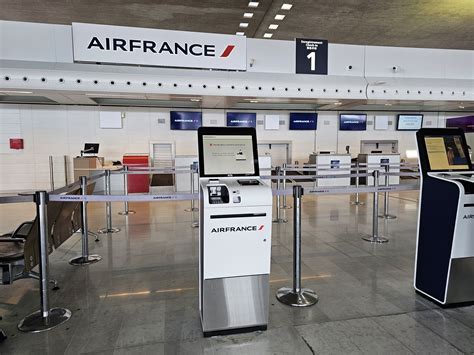
Air France’s Manifest Failure: How Can a Flight You Took Not Exist?
The heart of the issue lies in airline manifests, which are supposed to reflect precise records of who boarded and flew on any given aircraft. These records feed into systems of aviation security, immigration control, and commercial accountability. When they’re wrong, it opens the door not only to customer injustice—but to serious safety lapses.
In this case, the manifest for the CDG–VIE segment appears to have been incorrectly updated, leaving the passenger listed as a no-show. Whether this was caused by a software sync failure, ground handling issue, or another form of operational negligence remains unknown. What is clear is that the passenger boarded, flew, and landed—yet according to Air France, they vanished.
This isn’t an isolated glitch. Similar cases, particularly around low-cost carriers like Spirit Airlines, have shown passengers—including unaccompanied minors—being marked absent or “stowaway” because the manifest failed to reflect actual boarding data. These errors don’t just cost travelers money; they threaten national aviation security, where precise accounting of every soul onboard is mandated.
Document Everything: Proof Is the Only Defense
In scenarios like this, documentation is your best ally. While Air France’s internal records may have been flawed, there are several external ways a traveler can prove they were onboard:
- Boarding Passes: Paper or mobile versions, ideally with timestamps.
- Google Maps Timeline: A surprisingly potent tool showing geolocation proof of presence at CDG and arrival in VIE.
- In-flight Purchase Receipts: If anything was bought onboard using a credit or debit card, the airline will have a transactional record.
- Flight Tracking Apps: Some apps store boarding details via integrations with emails or loyalty programs.
It is vital to preserve these documents for at least a few months post-travel. Once this type of dispute arises, proof shifts the burden back to the airline.
Air France Customer Care’s Position: Denial, Not Dialogue
The passenger’s attempts at redress through Air France’s customer care team met a wall of formality and refusal. This has become a familiar pattern across legacy carriers. Rather than acknowledging operational lapses, many lean into rigid policy enforcement, often citing no-show clauses and fare terms.
Yet when a customer provides evidence they were onboard, the matter ceases to be a fare compliance issue. It becomes a systems failure, and to penalize a passenger for the airline’s tech fault veers into bad faith. In this case, Air France’s refusal to refund even the €150 out-of-sequence fee signals either internal dysfunction or willful disregard.
What Are the Legal and Regulatory Avenues?
Several options exist to hold an airline accountable in these scenarios:
1. Report to the French Civil Aviation Authority (DGAC)
The Direction Générale de l’Aviation Civile (DGAC) oversees all air carriers operating within and out of France. Travelers can submit formal complaints, especially when documentation proves boarding. A report here can prompt an internal investigation and, in some cases, compel the airline to issue compensation.
2. Engage the Austrian Passenger Rights Agency (APF)
Since the incident occurred at VIE, Austria’s APF also has jurisdiction. Their involvement can be crucial, particularly if Air France insists on the validity of its Vienna station’s denial.
3. Pursue a Chargeback via Credit Card Provider
Travelers who paid the €150 penalty with a credit card may seek a chargeback under the logic of services not rendered properly or under duress. Many issuers take such claims seriously, especially if backed by documentation.
4. Leverage Social Media Pressure
It’s no secret that large companies often react faster to public scrutiny than private emails. Numerous travelers report receiving apologies, refunds, or even travel credits after airing grievances on Twitter (now X) and tagging @AirFrance. This channel bypasses customer care’s scripts and taps into brand protection departments.
5. Involve the European Consumer Centre (ECC)
The ECC facilitates dispute resolution between consumers and companies in cross-border EU issues. Filing a complaint here may not only support financial redress but also prompt wider scrutiny of systemic flaws.
Security Oversight: The Hidden Risk in Manifest Errors
The implications of such an error go far beyond passenger inconvenience. If a person is not listed as having boarded—but did—this introduces holes in airport security and border control systems. In many nations, manifests are compared against customs declarations and immigration checks.
A mismatch could mean a ghost traveler enters or exits a country. Worse, it implies that internal systems can be manipulated or misaligned with physical reality. As several commenters noted, a “stowaway” could exploit such gaps. This is particularly alarming in cases involving unaccompanied minors or high-risk flights.
Lessons from Similar Cases and Precedent
This situation is not unique. One notable example involved a UK airline manifest error, which was only rectified after the passenger involved escalated to the UK Civil Aviation Authority (CAA). The airline initially dismissed the complaint but reversed course within days of regulatory involvement.
Such precedents suggest that individual passengers, when armed with evidence and escalation tools, can achieve justice. But they also underscore the lack of consistent accountability mechanisms, particularly when manifest data is siloed or not auditable externally.
What Air France—and the Industry—Must Change
Air France, like all legacy and budget carriers, must treat manifest integrity as a core responsibility, not a back-end technical detail. When a passenger is wrongly marked absent, it is not just a commercial disruption—it is a failure in the contract of carriage, system integrity, and customer trust.
We urge the airline to:
- Introduce cross-verification systems for boarding data between ground handlers and central systems.
- Provide passenger-accessible audit trails via loyalty apps or post-flight emails.
- Respond to manifest disputes within 7 business days, especially when documentation is submitted.
- Include clear protocols for internal investigation of manifest errors and publish anonymized outcomes.

Final Thoughts: Know Your Rights, Guard Your Evidence
Travelers should not have to defend their physical presence on a flight they boarded, yet in today’s digital travel ecosystem, errors happen—and when they do, it becomes the passenger’s burden to prove reality.
Keep your documents. Use your digital tools. Escalate when ignored. And remember, when a system fails, silence only encourages repetition.
As more of us rely on automated check-ins and app-based boarding, we must demand transparency and accountability when those systems fail. This isn’t just about a €150 fee—it’s about trust, safety, and truth in the skies.