The emergence of China’s ability to convert commercial cargo ships into military drone carriers has redefined the boundaries of maritime warfare. As images from the Hudong-Zhonghua shipyard in Shanghai surfaced, they unveiled a chilling glimpse into Beijing’s military-civil fusion strategy, which blurs the line between civilian commerce and lethal force projection.
This new strategy, clearly visible in the transformation of the Zhong Da 79 freighter, represents more than a technological advancement—it is a paradigm shift. These developments show that China is no longer just expanding its naval arsenal—it is multiplying it with flexibility, deception, and scalability in mind.
Zhong Da 79: A Cargo Ship Turned Arsenal Drone Vessel
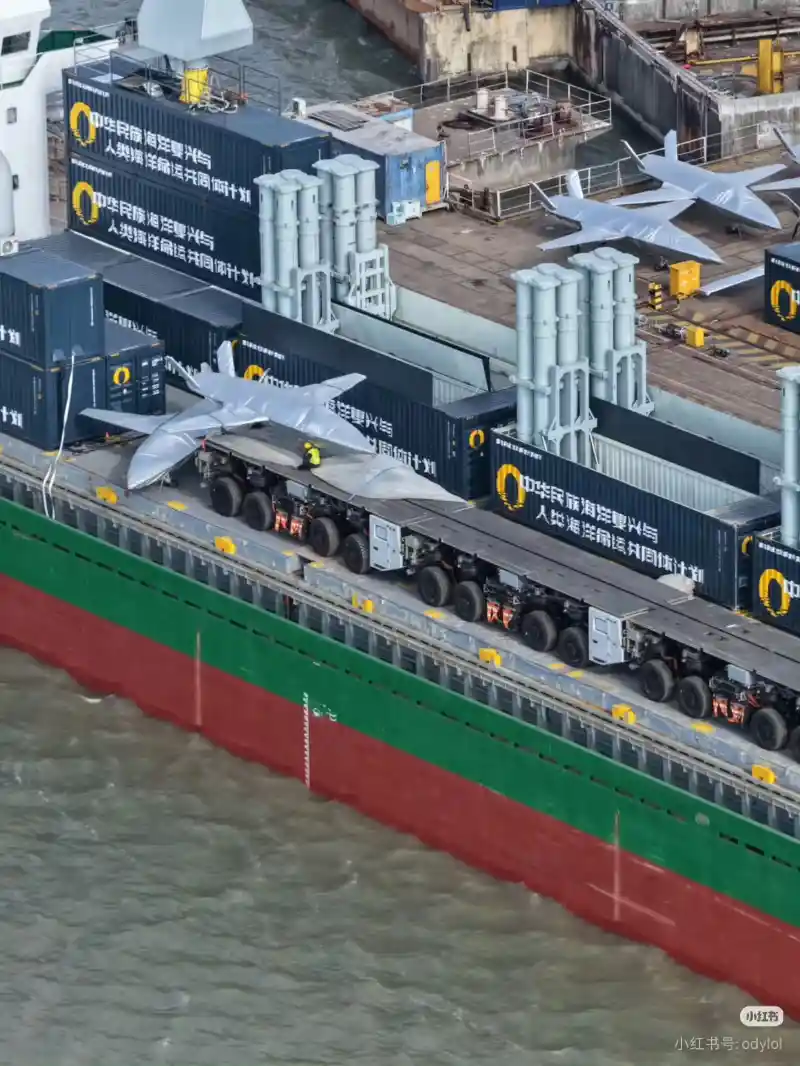
The Zhong Da 79 was originally a nondescript, medium-weight freighter. However, in December 2025, images surfaced showing it outfitted with 60 containerised vertical missile launchers (VLS), rotary phased-array radar, over-the-horizon targeting systems, close-in weapon systems (CIWS), and decoy launchers. Its design was modular, leveraging removable container-based systems that could be rapidly deployed or withdrawn. This modularity ensures that such cargo ships can revert to civilian use, making detection and tracking during peacetime almost impossible.
Further analysis confirmed that the Zhong Da 79 wasn’t just a floating missile barge—it was being converted into a multi-role drone carrier. By stripping some VLS units and retaining 24, the vessel made way for electromagnetic aircraft launch systems (EMALS) and large collaborative combat drones, signaling a more offensive intent.
Mobile EMALS: The Technological Game-Changer
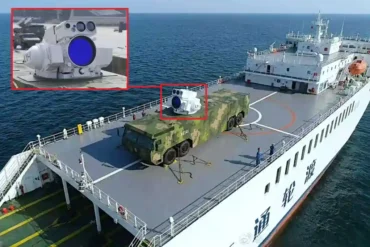
One of the most striking revelations was the truck-mounted mobile EMALS seen aboard the ship. This modular electromagnetic launch track, composed of linear segments assembled into a portable rail system, was capable of launching unmanned combat aerial vehicles (UCAVs) weighing up to 2 tons. These vehicles were connected like a train, carrying cylindrical energy storage units, high-power electrical wiring, and launch tracks for accelerating drones via magnetic force.
The sight of these trucks on deck was more than symbolic. It demonstrated how China could deploy air power from unconventional platforms. These mobile EMALS units don’t require traditional runways and can be launched from ships, ports, or even inland industrial zones. This advancement effectively dissolves the dependency on static airbases, offering unprecedented agility and survivability.
Loyal Wingman Drones and Offensive Capabilities
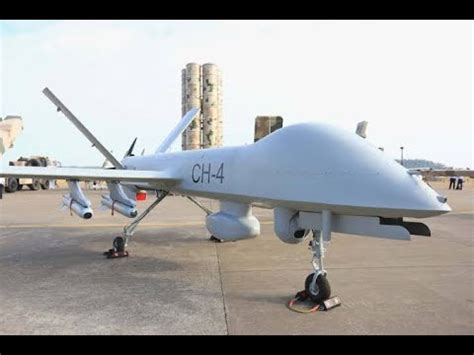
Recent photos show high-performance drones, visually akin to American CCA-style “Loyal Wingman” UCAVs, poised for launch from these platforms. These stealthy, swept-wing aircraft could serve in reconnaissance, strike, or air superiority roles. Notably, a CH-4 drone was also observed, suggesting a blend of strike capability and real-time intelligence gathering.
Although current configurations seem optimized for one-way drone missions, future adaptations may include parachute-aided recovery systems or sea-based airbag landings. However, there is also the distinct possibility that these drone deployments are designed as kamikaze-style loitering munitions, expendable by nature but devastating in effect.
Civilian-Military Fusion: Strategy Behind the Screens
Beijing’s military-civil fusion isn’t a new idea, but its execution has reached alarming maturity. The Zhong Da 79 is not an isolated case—it is part of a broader strategy that envisions China’s massive commercial fleet as latent military force multipliers. Every flat-decked cargo ship could potentially be transformed into a drone or missile carrier. This aligns with national directives that require new civilian ships to be built to military mobilization standards.
China’s People’s Armed Forces Maritime Militia (PAFMM) already integrates thousands of fishing vessels and trawlers into its grey-zone strategy. These are not merely passive observers—they are outfitted with surveillance gear, reinforced hulls, and are capable of coordinated military operations, all while flying civilian flags.
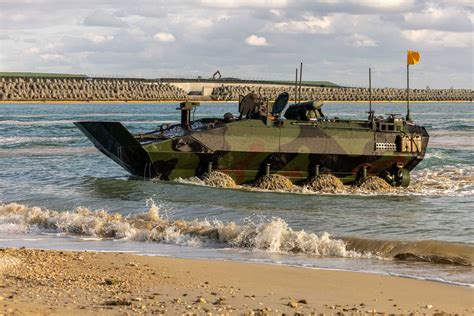
Similarly, RO-RO ferries (roll-on/roll-off vessels) have been adapted for amphibious warfare. Equipped with stern ramps, they can launch armored vehicles and troops offshore, facilitating potential rapid invasions or responses in contested zones like Taiwan or the South China Sea.
Nightmare Scenario for U.S. and Allies
From a strategic perspective, this development presents formidable challenges to U.S. Indo-Pacific Command. In a crisis or war, China could activate hundreds of cargo ships as drone or missile launch platforms. This means that distinguishing between civilian and combatant vessels becomes near impossible. The cost, in time and precision, of verifying targets would paralyze early response mechanisms.
Moreover, these mobile drone launchers could create a dispersed, decentralized, and survivable strike network. They don’t need runways, can be hidden in ports or industrial sites, and can quickly mobilize across maritime zones. By bypassing traditional logistic and infrastructure limitations, China would gain the ability to overwhelm localized air defenses, swarm U.S. assets with drones, and project power far from its shores.
It is not only the scale but the deception and agility of this strategy that makes it lethal. In peacetime, these ships operate under neutral guises. In conflict, they transform overnight into missile barges or drone carriers, creating a fluid battlefield where nothing is static and everything is potentially hostile.
Technical Challenges and Questions Ahead
Despite its promise, there are technical hurdles. The EMALS trucks, while mobile, must contend with saltwater corrosion, deck vibrations, and power stability during maritime operations. Additionally, launching heavy drones from a rocking ship deck raises serious concerns about reliability and safety.
Questions also remain about recovery mechanisms, especially if drones are not expendable. Launching a 2-ton drone is feasible with enough power, but recovering it without a traditional airstrip or hangar deck introduces engineering complexity. Future ship conversions may integrate catch-nets, crane systems, or develop ways to deploy sea-based UAV recovery units.
Nonetheless, what we observe now is a proof of concept—a glimpse into China’s broader ambition to eliminate the distinction between military and civilian maritime assets.
Implications for Global Maritime Security
The global maritime order is built on trust in civilian shipping and the sanctity of neutral commerce. By militarizing this domain, China is not just innovating—it is undermining long-held conventions of maritime law and security. If such a strategy proliferates, we could see an arms race where every commercial ship becomes a potential weapon, triggering escalation and suspicion on the high seas.
This tactic also complicates international naval planning. Fleets must now allocate more resources for constant vessel identification, surveillance, and response readiness, all while operating under peacetime restrictions. In a flash conflict, China would hold a significant first-mover advantage, with drone-equipped ships striking before adversaries fully comprehend the scope of the transformation.
Conclusion: A New Era of Asymmetric Naval Warfare
China’s conversion of cargo ships into drone and missile carriers is not a mere novelty—it is a strategic evolution. The Zhong Da 79, with its EMALS catapults and stealth drones, is the prototype of a disruptive maritime doctrine aimed at saturating the battlespace, confusing adversaries, and exploiting loopholes in conventional military planning.
The U.S. and its allies must now rethink their approaches to naval warfare. Traditional deterrence models based on identifying warships and securing airfields may not be enough. Countering China’s mobile drone fleet will require new detection techniques, AI-driven tracking systems, and perhaps even revisions to international maritime law.
What is unfolding before our eyes is a silent revolution in naval warfare, driven by deception, speed, and technological synergy. The question is not whether China can execute this strategy at scale—it is whether the world can adapt quickly enough to counter it.